Drop in to find new books to read and giveaways. Learn publishing trends, and get great writing and publishing tips from published authors.
Friday, February 25, 2011
What Motivates You to Keep Writing?
Everyone loves getting accolades and praise. But what do you do when you don’t hear anything back from a publisher or agent? I asked a group of writers what motivates them to keep writing and here’s some of the encouragement they had for other writers to keep at the craft and persevere.
Once I submit my work to a publication, I let it go, making sure to have a "plan b" market already lined up in case I receive a rejection. That way, I don't have time to have an emotional reaction--I send it out again and let it go. I find it helps to keep my head clear of any potential frustration so I can keep improving, and keep submitting new material.
I remind myself why I'm writing. God has put in my spirit to write for publication, and until He tells me different, I keep going no matter what the results.
I have come to the point of giving up many times. Each time a different circumstance gave me the will to continue… like when friends tell me they were touched by my story and want to share it with others.
I keep going with the little signs of encouragement -- like when a publisher who had previously rejected me, suggests I enter his writing contest.
This is a business based on acceptance or rejection. Both are going to happen. So, don't let the rejections stop you. Do what you love to do. Rejections show you’re in the game. Keep getting up to bat.
When I've had a rejection that stings, I write other small pieces and submit them to different journals and competitions. I need something to hope for, and I need to feel that someone is reading what I'm writing.
Over the past 10 years I’ve only had a few things published. I've had times where I gave up writing for bits of time. Giving up writing for good is not an option for me. There's no better way to say it then I feel I have a calling on my life to write. Something God given is inside me that doesn't allow me to give up.
It’s just the act of writing itself, which keeps me going. I know I can query the next book and go through the rejection again because I need to continue to write despite the odds.
I queried over 100 agents and had just a few who said they loved what I wrote but couldn't see the novel selling to any publishers. It was my love and passion for my novel for my novel that kept me going. Whenever I felt like giving up, I'd ask myself, have I done enough for this novel? If the answer was no, I had more in me to go on. I'm always surprised by those who said they got 5 or 10 rejections and stopped trying.
This business is all about treading the fine line of humility. You have to know you can always learn and improve. You need to have the confidence to believe in what you've written and its worth.
I’ve decided I am a writer no matter what. I write to disprove the rejections. If someone tells me I can't do something, I’m going to prove them wrong! When I get a rejection slip, it actually motivates me.
So many things keep me motivated. It’s my love of being immersed in my stories and characters of wanting to make those magical places exciting for someone else to visit and share it with others.
I'm OK with rejections, it's the of silence that bothers me... but I keep going because I have stories that need to be told, and that only happens if I write them, and people will only read them if I sell them, and I keep getting better, so it's worth it.
Even if one hundred agents don't respond of your book, remember it only takes one who loves it enough to convince one editor. You just have to keep trying until you find the agent your book speaks to in the way you meant for it to speak.
Read some of the sites that post how many rejections very, very famous authors were sent before someone recognized their talent and signed them.
I write for the joy of writing and it's like entertainment for me. I only write when I'm in the mood and never pressure myself to conform to others' expectations of how I should write. If I'm published, so be it. If I'm not, well, I enjoyed the ride.
Tuesday, February 22, 2011
Interview with Author, Tracy Krauss
My interview today is with Tracy Krauss who has published two books and has another one in the process. She describes herself as a writer, an artist, a teacher, and a director/drama enthusiast. She currently is a High School teacher of Art, Drama and English. Like many of us, she dreams of some day having the freedom to write full time.
I see you have two books that you have published that are quite different from one another. The first one is My Mother the Man-Eater which is about a self proclaimed “cougar,” her adult daughters and her quest for love. What was your inspiration?
I love characterization and I spend a lot of time developing my characters and their back stories. For this particular novel, I was actually inspired, if you can call it that, while playing the Sims. No, really. I know that sounds rather shallow, but after I had developed these characters and they started ‘interacting’, a whole convoluted story began developing in my head. Of course, things mushroomed from there and I saw the potential for a really great story full of murder, mayhem and (dare I say ‘sex appeal’) while leading to the ultimate climax of God’s redemption and grace.
Cougar Town is a popular TV show now, how is your story different or similar to the show? What would you like your readers to take away from this story?
I’ve never actually watched ‘Cougar Town’, although I have heard of it. I think this book is rather timely in that regard, however. Let’s face it. People are interested in this topic right now. (The Drama-Queens-slash-housewives-of-where-ever …) I think it’s a really fun and fast paced story that is not typical for the Christian market, but, in the end has a strong and moving message of redemption. God can take anyone – even a former prostitute – and use him or her for His glory.
Your other book is entitled And The Beat Goes On which is a tale of intrigue with an archeologist and his discoveries deep in the mountains of Zimbabwe. This sounds like it is a total opposite from the Man-Eater book. Which style is your greatest strength?
Despite what seems like differences on the surface, both books are classified as ‘Romantic Suspense’. Man-Eater has a lot of action, intrigue, murder and mayhem, as does And The Beat Goes On. As well, The Beat has a healthy dose of romance, although not the ‘sappy’ variety, if I may say so, which is actually also the case for Man-Eater (despite the subject matter!) So, stylistically, they aren’t that dissimilar. I like to classify myself as ‘Edgy Inspirational with a twist of romance’.
What drew you to write this story?
As far as the inspiration for And the Beat Goes On, it came out of my interest in what I saw as the discrepancy between evolutionary theory and what the Bible had to say about the origins of the universe. When I first got saved, this was a big issue for me because I had been ‘schooled’ into thinking that the evidence was actually in favor of evolution and that as a Christian, I was just supposed to blindly follow the Creation model without asking any questions. I ended up reading anything I could get my hands on that had to do with the topic. I soon discovered that the so called ‘evidence’ for evolution was iffy at best and often skewed to fit the model – not something proponents want you to know.
This story is actually a sequel to another book I wrote called Play It Again (which is not published yet) in which the main character from The Beat was a child. He was kind of quirky kid who liked rocks, arrow heads, and things. When I started thinking about And The Beat Goes On, I decided to make him an adult. Other than that, the two books stand alone, so nobody needs to worry about reading the first one before the second. It’s also where I came up with the title. I thought it would be neat to continue the ‘musical’ theme. Unfortunately, some folks think it’s a tribute to Sonny and Cher …
I see both books are published by Strategic Book Publishing. I am not familiar with them, though I see their sister imprint Eloquent Books have somewhere around 2000+ authors. Could you tell me how you first heard about them?
I did a ‘blitz’ while trying to find an agent/publisher and ended up with several offers. I liked their contract the best, so I signed with them.
What has your experience been like in working with them?
I have had a very positive experience working with Strategic. They have had some bad press in the past, apparently, but I have found them to be very professional, helpful and forthright in all their dealings with me. Initially, it took several months before I heard anything back from them. Once I signed with them and got the ball rolling, it was probably six months before the first book was released.
Did you contact any other publishers before you got a contract with them?
I looked into straight up self publishing, but decided I didn’t want to go that route. I also had a couple of offers from publishers that were ‘joint venture’ but the cost was really high and I didn’t see it as an advantage over self-pubbing. I have also had some interest and ‘requests for more’ from several agents, and even one of the big publishing houses, but nothing came out of those.
Strategic offers full contract (you pay nothing), ‘joint venture’ (you pay some) and self pub (you pay - period) so they are quite versatile in that regard. Does that mean I am going to stick with them and only them? I’m still in the process of submitting to other agents and publishers. I think it is smart to ‘play the field’ and keep one’s options open.
In working through your first book, what surprises, if any did you encounter in working with your publisher?
I was such total rookie, that pretty much everything was a surprise. I would say my best advice for anyone is to do your homework. I thought I had, but it turns out I only scratched the surface. You really need to take the time to research the publishing industry in general and decide what is best for you. There are so many options out there now from e-pubbing to self-pubbing to how to acquire an agent to publicity … it’s overwhelming at times.
What advice would you give about promoting and marketing an author’s books?
Again, I had no idea what I was getting into so it’s been a very steep learning curve. Strategic has been good about helping with promotions, but gone are the days when you could just sit back and write and let your publisher do all the work of promoting. Unless you’re a million book seller, it just isn’t going to happen, no matter who your publisher is. It is crucial these days to develop an online presence, even before you sign a contract or get published. I didn’t know this and so I have been doing a lot of ‘catching up’, so to speak. You need a website, you should be blogging, and you should be interacting on social media sites. This helps develop an audience and a platform. There really are no shortcuts. It takes a lot of effort.
What do you know now about getting published that you wished you had known earlier in your writing career?
What I said in the last question about building a platform. I was kind of sitting around waiting to be ‘discovered’, but this is not reality for most authors. Self-promotion goes against the grain for most of us – especially those of us that are Christians who have been told we need to be ‘humble’.
What is the best advice you’ve ever been given on writing?
My best advice is to LISTEN to what others are saying – even if it hurts. Often we are so emotionally invested in our own writing that we don’t see the flaws until someone else points them out. I’ve had many ‘ah-ha’ moments where I couldn’t believe I missed some flaw that, as soon as it was pointed out, became glaringly apparent. Having a trusted critique partner or group is a really good idea. This doesn’t mean we bow to every suggestion. At some point you have to know your own voice and go with it. But accepting criticism and constructive feedback is crucial if we’re ever going to get to that place.
Special Promotion for this book...MyMotherTheManEater #contemporary fiction – buy today and also get great bonuses gifts! http://mytinyurl.com/d3srfsw1f1
Thursday, February 17, 2011
Preparing for a Writer’s Conference withTamera Lynn Kraft
Today I'm turning over this post to guest blogger, Tamera Lynn Kraft. In my previous post with author, Anita Estes, we discussed the importance of attending writing conferences. Today, Tamera will give us her tips on making the right impression.
Manners are a very important part of approaching editors and agents at writer’s conferences. This is something you should have been taught as children, but alas, not all people have proper manners. Even those of us that do, need refresher courses at times especially in new situations where we don’t know what’s expected. There is a standing joke of a writing following an agent or editor into the restroom and pitching while they are captive audiences. This is not the way to positively influence an editor or agent.
Here are a few pointers on manners at writer’s conferences.
Be prompt: Arrive for all appointments a few minutes early. Who knows? If the person before you doesn’t need the whole time and you’re already there, you could get extra time. If you can’t make an appointment, let the appointment director know so the editor or agent doesn’t waste time waiting for a no show.
Don’t monopolize: At some conferences, you will have the opportunity to sit and eat with editors and agents. If this is the case, don’t monopolize the conversation. Most agents and editors will give each person at the table a chance to talk. Wait for that opportunity or you will appear rude.
Elevator pitches: If you find yourself on an elevator or alone with an agent or editor, be courteous. Introduce yourself, and ask if this is a convenient time to make a pitch.
Appointment Manners: The best way to make an impression is to be kind and truthful. First ask the agent or editor how his day has gone? Has she found any likely prospects. Treating them like human beings gain help you gain respect. Next, if you’re nervous or if this is your first pitch, say so. Most agents and editors will help you through your nervousness if you’re honest with them.
Be prepared: When it’s time for your appointment, know what you’re going to say. Have one sheets or sample pages ready to give the agent or editor. Have yourself and your materials ready.
Showing professionalism by displaying manners may just be the edge you need to land an editor or agent.
Thank you, Tamera, for your suggestions. As the old saying goes, you never get a second chance at a first impression. If you want to make the most of a conference you need to think of it as a business function. It's similar to attending a job fair. The job you are trying to get is being an author with a paying publisher. Tamera has several more suggestions about how to make the most out of writer's conferences. You can read them on her blog, just click here.
Tuesday, February 15, 2011
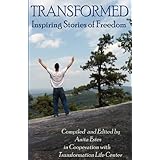
Interview with Anita Estes, author of Transformed—Inspiring Stories of Freedom
Anita Estes has been honored in Who’s Who of American Teachers for 2000 and 2005. Her writing appears in several different publications and has been a featured writer in The Cup of Comfort series. She is the author of When God Speaks-40 Days and Nights of His Promises as well as Transformed—Inspiring Stories of Freedom and has presently received her proof copy for Letters to God on a Prodigal Son —Overcoming Addiction through Prayer
Tell me about the first book you published. I was invited to be a speaker for a woman’s conference based out of Charleston, S.C. I was told it would be a good idea to have a book of the devotions and articles I had written, so I collected them together, added some art-work, I’m also an art teacher, and my first book was born, When God Speaks, 40 Days and 40 Nights of His Promises. The stories demonstrate how God is at work in our daily lives and throughout our struggles. Some of the topics include: Our Identity in Christ, Peace, Joy, True Prosperity and Resurrection Life. Each day includes a story, prayer, application and night-time reflection, which is ideal for a Lenten devotion. I published that with a POD company, Pawprints
What was it like working with Pawprints? Linda was a good person to work with for my first book. She was patient and allowed me to make edits that I saw as she sent files back to me. She did all the set-up of the files, gave me a good price, added me to Amazon.com, and now wants to put my book on Kindle, which will be available soon.
What writing experience did you have prior to your first book? I had been writing devotionals and articles for about ten years and had some of them published. I also belonged to ACFW, American Christian Fiction Writers and was attending a few conferences. Through someone I met on-line with ACFW, they recommended Pawprints and I began looking into self-publishing.
Which writer’s conferences have you attended? I've attended The Greater Philly Christian Conference for 3 years. It’s been an excellent way to meet other authors, editors, agents, and people to critique my work. I also attended one-day conferences in Vermont, New York and Pennsylvania. The most recent was directed by Gloria Clover, my critique partner with ACFW.
What have you learned from attending conferences? When you attend a conference, sign up for an evaluation, it’s worth the extra money. Get your best writing together and be organized. Make a sell sheet if you have a book or books. Bring a written book or article proposal. Plan on visiting agents, editors, authors, and all the people available for you to see. Reach out and meet other people and network. Print up a business card and give it out.
What inspired you to write your second book? I became involved with a local Bible based treatment center that helped my son though a difficult time in his life. When I heard the men’s testimonies I wanted to help them write them. As I gathered their stories, I thought it would make a great book, so I compiled and edited the stories, which became Transformed—Inspiring Stories of Freedom. I learned a lot more about self-publishing as I took on the job myself to do all the work (formatting the book , files and creating the cover) and submitted it to a printer, rather than going through a middle man, POD, like Pawprints. I formed a company, Transformation House, which would help the Transformation Life Center. All the profits for the book are donated to TLC, a non-profit that receives no government funding. We are presently working on a project to have the men of TLC read the stories and put them on u-tube, so watch for that!
What did you learn in your experience with self-publishing? The first printing company I choose was Fidlar-Doubleday. They had a great salesman on board who helped me through the process of setting up files, embedding them and creating a cover to specs. My daughter helped me with the cover using Adobe Photoshop. I found it very confusing, but waded though it with her help. The first printing was without an ISBN since we were printing it to be sold at a banquet fundraiser. I had made some editing mistakes so we didn’t sell it then, but we had other outlets to donate and sell them to. I didn’t see some of the mistakes with an on-line proof, which was my mistake. I recommend that whenever you publish a book, ALWAYS purchase a printed proof. This was very hard learning experience, but I recuperated and re-edited it, then had more books printed.
After my second printing of Transformed I joined a self-publishing group on-line that taught me a lot about the technical aspect of publishing. I learned from them how to buy a block of ten ISBN’s and got my book ready to submit to one of the largest book printers and distributors for Ingram, who sell to Barnes and Nobles and other bookstores— Lighting Source International (LSI) . They are a large company and they don’t hold your hand through the process. You need to know how to do everything yourself, but they are helpful to newbies. Transformed is now available on Amazon, Barnes and Nobles, and recently GoodReads. When God Speaks is on Amazon, but not Barnes and Nobles. My newest book is available for preview on Create Space. I’d love for some of you to give me your input. https://www.createspace.com/Preview/1077348
What is it like having your own publishing company?
Transformation House is only six months old, but I have been approached by other authors to publish their work and I’m considering publishing a few books other than my own. I’m currently editing a proof of Letters to God, on a Prodigal Son—Overcoming Addictions through Prayer. I’m using CreateSpace to print this book because I was told they have more promotional tools, such as the preview noted above.
I find that the most difficult thing about self-publishing is marketing, but I’ve been told that’s true for many authors, even those who are published with traditional publishing houses. I’ve learned a lot and received some good advice from the self-publishing group and authors on Christian Writers. They recommended I join groups like GoodReads, and I just gave three free books away in a contest and was added to a number of people’s books to read. I’m learning about that aspect slowly. This is my least favorite thing about writing. I like to connect with people face to face, so working on-line is a whole new learning curve for me. I’ve joined Facebook, Listmania, Linked-in, GoodReads and created a blog to discuss Christian ideas and promote Transformation House books.
My reason for doing all this is not so much about making money, but more about writing and publishing books for people who need encouragement and hope during difficult times, that’s my focus. I would like Transformation House to become a self-sustaining ministry so I can give books away to people who are hurting. My web-site’s new logo, www.anitaestes.com, is “Delivering hope to the hopeless and truth with compassion.” That is my goal.
confirmation code ESFG9VBX6C3G
Tuesday, February 8, 2011
Interview with E.G. Lewis, author of the Seeds of Christianity Series
Today’s interview is with E. G. Lewis, who is in the process of publishing a book series. If the book is anything like his website, it will be amazing. I have reviewed many a writer’s blog and found them interesting but nothing like this one. It is more like reading an online magazine. It is layered with multiple textual details and replete with beautiful photos. The research alone to do the stories has to be extensive. I’ve listed the info for accessing his site at the end of this interview. It is a must read!
Tell me a little about your background, prior to writing these books. Your bio says you grew up in Cincinnati, Ohio and spent years in Kentucky's Appalachian hill country and now live in Oregon. Was it your journalism career that sent you across the country? Or was there something more?
There was definitely something more. When I was the editor of a small town weekly newspaper in Southern Ohio I commented on something an Oregon editor wrote. She wrote back and we began to correspond. We spoke on the phone, I visited Oregon and, as they say, the rest is history. We’ll be celebrating our twenty-fifth wedding anniversary this year.
You write what is termed Christian/Biblical Fiction. What is your background?
I have no Jewish background, other than several Jewish friends, or formal theological training. I have, however, spent untold hours over the past ten years researching and studying Judaism and the Early Church. I’ve developed a tremendous respect for the spirituality of Judaism and the many aspects of Christianity derived from it. The things that the Early Christians accomplished are incredible…especially when one realizes that many of the first converts belonged to the lower echelons of society.
In your Seeds of Christianity Series, you currently have 2 books in publication. How large of a series do you expect this to be?
For a long time I envisioned it as a trilogy. However, last summer it became clear that we’d need a fourth book to get the job done right. So, after lots of discussion and re-arranging of publication schedules, we settled on a four-book format: Witness, Disciple, Apostle, and Martyr.
How did you formulate the idea for this series?
At church one Christmas Eve service I imagined a young shepherd girl going to the stable on that first Christmas. So I set out to write a short - Mitch Albom, Richard Paul Evans short - Christmas tale. This “little” book grew into the Seeds of Christianity Series which begins with the birth of Christ and ends seventy years later in Rome with the death of Peter and Paul. Witness opens in the stable with a young Rivkah seeing Mary with the Christ Child and asking to hold him. But Mary and Jesus are soon gone and Herod’s soldiers begin killing the children of her village. Amidst the barbarity of Roman occupation, Rivkah marries and raises a family. Life is good until the day she encounters Jesus once again…this time on his way to crucifixion.
The second book, Disciple begins with the Pentecost experience and tracks the formation of the early church. Rivkah and her family convert, and must flee to Antioch during Saul’s persecution. In Apostle, they deal with the bitter memories of Saul when he returns as Paul. In Martyr they leave Antioch to assist old friend Peter in Rome where they encounter Nero’s persecution.
How did you go about doing research for this series for the historical aspects?
My rule was that the books be both Biblically and historically accurate. I studied the practices of ancient Judaism and read the writings of the great Rabbis. I studied the early church and the rise of Christianity, pored over maps of Jerusalem, Antioch, and Rome and read the Church Fathers and the works of historians such as Josephus, Eusebius, Tacitus, Juvenal, Cassius Dio, and Suetonius. When I couldn’t find the answers myself, I corresponded with Rabbis, University Professors, Historians and other experts. It’s been an exciting, faith-filled journey.
Tell me about your search to find a publisher.
The story of Cape Arago Press is an interesting one. When I completed Witness I followed the usual query process and found an agent who loved Rivkah almost as much as I did. Biblical fiction is never an easy sell and at that time the Christian publishers weren’t interested. She ran it by the New York trade houses instead. They eventually passed, but by then several CBA editors expressed interest. Through two more rounds of submissions Witness garnered praise, but no offers. She released the book to me, suggesting I place it with a small publisher.
The small publishers I found were all doing literary fiction. That’s when a group of us, both writers and non-writers, formed a partnership that became Cape Arago Press. I had books ready to go, so mine were the first ones out of the chute. Since then we’ve made offers to other authors that weren’t picked up and are currently working to acquire several books. Another of the partners will also be releasing a book very soon.
How did you go about the publishing process?
Clearly, my experience isn’t typical. Witness took about four months from the time we decided it’d be published until I actually had a hard copy in hand. There were design considerations, cover art to secure, typesetting and layout, copy editing and so on. We do everything in house. Though small, our group has all the necessary editorial, graphic and financial skills needed.
What type of publicity does Cape Arago Press do to promote your book?
Big, little, or in between, I don’t think any publisher gives their authors much support now days. They’ve done some targeted mailings, paid for bookmarks and posters, and experimented with various internet promotions such as ads on Facebook, Google, and Yahoo. Price promotions such as Twofers, BOGO, and that sort of thing have worked as well as anything. They’ve also purchased a block of Kindle Book of the Day ads to run mid-to-late 2011.
What ways do you promote your book?
The same things most authors do. Book stores are few and far between here on the Coast making signings difficult, but I’ve done a few. I also spearheaded a Book Fair at our local Mall. I’ve had blog tours and individual spots such as this one. I’m on Facebook, Goodreads, The Book Club Network, etc. I never include details of day-to-day First Century life without thoroughly researching them.
You also share additional information on your blog, Sowing the Seeds, don’t you?
As a service to my readers, I maintain the blog (http://www.seedsofchristianity.com/wordpress/), it’s a venue that allows me to share the fascinating and eclectic aspects of this research with those who are interested in knowing more.
What do you know now about writing that you wished you had known earlier in your writing career?
Fiction need not be intimidating. Writing has always been a part of my life. I’ve written for regional and national magazines, done technical writing, even wrote and directed training films, yet I always shied away from fiction. I thought novelists were New York types who smoked a pipe and had leather patches on the elbows of their tweed jackets. I wasted way too much time standing on the shore when I should have been out there swimming.
What advice would you give to other aspiring writers?
I’d say go for it. Read a lot, study a lot, write a lot and please, please don’t expect to get rich. Whenever the radio announced school closings because of snow, I had a friend who called in to remind them the school of hard knocks remained open. Writing can be a rough and tumble business and at times there are more downs than ups. Very few garage bands end up like the Rolling Stones, few aspiring actors become Stars, and few writers become a powerhouse like Stephen King or John Grisham.
The good news is your book doesn’t have to be a NYT Bestseller to change lives. Every once in a while God encourages us by pulling aside the veil a tiny bit and letting us peek inside. For instance, I work hard to portray my Biblical characters as the ordinary people they were rather than the exalted saints they became. I’ve had people tell me my books enriched their prayer life and helped them see the Bible in a whole new light. To quote Mark Twain, “I can live for two months on a good compliment.”
Yes, in this day and age of writing we all appreciate the compliments that we receive. I hope you have enjoyed this interview with E.G. Lewis. If you would like to learn more about him and his writing go to his blog at http://www.seedsofchristianity.com/wordpress The publisher’s website is: http://www.caapearagopress.com
His Tbooks are available in hard copy from internet sellers such as Amazon, B&N, Powell’s, etc. Ebooks are available through Kindle, Smashwords, and other Ebook retailers. They are also on Google Books.

Thursday, February 3, 2011
On Love and the Love of Writing
In the cold days of February when you are craving warmth, what could be a better source of comfort than love? A touch, a caress that lets you know you are alive and matter. So let’s honor the quest for love this month.
As writers we must be crazy in love with the craft. How else would you describe someone who for years sends out manuscripts only to be constantly rejected? Talk about unrequited love? Writers live and breathe it. Could that be why so many famous literary figures have crashed and burned in their lives? Think of Poe and Fitzgerald. Writing can drive a person mad. Yet still we persist. We have an insatiable desire to put pen to paper – or these days fingers to keyboards. Some may even be writing by voice to computers.
In celebrating the love of writing, I am going to leave you with some quotes by writers who had their love returned and celebrated consistently in print. May your love of writing be celebrated as well!
Authors and lovers always suffer some infatuation, from which only absence can set them free. Samuel Johnson
When I am dead, I hope it may be said: His sins were scarlet, but his books were read. Hilaire Belloc
Life can't ever really defeat a writer who is in love with writing, for life itself is a writer's lover until death - fascinating, cruel, lavish, warm, cold, treacherous, and constant. Edna Ferber
It took me fifteen years to discover I had no talent for writing, but I couldn't give it up because by that time I was too famous. Robert Benchley
True love is the only heart disease that is best left to "run on"--the only affection of the heart for which there is no help, and none desired. Mark Twain's Notebook
Now continue to read on about love throughout the month by clicking on to blog chain posted below!
Tuesday, February 1, 2011
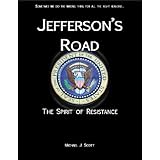
Interview with Michael J. Scott author of Jefferson's Road: The Spirit of Resistance
Today’s interview is with Michael J. Scott who is in the process of releasing two books. One is self-published using CreateSpace and the other is being published by Ellechor Publishing House and will be out in 2012. For this interview, I will focus with his current book.
Your current book which is available through Amazon is entitled, Jefferson's Road: The Spirit of Resistance. Tell me why you decided on the self-publish route with this one.
Originally, I wanted to pub Jefferson’s Road through a traditional press, but after submitting to fifty agents, I found no takers. I had one agent particularly interested in the story, enough so that I had to make some rewrites to the story, which strengthened it, but in the end, he declined representation.
Because my critique group here in Rochester includes multi-published authors who’ve given me high marks on the writing and the story, I was confident it had nothing to do with the quality of the work, nor the timing. It’s very relevant to today’s culture and political climate but the subject is controversial. Therefore, I chose to self-pub. I also realized how long it would take a traditional press to turn out the book, and I wanted it available sooner.
Tell me about the plot of Jefferson’s Road.
Jefferson’s Road is about an attempt to spark a second American revolution. It starts with The Spirit of Resistance, which details a plot to assassinate the President on his inauguration as a means of provoking the government into declaring martial law. I’m not advocating armed resistance with the book, but rather exploring what would happen if people did. I think such an action would be an utter disaster for this country.
What is the significance of the title?
The series title comes from Thomas Jefferson's letter to William Smith, in which he argues that the American people must keep the spirit of resistance as a check upon a tyrannical government. He understood that all governments tend toward greater control and less freedom, and actually called for armed resistance as the best guard against it. The phrase "The Spirit of Resistance" is directly from this letter, as are the next two titles in the series: "Patriots and Tyrants" and "The Tree of Liberty."
What type of research did you have to do for the Jefferson's Road?
For one thing, the book has a lot of quotations in it from the Founding Fathers, Revolutionaries, and significant figures throughout history. Some of them I knew. Some I found online. Most I found through a Thesaurus of Quotations I happen to own. I also had to learn about high-powered rifles and police tactics. For this, I turned to a Sheriff’s deputy whose son was in my son’s scout troop. He was able to answer many of my more provocative questions about sniper tactics, DUI checkpoints, police procedure, and the effectiveness of armor-piercing rounds against bullet-resistant glass. I was also able to turn to You Tube videos to get a sense of what different firearms could do.
What other research tools did you use?
Google Earth proved indispensable when it came to researching locations. It allows you to turn on the street view, and literally descend into a 360° photograph, where you can look around and see what’s there. In my book, Jefferson’s Road, I used this feature to go into the streets of D.C. and have a look around. This made it possible to give a more accurate description of various settings, and contributed to the plotting of the story. For example, verifying that there is, indeed, a payphone near a particular hotel in D.C.
What have you learned from working with CreateSpace in publishing this book?
Working with CreateSpace for Jefferson’s Road has taught me the detail that goes into publishing a print book – the work involved in getting a product right. I’ve been over Jefferson’s Road with a fine tooth comb many, many times, and I’m still finding errors in the text. But it’s easier having a printed copy to work from than trying to do it all on a computer.
What do you know now about getting published that you wished you had known sooner?
My only real regret is not studying my craft more intently when I was younger and practicing writing more diligently. I didn’t really start knuckling down until 2005. Five years later, I have a book contract. I wonder what would have happened—where I’d be in my writing career, had I gotten serious about it a lot sooner, say 1995. Or even 1990.
What advice would you give other writers?
Write. Just do it. Butt in chair. Shackled to the floor. Whatever you’ve got to do. Just write. If one story isn’t working for you, put it aside and work on another. Just get the words out until a story grabs you by the throat and won’t let go. I’ve heard it said that a writer has to churn out a million words of dreck before they write something worth reading. So just get those words coming out.
Seek criticism. They say you’ve got to have a tough skin in this business. That’s certainly true. Rejection hurts. But don’t just let someone reject you. Find out why. Find out what isn’t working. What doesn’t click? You have to get serious about actively seeking criticism. The harder and tougher, the better. The worst thing that can happen to me is going to a critique group and reading my material, and everyone loves it. That just means I’ve wasted my time. Unless I get critical feedback that helps me improve, what use is it? You always have to be about improving your craft, your technique.
Give up if you can. If you can go without writing, then you probably should. But if you can’t. If the stories just won’t let go. If the words scream to be written, then do it. And don’t let anyone tell you different. It’s your calling, then. Pursue it with passion, dedication, and an unshakable belief that you’ve got what it takes to not only finish a book, not only get published, not only sell a book, but to become a bestselling author. Don’t let go of that dream, because you have to reach for the stars. You may only hit the streetlight, but you’re bound to go farther than if you just aim for the streetlight.
If you would like to know more about this book or the author, you can go to his blog at www.MichaelJScott.wordpress.com. Click here for a direct link to his book on Amazon
Subscribe to:
Posts (Atom)