This is the closing post for the blog chain that I participate in monthly. To the right of this missive I have included the list of writers for July. I usually set up my post for the early part of the month to present my "fresh" ideas so I don't get caught up in what everybody else says. This way I can add a new twist or "fresh" idea to the topic for the month. However, this month has been very busy for me with lots of time spent on my secondary job while my primary job just flounders because of our recession. So I decided to wait until the end of the month when I had time off for "fresh" thinking and "fresh" energy.
You've probably noted my repeated use of the word "fresh" which was very deliberate. Our topic for the month is "fresh air" which I am going to take as meaning being refreshed or challenged. If you don't let a little fresh air into your life and thinking you'll get stagnant. That's what I think I've been doing somewhat in my life and now I am being challenged to be renewed and re-invigorated. I'm learning to breathe in fresh air of a major life change.
For the past 25 years I have lived and worked in Southern California in the real estate industry. This is the second recession we have faced in our area. The last one shook a lot of Realtors out of the business and this time my husband and I think it is time for a change for us as well. We have decided to move out of state and go to Texas. We have family and friends who have been suggesting it for years. You can just bleed your reserves so long. Once again we are both doing double jobs to try to make ends just as we did in the 90's. I'm not complaining, though I have whined a bit about it to my husband.
What I have learned in this season of change and fresh thinking, is finding out what I value. We are going to put our "dream home" up for sale which means packing up. We've already had the garage sale and donated lots of stuff to Goodwill with more to come. I'm finding it easy to let go of the "stuff" in this house we don't need and am looking forward to downsizing. Plus it means a lot less to pack-up! I am a bit anxious about the changes ahead but know that God's in control and we will survive this change as we have others.
What is more important to me than my things is my relationship with my husband. It seems to be getting stronger, just as it did in our last economic downturn. We tend to draw from each others strengths and value each other more -- especially since we are seeing each other less. That's the hardest change as we love being with each other as much as possible.
I am also focusing more on my Bible reading and trying to discover what God wants from me. I am gaining strength from listening to Christian music and hearing inspirational Christian teaching as I drive my long work commute. I understand that this is a new challenge for me and I want to make sure I follow in the destiny that God wants for me. I'm still not sure what that may be, but I am trying to be open to His direction.
Do you wonder what your destiny is? I've attached a link to a video of an inspirational talk I heard last weekend from a survivor of the Twin Towers collapse on 9/11. It's a bit long, but it is truly inspiring. It tells how his destiny was forever changed by that day. We may not each have such a dramatic event, but we need to look at our life and decide if we are living up to our destiny.
Here's the link... http://cpmassets.com/video.php?video=891&site=195
Photos: The Alamo in San Antonio, TX where we plan to move, A home for sale but not ours - don't need to advertise it here, The band, Sidewalk Prophets, who penned the song, "The Words I Would Say" which is one of my favorites
Drop in to find new books to read and giveaways. Learn publishing trends, and get great writing and publishing tips from published authors.
Thursday, June 30, 2011
Tuesday, June 28, 2011
Interview with Allyn Stotz, author of The Pea in Peanut Butter
Today's interview is with a first time author of a children's picture book. Her story is not the norm for struggling writers. Read on to learn more...
Prior to getting this book published what other writing credits did you have?
My first publication was a story called The Witches Next Door ,which was in the October 2010 issue of The StoryTeller Tymes Magazine. Then following that was Oogles of Imagination, published in Spacesports & Spidersilk Magazine. The Guardian Angel/Kids Magazine published my story Grandpa Bud’s Big Blue Truck in their February 2011 issue. I was also recently published in an adult magazine titled, Looking Back. And yes, I feel as though having a few credits to my name might have helped a book publisher see that I'm serious about my writing.
From the time you sent in your manuscript to this publisher how long was it before you got any feedback?
I was definitely one of the lucky few that had everything happen very quickly. I sent my story into the publisher and within 24 hours, I received feedback. And then within 3 days after that, I had a contract. This was very rare and does not happen very often.
I understand that FutureWord only picked 3 picture books to publish this year. What made your story stand out?
I was just flabbergasted that my book was 1 of 3 picture books they published for the year. To tell you the truth, I'm not sure what was so unique about my story that they chose mine over all the other stories they get, except that it was polished and had all the essentials to make a good story.
What other publishers did you contact to produce your book? Did you have an agent?
I only sent my story into 1 or 2 other publishers before FutureWord accepted my story. And no, I do not have an agent but hope to someday. Maybe after my next published picture book!
What was the total time frame from the point of submission of the original manuscript to the actual printing of the book?
I sent my manuscript in on 11/4/2010 and by the end of May 2011, my book was published. Normally it’s supposed to take over a year before the book is sent to print.
What sort of input did you have in regards to the illustrations?
I was sent a first draft with no color and asked to give my input or suggestions. I loved everything the illustrator did so I really made no suggestions. It was my first book so I wanted to be easy to work with, plus I'm not skilled at illustrating so... Then I was later sent the illustrations in color to approve those. It was a very easy process since the illustrator did such a good job in capturing my vision for the story.
What type of publicity does your publisher do to promote your book?
Since my book was just published, I’m a little in the dark about that. I do know they have posted on Facebook and their blog and plan to send press releases out to some health food stores in my area. They are in the process of marketing a book that was just released before mine but will soon be devoted to promoting my book. FutureWord Publishing is a very small organization so they can’t do it all at once like some of the major Publishing houses might.
What do you do to promote your book?
I set up a website and blog as soon as I signed my contract for the book. I’ve been promoting there and on Facebook as well as numerous other book and writing blogs. I belong to several critique groups so I have promoted my book there as well. Recently, I just got back from doing three book signings in my hometown of Edgerton, Ohio which were a huge success. Now that those are over, I can take a deep breath and start looking into book signings, blog tours, and school visits here in Baton Rouge, LA.
What surprised you most about the submission process with this publisher?
I must say that EVERYTHING surprised me about this publisher. I wasn’t expecting to have much say in anything but they were wonderful. I was allowed to make suggestions with the illustrations, however I loved everything the illustrator did so I agreed to just go with it. The publisher did a fantastic job of contacting me whenever they had a question and allowed me to ask any questions I needed. They were also very quick with their responses. Dreaming of getting published with a big “top gun” publisher is still in my thoughts; however I couldn’t be happier that FutureWord Publishing was my first experience. They made the process very smooth.
What do you wish you knew about publishing now that you wished you had known prior to submitting your manuscript?
To be honest, just about everything once again. I was very new to the world of book publishing and really had no idea how the process worked. I did my research but still felt very unsure. However, now that I’ve gone through the process, I don’t think I would have done anything differently. It has been a very good experience for me.
What advice would you give someone who is ready to submit a manuscript to this publisher?
Make sure you have written a good story that has plot, conflict, and is somewhat unusual. I think they look for a story that is not like every other story. Also, make sure you have edited, edited, and edited it more with no grammatical or spelling errors, as much as possible that is. But I would advise anyone to do that no matter what publisher they choose to submit to. And make sure you have followed all their submission guidelines.
What's the best writing advice or tip you've ever received?
The number one best writing advice I have received is that you must submit to get published! You can write, write, and write until you are blue in the face. But if you don’t get the courage to submit your work, then you will never get published.
The number two best advice I’ve received is to not rush into submitting your work until you have polished the story up to the best of your ability. Even if it’s a good story, your chances of getting published are practically zero if you haven’t taken the time to follow the submission guidelines exactly and polished up the story with little to no grammatical or spelling errors.
That’s it for our interview today. If you’ve been hesitating sending out your manuscripts because you’re afraid you’ll be rejected, remember you won’t get published either! Take the advice from Allyn and maybe you’ll soon be excited about getting published, too. If you would like to learn more about Allyn and her writing you can do that with these links below.
www.allynstotz.com,www.allynstotz.blogspot.com or allyn_stotz@yahoo.com
Prior to getting this book published what other writing credits did you have?
My first publication was a story called The Witches Next Door ,which was in the October 2010 issue of The StoryTeller Tymes Magazine. Then following that was Oogles of Imagination, published in Spacesports & Spidersilk Magazine. The Guardian Angel/Kids Magazine published my story Grandpa Bud’s Big Blue Truck in their February 2011 issue. I was also recently published in an adult magazine titled, Looking Back. And yes, I feel as though having a few credits to my name might have helped a book publisher see that I'm serious about my writing.
From the time you sent in your manuscript to this publisher how long was it before you got any feedback?
I was definitely one of the lucky few that had everything happen very quickly. I sent my story into the publisher and within 24 hours, I received feedback. And then within 3 days after that, I had a contract. This was very rare and does not happen very often.
I understand that FutureWord only picked 3 picture books to publish this year. What made your story stand out?
I was just flabbergasted that my book was 1 of 3 picture books they published for the year. To tell you the truth, I'm not sure what was so unique about my story that they chose mine over all the other stories they get, except that it was polished and had all the essentials to make a good story.
What other publishers did you contact to produce your book? Did you have an agent?
I only sent my story into 1 or 2 other publishers before FutureWord accepted my story. And no, I do not have an agent but hope to someday. Maybe after my next published picture book!
What was the total time frame from the point of submission of the original manuscript to the actual printing of the book?
I sent my manuscript in on 11/4/2010 and by the end of May 2011, my book was published. Normally it’s supposed to take over a year before the book is sent to print.
What sort of input did you have in regards to the illustrations?
I was sent a first draft with no color and asked to give my input or suggestions. I loved everything the illustrator did so I really made no suggestions. It was my first book so I wanted to be easy to work with, plus I'm not skilled at illustrating so... Then I was later sent the illustrations in color to approve those. It was a very easy process since the illustrator did such a good job in capturing my vision for the story.
What type of publicity does your publisher do to promote your book?
Since my book was just published, I’m a little in the dark about that. I do know they have posted on Facebook and their blog and plan to send press releases out to some health food stores in my area. They are in the process of marketing a book that was just released before mine but will soon be devoted to promoting my book. FutureWord Publishing is a very small organization so they can’t do it all at once like some of the major Publishing houses might.
What do you do to promote your book?
I set up a website and blog as soon as I signed my contract for the book. I’ve been promoting there and on Facebook as well as numerous other book and writing blogs. I belong to several critique groups so I have promoted my book there as well. Recently, I just got back from doing three book signings in my hometown of Edgerton, Ohio which were a huge success. Now that those are over, I can take a deep breath and start looking into book signings, blog tours, and school visits here in Baton Rouge, LA.
What surprised you most about the submission process with this publisher?
I must say that EVERYTHING surprised me about this publisher. I wasn’t expecting to have much say in anything but they were wonderful. I was allowed to make suggestions with the illustrations, however I loved everything the illustrator did so I agreed to just go with it. The publisher did a fantastic job of contacting me whenever they had a question and allowed me to ask any questions I needed. They were also very quick with their responses. Dreaming of getting published with a big “top gun” publisher is still in my thoughts; however I couldn’t be happier that FutureWord Publishing was my first experience. They made the process very smooth.
What do you wish you knew about publishing now that you wished you had known prior to submitting your manuscript?
To be honest, just about everything once again. I was very new to the world of book publishing and really had no idea how the process worked. I did my research but still felt very unsure. However, now that I’ve gone through the process, I don’t think I would have done anything differently. It has been a very good experience for me.
What advice would you give someone who is ready to submit a manuscript to this publisher?
Make sure you have written a good story that has plot, conflict, and is somewhat unusual. I think they look for a story that is not like every other story. Also, make sure you have edited, edited, and edited it more with no grammatical or spelling errors, as much as possible that is. But I would advise anyone to do that no matter what publisher they choose to submit to. And make sure you have followed all their submission guidelines.
What's the best writing advice or tip you've ever received?
The number one best writing advice I have received is that you must submit to get published! You can write, write, and write until you are blue in the face. But if you don’t get the courage to submit your work, then you will never get published.
The number two best advice I’ve received is to not rush into submitting your work until you have polished the story up to the best of your ability. Even if it’s a good story, your chances of getting published are practically zero if you haven’t taken the time to follow the submission guidelines exactly and polished up the story with little to no grammatical or spelling errors.
That’s it for our interview today. If you’ve been hesitating sending out your manuscripts because you’re afraid you’ll be rejected, remember you won’t get published either! Take the advice from Allyn and maybe you’ll soon be excited about getting published, too. If you would like to learn more about Allyn and her writing you can do that with these links below.
www.allynstotz.com,www.allynstotz.blogspot.com or allyn_stotz@yahoo.com
Tuesday, June 21, 2011
Interview with Historical Romance Writer, Jeanette Baker
Thinking back to when you wrote your first book in 1992, in what ways have you seen publishing change over the years? Is it easier or harder to get a book published?
Publishing has never been easy. The competition was, and continues to be, fierce when courting major New York publishing houses. The difference between 1992 and 2011 is that e-publishing has made it possible for anyone to publish.
The challenge is distribution. Without the enormous promotional clout of major publishers ratcheting sales figures into the tens of thousands in a single month, an unknown writer will sell no more than 50 books in a 6 week period. The upside is that the books don’t go out of print after 3 months and may, eventually, establish a web presence.
Do you do more to promote your books now than then?
I do the same amount of promotion for my books but, due to the Internet, today, the promotion is mostly virtual.
Your first book was a historical book on Scotland and then you moved on to Irish history. What type of research do you do in writing something with a historical base?
My inspiration always begins at a particular site with a particular event that intrigues me. For example: NELL began with a visit to Maynooth Castle, home of the Fitzgeralds, the uncrowned kings of Ireland. Henry Tudor, a cousin, was terrified of their power and on a trumped up charge executed all 5 male heirs in one fell swoop. He made the fatal error of misjudging the courage and determination of one member of the family, a woman, Eleanor, who made it her mission to save the last male left in her family, an 11-year-old boy.
After the initial premise, I spend time reading as much as possible about the era and the family. This part, I think, is the most essential part. Historians help the fiction writer bring authenticity to her story. Finally, I spend time at the site, walking, breathing, imagining what it must have been like.
So much has changed in 500 years. The giant forests are gone, bogs have been drained, there is more sunlight and grass covers the hills. Still, many times, the ruins are still there and if one has an imagination, the ideas come.
When you spend time in Ireland in the summer do you stay in Innishmore or do you travel around looking for ideas for stories?
I live in my house in Tralee, a town in Kerry. My husband is a Kerryman and although he has acclimated to California, his heart is Irish and he can’t be away for too long. We do travel throughout Ireland and have yet to see it all.
Do you read contemporary Irish writers? If so, who are your favorites? I happen to be a fan of Maeve Binchy and I love her husband’s picture book illustrations.
I, too, love Maeve Binchy and Nuala O’Faolain, as well as English writers, Johanna Trollope, Elizabeth Buchan, Marcia Willett, Georgette Heyer and American writers, Anne Rivers Siddons, Joan Wolf, Elizabeth Berg and so many, many more.
How much “artistic license” do you use in creating locations for your stories? How do you react when a reader complains that your descriptions of areas aren’t correct?
Not much artistic license actually. Sometimes I combine a bit, but only when I think it makes for a better story. Not that I haven’t made mistakes. Of course, I have.
I usually ignore reader complaints because usually the criticism is accompanied with words like, “I loved the story and I will definitely read more of this author’s works,” or “this author writes beautifully so I won’t cross her off my list.” How can a writer argue with reviews like that?
Sometimes I thank the reviewer for reading the book because a bad review is always better than no review and the person has taken the time to read my work. Writers cannot be thin-skinned and most of the time, we can learn from our readers.
Your bio says you won a RITA award. What category was it for? How did winning that award boost your ability to get publisher’s attention?
I won the RITA for my novel, NELL, in the paranormal romance category. Pocket, a division of Simon & Schuster had already published six of my previous books. What the RITA did was boost my advances and create an interest with several different publishers. Ultimately, I made the decision, with my agent’s advice, to change publishers and go with MIRA books.
I remember when Barbara Cartland was the biggest name in romance writing (and the most prolific author)and the books that she wrote were termed as “bodice busters.” Now it seems that Nora Roberts is almost perennial the winner of a RITA award. How do you see the publishing of romance books changing?
I don’t know that the perception of romance has changed. People still think of romance novels as bodice rippers. Some, I suppose, are, but most are not. Romance novels, meaning novels with a romance in them, span the range between the bodice ripper and those that have a romance somewhere in the book but it isn’t really the focal point of the story.
I haven’t kept up with RITA winners because I haven’t written romance for quite some time, although 4 of my romances, LEGACY, out in March, CATRIONA, an August release, with IRISH LADY and NELL to follow, are being reissued by Sourcebooks. Romance sales represent 25% of all fiction sales.
Romance readers are extremely loyal. Publishing for the romance market is marginally easier than other genres because publishers must fill that demand. For perspective writers, it can be a foot in the door.
I see you’ve written for several publishers Sonnet, Pocket & Mira. Why the changes?
Sonnet was label created by Pocket books to feature historical novels. I’ve written for several different publishers and moved on when I was offered contracts that offered more money, greater exposure and more liberal artistic license. Ultimately, when the kids need braces, the money comes in handy.
Your current book, WITCH WOMAN, is only available in an e-book format. Why is that?
WITCH WOMAN is still only in e-book format. I was interested in determining exactly how e-publishing would compare with print publishing. Because the book is relatively new, I have not yet determined the advantages and disadvantages of this method of publishing. I am always looking for a print publisher who shares my vision for my books.
What advice would you give new writers who want to write historical fiction?
Read historical fiction. Watch period films. Travel. Join a critique group. Take classes. Attend conferences.
That's it for today's interview. If you would like to learn more about Jeanette and her writing go to jeanettebaker.com or visit her on her Facebook pages: Jeanette Baker, Jeanette Baker – author, Witch Woman. You can also learn more about her on her blog: http://Everythingirishfromanamericanperspective@blogspot.com
Publishing has never been easy. The competition was, and continues to be, fierce when courting major New York publishing houses. The difference between 1992 and 2011 is that e-publishing has made it possible for anyone to publish.
The challenge is distribution. Without the enormous promotional clout of major publishers ratcheting sales figures into the tens of thousands in a single month, an unknown writer will sell no more than 50 books in a 6 week period. The upside is that the books don’t go out of print after 3 months and may, eventually, establish a web presence.
Do you do more to promote your books now than then?
I do the same amount of promotion for my books but, due to the Internet, today, the promotion is mostly virtual.
Your first book was a historical book on Scotland and then you moved on to Irish history. What type of research do you do in writing something with a historical base?
My inspiration always begins at a particular site with a particular event that intrigues me. For example: NELL began with a visit to Maynooth Castle, home of the Fitzgeralds, the uncrowned kings of Ireland. Henry Tudor, a cousin, was terrified of their power and on a trumped up charge executed all 5 male heirs in one fell swoop. He made the fatal error of misjudging the courage and determination of one member of the family, a woman, Eleanor, who made it her mission to save the last male left in her family, an 11-year-old boy.
After the initial premise, I spend time reading as much as possible about the era and the family. This part, I think, is the most essential part. Historians help the fiction writer bring authenticity to her story. Finally, I spend time at the site, walking, breathing, imagining what it must have been like.
So much has changed in 500 years. The giant forests are gone, bogs have been drained, there is more sunlight and grass covers the hills. Still, many times, the ruins are still there and if one has an imagination, the ideas come.
When you spend time in Ireland in the summer do you stay in Innishmore or do you travel around looking for ideas for stories?
I live in my house in Tralee, a town in Kerry. My husband is a Kerryman and although he has acclimated to California, his heart is Irish and he can’t be away for too long. We do travel throughout Ireland and have yet to see it all.
Do you read contemporary Irish writers? If so, who are your favorites? I happen to be a fan of Maeve Binchy and I love her husband’s picture book illustrations.
I, too, love Maeve Binchy and Nuala O’Faolain, as well as English writers, Johanna Trollope, Elizabeth Buchan, Marcia Willett, Georgette Heyer and American writers, Anne Rivers Siddons, Joan Wolf, Elizabeth Berg and so many, many more.
How much “artistic license” do you use in creating locations for your stories? How do you react when a reader complains that your descriptions of areas aren’t correct?
Not much artistic license actually. Sometimes I combine a bit, but only when I think it makes for a better story. Not that I haven’t made mistakes. Of course, I have.
I usually ignore reader complaints because usually the criticism is accompanied with words like, “I loved the story and I will definitely read more of this author’s works,” or “this author writes beautifully so I won’t cross her off my list.” How can a writer argue with reviews like that?
Sometimes I thank the reviewer for reading the book because a bad review is always better than no review and the person has taken the time to read my work. Writers cannot be thin-skinned and most of the time, we can learn from our readers.
Your bio says you won a RITA award. What category was it for? How did winning that award boost your ability to get publisher’s attention?
I won the RITA for my novel, NELL, in the paranormal romance category. Pocket, a division of Simon & Schuster had already published six of my previous books. What the RITA did was boost my advances and create an interest with several different publishers. Ultimately, I made the decision, with my agent’s advice, to change publishers and go with MIRA books.
I remember when Barbara Cartland was the biggest name in romance writing (and the most prolific author)and the books that she wrote were termed as “bodice busters.” Now it seems that Nora Roberts is almost perennial the winner of a RITA award. How do you see the publishing of romance books changing?
I don’t know that the perception of romance has changed. People still think of romance novels as bodice rippers. Some, I suppose, are, but most are not. Romance novels, meaning novels with a romance in them, span the range between the bodice ripper and those that have a romance somewhere in the book but it isn’t really the focal point of the story.
I haven’t kept up with RITA winners because I haven’t written romance for quite some time, although 4 of my romances, LEGACY, out in March, CATRIONA, an August release, with IRISH LADY and NELL to follow, are being reissued by Sourcebooks. Romance sales represent 25% of all fiction sales.
Romance readers are extremely loyal. Publishing for the romance market is marginally easier than other genres because publishers must fill that demand. For perspective writers, it can be a foot in the door.
I see you’ve written for several publishers Sonnet, Pocket & Mira. Why the changes?
Sonnet was label created by Pocket books to feature historical novels. I’ve written for several different publishers and moved on when I was offered contracts that offered more money, greater exposure and more liberal artistic license. Ultimately, when the kids need braces, the money comes in handy.
Your current book, WITCH WOMAN, is only available in an e-book format. Why is that?
WITCH WOMAN is still only in e-book format. I was interested in determining exactly how e-publishing would compare with print publishing. Because the book is relatively new, I have not yet determined the advantages and disadvantages of this method of publishing. I am always looking for a print publisher who shares my vision for my books.
What advice would you give new writers who want to write historical fiction?
Read historical fiction. Watch period films. Travel. Join a critique group. Take classes. Attend conferences.
That's it for today's interview. If you would like to learn more about Jeanette and her writing go to jeanettebaker.com or visit her on her Facebook pages: Jeanette Baker, Jeanette Baker – author, Witch Woman. You can also learn more about her on her blog: http://Everythingirishfromanamericanperspective@blogspot.com
Tuesday, June 14, 2011
Interview with Nona King, Christian Speculative Fiction Author
You write what is termed Christian speculative fiction. I can’t wrap my mind around that term. Can you define what that means?
The first time I heard the phrase 'Christian Speculative Fiction' was from Jeff Gerke of Marcher Lord Press. Speculative Fiction is an umbrella term referring to the genres of sci-fi, fantasy, horror, paranormal, etc. Christian Speculative Fiction means that these genres are written from at least a Christian world view.
One of your books, Resurrected Honor, is listed as Medieval Fantasy/ Christian Speculative Fiction. But another book entitled, To Save A Soul, is termed a Paranormal Fantasy? Why wouldn’t they both be considered speculative fiction?
They do both fall under the Speculative Fiction umbrella; however, I prefer to hone my novels' classifications from that broader spectrum. Not everyone who reads speculative fiction enjoys each and every genre, so it's best to let them know what they're getting into. For example, I don't like reading horror, regardless of whether it is Christian Speculative Fiction or not. If the author only listed the genre as Speculative Fiction, imagine my irritation when I discover blood and guts splashed on a majority of the pages!
Who is the target market for this sort of fiction?
The targeted audience would depend on the Publisher, the specific sub-genre, and the Author. It's my belief that Christian Speculative Fiction should target all ages. "Christian Spec Fic" is one of the premier ways to introduce "spec fic" lovers to the Christian perspective without "beating them over the head" with the Christian message.
How did you get involved in writing Christian speculative fiction?
Fantasy has always been a favorite genre to read. C.S. Lewis introduced me to the Christian approach to fantasy when I was a young adult. As an adult, that introduction was broadened by Karen Hancock and Kathy Tyers.
My involvement with writing Christian Speculative Fiction began in my twenties when some friends and I began a game development company. My role in the company was Storyboard Development. Thanks to growing up playing RPG (role-playing) video games such as Breath of Fire by Capcom and the Final Fantasy series by Square-Enix, I had been introduced to a variety of fanciful worlds and conflicts of good vs evil. Pair with this my being raised in a Christian home and you have a lover of the fanciful inspired and influenced by faith.
Who are the most popular authors in this genre?
This differs depending on who you ask, but a few are C.S. Lewis, Jill Williamson, Karen Hancock, and Kathy Tyers.
How hard is it to find a publisher for this style of writing?
It is quite the challenge to find a publisher for Christian Speculative Fiction. Marcher Lord Press specializes in it, and a few of the larger houses such as Bethany House have published such sagas as The Firebird Trilogy by Kathy Tyers and The Legend of the Guardian King by Karen Hancock.
This genre is growing in popularity, so I believe more of the larger publishing houses will begin to venture out into this 'experimental' genre. The challenge is determining whether or not what some see as 'magic' is outside the Christian faith. But how 'magical' did Jesus's miracles seem to those first believers? True faith unlocks our potential, and Christian Speculative Fiction allows authors to enhance that presentation as a subtle witnessing tool.
What do you know now about writing books that you wished you had known earlier in your writing career?
Write down at least a general outline of the basic story! I find that this simple task helps keep me from some outlandish tangents. It also is a great reminder as to the original story idea, which can sometimes undergo quite the alteration when inspiration strikes.
What advice would you give to other writers for encouragement?
Don't give up when writer's block hits you! Take notes as to your feelings and see if your characters are going through the same emotions! Also, remember that despair and disenchantment are a part of the writing journey. AND READ READ READ! Reading and critiquing others' work can oftentimes open your eyes to the same weaknesses and strengths in your own writing.
That's it for today's interview. If you would like to learn more about Nona and her writing, here are a couple of links to follow up with her...
http://www.nonaking.com - My Author page
http://www.wordobsession.net - My Blog page
The first time I heard the phrase 'Christian Speculative Fiction' was from Jeff Gerke of Marcher Lord Press. Speculative Fiction is an umbrella term referring to the genres of sci-fi, fantasy, horror, paranormal, etc. Christian Speculative Fiction means that these genres are written from at least a Christian world view.
One of your books, Resurrected Honor, is listed as Medieval Fantasy/ Christian Speculative Fiction. But another book entitled, To Save A Soul, is termed a Paranormal Fantasy? Why wouldn’t they both be considered speculative fiction?
They do both fall under the Speculative Fiction umbrella; however, I prefer to hone my novels' classifications from that broader spectrum. Not everyone who reads speculative fiction enjoys each and every genre, so it's best to let them know what they're getting into. For example, I don't like reading horror, regardless of whether it is Christian Speculative Fiction or not. If the author only listed the genre as Speculative Fiction, imagine my irritation when I discover blood and guts splashed on a majority of the pages!
Who is the target market for this sort of fiction?
The targeted audience would depend on the Publisher, the specific sub-genre, and the Author. It's my belief that Christian Speculative Fiction should target all ages. "Christian Spec Fic" is one of the premier ways to introduce "spec fic" lovers to the Christian perspective without "beating them over the head" with the Christian message.
How did you get involved in writing Christian speculative fiction?
Fantasy has always been a favorite genre to read. C.S. Lewis introduced me to the Christian approach to fantasy when I was a young adult. As an adult, that introduction was broadened by Karen Hancock and Kathy Tyers.
My involvement with writing Christian Speculative Fiction began in my twenties when some friends and I began a game development company. My role in the company was Storyboard Development. Thanks to growing up playing RPG (role-playing) video games such as Breath of Fire by Capcom and the Final Fantasy series by Square-Enix, I had been introduced to a variety of fanciful worlds and conflicts of good vs evil. Pair with this my being raised in a Christian home and you have a lover of the fanciful inspired and influenced by faith.
Who are the most popular authors in this genre?
This differs depending on who you ask, but a few are C.S. Lewis, Jill Williamson, Karen Hancock, and Kathy Tyers.
How hard is it to find a publisher for this style of writing?
It is quite the challenge to find a publisher for Christian Speculative Fiction. Marcher Lord Press specializes in it, and a few of the larger houses such as Bethany House have published such sagas as The Firebird Trilogy by Kathy Tyers and The Legend of the Guardian King by Karen Hancock.
This genre is growing in popularity, so I believe more of the larger publishing houses will begin to venture out into this 'experimental' genre. The challenge is determining whether or not what some see as 'magic' is outside the Christian faith. But how 'magical' did Jesus's miracles seem to those first believers? True faith unlocks our potential, and Christian Speculative Fiction allows authors to enhance that presentation as a subtle witnessing tool.
What do you know now about writing books that you wished you had known earlier in your writing career?
Write down at least a general outline of the basic story! I find that this simple task helps keep me from some outlandish tangents. It also is a great reminder as to the original story idea, which can sometimes undergo quite the alteration when inspiration strikes.
What advice would you give to other writers for encouragement?
Don't give up when writer's block hits you! Take notes as to your feelings and see if your characters are going through the same emotions! Also, remember that despair and disenchantment are a part of the writing journey. AND READ READ READ! Reading and critiquing others' work can oftentimes open your eyes to the same weaknesses and strengths in your own writing.
That's it for today's interview. If you would like to learn more about Nona and her writing, here are a couple of links to follow up with her...
http://www.nonaking.com - My Author page
http://www.wordobsession.net - My Blog page
Sunday, June 12, 2011
The Writer's Life: Guest Blog by Tracy Krauss
Today I am handing over the blog to a guest blogger and author, Tracy Krauss. Her topic for the day is "What writers have in common with Cirque du Soleil." I think you will find it most interesting. I know I did.
Writing can be a circus act and writers need to become world class jugglers and fearless trapeze artists. The juggling act for most writers is obvious. Most of the writers I know also hold down other jobs. Unless you are one of the famous few, you probably have to supplement your writing income with some other employment.
These are the things that make the writer's task even more challenging, because writing in itself is its own juggling act. Of course, at its base level, there is the 'writing' - the creative act of turning an idea into a full fledged story. This takes time, planning, rewriting, editing, critiquing, and more rewriting, until the finished product emerges and you are ready to share it with someone. But consider all the other tasks a writer must do beyond the creative act itself.
Sending out queries and pitching your work to agents, publishers, and periodicals is another whole category fraught with its own set of rules to master. If you are fortunate enough to find an agent or publisher, this does not guarantee they will take on subsequent work. Each manuscript, play or poem is subject to this same process unless you sign a multi book deal or become famous along the way.
Also, if you do sign a contract with a publisher, the work of editing, re-editing and editing yet again is another task that demands your time and attention - often on a strict timeline. Add to that other concerns like approving cover art, cover copy etc. etc. etc. and another 'baton' (plate, knife, flaming torch ...) has been added to your growing menagerie.
Then there is the whole marketing and promotional thing. Think of it as a large living organism thrown into the mix - perhaps a puppy, (or even a small whale!) This aspect of the 'performance' is a living thing. It is constantly changing, growing, adapting - and you better be too! No matter how much you want to, there is no avoiding it and you better be on your toes or it could send everything else crashing down. It can be fun, but if you let it, it can also take over the other, equally important things (like the writing itself ...)
Sometimes we get burned (we drop the flaming torch) such as when we spend money on a promotional 'opportunity' that turns out to be a dud. Or we get cut by one of the 'knives' (negative criticism, a bad review or a rejection letter ...) We miss opportunities, fumble, recover, drop a baton or two ... maybe even that cute beluga falls right on top of us and we get buried.
And I haven't even started on the trapeze analogy yet! I think you get the picture, though. Writing isn't easy. I inwardly chuckle when people say, "Maybe I should write a book!" as if it is some simple task. Yeah, I'll just skip home, glibly knock off several hundred pages in a week or so and then sell it for a tidy six digit figure to the highest bidder. They don't understand that writing is not something I do because it is easy. Far from it. Writing can be agonizing at times. Beyond the plain hard work, you've got to be willing to bare your soul to the world and keep smiling when it gets kicked around a bit.
Writing is, indeed, a circus act, but like any 'performance art' (and make no mistake, many aspects are 'performance' oriented...) there is often no greater thrill. Nothing beats the sense of satisfaction you get from hammering out that last chapter, receiving a positive review, or holding that newly published book in your hands for the first time. And, like anything else, the more you practice, the better you get.
What are your thoughts on this balancing act we called 'the writing life'?
If you would like to read more of Tracy's thoughts or buy her books, go to http://www.tracykraussexpressionexpress.com
Tuesday, June 7, 2011
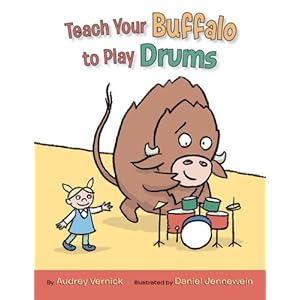
Interview with Children's Author, Audrey Vernick on her Book, Teach Your Buffalo To Play Drums
I see you’ve now written two books with buffaloes as your main characters. What attracted you to using buffaloes to tell your story?
I stumbled into the idea of a buffalo. One morning, I said something off the cuff to my son about how interested our dog seemed in some food he was bringing to school. I said that when he returned home from school, he should think about teaching his dog to bake. I thought for a minute and said, "You know, I should write a whole series: Teach Your Dog To Bake, Teach Your Cat to Surf, Teach Your Buffalo to Play Drums." Later that day, I wrote pretty much the whole buffalo drums book. Then there was no looking back.
I see the first book has a curriculum guide. What goes into doing a guide for a book?
I hired a genius, Natalie Lorenzi, to develop my curriculum guide. Both a children's writer and a teacher, Natalie has a unique gift for helping teachers work picture books into their curriculum and showing how to use them to reinforce core content standards.
Explain the concept of finding your inner buffalo?
It's a term I use for tapping into voice. Voice was always the thing that came naturally to me. (Plot is another story--that's my weakness.)
For the longest time, I couldn't get my voice into my picture-book writing. For me, the buffalo books were the breakthrough books; the moment when that happened. I know a woman who writes brilliant letters and email but when she tries to write fiction, something very formal keeps her from using that same, true voice. Finding your inner buffalo is about working through the difficulties until you find your true voice.
When did you start writing in trying to make it a career?
I never made a conscious decision about writing as a career. All the full-time jobs I held involved writing in some way--I worked as a publicist for a magazine, as a public information office at a college, a PR executive. All the while, I also wrote literary short fiction which, as we all know, is the opposite of having a career as a writer. When I stopped working full time to raise my children, the fiction writing life tucked nicely into that. And once I started writing children's books, I didn't write much more literary fiction. I enjoy writing children's books.
Tell me about what you cover in your school visits? How do you change it around for early grades to middle grades?
Though the examples I give are different for the younger and the middle grades, the message is pretty much the same. I talk about where writers find their ideas and where students might find theirs. We talk about how they can discover their own writing territories.
I tell them how many times my first published picture book was rejected, and point out that many people might have stopped sending it out after the 14th rejection or the 23rd, but that I'm glad I didn't, because it never would have been published.
The thing I repeat the most, because I really don't think kids have any idea, is that good writing doesn't often come in a first, second or third draft; good writing emerges from repeated rewriting.
What are some of the most interesting responses that you’ve received in your school visits?
I was asked if I've ever been so bored writing that I've actually fallen asleep. Young kids love to tell me which buffalo books I should write next, and once one suggests a sport, hands are raised until we get through EVERY sport. At my most recent visit, they tagged on extra words that cracked me up: How To Teach Your Buffalo How to Try on Clothes. Is Your Buffalo Going To Learn to Go To First Grade? And of course, Teach Your Buffalo How To Draw Himself.
At almost every visit, there's one kid who approaches me, usually after everyone else has left the room, to ask a more serious question about writing. I love those moments.
What are some other ways you promote your book? What would you say is your most effective promotion?
I don't think I can quantitatively say I have a most effective promotion, because what works one time usually doesn't work the next. I'm still figuring all this out. I'm working on developing my online presence. Part of that involved launching a new blog, http://literaryfriendships.wordpress.com. I also attend and present at a number of conferences for writers and educators and school media specialists.
What do you know now about writing books that you wished you had known earlier in your writing career?
I've learned how to get out of my own way. I spent so much time explaining--why my characters acted a certain way. Why it was okay that this one behaved this way when most rational people would behave the opposite way. Now I just state the truths as they serve my story without explanation. I wish I learned that one earlier.
What advice would you give to other writers for encouragement?
It's a very subjective business and it ONLY TAKES ONE. You only need one editor to fall in love with your work. I once submitted the same revision to two editors who liked a first-round submission but wanted some changes--they were both looking for similar revisions. When my agent submitted the revised manuscript, one editor said, "Wow, that's kind of a mess, isn't it?" And the other said, "Wow, you really hit it out of the park." And I was glad it only takes one.
I'd also mention, because I don't think it's acknowledged that often, that luck factors in a whole lot. When possible, have good luck, not bad.
That's all for our interview today. You can visit Audrey's website at http://audreyvernick.com/ and her blog at http://literaryfriendships.wordpress.com. Teach Your Buffalo To Play Drums will be released on June 28 and Audrey's debut middle-grade novel, Water Balloon, will be released on September 5.
Subscribe to:
Posts (Atom)