Blog Archive

Saturday, July 30, 2011

The Voices of Freedom


Today I am finishing the month for the Christian Writers Blog Chain. This month’s topic is freedom. It’s been covered quite well by the other bloggers, now it’s my turn.

Ever since I heard what the topic was, I can’t stop thinking about the lyrics from Me And Bobby McGee by Janis Joplin, “Freedom's just another word for nothing left to loose.” I’ve got to admit, I’ve never understood what the heck she meant by that verse. But then I’m not stoned to the point that everything and nothing makes sense at the same time. So let's get on to explaining the real meaning of freedom.

For this post I looked it up and got a couple of options from dictionaries to try to explain it better.

The power or right to act, speak, or think as one wants without hindrance or restraint…

The state of being free or at liberty rather than in confinement or under physical restraint…

The quality or state of being free: as the absence of necessity, coercion, or constraint in choice or action


Each definition seems to state that freedom means to act on your own, but then you have the other famous quote that says “Your freedom ends where it begins to impinge on my freedom.” So what exactly does freedom mean? I’ll let some other famous folk chime in with their thoughts…

Freedom is not the right to do what we want, but what we ought. Let us have faith that right makes might and in that faith let us; to the end, dare to do our duty as we understand it. Abraham Lincoln

They promise freedom, but they themselves are slaves of sin and corruption. For you are a slave to whatever controls you. 2 Peter 2:19 2 (New Living Translation)

True individual freedom cannot exist without economic security and independence. People who are hungry and out of a job are the stuff of which dictatorships are made. Franklin D. Roosevelt

O you give us freedom and joy in your presence Lord. In your presence we're free. O let us shout and dance and lift up our hands and sing cause we are free - Matt Redman – “Freedom song”

Man is born free, yet he is everywhere in chains. Jean Jacques Rousseau

Christ has set us free to live a free life. So take your stand! Never again let anyone put a harness of slavery on you. Galatians 5:1 (The Message)

The law will never make men free, it is men that have to make the law free. Henry David Thoreau

Freedom is, Life with a purpose to save. Freedom is,changing the world You made, Freedom is, knowing You Jesus Trent Cory “Freedom Song”

If a nation values anything more than freedom, it will lose its freedom: and the irony of it is that if it is comfort or money that it values more, it will lose that, too. W. Somerset Maugham

But take care that this liberty of yours does not somehow become a stumbling block to the weak. 1 Corinthians 8:9 (New American Standard Bible)

I disapprove of what you say, but I will defend to the death your right to say it. Voltaire

For you, brethren, were [indeed] called to freedom; only [do not let your] freedom be an incentive to your flesh and an opportunity or excuse [for selfishness], but through love you should serve one another. Galatians 5:13 (Amplified Bible)

Those who expect to reap the blessings of freedom must, like men, undergo the fatigue of supporting it. Thomas Paine

But the one who looks into the perfect law, the law of liberty, and perseveres, being no hearer who forgets but a doer who acts, he will be blessed in his doing. James 1:25 (English Standard Version)

Let your freedom arise, in our lives as we lift you up. Sing it out.Sing it out. Your freedom is here. Hillsong - Freedom Is Here

Tuesday, July 26, 2011

Interview with Mystery Writer, Sherban Young author of Dead Men Do Tell Tales

My interview today is with Sherban Young who writes mystery novels with a splash of humor and a mix of trivia. He is definitely not your standard mystery writer. I know once you read his ideas you will want to buy his books, so read on!

Prior to writing your current mystery books, what was your writing background?
I was a literature major in college (Loyola), but like most writers, I've been writing my whole life. Writing just becomes who you are.

My first major project came while I was at Loyola. My friend and I created a CD-ROM adventure game called Majestic. It was published and did quite respectably (well enough to justify all the attention we had diverted from our studies). My friend did the lion's share of the work - the graphics and programming - and I wrote the story and puzzles. Creating those puzzles would later inspire me to write Deadly Allusions (Dead Men Do Tell Tales).

What writers are your inspiration? Whose style, if any, do you think you emulate?
Without a doubt, P. G. Wodehouse is my largest inspiration. It always makes me think about a Bob Dylan quote I read once. He said the first time he heard Elvis sing he knew he'd be a musician himself. That's how it was for me and Wodehouse. The first time I read a Wodehouse novel, I knew I'd be a writer. Writing had interested me before then, but after that I knew.

You've written what I consider a unique style of mystery book which is both stories and games. One is Deadly Allusions and the other is Dead Men Do Tell Tales. What gave you the idea of doing these books?
Dead Men Do Tell Tales is the print edition of the Deadly Allusions e-book. My publisher changed the name. I'm working on getting the Allusions e-book title changed over to the Dead Men name - it's less confusing that way.

I originally wrote the Allusion puzzles for my website, something to get people to visit my page. The puzzles were pretty popular and I decided to turn them into a trio of iPhone apps: Deadly Allusions, Deadlier Allusions and Deadliest Allusions (12 puzzles in each).

I also brought out the complete collection (61 puzzles) in a Kindle edition. The apps were very well received by reviewers, and a few months later I was approached by Dover Books about selling them the print rights. They brought out the 61 puzzle collection last December under the new title Dead Men Do Tell Tales.

In each of these stories, you have a puzzle that the reader needs to figure out. How do you develop those puzzles? Could you give me a specific example of one of your word puzzles and how the reader would solve it?
When I first started writing mini-mysteries for my website, I tried to be more traditional with them. There was a mystery and a clue pointing to the culprit - something someone said or something out of place. I didn't like them. It just wasn't an approach that spoke to me.

I still liked the format, however, and so I had the idea of mixing trivia and knowledge into the mystery. I had always been fascinated by the old-fashioned mystery scenario, where a murder victim gives a clue with his dying breath. Agatha Christie's "Why Didn't They Ask Evans?" is a famous example of this. I also liked the more cryptic version, where the dying man, unable to speak, fumbles around and latches onto some telling clue - something that somehow identifies his killer.

I took that concept a step further. The mysteries in the collection feature a dying clue left behind by the murder victim. This clue always has some cultural or scholarly reference. An example I give in the introduction goes like this: Let's say the murder victim is a sports enthusiast. He's shot and with his last ounce of strength he grabs a Babe Ruth baseball card. We learn that one of his associates is named George Herman. George Herman, it will turn out, is the killer. (Babe Ruth's real name was George Herman Ruth.)

There are puzzles relating to literature, history, art, food, word origins, movies, sports etc. All the editions include hints, and I actually encourage readers to take their investigations online (or at least into a dictionary.) That is part of the fun - the sleuthing. It's also a great way to learn a new tidbit.

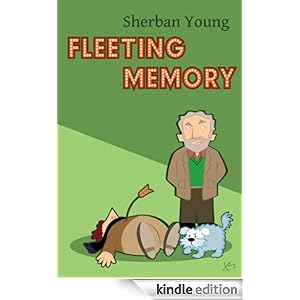
The puzzles are all done humorously. I like to call them murder-filled crosswords without the squares. My new novel, Fleeting Memory, features a Deadly Allusions style puzzle, which the characters are compelled to solve in the course of the book.

Amazon shows you as having 6 books “in print.” Three show as paperback and three in print? Why have you done three in e-book format only? I ask this as I don't read e-books as my favorite place to read is either in a Jacuzzi or a hot bath. Until they make a totally waterproof e-reader I probably never will.
I decided to mix things up with my two newest books - Fleeting Memory and Double Cover. I brought out the e-reader editions first, with the print editions to follow later this summer. Similar to how Dead Men came out.

Although I share your love of traditional print books, I think there's room in anybody's library for both. E-books have the advantage of a cheaper price (or should have), instant gratification and ultimate portability. Print books are more romantic. They look nice, they feel nice, they don't electrocute us in the bath. So I think it's wonderful for readers to have the option, depending on the book and the situation. I'm romantic and I love toys, so I love both mediums.

I see your first two books were published in 2000 and 2002 then the next one didn't come out until 2009. What did you learn about writing and publishing during that break in time?
I think what I learned most is flexibility. For a while, a long while, I was fixated on going the traditional route in publishing - that's the romantic side of me again. But the fact is, that traditional route is drying up. The industry is changing - for the better I'd say, but that wasn't always apparent to me. It is now.

As a percentage of writing time spent, how much time to do you spend on doing re-writes as opposed to the initial formulation of the story?
I spend a lot of time rewriting. It's essential. I think this is not only true at the end of a project but at the beginning. If you go into a project fully aware that you're going to rewrite it, you can approach it much more relaxed. The ideas flow.

Someone once described the process as writing to figure out what you're writing about. I think that's an apt way of putting it. You diddle around, get things moving a little, then you go back and start writing seriously. The serious writing is in the rewriting.

What is the best advice that you've been given about your writing?

Don't spend too much time on the opening, trying to make it perfect. You're just going to end up rewriting it anyway.

How have you found the time to write and do all the editing that goes with it?

I'm fortunate enough to have another source of income. I'm my own boss and can set my own schedule. As far as finding the time - I really don't do anything else. Wow, that's sad.

Are all your books self-published? Why did you switch from PublishAmerica to Dover Publications?
I don't think the term self-published applies as well as it once did. I prefer independent. When I first published with PublishAmerica they weren't even called PublishAmerica. They were America House then. After my first two books, it just wasn't a good fit anymore.

Dover Publications is a traditional publisher - and a very nice one. I enjoyed working with them. Their niche is game and hobby books. They do a lot of reprints, but they occasionally do originals, like mine. Dead Men Do Tell Tales is a beautiful edition.

After a lot of thought and examination of the market, I decided I'd bring out my two newest novels independently through Amazon. I feel I know enough about the industry now to devote my energy to marketing my own imprint of books, instead of using that same energy to find an agent/publisher; wait while that publisher publishes the book; and then finally - after years have passed - finally begin the marketing process.

It's a myth that the author can sit back and do nothing while the publisher makes him or her famous. Very few authors enjoy that luxury. After a book comes out, there is still a lot of work that needs to be done, and it just makes sense that I put that effort into me and my audience.

I see you have a phone app for Deadly Allusions. Did you design it? What goes into making an app?
I did design the apps. I had a little background in programming and with that, and a lot of help from Apple's sample code and various online tutorials, I was able to bring my mini-mysteries to the iPhone. The stories were the focus of designing the app.

What do you do to promote your books? For others who self-promote what ideas would you suggest someone avoid?
I'm no expert on promotion. I do know this, however - whether you go through a large publisher, a small press or you are your own press, book promotion is constant work. Blogs have emerged as a great venue. I think that's a win for everybody. When you market online, potential customers can sample or buy your book right then, while they're thinking about it. That's a great plus.

I'm not sure there is anything you need to avoid. Try a little of everything and then once you see what works, jump on it. Sort of like rewriting. Marketing and re-marketing.

What other books do you have in the process now?

I'm working on bringing out a new edition of The Five Star Detour, to go along with Fleeting Memory and Double Cover (they all relate to each other). I'm also in the process of revising another book - a separate detective novel, with just a hint of sci-fi.

If you would like to learn more about Sherban and his writing, here's three options to do just that...
www.mysterycaper.com,
www.goodreads.com/sherbanyoung
www.amazon.com/Sherban-Young/e/B0042I5KRE.

Friday, July 22, 2011

Can't Sleep So I Write

I haven't done this in a long time -- get up and write in the middle of the night. I really like the feel of doing this. I'm sitting alone in my home office with the only light on being the one from the computer screen. It's like I'm in my own little world. I have the window open to catch the light nighttime breezes and I can hear trucks rumbling by on the freeway some distance away as the night air seems to enhance sounds.

I've resisted the urge to do this nighttime writing for a few months even though my creative juices seem to flow in this quiet time. I've not done it because I've let writing rejections get to me. I let too many letters or emails that have said "thank you for your interest, but your writing doesn't fit our needs at this time" get to me. So I put much of my writing aside.

In the last writer's conference I attended, I asked an editor about those letters as I pitched a story one of their publications had previously rejected. She told me the story had promise, but that maybe the only reason the story was rejected was either they had just published something similar (it was a child's story about being a new kid in town)or maybe it just needed a little more tweaking. She even gave me some suggestions.

That gave me a little motivation so I sent out a couple of picture book stories to an agent I met at that same conference. I still haven't heard back from the agent. Then I let my other writing slip.

Today things changed.

My husband called me at work and let me know that two short pieces I had written were accepted and I received a check in the mail. I have no problem with him reading my mail especially when it's about my writing. He knows how to soften the blow when it's a rejection and how to encourage me when it's an acceptance.

I had sent these pieces out in November and had given up hope that they would be accepted. I thought it was just another silent rejection. Now I am energized again, but tired. I've now re-written a story to send out for an anthology. Now it's time for sleep once again.

Wednesday, July 20, 2011

Interview with Author, Scott Fields on "Dead Man Writing"

Today I'm doing something a little different. I am not talking about a book with an author, but rather his book blog. It's not your typical book blog where you see a picture of the book, how to buy it and arrange for book signings or speaking engagements. Rather it is a journal of the book. I'm not going to try to explain it, I'll let Scott do it himself.

You write a blog that you call a “public journal” of a novel. Can you explain what that means?
I journaled my way through my first novel in much the same way many writers do. I kept track of where I was in the story, which scenes I was writing, all that, but I also recorded my observations about the process itself. On a fundamental level, diaries and journals are basically people talking aloud to themselves. That’s probably why they translate so well to cinematic voice-overs. They’re natural narratives in action.

So for me the idea of a “public” journal was about taking the next logical step: talking aloud to myself while other people listened. The mundane information—number of words per day, little plot issues, things like that—wouldn’t be all that captivating, but I thought my observations concerning the craft might foster some interest. It’s amazing how common the act of writing is between writers. We may have disparate approaches to the craft, but in the end we’re all experiencing the same sort of thing. This is just another way to identify and establish some of those collective impressions.

What inspired you to write the story of Dead Man Writing?
It originated almost twenty years ago as an idea for a screenplay, back in the days when I wanted to direct movies. It struck me that all zombie stories are essentially the same: mindless, animated carcasses waddling around looking for living people to consume.


I thought . . . what if they weren’t mindless? If we can be led to believe a corpse could “rise” sufficiently to allow it to move, see, hear, feel hunger, and summon enough intelligence to realize a goal and seek its accomplishment—why not go the rest of the way? Why not allow these undead people to keep all their intelligence, and their personality to boot? What if, when they died, nothing inherent to who they are changed at all?

That was the seed of the idea. What inspired its actual writing were all the ideas that came out of that—how our world, and this society in particular, would react to such an event. What sort of medical, legal, and religious implications it would bring about. And, most of all, what it might be like to experience that kind of a change first-hand.

How long have you been blogging about your novel?

Six months now. I started Dead Man Writing on January 1st of this year (2011).

Would you give my readers a synopsis of your storyline for Dead Man Writing?

I’m always hesitant to give a full synopsis, in part because it doesn’t read as well in summary form and also because I don’t want to give anything away. Essentially, it’s the story of Stanley Leavitt, a sort of “everyman” who dies one morning before work, the latest victim in a worldwide pandemic of the living dead. He goes through all the medical conditioning that will allow him to remain mobile and prevent premature decomposition.

For a while, he tries to continue his “life” as it’s been to this point, not wanting to lose what he’s made for himself. When this becomes impossible, he settles into an existence more common to those who’ve passed without passing on. Eventually he’s forced to live in a secluded community with others like himself.

It’s really kind of a “docudrama” in the sense that a great deal of the story consists of his observations of events in the world that result from this pandemic. It’s his wry, dry sense of humor that keeps the account from becoming too heavy, maudlin, or dull.

On your blog there was a comment about a boxed game that you may have produced. Could you tell me a little about that?
For ten years now, I’ve been associated with Adventures For Christ, a group tasked with the revision, marketing, and distribution of the Christian role-playing game DragonRaid. It’s an allegorical representation of the Christian life, cast as a fantasy adventure. That’s what my last book dealt with—it was the first approved novelization of the game and its setting, and the initial volume in a trilogy.

I’m taking a break from that project to pound out Dead Men Walking, but I’m still very interested in finishing it someday. The whole DragonRaid framework is a phenomenal metaphor, and wonderfully useful for teaching biblical principles in a practical way, especially for teens.

You say your novel is a satire. I’ve often read that is one of the hardest stories to write as you have to know just how to blend criticism with humor to make a point. What have you learned about writing satire during this process?
I think satire can often be as simple as merely observing your fellow man and telling the truth about him. The more truthful you’re willing to be, the sharper the “edge” of your satire. We humans have an amazing tendency to parody ourselves, even in those moments when we’re trying to be most serious.

The hardest aspect, really, is deciding how much to say, how far to take things, where to draw the line. When you’re dealing with death there’s always a good chance of offending someone who may have experienced a recent loss. I’m doing my best to steer clear of material that crosses that sort of boundary. If I’m not careful, it could also get to be too creepy or vulgar in places. I am, after all, populating my story with walking cadavers.

So I’d say the toughest part about writing satire is trying to make wise decisions about what not to say. As far as spoofing humanity goes . . . that’s the stuff that comes pretty easy.

How has writing this blog helped you progress with your actual book?
It’s provided some good motivation—if I’m not writing the book, I won’t have much to blog about—but I have to confess there have been times when the blog’s risen above the book as an immediate priority. There’s a balance that needs to be there, obviously, and I can’t say I’ve quite found it yet. The blog’s been a great tool. It’s become a symbiotic part of the process. I just have to be careful that it doesn’t take over the process.

You say that you don’t adhere to the writing adage of fiction that says everything you write must advance the story. So how do you work it together so it just doesn’t seem like misplaced meanderings?
I definitely believe advancing the story is an important element; I just don’t think it’s the only element. Some of the best books I’ve ever read were great not simply because the author presented an absorbing story, but because he or she wrote it so well. We talk about actors who could win an Oscar for reading the phone book. I think the best writers could win a Pulitzer just by rewriting the Yellow Pages and adding their own voice to it.

I often refer to Mark Twain’s book The Innocents Abroad. It’s an anomaly in today’s literary landscape, because there aren’t any distinguishable characters, no back story, no plot, no twists or surprises, none of the things that have become so vital to fiction in today’s marketplace. It’s not much more than an invented travelogue. But it’s eminently readable, because Twain was a master writer. We turn the pages not to find out what happens next, but to find out what he’ll say next.

Sometimes I wonder if contemporary literature has grown so dependent on the sanctity of story that many writers have come to use it as a crutch (in some cases, even a stretcher). They learn all about plot points and structure and characterization, and they don’t give nearly as much attention to sharpening the craft itself. I like compelling stories and well-drawn characters, to be sure . . . but neither is as uniquely thrilling to the mind as a well-turned phrase or brilliantly composed stretch of dialogue.

What do you want people to take away from reading the book once it is published?
That’s impossible to dictate. I hope they’re intrigued by an interesting premise, of course, and that it leads them down some avenues of thought they’d never explored before. More than that, however, I would hope they’ll be challenged to think about the nature of life and death, both on a worldly level (how we deal with these things culturally, politically, and religiously) and on a spiritual level (what do life and death mean when viewed from the perspective of eternity?). Where they go with it from there will be up to them.

I hope you're intrigued enough to want to learn more about these nearly dead creations of Scott's. If you want to keep up to date on the story and his blog, go to http://writingdead.com/

Monday, July 18, 2011

Getting Creative with Marketing By Carol Peterson


Today I'm handing over my blog to fellow writer, Carol Peterson let her talk about her ideas on marketing. I did an earlier interview with her if you would like to read that you can click here. Now here are Carol's thoughts...

When we’re thinking about out-of-the-box marketing, we sometimes need to remember that when we’re inside the box, we’re in there all by ourselves. One great way to market is to get out of the box and join up with others who are struggling with the same problems you are.

There’s creativity in numbers. There’s also courage.

Maybe you’re like me: you’ve got a couple of published books. A publisher saw enough value in your concept to pay the thousands of bucks to put it in print and slap their name on it. But still, you are more comfortable sitting in the corner of your office, tapping out the zillion words that will become your next great book. You feel uncomfortable tooting your own horn.


Maybe what you need is to become part of an orchestra and let the sounds of other people’s horns blend with yours. Put into my personal perspective, I may not be able to promote my own books without feeling self conscious, but I can certainly tell the world about my friends’ books.

And as I am busy promoting my friends’ books, they’re happily promoting mine.

Or perhaps you don’t mind tooting your own horn; but your horn is brand new and you’ve never had any horn-tooting lessons.

If you join a music class, you’ll be able to learn from others who have expertise in horn tooting. Or maybe they have a special tooting style that can complement your fabulous skill in horn polishing.

In other words, maybe you need to look into joint marketing.

Before you get started on any type of joint marketing, you first need to know people who are like-minded writers. This is the easy part. Join with established writing organizations, such as SCBWI. Attend conferences and follow on list serves and forums. Get to know people and let other people get to know you.

Then send out feelers to see if others would be interested in joining up with you in a cooperative marketing venture. More than likely you'll find that there are loads of folks out there just like you--needing a push to get them started or keep them going in the marketing game.

When you settle on a group of friends and a type of joint marketing you’d like to embark upon, make sure you each understand what you’re trying to do and what each person is committing to do. Write it out so there is no confusion and so there is commitment. Keep it focused and make it clear.

What type of joint marketing can you do? The following is the first in a series of ideas for possible joint marketing ventures.

EVENTS

If there is a local event coming up, share an author’s table and share the expense. Recognize that one or all of you may not sell a single book. But you will be there--stepping out of your comfort zone and gaining experience in being in the spotlight.

Foster an “one for all” mentality. If your friends all sell books but you don’t, rejoice in their success. You might be the big seller at the next event.

If you have ties with other writers in your genre who may not live in your geographical area, consider sending each other copies of books to sell at events. My friend, Linda Yezak recently did this at a festival she participated in. She set a pile of books written by her friends on her table and sold them along with her own. (Go to her site and see how she did it.)

If nothing else, offer bookmarks or postcards touting your friends’ books at your event table. And ask that your friends do the same whenever they are at an event.

Brainstorm events locally: city events; library events, school events; cultural festivals; church events; Chamber of Commerce meetings; alumni open houses. Several of us UC Davis alumni are also published children’s authors. Several years, we participated in the annual alumni day, sharing the stage and the fun by interacting with children and offering our books for sale.

Good ideas, Carol. Thanks for your input. If you'd like to read more on Carol's thoughts on writing, go to http://www.carolpetersonauthor.com/

Tuesday, July 12, 2011

Interview with Kay Presto -- Sport Car Enthusiast, Author, Photographer and Sportscaster

Kay Presto has been involved with auto racing for decades whether it's been Formula 1, NASCAR or the Indy Racing League. She's also been involved with AMA Motorcycle and Motocross. She's been a photographer, sportcaster, producer and writer. Her writing credits include everything from major racing magazines to a racing photography coffee table book and stories in Chicken Soup for the Soul: NASCAR. She has won over 60 awards for television and radio broadcasting, photography and journalism. She's a wealth of information on racing, but let's learn more about who she is and how she got started.

How did you get started in writing for car racing?
In 1971, my daughter Deb was chosen as Queen of our new local Ontario Motor Speedway here in California. I had just quit work with an idea to write a book to help working mothers like myself, and she would invite me to the track to help her with her sash and other things. While there, I would also sit in the bleachers and ask questions of others around me.

I took notes so I could understand the IndyCar (USAC in those days) race coming up, and the sports editor of the local newspaper, the Daily Report, asked me what I was doing. When I told him, he said, "Write about the races, and I'll publish your articles and pay you." I told him I knew nothing about racing. He said, "Write it from your viewpoint," so I took him up on it and started learning about the races and drivers and submitting them for publication. After a motorcycle race at the track, I even found a "scoop" that the other reporters missed.

How did you add taking photos to go with your stories?
As I wrote stories for the newspaper, I would see the perfect photo opportunity to go with it, but there was often no cameraman from the newspaper to take the photo. I did not own a 35mm camera, so I bought a new one. It was a Minolta camera with two telephoto lenses. There were no instructions with it, so I went to our local camera shop and they showed me how to load the film, attach the lenses, and focus.

The newspaper began to buy my photos to go with my articles, so I became a professional photographer without ever having a lesson. I soon purchased two more Minoltas, with various lenses, like a fish-eye and longer telephotos, so I could create more unique photos. That way I could have film ready at all times, so I did not have to stop and re-load, and could get close-ups and long shots. I still have all that equipment today, in perfect condition.

What tips do you have for those who might want to add photos to their stories?
I recommend taking a good photo class in the very beginning. Many community colleges provide these classes. Learn composition, unique camera angles, use of light, flash, etc. With the new 35mm digital cameras, you get higher pixels for sharper photos, and the cameras even include video.

I did not take a class until several years after I started doing photography. By that time I was doing photo-journalism for national magazines, and was not pleased with the prints the local labs were turning out for me, so I took photography courses and learned to do my own in their photo lab. I'm currently using a new high-tech Canon T2i digital camera with various Canon SLR telephoto lenses that feature Image Stabilizing.


How has your writing and photos for racing evolved over the years?
Since I photograph race cars, I have to catch them racing at high speeds, which seem to get faster every year -- as much as 330 miles per hour in drag racing -- so I must "pan" smoothly (move the pre-focused lens along with the speed and direction of the car as I snap the photo) with one flowing movement to get a nice sharp image of the car and its' tiny sponsor labels. You can see some of my photos in the Gallery section of my racing website -- www.carsandcompetition.com.

In writing my articles, the rules in racing, and the race details, change very often so I have to keep up with new information all the time. That, and doing the technical articles is a challenge -- but an interesting one -- to write accurately about all the new changes to the cars, etc. I learn new things every day, and also love to do in-depth features about the drivers and their crews, so it never gets stale or boring. Definitely keeps me on my toes.

Give me an example of an "aha" moment you had in your writing that inspired you?
When the drivers told me that I asked questions that delved into their true personalities. They said I asked them questions that no one else did, and they appreciated that. They also thanked me for not misquoting them, and for not putting my own "spin" into the story instead of theirs.

For that reason, I've received many letters of thanks from drivers and teams, even from Janet Guthrie, the first woman ever to race in the Indianapolis 500. In her letter she said my article about her "set some sort of record for accurate quotes, and certainly put it all together beautifully. I was really excited about it." I took that as the ultimate compliment.

A famous drag racer sent me a commemorative cup with his team logo and a thank-you note. I treasure all those letters and that cup, as that lets me know I'm doing my job to the very best of my ability.

What tips would you give to other writers in doing interviews?
First, know a lot about your subject before you interview them. Get background facts, find out their interests, what makes them come alive, search for those little nuances that make them "tick." Then create interesting questions to ask them about all that.

Try to create an article that delves into the psyche of that person, what makes them special in their work and their lives, what makes them different from anyone else. Show them that you really care about doing a unique story about them, and be courteous during your interview. You can get real gems of usable quotes that way. Also -- tape-record your entire interview, and don't distort their quotes. One of the comments I get from the people I interview is that they appreciate my doing articles about them because I never -- repeat never -- misquote them.

Be sure to have fresh batteries in your tape-recorder, and plenty of audio tape, or you can also use the new electronic tape-recorders. When I started forty years ago, I was the only reporter using a tape-recorder; the custom was to write notes on notepads. Now the majority of journalists use tape-recorders, too..

You've won over 60 awards now and counting. Is there any one award that means more to you than any others?
Yes, I received it many years ago, when I was still new to the auto racing profession. I had written a magazine article, with extensive quotes from various race sponsors, on what qualities they look for in a driver before they sponsor them. I got in-depth quotes from team owners like Roger Penske and many sponsors.

That article won the special national Sears award, which was new that year. When I accepted it, I realized that I had won over all the men, who were all excellent at their craft. That really meant a lot to me, especially when the official from Sears personally presented the plaque to me at their company banquet. That was the only year that contest was held, so that award is truly one-of-a-kind.

You've written about racing for years, now you are drawn to writing for children. Tell me how that began?
While raising my four children, I would make up stories while I played with them, dressed them, fed them, just to make them laugh, and create some fun. But I just wrote those down and kept them in a drawer. I had already been published in a Catholic newspaper when I was in sixth grade, but never considered myself a writer, as I've never had formal journalism training of any kind, so I did not consider having those stories published.

Then -- about ten years ago -- I was sitting on the couch, a children's story idea suddenly came to me, I rushed and typed it into my computer in about ten minutes, then realized I had a complete story, written with a full plot and everything. This continued to happen, until I had ten stories, and realized that each one had a great moral woven into the story.

I always say I did not write these stories; they came from a higher power, as they came in such a rush. Finally, I began to realize they had commercial potential as children's books, and was advised to join SCBWI (Society of Children's Book Writers and Illustrators), which is how I found our critique group, CHAIRS. CHAIRS has been a great help to me, as children's book publishing is completely different from magazine writing.

This interview could go on and on but I will end now. If you would like to contact Kay Presto, she can be reached at: prestoprod6@yahoo.com.

Saturday, July 9, 2011

Getting an Agent or Publisher's Attention

This post is going to be short and sweet as it fits the topic which is doing the quick "elevator pitch" to an agent or publisher. How do you describe your 50,000 to 150,000 word opus in just a sentence or two? Can it really be done. Of course the answer is yes. But what is the key to doing it?

I've read many different thoughts on this, but I just read an article that really hit the mark for me. When you are talking about your story make sure you highlight an event that happens to people the reader can care about.

Here's an example that was given of using a ho-hum pitch and turning it into something that pops...
SNORE:“A burning skyscraper threatens the lives of thousands, including a pregnant woman trapped on the top floor.”
THAT ROCKS: “A former firefighter, fired for insubordination, races to save the lives of thousands of people in a burning skyscraper, including his pregnant wife.”

This article came from Writer's Digest. If you're a writer, it really makes sense to subscribe to this service. I'm not suggesting you subscribe to the paid service, unless you have lots of money, just the free one. They may send you a lot of junk email, but frequently they throw in a gem like this. If you'd like to read more on this, click here.

Tuesday, July 5, 2011

Interview with Terrie Thorpe

How did you come up with the idea of your current book?
Don’t let the title fool you, I have no doubt of my salvation, but more of a play on words to entice others who might have questions. Everyone loves real life stories. I have included many trials and experiences that helped to shape my relationship with Jesus. The church is full of people who don’t know much about salvation or why Jesus saved them.

In the early spring of 2003, I had completed a study similar to Rick Warren’s “Purpose Driven Life.” Something was stirring in me. I knew the Lord had something He wanted me to do - I began praying. Certain concepts started coming to my mind, “Why aren’t more people interested in Jesus?” Those thoughts evolved into fears people have. Before I knew it, I was sketching out an outline of top ten fears of new Christians. Originally, I planned to call it; “Ten Fears of New Christian’s” later changed it to “Am I Really Saved- Answering Questions of Christians.

I drew from my own experiences. None of my family professed faith in Jesus. The first few years of recommitting my life to Jesus, I struggled. I made so many mistakes; I had no mentor or anyone to help me. I suffered embarrassment from asking questions from the wrong Christians, I did not want anyone else to feel that way.

Could you give a short synopsis on the story for my readers?

I designed this book from a prospective of one Christian helping another. Primarily for new Christians or those who have lost their joy. It’s not a “preachy” kind of book, but more like I’ve “been there – done that.” My hope is that people will get excited about the Word of God, discovering the wonder of His love.

There are over sixty-one subjects addressed from: Basics of receiving Jesus as Savior, Assurance of Salvation, Learning to obey, Baptism, Faith, The Bible; Prayer, Grace, the Devil, Losing Salvation, Spiritual Warfare, Church, Tithing, Spiritual Gifts, Your Ministry, Heaven Bound, just to name a few. I’ve used many scriptures and prayers throughout each section.

Prior to writing your current book, what other types of publishing credits did you have?
I have written many things over the course of thirty years, but never really kept a resume. These are my current publishing credits:

Over 70 posts written for my blog Light for the Journey-Teaching Ministry( 2009- current); Thought for the Day website articles (2008-2010); Half dozen plays and skits children’s ministry (1998-2005); Several articles in ACW bi-monthly newsletters (2009-2010); Article “Faith in Financial Crisis” Jobs to Joy website (2010); Poem in “Wings of Night” anthology (1998), Several short stories published professional organization’s newsletter.

Prior to self-publishing, did you contact any other publishers to produce your book?
Yes, the traditional route was the route I knew. The genre I write is very small. Not many publishers are interested in you unless your name is Stormie Omartian, Joyce Meyer or Beth Moore. They are not willing to take a chance on someone with limited experience or leader of a large ministry.

I discovered paid membership listing site called, “Christian Manuscript Submission” where many well known publishers supposedly browse for new manuscripts. I received only contacts from vanity publishers, but nothing from traditional houses.

What was your process in choosing a company to publish your book?
While I was disappointed that a big publisher did break down the door to sign me, I asked friends who chose the self-pub route, who they would recommend. I spent about a week on the web researching vanity and publish on demand [POD] companies. There is a lot of information available, this is a growing market. I read thousands of posts from current and past customers of certain companies. I was looking for customer satisfaction and value.

For those who have never self-published a book, can you tell us what self-publishing entails? Hang on for a wild ride, do your homework and don’t settle for the first company that is interested in publishing you. It is a “win-win” for them because you front all the money, manuscript, marketing, time and talent necessary, they just offer some advice and print your book.

Many unscrupulous characters are scanning the internet and websites looking for people who are desperate to get published. They have one thing in mind get your payment and leave you with a pile of books.

This is a broadening frontier with the author in the driver’s seat. Because the publishing industry is changing, many of these self-publishing companies offer a full menu of services for fees. A few offer a complete “do it yourself” format, which is virtually free. Watch out for POD [print on demand] companies that have a minimum run size. The company I use will print one, a thousand, or how many a customer purchases.

What do you do to promote your book?
I have worked on building a platform, but I wish I had put more time into marketing research. Currently I have, an author’s website, Facebook page, networking with my friends and neighbors, writer’s groups. Trying the social networks shelfari, author central [Amazon affiliate] and writer’s websites, hoping to generate as much exposure as I can on a limited budget.

What do you know now about getting published that you wished you had known earlier?

It’s easier to write and edit than to market your work. The most helpful advice I could give is start building a platform early. Get known by the people you hope will buy your work. Get involved with writer’s groups and go to seminars. Know your genre and follow the trends.

Be patient, which is especially hard for me. This has been a wonderful experience and I know I am fulfilling God’s plan for me, which adds confidence that my writing will be successful.

What advice would you give someone who wants to write and get published?
Follow your heart. There is a reason you have that dream. Learn as much as you can about your market and start testing the waters. Don’t be afraid of what someone might say, knowing that you are a writer-write!

That's it for today's interview. If you would like to know more about Terrie and her writing, follow up with these links:

www.4everhischild-tathorpe.blogspot.com
www.godhasbeenfaithfultome.blogspot.com
http://www.facebook.com/pages/Terrie-Thorpe-Christian-Writer/173950515969133
Website: www.TerrieThorpeWrites.com

Sunday, July 3, 2011

On Freedom and Liberty

As we celebrate our independence as a nation this 4th of July, I thought it might be interesting to shed some light on that liberty and what it means. The following is a series of quotes by those who fought for our independence to be a nation and those who still believe in that independent spirit to lead our country forward. In researching these quotes, I was reminded of what it took to gain our freedom and what we need to do to continue to value that freedom. I hope it will inspire you to value or freedom and liberty as well.

On the question of liberty, as a principle, we are not what we have been. When we were the political slaves of King George, and wanted to be free, we called the maxim that "all men are created equal" a self-evident truth, but now when we have grown fat, and have lost all dread of being slaves ourselves, we have become so greedy to be masters that we call the same maxim "a self-evident lie." The Fourth of July has not quite dwindled away; it is still a great day--for burning fire-crackers!
ABRAHAM LINCOLN, letter to George Robertson, Aug. 15, 1855

The Revolution was effected before the War commenced. The Revolution was in the minds and hearts of the people; a change in their religious sentiments of their duties and obligations ... This radical change in the principles, opinions, sentiments, and affections of the people, was the real American Revolution.
JOHN ADAMS

It does not require a majority to prevail, but rather an irate, tireless minority keen to set brush fires in people's minds...
SAMUEL ADAMS

Any society that would give up a little liberty to gain a little security will deserve neither and lose both. BENJAMIN FRANKLIN

God who gave us life gave us liberty. Can the liberties of a nation be secure when we have removed a conviction that these liberties are the gift of God?
THOMAS JEFFERSON

No people will tamely surrender their Liberties, nor can any be easily subdued, when knowledge is diffused and Virtue is preserved. On the Contrary, when People are universally ignorant, and debauched in their Manners, they will sink under their own weight without the Aid of foreign Invaders...
SAMUEL ADAMS

And that the said Constitution be never construed to authorize Congress to infringe the just liberty of the press, or the rights of conscience; or to prevent the people of the United States, who are peaceable citizens, from keeping their own arms; or to raise standing armies, unless necessary for the defense of the United States, or of some one or more of them; or to prevent the people from petitioning, in a peaceable and orderly manner, the federal legislature, for a redress of grievances; or to subject the people to unreasonable searches and seizures of their persons, papers or possessions. SAMUEL ADAMS

Good intentions will always be pleaded for any assumption of power. The Constitution was made to guard the people against the dangers of good intentions. There are men in all ages who mean to govern well, but they mean to govern. They promise to be good masters, but they mean to be masters.
DANIEL WEBSTER

And that the said Constitution be never construed to authorize Congress to infringe the just liberty of the press, or the rights of conscience; or to prevent the people of the United States, who are peaceable citizens, from keeping their own arms; or to raise standing armies, unless necessary for the defense of the United States, or of some one or more of them; or to prevent the people from petitioning, in a peaceable and orderly manner, the federal legislature, for a redress of grievances; or to subject the people to unreasonable searches and seizures of their persons, papers or possessions. SAMUEL ADAMS

"...the opinion which gives to the judges the right to decide what laws are constitutional and what not, not only for themselves in their own sphere of action but for the Legislature and Executive also in their spheres, would make the Judiciary a despotic branch."
THOMAS JEFFERSON

A right, such as a right to free speech, imposes no obligation on another, except that of non-interference. The so-called right to health care, food or housing, whether a person can afford it or not, is something entirely different; it does impose an obligation on another. If one person has a right to something he didn’t produce, simultaneously and of necessity it means that some other person does not have right to something he did produce. That’s because, since there’s no Santa Claus or Tooth Fairy, in order for government to give one American a dollar, it must, through intimidation, threats and coercion, confiscate that dollar from some other American.
Walter Williams, economist