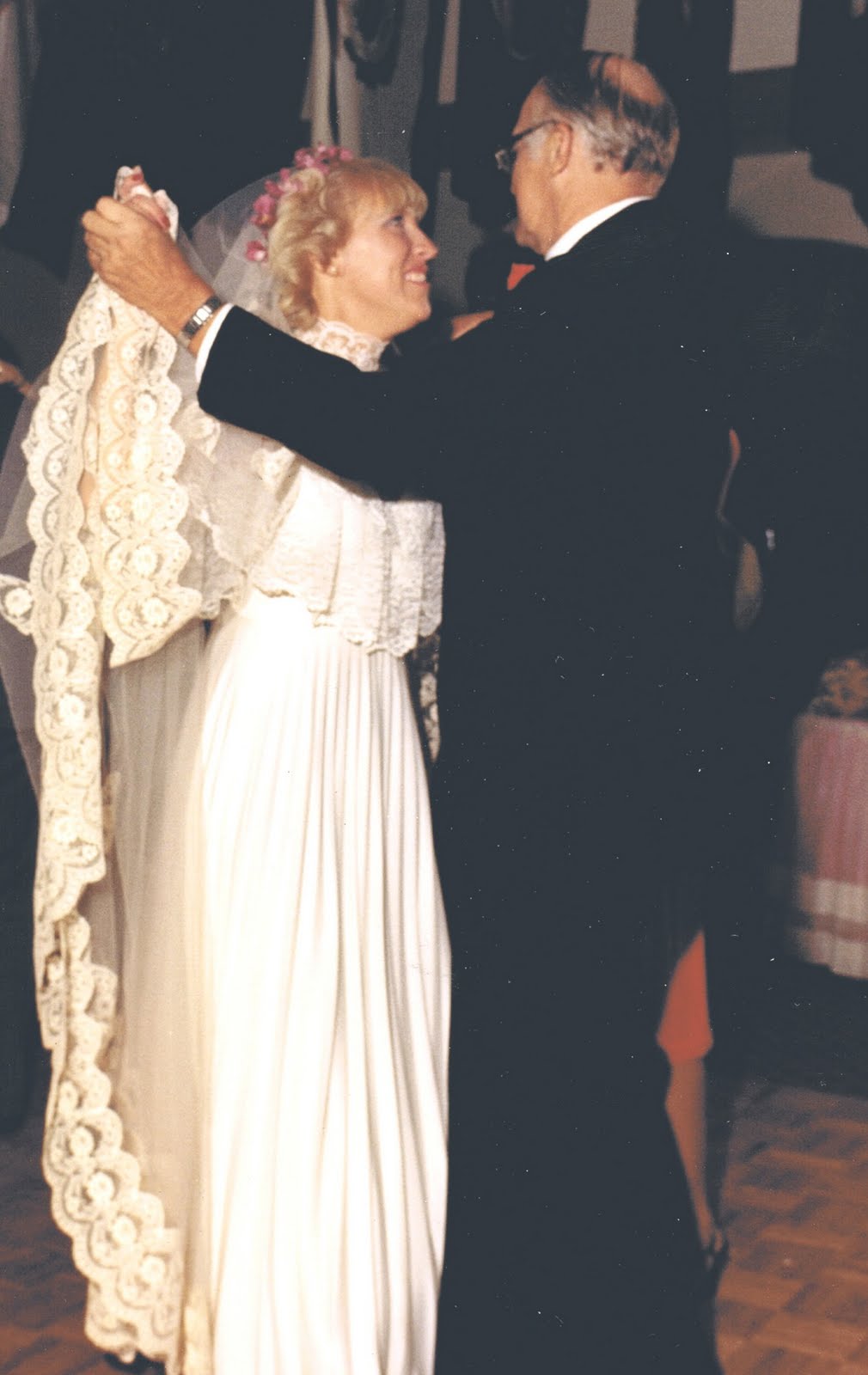
Donna wrote her first poem as a Mother’s Day gift to her mother and has been writing ever since. At the age of 20, Donna started work at a publishing house in Kansas City. Her on-the-job training there taught her the nuts and bolts about publishing. She learned why books are rejected or accepted and what happens once a manuscript is accepted. On the editing side she learned how to verify quotations for accuracy and how to obtain permissions and copyrights for their use. This was great training for her own career in writing.
You’ve written books on a variety of subjects to include a puzzle book, devotionals, textbooks and how to guides for businesses and writers. Do you have a favorite style?
I enjoy devotional books the most. My first book was a puzzle book, then the next four were devotional books for Sunday School teachers, children, teens, and women. I've since finished (but not sold) devotional books for writers, office workers, hymn lovers, and on Isaiah 40:31.
When was the first time you got paid for your writing?
I sold my first poem at the age of 14 to our denominational teen magazine for $1.40. The second one was a short story to a Sunday school paper at the age of 18 for $12. (Sold it as a reprint years later for $60!).
You’ve done numerous works for Standard Publishing. How did you first get your foot in the door?
In the early 1970s I sent 30 puzzles I had written for children's church to one of their Sunday school take-home paper editors, and she wrote back that they wanted to put it in a book. It was a small book, sold for 29 cents, and before it went out of print, it sold over 140,000 copies. (I sold it to them outright for $125.)
Then I sent them some newspaper devotional columns I had written and suggested a devotional book for women. They were just starting a new series called The Fountain Series which they said that book would fit into, and asked if I would also do one for children and teens.
What is the best writing guidance an editor has given you?
You don't have to write what you know about; write what you'd LIKE to know about, what you're interested in.
You have two books entitled Step in the Write Direction with one being called the Complete How-to Guide and the other as a Student Edition. Why did you feel the need to write two different editions instead of just one?
When the first one came out, people started asking me if it would be appropriate for younger people, especially teens. So I developed this student one, specifically with home schoolers and Christian schools in mind as there are writing assignments all the way through. One California classroom "test drove" it for me. I sent them each chapter as I finished it and they gave me hints. (For example, they didn't know what a water bed or a CB radio was.)
With so many how to books on writing out there what makes yours different?
As the title says, I think it is COMPLETE. It includes hints on every genre of writing, other ways for a writer to make money (proofreading, editing, teaching, etc.), collaborating with another writer, preparing a manuscript for publication, editing hints, where to get ideas, plus how to handle writer's block, rejection, and time management.
The income tax section alone is worth the price of the book (I did taxes for 18 years). The section giving 15 hints on using Scripture in your writing is also useful, as well as 20 pages of guidelines from several devotional booklets. Oh yes, there's also a section on starting and running a writers' group.
What does it really take to make a career in writing that pays well?
I think to support yourself by writing, you'd have to have royalties coming in from several books. I haven't made as much by actual writing as I have by proofreading, editing, and teaching at conferences--other people's, as well as my one- and two-day ones I hold across the U.S.
You’re currently putting together an anthology of Christmas stories. How did that come about? Was this something you pitched to an editor?
I had submitted an Advent book to a Canadian publisher last summer. He turned it down but kept my name. When he came up with the idea of a Christmas anthology, he thought of me. I sent out a call for submission via my e-mail list and on Facebook. I ended up with 3 times more than we could use, so I had to select what we could use, write acceptance and rejection letters (no fun on the latter), then do all the editing.
I sent in the finished manuscript last week. Now we're talking about doing one for women--stories and recipes from or about mothers and grandmothers.
How do you promote your books? What has worked best for you?
That's my weakness--mostly because of the time elements. I not only do editing and proofing (usually with tight deadlines), but I take care of a disabled husband who's had 4 heart surgeries, diabetes, a broken hip, 4 fractured vertebrae, etc. I've had a couple of book signings and some sales through Facebook and blogs like yours, but mostly they're at the writing workshops I hold. (I actually have only 3 books in print right now--Healing in God's Time, the story of my songwriter nephew's healing, and my two writing books.) Oh, yes and two cookbooks.
What book has been your best selling?
The cookbooks, and also before I wrote the writing book, I had a series of self-published booklets on specific subjects--poetry, selling what you write, writing devotionals, writing and selling your first book, starting and running a Christian writers group, and editing hints. Except for the writers' group one, they sold for $5 apiece and I sold a lot of these through the years.
The only one of those I still sell is the one on starting and running a Christian writers group. That also has a section on critiquing hints and one on planning a conference. However, the Step in the Write Direction is selling steadily at the present time.
What do you know now about getting published that you wished you had known earlier in your writing career?
Not to take a rejection personally. There are many reasons manuscripts are rejected. The other thing is--I began writing when I was 9. I didn't know until the first conference I attended in 1980 that you could sell reprints. I had sold 200 manuscripts up until that point, so it opened up a whole new world to me.
Let’s end with another book that is in the works, the one about letting go. Tell me about that.
"The Freedom of Letting Go" book. I'm very excited about this. It took me 11 years to let go of my mother after she died, then one day I realized it wasn't just letting go of her, but the whole principle of letting go. This book includes chapters on letting go of: grief, failure, success, possessions, your children, your youth, people who hurt you, health issues, guilt, worry, doubt, fear, then the last chapter is "The Land Beyond Letting Go."
It will be released May 1, 2012. I'm thrilled now to have something to offer people when I speak on this topic.
If you would like to know more about Donna and her writing or to buy her books, you can email her at dgood648@aol.com or visit her web site at www.thewritersfriend.net
For those who love to write and read about the craft of writing and publishing. Read, study, research, write, rewrite, review, submit, submit, submit...Publish! Then do it all over again.
Tuesday, August 30, 2011
Tuesday, August 23, 2011
Interview with Lauren Carr, Mystery Writer and Playwright
Lauren Carr fell in love with mysteries when her mother read Perry Mason to her at bedtime. Living in Southern California I've been to the building where the stories were written and have probably seen all the Perry Mason re-runs. So I knew I would enjoy doing this interview. The first installment of her Joshua Thornton mysteries, A Small Case of Murder was a finalist for the Independent Publisher Book Award. She is also an active member and director of the Association of Independent Authors. Now let's get on to the interview and see what moves her to write.
Tell me about your writing background prior to writing mystery novels. Your bio notes say you were an editor and you wrote mysteries for television and stage. Can you expound on that?
While I was working as an editor with the federal government, I checked a book about how to write a screenplay out of the library. Using the instructions in this book, I wrote a screenplay and sent it to a literary agent listed in the back of the book. This was the early 1990’s before Internet. Well, a couple of weeks later, I had an agent. Less than a month after that, my screenplay was at Universal Studios with an actor (who I will not name since he dumped me) and a producer who want to make my screenplay into a pilot for a television series.
I’m thinking, “This is easy.”
After I spent six weeks rewriting the script to move the setting to Boston, the actor dropped the project for a better offer elsewhere; and the project collapsed since he was the one who wanted to do it. My agent shopped the screenplay elsewhere and said everyone loved the script, but no one wanted to take a chance on an unknown. I dropped the agent when I began writing books because he didn’t handle novels.
What about your playwriting? Are you still involved in that?
This spring, I wrote a stage play entitled Mystery on Sugar Island, a hilarious comedy about a group of castaways whose island is invaded by pirates. When one of the pirates is killed, their skipper and his wife are accused of the murder. They have to find the real killer or be taken out to sea to be used as shark bait. My dinner theaters have a different ending every night. Someone who sees it the first night can’t ruin it for those who see it the last night. The play was a hit and sold two out of three nights.
My first play was called The Mystery of Pirate’s Cove, set at a seashore resort. This play came about when I received a phone call one night from a friend. She had received the script for a play that she was directing and hated it. So she asked if I could write a play for her. She had the actors, many of whom I knew. It needed to have a pirate theme and, “Oh, yeah, rehearsals start this Saturday.” The call was Tuesday night. I wrote the play and rehearsals started on time.
Next year, we will be performing a period piece, The Mysterious Disappearance of Uncle Eugene, set in a small town during the 1940’s.
Your bio also says you are a guest speaker? What topics do you normally cover?
I do speaking engagements for writing groups, book clubs, school classes, libraries, conferences and groups about writing and publishing. This fall I will be teaching two courses on Book Writing for our adult community education.
When did you write your first novel? How many drafts did it take?
I wrote A Small Case of Murder after giving up my writing career to be a stay-at-home mom. That lasted six months. Writers have to write the way singers have to sing. Even if a singer isn’t singing on stage, they’re singing in the shower.
It is the same way for a writer. I started writing A Small Case of Murder in 1999. After writing the rough draft I had let it sit for at least a year before picking it up and revising it, letting it rest for months between drafts. I went through several drafts before having it edited by the son of a friend of my mother. This was a mistake. I was trying to cut corners and used someone who had never edited a book before.
I have revised A Small Case of Murder to correct mistakes missed by the editor before re-releasing it this April.
Which of your books is traditionally published?
My second book, A Reunion to Die For, was picked up by a traditional publisher after A Small Case of Murder was named a finalist for the Independent Publisher Book Award. I was honored that it was released in hardback, but quickly discovered that it’s very hard to sell a $26 book when you’re an unknown.
My next book would have to come out in paperback. Yet, my traditional publisher had done away with their paperback division. They were willing to pick up It’s Murder, My Son, but I declined.
By the time I had found another traditional publisher who could publish It’s Murder, My Son in trade paperback, I was already looking at CreateSpace, which is an Amazon company. Since I had self-published my first book, A Small Case of Murder, with iUniverse, I had the experience of both self-publishing and traditional publishing. So I was fortunate enough to be able to compare my experiences when making my decision.
With A Small Case of Murder, I hired a publicist with money out of my own pocket, (not surprising because I was self-publishing) to send out review copies, set up book signings, arrange television and radio interviews; and design display materials, which I printed. I paid the fees and all of the expenses for conferences and begged and pleaded for bookstores to order my book.
What are some of the ways you promote your books?
With A Reunion to Die For (the traditionally published book), I sent out review copies, set up book signings, arranged television and radio interviews, and designed display materials, which I paid to have printed. I paid all the fees and all of the expenses for conferences and begged and pleaded for bookstores to order my book. The publisher had sent out a total of 40 books to reviewers and listed my title in their catalog. In marketing, I went several times over the advance they had paid me to go beyond that.
It was plain to see that I would end up with all the same responsibilities for making my book a success no matter which way I went. When I found myself asking what the traditional publisher would do for me, the answer was plain.
Is this when you moved to CreateSpace for your books?
CreateSpace ended up being the best choice for me because I have all the experience and resources to publish my own books. CreateSpace is a Do-It-Yourself publisher. With years of editing and interior layout design experience, I am able to lay out the interior of my books. I outsource the editing and cover design. Once I have everything ready, I simply upload the files to CreateSpace.
I was so pleased with them when I published It’s Murder, My Son, that I went back when I released Old Loves Die Hard, the second installment in the Mac Faraday Mysteries. I also used CreateSpace for the re-release of A Small Case of Murder and A Reunion to Die For.
Since I didn’t tie up my rights with a traditional publisher, I released the e-book versions of all of my books with DTP Kindle on the same day that the print versions were available.
I’ve spoken with several writers who self-publish now as a way to speed up the publishing process, but you then have to do the work of the publisher. How much time do you have to spend with the process of getting the book to print?
After my book is edited, I will do the interior layout design. Then I will send it to the proofreader and we go through it twice. She will go through it. I will go through it when I get it back from her, and then I send it back for her to go through it again. This whole process takes approximately two months.
Then I will upload the files to CreateSpace and order a proof. Next I will sit down with a red pen and read the proof cover to cover marking mistakes that need correcting. This process takes a few days. You don’t want to do it in pieces (a chapter here, and then the next chapter two days later) because you want to catch mistakes in continuity. Reading a book in hard copy is very different from reading it on a computer screen. I don’t know of any author who hasn’t found mistakes, sometimes big ones, in proofs.
After making the corrections, I will upload the new file and order another proof. With this proof, I will check to make sure that my corrections were made. If this proof is error free, then my new book is released.
Old Loves Die Hard took three months from the layout to its release. The combined cost of the editing, cover design, and $39 to CreateSpace for the expanded distribution, was approximately $500 to publish.
How did your previous career in writing help you in writing your mystery novels?
I have learned how to writing more tightly. As my husband says, “Write in bullets.” You can expand more in a book, but still, because people have such short attention spans, you can’t go on forever. It has taken years, but I have finally put it all together to see the fat that needs to be cut, and the gems to keep. That’s something that can only be learned with experience.
Is the dog in the Mac Faraday story modeled after your own dog? How did you decide to have the dog play a big part of the story? How does your life mirror in your stories?
Gnarly is based on Ziggy, my Australian shepherd, the dog I use in my publicity photo. Raised on a farm, I’ve had pets my whole life. But Ziggy is different. When disciplining him, something will work once, but don’t try it again, because he’ll figure out how to get around it the next time.
This dog got into trouble all the time. We had him analyzed by a dog trainer, who declared that Ziggy was so smart that he was easily bored. The way a child gets into trouble when he’s bored, Ziggy looks for trouble to get into.
I’ve slipped animals into every one of my books, but they have always been minor characters, until Ziggy came into my life. He has a distinct personality, just like Gnarly. He was too good not to incorporate into a book.
A canine genius, Gnarly is smarter than Ziggy, of course. But much of his personality is the same. I think if Gnarly was a human cop, he’d be a loose cannon.
Writers don’t live in a vacuum, so they’re always influenced by people and events in their lives. I only wish I was a retired cop that inherited $270 million dollars and an estate on Deep Creek Lake and passed my time solving murder mysteries.
That's it for today's interview. I hope it inspired you to write. Here's a picture of Lauren and Ziggy, her inspiration for Gnarly. If you would like to know more about her writing or purchase her books go to http://laurencarr.webs.com/
Tell me about your writing background prior to writing mystery novels. Your bio notes say you were an editor and you wrote mysteries for television and stage. Can you expound on that?
While I was working as an editor with the federal government, I checked a book about how to write a screenplay out of the library. Using the instructions in this book, I wrote a screenplay and sent it to a literary agent listed in the back of the book. This was the early 1990’s before Internet. Well, a couple of weeks later, I had an agent. Less than a month after that, my screenplay was at Universal Studios with an actor (who I will not name since he dumped me) and a producer who want to make my screenplay into a pilot for a television series.
I’m thinking, “This is easy.”
After I spent six weeks rewriting the script to move the setting to Boston, the actor dropped the project for a better offer elsewhere; and the project collapsed since he was the one who wanted to do it. My agent shopped the screenplay elsewhere and said everyone loved the script, but no one wanted to take a chance on an unknown. I dropped the agent when I began writing books because he didn’t handle novels.
What about your playwriting? Are you still involved in that?
This spring, I wrote a stage play entitled Mystery on Sugar Island, a hilarious comedy about a group of castaways whose island is invaded by pirates. When one of the pirates is killed, their skipper and his wife are accused of the murder. They have to find the real killer or be taken out to sea to be used as shark bait. My dinner theaters have a different ending every night. Someone who sees it the first night can’t ruin it for those who see it the last night. The play was a hit and sold two out of three nights.
My first play was called The Mystery of Pirate’s Cove, set at a seashore resort. This play came about when I received a phone call one night from a friend. She had received the script for a play that she was directing and hated it. So she asked if I could write a play for her. She had the actors, many of whom I knew. It needed to have a pirate theme and, “Oh, yeah, rehearsals start this Saturday.” The call was Tuesday night. I wrote the play and rehearsals started on time.
Next year, we will be performing a period piece, The Mysterious Disappearance of Uncle Eugene, set in a small town during the 1940’s.
Your bio also says you are a guest speaker? What topics do you normally cover?
I do speaking engagements for writing groups, book clubs, school classes, libraries, conferences and groups about writing and publishing. This fall I will be teaching two courses on Book Writing for our adult community education.
When did you write your first novel? How many drafts did it take?
I wrote A Small Case of Murder after giving up my writing career to be a stay-at-home mom. That lasted six months. Writers have to write the way singers have to sing. Even if a singer isn’t singing on stage, they’re singing in the shower.
It is the same way for a writer. I started writing A Small Case of Murder in 1999. After writing the rough draft I had let it sit for at least a year before picking it up and revising it, letting it rest for months between drafts. I went through several drafts before having it edited by the son of a friend of my mother. This was a mistake. I was trying to cut corners and used someone who had never edited a book before.
I have revised A Small Case of Murder to correct mistakes missed by the editor before re-releasing it this April.
Which of your books is traditionally published?
My second book, A Reunion to Die For, was picked up by a traditional publisher after A Small Case of Murder was named a finalist for the Independent Publisher Book Award. I was honored that it was released in hardback, but quickly discovered that it’s very hard to sell a $26 book when you’re an unknown.
My next book would have to come out in paperback. Yet, my traditional publisher had done away with their paperback division. They were willing to pick up It’s Murder, My Son, but I declined.
By the time I had found another traditional publisher who could publish It’s Murder, My Son in trade paperback, I was already looking at CreateSpace, which is an Amazon company. Since I had self-published my first book, A Small Case of Murder, with iUniverse, I had the experience of both self-publishing and traditional publishing. So I was fortunate enough to be able to compare my experiences when making my decision.
With A Small Case of Murder, I hired a publicist with money out of my own pocket, (not surprising because I was self-publishing) to send out review copies, set up book signings, arrange television and radio interviews; and design display materials, which I printed. I paid the fees and all of the expenses for conferences and begged and pleaded for bookstores to order my book.
What are some of the ways you promote your books?
With A Reunion to Die For (the traditionally published book), I sent out review copies, set up book signings, arranged television and radio interviews, and designed display materials, which I paid to have printed. I paid all the fees and all of the expenses for conferences and begged and pleaded for bookstores to order my book. The publisher had sent out a total of 40 books to reviewers and listed my title in their catalog. In marketing, I went several times over the advance they had paid me to go beyond that.
It was plain to see that I would end up with all the same responsibilities for making my book a success no matter which way I went. When I found myself asking what the traditional publisher would do for me, the answer was plain.
Is this when you moved to CreateSpace for your books?
CreateSpace ended up being the best choice for me because I have all the experience and resources to publish my own books. CreateSpace is a Do-It-Yourself publisher. With years of editing and interior layout design experience, I am able to lay out the interior of my books. I outsource the editing and cover design. Once I have everything ready, I simply upload the files to CreateSpace.
I was so pleased with them when I published It’s Murder, My Son, that I went back when I released Old Loves Die Hard, the second installment in the Mac Faraday Mysteries. I also used CreateSpace for the re-release of A Small Case of Murder and A Reunion to Die For.
Since I didn’t tie up my rights with a traditional publisher, I released the e-book versions of all of my books with DTP Kindle on the same day that the print versions were available.
I’ve spoken with several writers who self-publish now as a way to speed up the publishing process, but you then have to do the work of the publisher. How much time do you have to spend with the process of getting the book to print?
After my book is edited, I will do the interior layout design. Then I will send it to the proofreader and we go through it twice. She will go through it. I will go through it when I get it back from her, and then I send it back for her to go through it again. This whole process takes approximately two months.
Then I will upload the files to CreateSpace and order a proof. Next I will sit down with a red pen and read the proof cover to cover marking mistakes that need correcting. This process takes a few days. You don’t want to do it in pieces (a chapter here, and then the next chapter two days later) because you want to catch mistakes in continuity. Reading a book in hard copy is very different from reading it on a computer screen. I don’t know of any author who hasn’t found mistakes, sometimes big ones, in proofs.
After making the corrections, I will upload the new file and order another proof. With this proof, I will check to make sure that my corrections were made. If this proof is error free, then my new book is released.
Old Loves Die Hard took three months from the layout to its release. The combined cost of the editing, cover design, and $39 to CreateSpace for the expanded distribution, was approximately $500 to publish.
How did your previous career in writing help you in writing your mystery novels?
I have learned how to writing more tightly. As my husband says, “Write in bullets.” You can expand more in a book, but still, because people have such short attention spans, you can’t go on forever. It has taken years, but I have finally put it all together to see the fat that needs to be cut, and the gems to keep. That’s something that can only be learned with experience.
Is the dog in the Mac Faraday story modeled after your own dog? How did you decide to have the dog play a big part of the story? How does your life mirror in your stories?
Gnarly is based on Ziggy, my Australian shepherd, the dog I use in my publicity photo. Raised on a farm, I’ve had pets my whole life. But Ziggy is different. When disciplining him, something will work once, but don’t try it again, because he’ll figure out how to get around it the next time.
This dog got into trouble all the time. We had him analyzed by a dog trainer, who declared that Ziggy was so smart that he was easily bored. The way a child gets into trouble when he’s bored, Ziggy looks for trouble to get into.
I’ve slipped animals into every one of my books, but they have always been minor characters, until Ziggy came into my life. He has a distinct personality, just like Gnarly. He was too good not to incorporate into a book.
A canine genius, Gnarly is smarter than Ziggy, of course. But much of his personality is the same. I think if Gnarly was a human cop, he’d be a loose cannon.
Writers don’t live in a vacuum, so they’re always influenced by people and events in their lives. I only wish I was a retired cop that inherited $270 million dollars and an estate on Deep Creek Lake and passed my time solving murder mysteries.
That's it for today's interview. I hope it inspired you to write. Here's a picture of Lauren and Ziggy, her inspiration for Gnarly. If you would like to know more about her writing or purchase her books go to http://laurencarr.webs.com/
Friday, August 19, 2011
CELEBRATING 100 POSTS!!
Here's to my first milestone of 100 posts! I started slow and intermittent then became consistent. Thank you one and all who have read and commented on my thoughts.
From writing these posts, here's what I have discovered. First, many of them take longer than I expect. Especially the ones where I include a lot of quotes. I am very picky about what quotes I use which extends my reading and research times. The same goes for the pictures I use. I've really liked sharing my sidebar pictures with you of some of my favorite things.
Secondly, I really love doing the author interviews. It's been fun doing interviews with people I know and learning more about their writing. But even more so I enjoy doing interviews with strangers and getting to know them and their writing. It's been inspiring to me and I hope to others as well.
Other random thoughts...Some changes to blogs are intuitive, like re-sizing pictures by keeping the ratio of the two numbers that are in quotes after you input the photo and see the description. Others like changing font colors for specific areas are not. To get followers you have to work at it, they just don't come automatically unless you are a celebrity.
I also enjoy being part of a blog chain and getting to see the writing styles of others. The chain I post with monthly has poets which on my own I would not have searched out. Now I look forward to reading their posts and seeing the emotional way they can create a word picture.
Now it's time to grow some more with my blogging. I'm going to be branching out with a new blog. I'll still do this blog but I'm adding another. This new blog will be a journal of my experiences with starting over with a move across the country. I know making life changes can be scary, but I hope to encourage others with my experiences as a time of growth. Here's the link to my new blog... http://startingoveratxage.blogspot.com/
From writing these posts, here's what I have discovered. First, many of them take longer than I expect. Especially the ones where I include a lot of quotes. I am very picky about what quotes I use which extends my reading and research times. The same goes for the pictures I use. I've really liked sharing my sidebar pictures with you of some of my favorite things.
Secondly, I really love doing the author interviews. It's been fun doing interviews with people I know and learning more about their writing. But even more so I enjoy doing interviews with strangers and getting to know them and their writing. It's been inspiring to me and I hope to others as well.
Other random thoughts...Some changes to blogs are intuitive, like re-sizing pictures by keeping the ratio of the two numbers that are in quotes after you input the photo and see the description. Others like changing font colors for specific areas are not. To get followers you have to work at it, they just don't come automatically unless you are a celebrity.
I also enjoy being part of a blog chain and getting to see the writing styles of others. The chain I post with monthly has poets which on my own I would not have searched out. Now I look forward to reading their posts and seeing the emotional way they can create a word picture.
Now it's time to grow some more with my blogging. I'm going to be branching out with a new blog. I'll still do this blog but I'm adding another. This new blog will be a journal of my experiences with starting over with a move across the country. I know making life changes can be scary, but I hope to encourage others with my experiences as a time of growth. Here's the link to my new blog... http://startingoveratxage.blogspot.com/
Labels:
blogging experience,
celebrating 100 posts
Tuesday, August 16, 2011
Dad and Me and Dignity
My father’s name was August and as a child I thought it was odd that he was named after a month. Of course, I never called him August but rather Dad or Daddy. None of his friends called him August either. He was called by his nickname, Lanky, because he was tall and lean for most of his adult life.
But going back to his given name of August, I believe he was given that name because of its meaning of dignity. He was the first born son in his family and his parents had hopes that he would bring both dignity and grace to the family by becoming a priest.
I don’t believe that was ever a plan of my dad’s and any inkling of pursuing that role fell away once he met my mom. I don’t know if it was love at first sight, but it was true love everlasting. My folks displayed a deep and caring love for each that was a great role model to my siblings and me of a strong and dedicated marriage.
I never heard my parents argue; which isn’t to say they didn’t disagree. Rather they didn’t do it in front of us kids. If there were arguments, all we heard were muffled voiced coming from the closed door to their bedroom. There was also the silent treatment from my mom where we knew they were having a fight because they weren’t talking. Like the time we were having an outdoor party for about 20 of our relatives and my dad decided that morning would be a great time to clean out the garage. The looks Mom gave Dad that morning said a thousand words!
My dad was great for saying little in words but lots in looks. When he put his hands on my shoulders and looked into my eyes and said, “Do you now how much you’ve disappointed your mother and me?” Those words would make me melt. I could see in his eyes a great love for me and a desire for me to do better. It wasn’t his way to force his will on me; instead he inspired me to strive to do better. Because of my dad and mom’s love for me and their encouragement, I felt like I could do whatever I hoped and dreamed to be.
I was the youngest of my siblings and believe I got the most of my dad’s attention especially in my teen years. When I was in high school I enjoyed our evening conversations together as Mom prepared dinner. We would argue over differences of opinion but he never belittled me. He did however require me to back up my reasoning with facts. He didn’t want me to puppet his beliefs.
As my parents encouraged my siblings and me to be independent, I wasn’t near home when he died. He’d had some chest pains so my mom took him to the hospital. The doctors decided to keep him overnight to monitor his condition as he had previously had heart attacks. She called and let me know he was there. When I spoke to my dad that evening he sounded upbeat and happy. My last words to him were telling him how much I loved him.
He died later that night. I would have loved to have had more time with my dad, but God decided that he had finished his race. I am grateful for the legacy of love and encouragement that he left me. I try to pass on the same to people I meet.
He died over 25 years ago and I still miss him. I know one day I will see him again in heaven when I, too, finish the plan God has for me. Still I wish I could still call him and say, “Daddy, what do you think about my ideas?”
This post has been my contribution to the CW blog chain with the topic of August as either the word or the month. For more posts like it, click on the links to the left of this post.
Come back this Friday as I celebrate my 100th post and make a special announcement!
But going back to his given name of August, I believe he was given that name because of its meaning of dignity. He was the first born son in his family and his parents had hopes that he would bring both dignity and grace to the family by becoming a priest.
I don’t believe that was ever a plan of my dad’s and any inkling of pursuing that role fell away once he met my mom. I don’t know if it was love at first sight, but it was true love everlasting. My folks displayed a deep and caring love for each that was a great role model to my siblings and me of a strong and dedicated marriage.
I never heard my parents argue; which isn’t to say they didn’t disagree. Rather they didn’t do it in front of us kids. If there were arguments, all we heard were muffled voiced coming from the closed door to their bedroom. There was also the silent treatment from my mom where we knew they were having a fight because they weren’t talking. Like the time we were having an outdoor party for about 20 of our relatives and my dad decided that morning would be a great time to clean out the garage. The looks Mom gave Dad that morning said a thousand words!
My dad was great for saying little in words but lots in looks. When he put his hands on my shoulders and looked into my eyes and said, “Do you now how much you’ve disappointed your mother and me?” Those words would make me melt. I could see in his eyes a great love for me and a desire for me to do better. It wasn’t his way to force his will on me; instead he inspired me to strive to do better. Because of my dad and mom’s love for me and their encouragement, I felt like I could do whatever I hoped and dreamed to be.
I was the youngest of my siblings and believe I got the most of my dad’s attention especially in my teen years. When I was in high school I enjoyed our evening conversations together as Mom prepared dinner. We would argue over differences of opinion but he never belittled me. He did however require me to back up my reasoning with facts. He didn’t want me to puppet his beliefs.
As my parents encouraged my siblings and me to be independent, I wasn’t near home when he died. He’d had some chest pains so my mom took him to the hospital. The doctors decided to keep him overnight to monitor his condition as he had previously had heart attacks. She called and let me know he was there. When I spoke to my dad that evening he sounded upbeat and happy. My last words to him were telling him how much I loved him.
He died later that night. I would have loved to have had more time with my dad, but God decided that he had finished his race. I am grateful for the legacy of love and encouragement that he left me. I try to pass on the same to people I meet.
He died over 25 years ago and I still miss him. I know one day I will see him again in heaven when I, too, finish the plan God has for me. Still I wish I could still call him and say, “Daddy, what do you think about my ideas?”
This post has been my contribution to the CW blog chain with the topic of August as either the word or the month. For more posts like it, click on the links to the left of this post.
Come back this Friday as I celebrate my 100th post and make a special announcement!
Labels:
dignity,
enouragement
Tuesday, August 9, 2011
Let's Talk Blogging!
Here I am in front of my computer getting ready to write my new post. I always have toys of some type near me when I write... just for fun
Today my interview is with a fellow blogger, Liberty Speidel. We have a lot in common as we both love to write (which we have been doing for years) have an affinity for politics, write book reviews, and are both part of the same monthly blog chain. Since I’m coming up to my 100th blog post, I thought it would be interesting to talk about blogging and how it is a part of our writing. So let’s get to the questions for today.
How long have you been blogging?
I started Word Wanderings in late May/early June of 2009. Before that, I had a semi-regular personal blog that was an outlet for whatever happened to be on my mind. Gratefully, I've shut that blog down.
Is Word Wanderings your only blog outlet?
I have just Word Wanderings, although I do book reviews for Christian Children's Book Review, which is in a blog format. CCBReview.blogspot.com. I've also served as a communications chair for a statewide political group, so I've done a teeny, tiny bit of blogging for that group--though my last year has been so crazy, I didn't do nearly as much as I should have.
How has your blog writing changed since it began/evolved?
While I think I still have a lot to learn, and the focus of Word Wanderings is evolving, I think just by the act of writing, I've developed a better focus. I'm starting to figure out what works, what doesn't. My monthly posts for ChristianWriters.com are always popular... I wish I could say the same for the rest of the month!
What have you learned about writing from blogging?
How to make things more succinct. I've been a novelist for a very, very long time, close to half my life. When you're dealing with stories that range in span from 50,000 - 120,000 words, you have a lot of freedom to meander through your story.
In blogging, I have about 1,000 words (usually less) to make my point. Sometimes, I have to really think about what my point is, and how to make it effectively. It definitely has made me appreciate the value of each word and how they're strung together.
Do you have any special tips that you’ve learned about blogging that you would like to share?
Blog regularly. Tell your readers what they can expect from you. Be open and honest. Work on creating a dialogue with your readers. You want to engage them so they'll comment, or at least come back. And, if they are kind enough to leave a comment, respond back. It goes a long way if they know you'll be responding to their comments or questions.
What do you do to promote your blog and grow your following?
This is something I'm working on right now. For a long time, I've been stagnant at around 60 - 70 followers. Sometimes, having a contest has helped. But, I tend to hit the social networking a little harder, though I should be better about it than I am.
Utilizing Twitter (twitter.com/righter1) and my Facebook page (facebook.com/LibertySpeidel) have helped, as long as I am working the process to make people aware I'm out there. Since I never really know day-to-day (sometimes hour-to-hour!) what is going to happen, having a minimal amount of scheduled tweets/posts throughout the week that highlight my current blog post or the fact I've got a Facebook fan page really helps. Hootsuite (and other programs like it) are a God-send for busy moms/writers like me.
What is the “networked blogs” link on your blog page?
Networked Blogs is a Facebook application that a growing number of bloggers are utilizing to highlight their blogs on Facebook pages. It creates a stream--as soon as you publish your blog, and as soon as Networked Blogs reviews your blog, a post is created on whatever page or pages you have it set to run on.
In my case, it runs on my personal Facebook page, as well as my author page. It's just one more tool for bloggers to use to promote their blog and get the "sticky eyeballs" effect. The reason why it's good is the fact that not everyone has a Blogger.com or Wordpress.com account, nor do they want to create one. But, they can still follow you through Facebook by using Networked Blogs.
On your blog you show details of some of your stories and you note that you have “beta readers.” How did that come about?
Author K.M. Weiland was a big influence on me starting a blog. Around the time I started Word Wanderings, she and authors, Lynnette Bonner and Linda Yezak, started AuthorCulture.(It now includes Johne Cook and John Robinson. All 5 are ChristianWriters.com alumni.) When I was looking around the various blogs to figure out what to include on mine, I noticed how Ms. Weiland noted what her current projects were and their statuses. I thought this would be a good thing to include on my blog. Initially, this was in a sidebar on my homepage. I recently tweaked my blog appearance for a cleaner, less cluttered look, and it shifted to being included on my "About Liberty" page.
How have your beta readers helped you?
I love my beta readers. Most of them are in my local critique group, but I have a handful of folks in the cyber world who have agreed to look at my stories as well. They've helped me refine my stories; see my stories in a different way, allowed me to be me in some ways. They'll tell me when I've gotten off on a tangent and when something's just not working with a story. I don't think I'd be the writer I am today without having beta readers.
Have you sent out any of these books to agents or publishers yet?
Two of these books are still in the first and second drafts, so they are nowhere near going out. The third book, I sent out--about 3 - 4 years ago, I think. It was entirely too early, and the story has taken shape in some ways I hadn't seen. It's also gotten a bit of a "haircut" so to speak. When I was sending it out, it had a word count right around 110,000, which is lengthy, and near the top end of allowable for a mystery by a first-time author. It's since gotten trimmed to around 90 – 95,000. I haven't gotten any feedback on it--all the responses from agents were either non-responses or form letters. I'm gearing up to (hopefully) send it back out sometime in the next six months--but that's dependent on a lot of factors, mostly familial.
What do you mean when you say one of your books is mild sci-fi?
I am primarily a mystery/suspense writer. But, since I was a little girl and I would watch Star Trek: The Next Generation on TV with my Dad, I've had a huge interest in science fiction. That only got stronger as I was introduced to Star Wars and, as of late, the superhero movies by Marvel Comics. It seemed like it was only natural for my creativity to start leaking a sci-fi story at sometime!
When I say mild sci-fi, I'm referring to the fact that there are aspects in this story that are most certainly of a sci-fi genre, but the primary story is a mystery. It's more setting that makes it tickle the sci-fi side of things. I try not to get into the technical aspects of the science thing--I'm interested in it, but it's not the focus of my stories--so I kind of do the Star Wars thing on how they explain the Force in Episode V. (I am *so* hearing Yoda in my head now! :D)
In the synopsis of Beyond Dead, your work in progress, you note that the main character can resuscitate murder victims. Tell me a little more about the story.
Beyond Dead was my first attempt at writing a book that could fit squarely within the guidelines of the CBA market--everything else I've written is almost fully ABA. So, there's a definite spiritual component with this story, and the sequel I've been poking at off and on the last six months or so. For instance, my main character, Detective Darby Shaw, is a Born Again Christian, but she's been "gifted" with the ability to resuscitate murder victims (there's a lot of factors, but it has to be, generally, within a week of death.) She constantly questions why God gave her this gift, and it's something her partner Detective Mark Herman, who's not a Christian, watches her struggle with it.
Beyond Dead was a blast to write--I did it as part of the National Novel Writing Month in November 2009. I've sworn off NaNo--twice when I've done a NaNo, I've gotten pregnant! I didn't know I was pregnant while writing Beyond Dead, and I honestly have no idea how I managed to get it done between the morning sickness and extreme fatigue--but I did, and with time to spare. I finished it on Thanksgiving Day.
To learn more about Liberty and her writing go to http://libertywordwanderings.blogspot.com
Today my interview is with a fellow blogger, Liberty Speidel. We have a lot in common as we both love to write (which we have been doing for years) have an affinity for politics, write book reviews, and are both part of the same monthly blog chain. Since I’m coming up to my 100th blog post, I thought it would be interesting to talk about blogging and how it is a part of our writing. So let’s get to the questions for today.
How long have you been blogging?
I started Word Wanderings in late May/early June of 2009. Before that, I had a semi-regular personal blog that was an outlet for whatever happened to be on my mind. Gratefully, I've shut that blog down.
Is Word Wanderings your only blog outlet?
I have just Word Wanderings, although I do book reviews for Christian Children's Book Review, which is in a blog format. CCBReview.blogspot.com. I've also served as a communications chair for a statewide political group, so I've done a teeny, tiny bit of blogging for that group--though my last year has been so crazy, I didn't do nearly as much as I should have.
How has your blog writing changed since it began/evolved?
While I think I still have a lot to learn, and the focus of Word Wanderings is evolving, I think just by the act of writing, I've developed a better focus. I'm starting to figure out what works, what doesn't. My monthly posts for ChristianWriters.com are always popular... I wish I could say the same for the rest of the month!
What have you learned about writing from blogging?
How to make things more succinct. I've been a novelist for a very, very long time, close to half my life. When you're dealing with stories that range in span from 50,000 - 120,000 words, you have a lot of freedom to meander through your story.
In blogging, I have about 1,000 words (usually less) to make my point. Sometimes, I have to really think about what my point is, and how to make it effectively. It definitely has made me appreciate the value of each word and how they're strung together.
Do you have any special tips that you’ve learned about blogging that you would like to share?
Blog regularly. Tell your readers what they can expect from you. Be open and honest. Work on creating a dialogue with your readers. You want to engage them so they'll comment, or at least come back. And, if they are kind enough to leave a comment, respond back. It goes a long way if they know you'll be responding to their comments or questions.
What do you do to promote your blog and grow your following?
This is something I'm working on right now. For a long time, I've been stagnant at around 60 - 70 followers. Sometimes, having a contest has helped. But, I tend to hit the social networking a little harder, though I should be better about it than I am.
Utilizing Twitter (twitter.com/righter1) and my Facebook page (facebook.com/LibertySpeidel) have helped, as long as I am working the process to make people aware I'm out there. Since I never really know day-to-day (sometimes hour-to-hour!) what is going to happen, having a minimal amount of scheduled tweets/posts throughout the week that highlight my current blog post or the fact I've got a Facebook fan page really helps. Hootsuite (and other programs like it) are a God-send for busy moms/writers like me.
What is the “networked blogs” link on your blog page?
Networked Blogs is a Facebook application that a growing number of bloggers are utilizing to highlight their blogs on Facebook pages. It creates a stream--as soon as you publish your blog, and as soon as Networked Blogs reviews your blog, a post is created on whatever page or pages you have it set to run on.
In my case, it runs on my personal Facebook page, as well as my author page. It's just one more tool for bloggers to use to promote their blog and get the "sticky eyeballs" effect. The reason why it's good is the fact that not everyone has a Blogger.com or Wordpress.com account, nor do they want to create one. But, they can still follow you through Facebook by using Networked Blogs.
On your blog you show details of some of your stories and you note that you have “beta readers.” How did that come about?
Author K.M. Weiland was a big influence on me starting a blog. Around the time I started Word Wanderings, she and authors, Lynnette Bonner and Linda Yezak, started AuthorCulture.(It now includes Johne Cook and John Robinson. All 5 are ChristianWriters.com alumni.) When I was looking around the various blogs to figure out what to include on mine, I noticed how Ms. Weiland noted what her current projects were and their statuses. I thought this would be a good thing to include on my blog. Initially, this was in a sidebar on my homepage. I recently tweaked my blog appearance for a cleaner, less cluttered look, and it shifted to being included on my "About Liberty" page.
How have your beta readers helped you?
I love my beta readers. Most of them are in my local critique group, but I have a handful of folks in the cyber world who have agreed to look at my stories as well. They've helped me refine my stories; see my stories in a different way, allowed me to be me in some ways. They'll tell me when I've gotten off on a tangent and when something's just not working with a story. I don't think I'd be the writer I am today without having beta readers.
Have you sent out any of these books to agents or publishers yet?
Two of these books are still in the first and second drafts, so they are nowhere near going out. The third book, I sent out--about 3 - 4 years ago, I think. It was entirely too early, and the story has taken shape in some ways I hadn't seen. It's also gotten a bit of a "haircut" so to speak. When I was sending it out, it had a word count right around 110,000, which is lengthy, and near the top end of allowable for a mystery by a first-time author. It's since gotten trimmed to around 90 – 95,000. I haven't gotten any feedback on it--all the responses from agents were either non-responses or form letters. I'm gearing up to (hopefully) send it back out sometime in the next six months--but that's dependent on a lot of factors, mostly familial.
What do you mean when you say one of your books is mild sci-fi?
I am primarily a mystery/suspense writer. But, since I was a little girl and I would watch Star Trek: The Next Generation on TV with my Dad, I've had a huge interest in science fiction. That only got stronger as I was introduced to Star Wars and, as of late, the superhero movies by Marvel Comics. It seemed like it was only natural for my creativity to start leaking a sci-fi story at sometime!
When I say mild sci-fi, I'm referring to the fact that there are aspects in this story that are most certainly of a sci-fi genre, but the primary story is a mystery. It's more setting that makes it tickle the sci-fi side of things. I try not to get into the technical aspects of the science thing--I'm interested in it, but it's not the focus of my stories--so I kind of do the Star Wars thing on how they explain the Force in Episode V. (I am *so* hearing Yoda in my head now! :D)
In the synopsis of Beyond Dead, your work in progress, you note that the main character can resuscitate murder victims. Tell me a little more about the story.
Beyond Dead was my first attempt at writing a book that could fit squarely within the guidelines of the CBA market--everything else I've written is almost fully ABA. So, there's a definite spiritual component with this story, and the sequel I've been poking at off and on the last six months or so. For instance, my main character, Detective Darby Shaw, is a Born Again Christian, but she's been "gifted" with the ability to resuscitate murder victims (there's a lot of factors, but it has to be, generally, within a week of death.) She constantly questions why God gave her this gift, and it's something her partner Detective Mark Herman, who's not a Christian, watches her struggle with it.
Beyond Dead was a blast to write--I did it as part of the National Novel Writing Month in November 2009. I've sworn off NaNo--twice when I've done a NaNo, I've gotten pregnant! I didn't know I was pregnant while writing Beyond Dead, and I honestly have no idea how I managed to get it done between the morning sickness and extreme fatigue--but I did, and with time to spare. I finished it on Thanksgiving Day.
To learn more about Liberty and her writing go to http://libertywordwanderings.blogspot.com
Labels:
blogging tips,
Liberty Speidel,
NaNoMo
Tuesday, August 2, 2011
Interview with Children's Author and Writing Instructor, Nancy Sanders
Let me introduce you to our author today. She is the bestselling and award-winning author of over 80 books. This is someone who I would consider my mentor and writing guru. She is the leader of the writing group where I am a member and a leader. Maybe I'm a bit prejudiced about her writing and teaching skills. However, if you were a regular attendee of our regional writers group, known as CHAIRS, you would probably feel the same. So relax and learn from a prolific writer.
You’ve published a variety of books in your publishing career from fiction to nonfiction. In your book for writers, Yes! You Can Learn How to Write Children’s Books, Get Them Published, and Build a Successful Writing Career, you write about the importance of getting your foot in the door of publishing by writing nonfiction. Why should a writer try that route? There are two main reasons every children’s writer should try writing nonfiction.
#1) The odds of getting published. Magazine and book publishers get oodles of fiction manuscripts submitted to them each year. Nonfiction submissions are slim. In this highly competitive children’s market, your odds of getting a nonfiction piece published are much, much greater based on sheer statistics. Then, once you have gotten your foot in the door and are working with an editor, they’ll be much more open to looking at your fiction.
#2) It’s easier for most writers to write successful nonfiction. It can take years to learn how to craft a strong story arc, engaging dialogue, and award-winning characters for successful fiction. In the meantime, write a short nonfiction article about a historic fact you’re including in your novel that you’re writing. (Get double mileage for research you have to do for your fiction novel.) Submit that nonfiction article to a magazine and start building published credits while you’re learning how to write great fiction.
How did you get your start in writing books on African-American history?
After I wrote my first book for Chicago Review Press, my contract said I must submit my next book proposal to them. So I studied their current catalog and saw that they published nonfiction activity books on various cultures. I saw that they didn’t have any books at that time on Mexican-American history, Chinese-American history, African-American history, or Egyptian history. Even though I had never studied any of these topics, I knew there was enough research out there to give me plenty of material to write about.
So I pitched these ideas to my editor and she said that out of the bunch, she’d like to see a proposal on African-American history. I wrote the proposal and landed the contract for A Kid’s Guide to African American History. The information I discovered during the writing process convinced me that I had unearthed amazingly valuable treasures that I wanted to continue to write about so kids could learn what I learned.
How do you go about researching for a nonfiction book?
I visit my local public library, local university libraries, and search on Amazon for books on my topic. Then I choose 1 or 2 children’s books and 1 or 2 adult books to use as my main resources for research. I often purchase these at huge discounts from used bookstores on Amazon. When I write about the same topic for several different books, I keep using the same books but add several more each time. This builds my research library at a rate I can afford.
I use the children’s books on my topic to help me create my chapter outlines, timelines, and grasp the wording for the age level I need to use to write about my subject. I use the adult books for the actual reliable information I need to present, plus I search in their bibliographies and list of photo sources for more research sources I can use.
What tips to you have for doing research?Develop a rhythm of daily writing for a nonfiction children’s book. Read for an hour and take research notes. Then write new content on your manuscript for an hour using the notes you just took. Then fact check for the next hour for any information you presented that needs three resources to back it up. Then go back and self-edit what you just wrote. Then spend your final hour doing odd tasks that need to be accomplished such as answering editor e-mails, building a website for when your book gets published, or fleshing out your outline to prepare for the next writing day.
Then start the process all over again the next day. Developing and maintaining this daily rhythm will help you move forward in your research and writing new material at a constant rate so that one or the other doesn’t fall behind.
Can you give me one or two examples of something that surprised you in doing research?
When I began to study African American history, it surprised me that I had never learned any of this in school. The great men and women heroes of our nation and the amazing accomplishments and achievements they made, often to contribute significantly to America’s history, had been left out of most textbooks. That’s one of the reasons I feel so passionate about writing books for kids to let them know the names and faces of these people and how they shaped America and continue to shape it today.
It also surprised me that some collections lose their items or don’t know where they’re located. However, most are short-staffed these days, so it’s understandable. I actually helped a couple museums/archives locate items they didn’t realize they had by quoting books that cited specific files or sources in their collections.
Do you do much research in writing your fiction books?
This depends. For my historical fiction, the research is overwhelming sometimes because I have to learn what that particular time period was like in the setting it takes place. For a fiction story that was published in a children’s magazine, I still do a bit of research. For instance, in my story about a little kangaroo and koala bear who become friends, I did research to learn more about kangaroos, koala bears, and also about Australia where the setting takes place. I even learned a bunch of Australian words like “walkabout” and “mum” to incorporate into the dialogue.
How long does it take to write one of your picture books? Is the publishing and editing side easier since you’ve written so many books?
It took me three months to write D is for Drinking Gourd: An African American Alphabet. I could write it in such a short time because I had already done all the research for most of the topics in that book. If I want to write a fiction picture book just for fun, I can write it in one day.
But if I want to write a fiction picture book that my agent will accept and that will fit well into today’s competitive market, I usually allow myself three months. This gives me time to really develop each of my characters and their unique voices, plot out the story arc so it’s strong and exciting, and choose words and sentences that make my story shine.
I think asking if the publishing and editing side gets easier with the more books I write would be like asking if having the fourth baby was easier than the first. In some ways, yes, it’s easier. I know sort of what to expect along the journey, I have the basic research books and office tools already that I need, and I know what it’s like to work with editors.
But in other ways it’s still very challenging. You never know what’s going to happen at a publishing house during the journey…you might get a new editor who wants massive revisions at the last minute, your book might fall to the wayside for a couple of years and not move forward toward publication, or the entire publishing house might even get sold.
What’s one of the best pieces of writing advice you’ve ever been given?
Brainstorm. Use charts like story webs or story ladders to organize your ideas whether it’s for dialogue, character development, crafting a scene, or building the plot. Some writers sit down with a blank computer screen or piece of paper and wonder why they have writer’s block. But if you start by sitting down to brainstorm and read books on your topic and jot down ideas for the various ingredients in your story, it gives you material to work with when you sit down to actually write.
That's enough to get you started. For more info on Nancy and her writing, go to her website at www.nancyisanders.com. She also teaches writer’s workshops over Skype to writers’ groups across the nation. For more information about scheduling a Virtual Writing Workshop for your writers’ group, please visit: www.YesYouCanLearnVirtualVisit.wordpress.com
You’ve published a variety of books in your publishing career from fiction to nonfiction. In your book for writers, Yes! You Can Learn How to Write Children’s Books, Get Them Published, and Build a Successful Writing Career, you write about the importance of getting your foot in the door of publishing by writing nonfiction. Why should a writer try that route? There are two main reasons every children’s writer should try writing nonfiction.
#1) The odds of getting published. Magazine and book publishers get oodles of fiction manuscripts submitted to them each year. Nonfiction submissions are slim. In this highly competitive children’s market, your odds of getting a nonfiction piece published are much, much greater based on sheer statistics. Then, once you have gotten your foot in the door and are working with an editor, they’ll be much more open to looking at your fiction.
#2) It’s easier for most writers to write successful nonfiction. It can take years to learn how to craft a strong story arc, engaging dialogue, and award-winning characters for successful fiction. In the meantime, write a short nonfiction article about a historic fact you’re including in your novel that you’re writing. (Get double mileage for research you have to do for your fiction novel.) Submit that nonfiction article to a magazine and start building published credits while you’re learning how to write great fiction.
How did you get your start in writing books on African-American history?
After I wrote my first book for Chicago Review Press, my contract said I must submit my next book proposal to them. So I studied their current catalog and saw that they published nonfiction activity books on various cultures. I saw that they didn’t have any books at that time on Mexican-American history, Chinese-American history, African-American history, or Egyptian history. Even though I had never studied any of these topics, I knew there was enough research out there to give me plenty of material to write about.
So I pitched these ideas to my editor and she said that out of the bunch, she’d like to see a proposal on African-American history. I wrote the proposal and landed the contract for A Kid’s Guide to African American History. The information I discovered during the writing process convinced me that I had unearthed amazingly valuable treasures that I wanted to continue to write about so kids could learn what I learned.
How do you go about researching for a nonfiction book?
I visit my local public library, local university libraries, and search on Amazon for books on my topic. Then I choose 1 or 2 children’s books and 1 or 2 adult books to use as my main resources for research. I often purchase these at huge discounts from used bookstores on Amazon. When I write about the same topic for several different books, I keep using the same books but add several more each time. This builds my research library at a rate I can afford.
I use the children’s books on my topic to help me create my chapter outlines, timelines, and grasp the wording for the age level I need to use to write about my subject. I use the adult books for the actual reliable information I need to present, plus I search in their bibliographies and list of photo sources for more research sources I can use.
What tips to you have for doing research?Develop a rhythm of daily writing for a nonfiction children’s book. Read for an hour and take research notes. Then write new content on your manuscript for an hour using the notes you just took. Then fact check for the next hour for any information you presented that needs three resources to back it up. Then go back and self-edit what you just wrote. Then spend your final hour doing odd tasks that need to be accomplished such as answering editor e-mails, building a website for when your book gets published, or fleshing out your outline to prepare for the next writing day.
Then start the process all over again the next day. Developing and maintaining this daily rhythm will help you move forward in your research and writing new material at a constant rate so that one or the other doesn’t fall behind.
Can you give me one or two examples of something that surprised you in doing research?
When I began to study African American history, it surprised me that I had never learned any of this in school. The great men and women heroes of our nation and the amazing accomplishments and achievements they made, often to contribute significantly to America’s history, had been left out of most textbooks. That’s one of the reasons I feel so passionate about writing books for kids to let them know the names and faces of these people and how they shaped America and continue to shape it today.
It also surprised me that some collections lose their items or don’t know where they’re located. However, most are short-staffed these days, so it’s understandable. I actually helped a couple museums/archives locate items they didn’t realize they had by quoting books that cited specific files or sources in their collections.
Do you do much research in writing your fiction books?
This depends. For my historical fiction, the research is overwhelming sometimes because I have to learn what that particular time period was like in the setting it takes place. For a fiction story that was published in a children’s magazine, I still do a bit of research. For instance, in my story about a little kangaroo and koala bear who become friends, I did research to learn more about kangaroos, koala bears, and also about Australia where the setting takes place. I even learned a bunch of Australian words like “walkabout” and “mum” to incorporate into the dialogue.
How long does it take to write one of your picture books? Is the publishing and editing side easier since you’ve written so many books?
It took me three months to write D is for Drinking Gourd: An African American Alphabet. I could write it in such a short time because I had already done all the research for most of the topics in that book. If I want to write a fiction picture book just for fun, I can write it in one day.
But if I want to write a fiction picture book that my agent will accept and that will fit well into today’s competitive market, I usually allow myself three months. This gives me time to really develop each of my characters and their unique voices, plot out the story arc so it’s strong and exciting, and choose words and sentences that make my story shine.
I think asking if the publishing and editing side gets easier with the more books I write would be like asking if having the fourth baby was easier than the first. In some ways, yes, it’s easier. I know sort of what to expect along the journey, I have the basic research books and office tools already that I need, and I know what it’s like to work with editors.
But in other ways it’s still very challenging. You never know what’s going to happen at a publishing house during the journey…you might get a new editor who wants massive revisions at the last minute, your book might fall to the wayside for a couple of years and not move forward toward publication, or the entire publishing house might even get sold.
What’s one of the best pieces of writing advice you’ve ever been given?
Brainstorm. Use charts like story webs or story ladders to organize your ideas whether it’s for dialogue, character development, crafting a scene, or building the plot. Some writers sit down with a blank computer screen or piece of paper and wonder why they have writer’s block. But if you start by sitting down to brainstorm and read books on your topic and jot down ideas for the various ingredients in your story, it gives you material to work with when you sit down to actually write.
That's enough to get you started. For more info on Nancy and her writing, go to her website at www.nancyisanders.com. She also teaches writer’s workshops over Skype to writers’ groups across the nation. For more information about scheduling a Virtual Writing Workshop for your writers’ group, please visit: www.YesYouCanLearnVirtualVisit.wordpress.com
Subscribe to:
Posts (Atom)