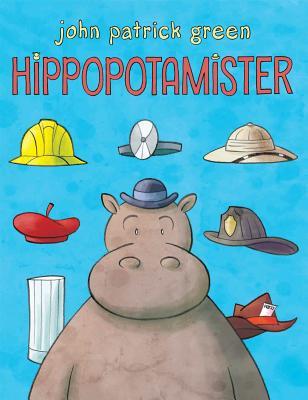
My interview today is with John Green, who is a very creative guy. He was the comics consultant for Disney Adventures magazine, and has written, illustrated, or otherwise worked on comics for Nickelodeon, Dreamworks, Scholastic, DC Comics, and First Second Books. When not drawing comics John creates artwork for video games, such as Emerald City Confidential, Puzzle Bots, and Nearly Departed.
As kids, we’ve all read comics or watched cartoons, but you took it to the next step. You’ve actually written or illustrated a series of comic and graphic novels. How did you get started with comic books?
I first started working for Disney shortly after graduating from art school. I worked for Disney Adventures Magazine, which was a digest-sized magazine for kids that you used to be able to find at supermarket checkout counters. It covered movies, music, and pop culture, and in the back were comics. Most were based on Disney or Pixar properties like Kim Possible or Toy Story, but a few were creator-owned. I started as the comics assistant, handling lettering and production, but eventually I started writing and doing art for a number of the comics.
When Disney Adventures Magazine ended, I still kept in touch with many former coworkers. They contacted me when the Phineas and Ferb magazine was being launched to see if I was interested in drawing some of the comics. And so I did! I've lost count of how many I actually drew, but it was a lot. I also adapted some of the episodes of the cartoon into comics format (basically I took the script of an episode and all the animation frames from an episode and distilled them down into a story that worked as a comic book.) So in those instances I had to do some re-writing of the stories, but I didn't write them from scratch. I did some art for a couple of Phineas and Ferb picture books as well.
When did you actually first start creating comics?
I started writing my own comics way back when I was about 10 years old. My first introduction to comics was specifically through newspaper comic strips. Garfield was a big influence at the time and I learned a lot about cartooning early on just by copying Jim Davis' strip. I started making my own newspaper strips with my own characters, but eventually I discovered comic *books* by way of my brother. Things like Spider-Man, X-Men, and so on.
From that point on all I really wanted to do was make comic books, so I took my characters I made in the newspaper comic mold and put them into comic book-format stories. I'd photocopy them on my grandparents' copier, staple them, and sell them to other kids at school for a dollar or so. I did that just about up until 9th grade, when I started making more "serious" art. Painting, illustration, less cartooning.
But you didn't stay with the "serious art." What changed your mind?
I went to School of Visual Arts in Manhattan for graphic design and while I was there I met some students who reignited my interest in comics. I was drawn (pun intended) back into that world. We started making comics together, and even self-published them (as in actually got them distributed to comic shops across the country.)
We'd attend as many comic conventions as we could, exhibiting and selling our comics. I've attended San Diego Comic-Con (aka Comic-Con International) and New York Comic Con (the shows are not put on my the same companies, so when someone just says "comic con" I'm not sure which one they mean. They are not the West Coast/East Coast version of the same show.) My most favorite comic conventions though are the smaller ones, like Small Press Expo (aka SPX, in Bethesda, Maryland), the Toronto Comic Arts Festival (aka TCAF), and MICE (the Massachusetts Independent Comics Expo.)
How did you go from making your own comics to working for Disney and the others?
As for the submission process, I sort of went in through the backdoor. I've been working within the industry for a long time, so I know people and have a lot of friends. When I heard a specific editor was looking for a certain type of book, I basically said "I have an idea!" and ran it past them. They said "I like it! Show me more when you have it!" Then I did just that (though it took me another year or two to finally put together the pitch.)
Once you have the attention of an editor, you don't *have* to go through an agent unless they tell you otherwise. Perhaps I would have if the pitch was turned down, but I submitted it, they made an offer, and that was that! By comparison, my follow-up book took many more tries until the pitch was accepted.
I see you’ve also co-authored a number of books. How does that work? How do you divide up the story?
I've illustrated and co-created the series Jax Epoch and the Quicken Forbidden and Teen Boat! with Dave Roman (one of the aforementioned students I met while at SVA.) While it's easy to say that for both those series Dave was the writer and I was the artist, it's not really that cut and dry. For Jax, Dave would, for the most part, hand me a script and then I'd go draw it. But usually we would hash out some parts of the story before Dave finished that script part. He'd tell me big picture ideas, or options of different directions the story could go, and I'd give feedback.
Sometimes I'd say "it would be cool if this happened in the story, because I'd like to draw a sequence like it." Sometimes I'd come up with snippets of dialogue or little story beats, and most of the time Dave would provide his own sketches for things he was picturing in his mind (creatures, environments, and the like.) Some parts of the story Dave would draw himself, because we have different styles, and the different art styles helped with the mood of specific parts of the narrative.
Our process on Teen Boat! was a little different, especially on the first book. The book started as mini-comics, which were just black-and-white 8-page comics photocopied and stapled together. We didn't plan much of the stories as a whole in advance, just mostly made them up in little chunks as we went along. Usually one of us would say to the other "hey, we have a convention to go to next month, let's see if we can whip up a new Teen Boat! comic for it." And then we'd just come up with funny jokes and boat puns that could have a story created around them, or we'd say "let's do a version of The Breakfast Club or License to Drive."
There's a part in the first volume of Teen Boat! that takes place in Venice, and that came about mostly because I told Dave "Hey, if I can make a comic out of my trip to Venice, I can write it off as a business expense." For the second volume, Teen Boat! and the Race for Boatlantis, we didn't fly by the seat of our pants as much. The whole book was written before I started drawing any of it, so in comparison to the first book it feels like one big story instead of tiny episodes. Dave and I still got together to hash out the story ideas. I even did concept sketches of locations and characters that helped Dave formulate some scenes and story bits. Generally, our process is much more collaborative than people realize when they think of Dave just being the writer and me just being the artist.
What has frustrated you the most in putting together your stories?
I guess the most frustrating part is just that they're time-consuming. Like, I can see the finished page in my head right away, but it can take days to execute a page to the point that it actually exists.
What has pleasantly surprised you in the process? What do you know now about writing and publishing you wish you had learned sooner?
As for pleasant surprises, I'm going to say librarians. And that's part of something I wish I'd learned sooner. In the world of mainstream comic books, librarians hadn't really been a part of the process. If you were making a monthly or bi-monthly comic, your outlet was basically to have it distributed to comic shops, and that's it. Librarians or teachers never really factored in. Even if you planned to collect your series into a trade paperback, your expectation was that it would just get sold in a comic shop. Now comics and graphic novels have exploded into the book market, and librarians are some of the best advocates for getting new readers interested in things. If I could, I go back and tell myself to focus less on the comics industry as an outlet for my work and more on the BOOK industry.
What’s the best writing tip you’ve learned or been given that you’d like to share about writing comics and graphic novels?
 I would say the best advice I'd have for a writer of comics, especially if they don't plan on being an illustrator, is to learn how to think visually. Comics are quite different than picture books, and they're totally different than prose books. You don't have to be an artist to write a comic, but you have to know why your story is best told as a comic versus any other format. If you can't think of your story existing as visuals, what makes you want to tell it as a comic? Comics are a merger of text and images that are inseparable, and keeping that in mind during the writing process will only make the work stronger in the end.
What other works do you have in the process?
My next book will have kittens!
Any last words or tips?
Put your work out there. Be nice to people. :)
That's all for today's interview. As you can see my John's history, you're never too young to start promoting your creative ideas. Take a risk in small steps and see where it can take you. If you'd like to learn more about John and his comics, here's some options.