Blog Archive

Showing posts with label Beverly Stowe McClure. Show all posts

Tuesday, May 29, 2012

How to Series: Writing for the YA Market by Guest Blogger, Beverly Stowe McClure


The young adult fiction market in the Milky Way Galaxy is booming today. From the Twilight series and movies to the Hunger Games novels and movies, and too many others to mention them all here, we’re surrounded by teens and other creatures of the night. So on the chance that you might be thinking of entering the world of ya literature, let’s take a look at what young adult novels are.

First, who is the young adult audience? All readers are different, so stating that a book is written for a certain age is only a guideline for parents and teachers. Children/teens vary in what they prefer to read and can understand at different ages. That said, young adult books are generally recommended for readers ages 12 to 18. There are books, however, for the younger end of the scale, children from 10 to 12, AKA as middle grade or tween fiction. Since children tend to skip over a scene they don’t understand and take from a story what’s important in their lives, younger readers may pass right over that stalking scene or the kissie, kissie romance and absorb the scenes they relate to. On the other hand, many readers will recognize when a character is being bullied or abused and perhaps be able to apply the story to themselves or someone they know. Each child will take whatever he/she is curious about or living with and apply it to their own life.

Second, what subjects and themes appeal to young adults? If you look through the titles of current novels and go back to even older books, you’ll find most every topic is covered: themes of identity, depression, suicide, drug abuse, family, bullying, etc. Teens want to read about friendship, love, family, divorce and just about anything that relates to their world. Even fantasy, science fiction, and dystopian novels contain these elements though they may take place in the future, past, or in another universe. Whether the friends are vampires or werewolves or other-worldly creatures, there is romance, friendship, enemies, and other elements that a teen may be struggling with and that will open a door for a solution to his/her problems.

Today, there seem to be few, if any, taboos in young adult literature. Young adult books deal with most everything, from suicide to abuse to violence to sex and language. I think the main thing is to be honest, to let the character tell the story in his own words, with his emotions and what he knows or hopes to learn.

Third, a big issue in teen literature is finding books that teen boys will read. So many of the popular young adult novels are written more for girls (and women who still feel like teens). You’ve heard it said that girls will read books with boys as the main character, but the reverse is seldom true. So think about boys for a minute. The ones in your family or those you know. I raised three sons and they still confuse me. Generally, boys don’t like the mushy stuff, even though they might enjoy kissing a girl, they’d feel weird reading about it. Most boys are action. They’re constantly on the move, doing something. So they need adventure and challenges. Even gross stuff appeals to them. There are many great “boy” books out there. Think of James Patterson, Rick Riordan, and Paolo Bacigalupi to name a few. There’s also Darby Karchut, a new author whose Griffin series about a guardian angel in training is sure to convince young males that reading is fun.

I planned to compare the sales of young adult literature with other books, but was totally lost when I started reading the statistics. So rather than go through percentages, numbers, and such, here are some sites for you to check if you’re interested in learning more:

http://www.mcsweeneys.net/articles/young-people-are-reading-more-than-you
http://productivewriters.com/2011/02/16/book-e-book-sales-data-united-states-2010/
http://paidcontent.org/2012/01/23/419-new-stats-kids-find-e-books-fun-and-cool-but-teens-are-still-reluctant/
Short link to the above: http://tinyurl.com/6vtxlob

Writing for teens is a challenge. Writing for teens is fun. So why not take a chance and see what you come up with. You never know.

Thank you for your insight on writing for the YA market. If you would like to learn more about Beverly's writing, here is the link to her website and her blog.

Tuesday, November 29, 2011

Interview with Beverly Stowe McClure, author of children and teen books


I was intrigued in reading your bio that the time between your first published piece and your second was forty years as you never went after it as a career. You then got into a writing career when others are starting to plan for retirement. What motivated you to take on that new challenge?  
The poem that was published in 8th grade was strictly for an assignment. At that time I had no desire to write. I read only what was necessary for school work. As a teacher, I enjoyed reading to my students especially the great Newberry award winning books. Seeing these books I came to realize that reading could be fun!  

A few years before I retired I decided to try writing. I started with magazine articles, many based on activities we did in class. Then I tried my hand at writing novels. Just because you retire doesn't mean you stop living. I'm now in my second career-writing-and loving it.

Did anyone ever tell you that you were too old to start writing? Have you ever felt that maybe you were out of your league and should just forget about the idea of being a writer?
No one ever told me I was "too old" but I didn't receive a lot of encouragement. I took a writing course that helped guide me in the right direction. I've never considered not writing since I started, even when I sometime want to throw the computer out the window. The next day will usually be better.

You write for beginning readers, tweens and YA. Which is more challenging? Which genre do you feel more comfortable writing?
 I think writing for young children is harder. Every word has to count. I'm more comfortable writing YA.

How often do you write?
I try to write a minimum of two pages a day. More is better, but not always possible.

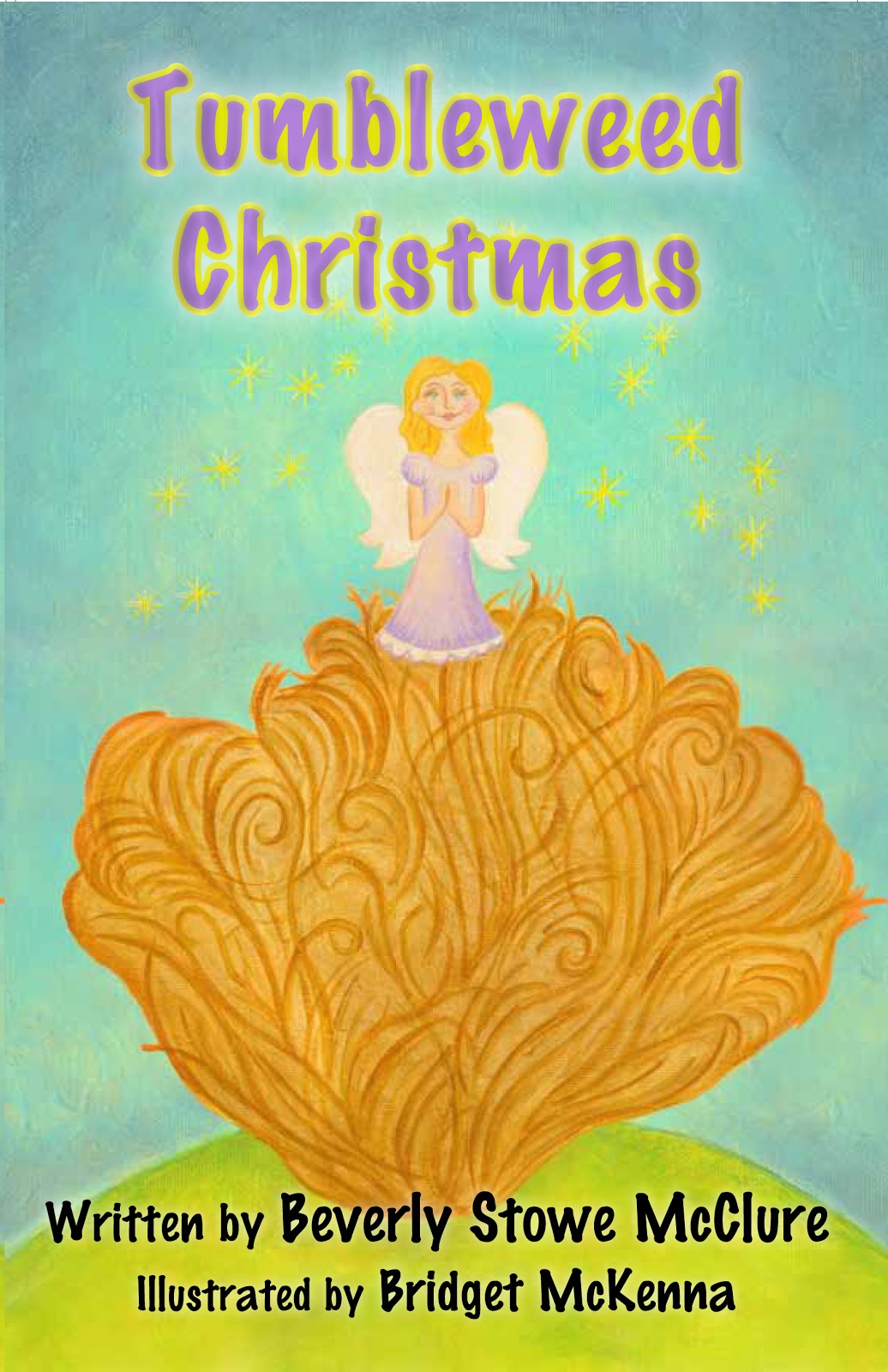
I love everything Christmas and I see you have a new book out called Tumbleweed Christmas. How did this story evolve? I understand it is nominated for the Cybils Award. Can you explain to my readers what that means?
Tumbleweed Christmas was born when I saw a tumbleweed roll across our pasture. I knew there was a story there. It took me a while to find it, but now it's out for all to read. 

The Cybils Award is to "Reward the children’s and young adult authors (and illustrators) whose books combine the highest literary merit and "kid appeal." It's also to "Foster a sense of community among bloggers who write about children’s and YA literature, and to highlight our best reviewers."

How long did it take for you to get your first book published? How many publishers did you contact? What do you know now about publishing that you wished you had learned earlier?
My first book took about two years to be published. I'd say most of the "big" publishers had a chance. I thought the only way to go was with N Y houses. I went with an ePublisher finally. Now, I love Indie publishers.

I've also learned that entering contests helps get your name out there. And if you're a winner in one or two, it makes all your work more exciting. Caves, Cannons, and Crinolines, my YA Historical, is a Finalist in the 2011 Next Generation Indie Awards, Novella Division, and also a Finalist in the eBook Global Awards, Teen Division. These contests have encouraged me.

Can you think of any special event that happened when you were doing either a book signing, reading or other promotion that touched you and made you think – that’s the reason I write?  At my recent signing for Tumbleweed, a 1st grade girl told me she wanted to be an artist. She loved looking at the illustrations in the book. When I showed her the picture of the artist she was so excited. Children (or teens) are the reason I write. If I can help them love books, I've done my job.

What words of advice do you have for starting out writers regardless of their age for encouragement?
Write for yourself, no matter your age. I seldom think about being a grandma when I'm writing. I'm me, a writer. Also, write what you enjoy reading. Never give up, no matter how many times your manuscript is returned with a "no thanks." Keep looking for the right publisher. Study how to write good query letters. Join a critique group to help you make your story the best it can be. And read, read, read. 

What other books do you have in the works?
Currently I'm working on a Tween book, Princess Breeze, the sequel to Just Breeze. Also, a YA Contemporary Novel, Survivors' Club is going through revisions
.
Thank you for the great interview, Beverly. If you would like to learn more about her and her writing go to http://beverlystowemcclure.blogspot.com, or http://beverlystowemcclure.wordpress.com...
Her books are also available at Amazon, B&N, BAM,and Powell's (one of my favorite bookstores to visit when I'm in the area)