Blog Archive

Showing posts with label children's writer. Show all posts

Tuesday, August 26, 2014

Writing for the Love of the Craft: Author Interview with Michelle McBeth

You’ve recently published your first children’s picture book, A Case in Candy Land. When did you decide to write this book?
Although I have been writing bits and pieces of children's books over the past twenty years, I actually began my writing as a career in January 2013. In December of 2013 I decided to write a short chapter book series for readers who don’t read much because books are simply too long for them. I had a lot of fifth grade students like that when I was teacher. This book is only ten short chapters and full of illustrations for more interest. I tried to make the wording simple for a quicker read. It still comes out to fourth grade level though based on sentence length and word difficulty.

In order to find a high interest concept, this book started from an alternate universes idea that popped into my head. But I thought it would be too mature for the age group I wanted to write for, so it eventually morphed into this story about a world where people travel from one land to another through the Hall of Travels. Each land is unique in its purpose such as Candy Land, Toy Land, Hairstylist Hollow, and Doctor Dale. Traveling only takes a moment. It is like a time machine, but instead of changing times, you change lands.

Who helped you polish your story? I had a few friends who read my manuscript as well as my two sons. My sons hear a lot of, "Read this please and tell me what you think." Based on their comments as well as what I know about polishing techniques, I made changes in my manuscript.  

Are you active in any writing critique groups?
I do not currently have a writing critique group, but I am actively seeking one specifically for authors of children's literature. I believe this kind of feedback can be extremely valuable to writers.

Prior to writing this book, what was your publishing and writing background?
I have been writing stories since I was four years old. Off and on throughout my life I have submitted small pieces for publication in school newspapers and journals. I began writing children's books about twenty years ago, but did not feel that things were clicking in place for me to be able to publish until last year.

In 2013 I had a children's short story series published in a local journal. I also self-published a parent guide for Autism that year. Children's fiction has always been my true love--both reading and writing--so I am pleased to be coming back to it in my new Hall of Travels series.

Who encouraged you along the way?
My two teenage sons have been my biggest fans. A few years ago, I found out my younger son had been sneaking into my stash of writings. He was impressed with what I had written and encouraged me to finish my books and start publishing. My sons are not afraid to tell me what is good and what is bad about my writing either!
Did you try the traditional route of seeking a publisher and/or agent to market your book? Because I felt I had the skills to self-publish, I chose to try that route first. I have not yet sought out an agent or publisher, but I have not discounted the idea. I chose to self-publish after meeting a fellow author in December 2012 who was self-published. She told me about some of the advantages of self-publishing and how easy the process could be.

Tell me about the process. How did you decide where to publish? How much research did you do?
After meeting the self-published author who had published through CreateSpace, I began researching the process and what this company had to offer. I did not shop around because I felt this company perfectly fit what I wanted. Another reason I did not shop around was because I did not need any of the additional services self-publishing companies often provide. I had the skills and the resources to do the design, layout and illustrations without outside help.

The majority of the research I did before designing the book involved what a good layout looked like. I researched font type, size, margins, bleed, illustration size, etc. This was time consuming on my first book.
What are some of the promotions that you’ve done for the book that have been the most successful?I am still in the beginning stages of learning how to self-promote my books. To date I have run a Goodreads Giveaway for my book, I have printed postcard sized flyers that I give to everyone I come in contact with, and I have given free books where I believe it would do the most good.

I feel that promoting myself locally has had the biggest impact. Giving my book to the local library and schools is a great way to become known in my own community.
How did you go about finding an illustrator?
I am an extremely fortunate author because I have two sons who are artists! My fourteen year old son, Ryan, who has the drawing style I needed for this book, was my illustrator. Our informal agreement was that when the book(s) began to make a certain amount, he would receive a percentage of royalties.
    
Did he work strictly from your text or did you give him suggestions of how you want the story to be done?
I told Ryan exactly what I wanted for each illustration and then left it to him to draw it in his own style. After each illustration was complete, I reviewed it and then asked for edits if I felt the picture did not quite convey what I wanted.

What has frustrated you the most in putting these books together?
Doing everything myself in the publication process has its rewards, but is also frustrating because it is so time consuming. I could have had this book written in a month, but it took four additional months for layout, design and illustration. Creating my own Kindle version of the book was frustrating as well because I don't own an e-reader. This made it more difficult for me to figure out how the concept worked. I won out in the end!
What has pleasantly surprised you in the process?
I have been pleasantly surprised by how professional the book looked when I actually had one in my hand. Other people have also commented on how professional it looks. I can hold that book in my hand and say, "I created this!" It is an awesome feeling.

What suggestions do you have for someone who wants to write children’s stories?
First, find out what kids are reading. Read books written for different age groups to find out what the differences are. Second, find a way to spend lots of time with children. Observe them. See what kids like, how they behave, what makes them tick. Then, write, write, and write some more. Read your work to children to get feedback from the audience you are writing for.

Submit your work. Take rejections as feedback, not as a sign that you should stop writing. When you get negative feedback listen with a discerning ear. Some of that feedback will make you a better writer. However, always stay true to yourself and your style. Above all, love what you are doing. That love and passion for your work is the proof that you are doing exactly what you should be!

What is the writing best advice you’ve been given?
The best advice I heard from a fellow author is, if you are writing to make a bunch of money, you are in the wrong business. You should be writing because you love it so much you couldn't imagine doing anything else.

How much time daily do you have for writing?
I spend several hours a day writing in some capacity whether on my blog or writing stories. I also spend quite a bit of time arranging stories in my head before writing them down. 

What message would you like parents and children to take away from your book? 
All of my books and stories are written with one thing in mind. I want the readers to feel they enjoyed themselves. And after closing the cover of the book, I want them to have a smile on their faces. If they learn something new from the book, such as new words or concepts, well that's a bonus. A Case in Candy Land is spiced with humor and fun characters to create the fun factor. My author blog is called, "Sunshine On A Rainy Day" because this is what I want to be to my readers. In my opinion, there is already enough darkness in the world. I do not want that reflected in my books.
What other books do you have in process?
I am currently creating the sequel to A Case in Candy Land called Trouble in Toy Land. The first book was written in Henry's voice (the main character). The second will be written in Amelia's voice (the next door neighbor).

After this book, I will consider publishing a new series for middle school that I have begun writing. It is one boy's humorous perspective on puting up with his crazy family.
Is there any other tips about writing or publishing you’d like to add?
My additional advice as a self-publisher is, unless you have the skills to create a complete book yourself, consider trying the traditional route first. This way you can concentrate on the writing and allow them to concentrate on the publication. There are trade-offs either way and you have to carefully consider which would be the better choice for you. 
That's it for today's interview. Hope you'll take Michelle's advice and submit your writing for publication. However, before you do make sure it is professionally edited and polished.

If you'd like to learn more about her writing and blog, here's the links...
http://michellejmcbeth.wordpress.com
https://www.facebook.com/michellejmcbeth

Wednesday, April 2, 2014

Teaching Young Children with Books: Author Interview with Callie Grant

You write picture book stories for children to grow closer to God? What inspired you to write the first book?
The first five years of a child’s life are so important, and I wanted durable books about life with God for my daughter during that time. But the choices were limited. There were many baby Bible versions and prayer books, but not much that showed what a day-to-day relationship with God was like. Even young children have a spiritual life, and I felt a little desperate about nourishing her in that way.

I also wanted books that could fit right in with her other books—a story about puddle-splashing that mentions the God who made them possible. So, not everything had to be a lesson or information, but more about the experience, which is really how faith grows.

You’ve now published 7 books since last year. When did you actually start writing your first book? How long did it take to write your first draft?
Once we decided to start the company, we knew there would be a long period of writing and development in-house, collaborating with others for guidance and input. We wanted to create a purposeful, cohesive collection. But at the same time, we wanted to maintain spontaneity and realistic childhood fun. This process has taken a long time. All seven of the current books were on the burner for five or more years and went through many changes.

Who encouraged you along the way?
My husband and daughter have both been incredibly encouraging and helpful—we are in it together. But we would not have moved ahead unless we felt like God was in it, and leading it. He has been the main inspiration and source of encouragement, giving just what we need when we need it most. He also brought many moms and dads into our lives who were hungering for ways to share God more intimately with their young children. They have been vital inspiration.
Prior to writing these children’s books, what was your publishing and writing background?
My writing background involves many professional paths. I started with a journalism degree and went into public affairs and public relations for several years, which led to a time in nonprofit with the Tech Museum in San Jose, which led to working for Scholastic. The one constant in all of these arenas was writing about complex topics in a variety of ways to engage particular audiences.

My first two children’s books for a publisher were Jeeves, I’m Bored: 25 Internet Adventures for Kids and Jeeves, I Need Help: Tips and Tricks for Kids on the Net. These jobs also involved public relations, sales, special events, production, trade shows, and marketing. One head hunter looked at my resume back then and said she honestly had no idea where to plug in all of that. I had no idea where it was leading either.

The publishing company, Graham Blanchard Inc. is your company. What made you decide to start your own publishing company?
My husband and I lived in the Silicon Valley startup culture for many years, which encourages risk and tolerates failure, because it is better than not trying. Graham Blanchard grew out of a hope to serve families with a community and a purposeful board book collection. For us to be clearer about the vision and understand the possibilities required that we dig in and scope out what that looked like.

We had two choices: Send out the ideas to publishers or start a new company that would carry the larger vision forward. It wasn’t a decision we rushed into. But experiences confirmed for us that there was room for a new company to specialize in the underserved niche of Christian board books for young children.

How long was it in the works before you signed the incorporation papers?
The decision to move ahead on the company was made about five years ago, and it was incorporated last year.

Are you going to stay exclusively with board books? Or do you plan to do picture books for the 6-9 age range?
We are committed to board books and the 0-7 range for some time to come. But moving beyond that in the future will always be an option.

How did you go about finding your team of collaborators? Are you all co-owners of the company?
The team grew from old connections and new ones, colleagues and friends, divinely introduced at just the right time. They are all stakeholders in a larger sense, but this is a boot-strapped company with one owner.

What are some of the promotions that you’ve done for the book that have been the most successful?
I am very impressed with the quality of blogs—the value of the content they provide readers and the engagement they have. We have appreciated their reception of a newcomer. Also, traditional and social media advertising will always be important.

Can you give me one example of a promotion that has generated more sales than another?
As a new company, we have just begun this process ourselves, and time will tell whether one promotion works better than another. But the industry has been around a long time, and it relies heavily on reviews. Sending out books to appropriate blogs, local newspapers, or opinion makers for review is probably the most cost-effective promotion an individual or small press could do.

I see you have had several different illustrators for your books. What do you look for in an illustrator?
The illustrators have a big role in the final outcome of a book. They add a whole dimension to a story through their art. Illustrating books for children about spiritual matters is not an easy job. It is a wonder to see what they come up with. We want the art to be engaging to children and to grownups. We also aim for illustrators who are professional about project management and communications—the whole experience of everyone matters. Working with them is a highlight for me in this business.

Do you see the company adding other authors anytime in the near future?
We do plan to involve additional writers and would like to publish titles authored by others by 2016. That infusion of creativity and engagement is vital for any effort to truly thrive. We have a well-defined framework and publishing strategy that will guide those choices. The submissions guidelines are posted at http://www.grahamblanchard.com/contact/
Your company website says that you have an extensive group of people helping with the process – including children. Do they act as a critique group or sounding board for the stories?
We share all the material with children of various ages and developmental capabilities to see if we are hitting the mark. Most of our editorial advisors and reviewers have children, have written for children, or have backgrounds in childhood development or ministry. One child was confused about the word “yoke” in Jesus Invites Me. It sounded too much like egg “yolk” when read aloud. So, we decided to say that in the book and have fun with it.

What has frustrated you the most in putting these books together?
All the things that make starting a publishing company possible now, are also the things that can make it the most difficult at times. Independent book publishing is exploding, and that’s a great thing! But it makes getting books into bookstores difficult. That isn’t frustrating, but it is a challenge. I’m glad to accept the challenges with the benefits, though. I have been heartened by the publishing industry in general, and the selfless advisors and mentors who have helped me with all aspects of the business along the way.

What advice would you give someone who wants to write children’s stories?
Write! And develop your audience. There has never been a better time to be a writer of any genre. There are so many audiences and avenues now for your work. And I think it’s helpful to be detached from the outcome and the idea of being an author. Just enjoy the craft, always have something on the drawing board, and share it.

What is the best writing advice you’ve been given?
A writer I greatly admire encouraged letting works simmer for long periods of time. He said he would work a year on a single professional paper. That stuck with me, and I have found it to be true with all of our books and online content: They benefit from time. And I think children’s books especially benefit from simmering. There are so few words, but many ways to put a certain idea. Time gives you the freedom to work it out.

How much time daily do you have for writing?
So much of the day involves writing of some sort, and it is my favorite thing. I love writing anything, even a user’s guide! It’s always a good day when I can write on a special project for at least an hour.

What message would you like parents and children to take away from your books?
My hope for children and parents is whatever God hopes for them. He knows them best. People of all ages seek Him in their own personal way, and I hope the books and the community we offer at our Web site help them in their own journeys. We are committed as a company to support others in this way.

Thanks so much for your questions and this opportunity to write and reflect!

Please find out more about the books, free tips for extending them beyond the shelf, and other free resources at http://www.grahamblanchard.com And participate in our community! We love hearing from others.

Tuesday, June 4, 2013

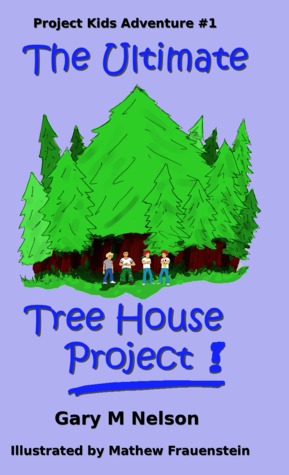
The Analytical Leap to Children's Writing: Author Interview with Gary Nelson

You have a highly analytical background that deals with business management. How did you make the jump from the business field to the more creative side of writing fiction?
Well, I have enjoyed writing ever since I was a teenager. Up through University and my early career, I did a lot of creative writing -- mainly poetry and a few short stories. In my work career, the writing has perhaps not been as “creative."

When developing and delivering training courses, I looked for ways to make the material more relevant and accessible to the participants. This included telling anecdotes (stories) during training sessions which supported the delivery. Response from the participants was very good; it seems no matter how old or young you are, everyone likes a good story, whether it is fiction or an experience-based anecdote.

The jump from business to fiction was not as big a leap as I thought it might be - particularly as The Ultimate Tree House Project is a series of core lessons woven into a fun, full-length children’s story. So I guess you might call it “instructional fiction”.


What inspired you to do this instructional fiction for kids?
The inspiration for this book comes from several sources. My wife had been bugging me for years to write a children’s book because I have been making up silly songs and bedtime stories for my children for a while now.

The other inspiration, or challenge really, came from a conversation at a project management conference last year. I was telling them about my first book, Gazza’s Guide to Practical Project Management, which uses anecdotes and stories to teach specific topic lessons. They were intrigued by the idea and then suggested that my second book should be a children’s book - teaching basic project management concepts for children aged 8-11, as there was really nothing much in this space and they were looking for something to support schools at this level.

It was an interesting idea - and quite a daunting challenge, really - as I had decided to first and foremost make it a fun, readable story, but still convey important concepts.

Prior to writing your children’s book did you do any other fiction writing?
I did a lot of writing in my early years - and then took a long break from poetry or fiction. I always wanted to write a book - but the problem was that I was not sure what would be interesting enough to write a book about. I started writing some sci-fi stories back in university but I didn’t have the confidence or skill at the time to carry it through. Looking back, they were pretty horrible, actually.

How long did it take you to write the first book?
In April 2012 I started writing my first book (Gazza’s Guide to Practical Project Management) - but it was primarily based on my personal experience, so it was not fiction at all. That one was published in September 2012 and the actual writing and editing took about 4 months.

I started the children’s book (The Ultimate Tree House Project) in November 2012 and wrote like crazy for two weeks or so with lots of changes and edits based on daily feedback from my 9 and 10 year old boys …and then I changed jobs, things got really busy and I did not pick it up again until February this year.
I finished writing the rest of the book in the last half of February because I suddenly found that I had a hard deadline to get it finished.

I had pitched the book concept to a group of Project Managers as part of a Pecha-Kucha presentation session in early February and they loved it! I was asked if I could be ready to launch the book at the inaugural PMI Australia conference in Sydney at the beginning of May. After checking the schedule with my illustrator, I started writing the rest of the book on the flight back up from the board meeting - and wrote The Accident chapter at 30,000 feet.

The full draft was finished by the end of February and the editing/proofreading and the artwork were all finished before the end of March. So actual writing time - about a month or so. It was an intense effort - but it all came together and the book arrived in time for the launch, which was very successful. Whew!

How many rewrites did you do on it?
I did extensive rewriting of the first 4-5 chapters during the first few weeks. The last time I had attempted writing story dialogue was in 1988, and as I said before, it was a horrible result. I was not really sure I could do it. I also wanted to make sure that the story was set at the correct level of language and flowed well for my target audience (children aged 8-11).

My 9 and 10 year old sons, Daniel and Liam, were the perfect review team. They were really tough on me, which they not-so-secretly enjoyed, but the result was very good. The very first night I read to them I had a draft of the first 2 ½ chapters. They kept interrupting me with helpful criticisms like “You can’t start the adventure in the first chapter, Dad - you have to introduce the characters more first!” So I listened closely and followed their advice. I rewrote the first 4-5 chapters several times until my kids felt I got it “right”.

Who helped you with the editing?
Editing happened in several stages. After I had the basics down with my children and had the first 8-9 “good” chapter drafts written, I asked their teachers at school to review what I had written so far, to give feedback on structure, language reading levels, general concepts, and suitability for classroom vs. independent reading. They gave me some very constructive feedback that I used to go back and edit what I had written before I wrote further chapters.

After that - I asked family and a work colleague to proof-read it and mark it up. What they found for edits were generally minor - nothing that required any extensive rewriting. They did catch some typos and grammar of course, and also some inconsistencies between earlier and later chapters that I had missed.

Have other books been started and stopped along the way?

Since I started the first book, I have progressed with one book at a time. I have a few ideas for other books that I have been bouncing around in my head but I have not actually started writing them yet, other than the next children’s book in the series.

How did you go about trying to find a publisher?
With my first book, I decided to self-publish because a colleague had recently done it. So I self-published Gazza’s Guide to see how the process worked, and I was not as concerned about trying to sell thousands (or millions!) of books. I wrote the book to help people, so if I was successful in that for even a few people, I would consider the experiment a success. I was really focused on the quality of the content and the writing - and frankly, I wanted to see if I could do it and do a good job of it.

With the children’s book, I thought long and hard about the traditional publishing route, but as this book is also in a bit of a unique niche, I was not sure that many traditional publishers would see where it fit. From the conversation I had in October there was definitely a need for this type of book - and there was literally nothing out there in this particular segment - “project management concepts for primary/middle school kids” - so I started out with knowing there was a potential market that was largely untapped. I made the decision to self-publish again, to get the book out there and start promoting it. So far, everyone who has read it loves the book and the concept - and kids love the story too.

How do you write?
In terms of the actual writing, I tend to internally verbalize the words as I write - I find this to be the same both for work and personal writing. I think this helps with the flow and grammar - if something does not seem quite right when I am typing it, I will repeat the sentence or paragraph aloud and rework it in my head until it flows. I write mostly at night, when the kids are in bed and it is quiet - but when inspired I can write at any time of day depending what else is going on.

When I was finishing up The Ultimate Tree House Project draft, I had my iPad with me all the time and I was adding in sections in the morning before work, at lunch and on my breaks - and then again in the evening. By the time February came round, the rest of the story had been sitting in my head for several months waiting to be typed out, and I could literally not type it out fast enough.

Did you do an outline first?
Absolutely. I find that this works extremely well for any type of writing - work or personal. When you have the basic outline flushed out - headings, some details, filling in the rest of the detail comes relatively easily.

Did you do individual character development before doing the full plot?

I had the outline for the book in place, an idea of what characters I needed (four boys, four girls), but I started character development on the fly in consultation with my 9 and 10 year olds as I wrote the first drafts. I wanted to make sure the kids were believable and likeable (and a few appropriately annoying), so their input was invaluable. They tossed out a bunch of potential character names, too.

The characters developed as the story grew. Interestingly, about two-thirds of the way through the book, I found that the characters imposed limits on the writing - “Amanda would not say that” type of thing - I found that their “voices” directed me to write some sections quite differently than I had originally planned.

Since you already have experience in speaking to business groups, are you now doing talks to children’s groups to promote your book?
I have not started speaking to many children’s groups yet, but that is in the works. As I wrote the book, I did readings for my Cub group, who are in this age range as a “test market”.

My schedule has been quite hectic since the book was published - but I am looking forward to having some more time to speak with other groups. I have also been asked if I could do some workshops around the book concept and structure it for teachers, so I will be looking at developing something for that too.

What type of promotion has worked best for you so far in generating sales?
I setup the website early, did some social media promotion and advance giveaways, but so far the most effective method has been the personal touch. Everyone I have spoken to loves the concept, and many have read the book and rave about it - and they are actively promoting it in their circles. Visibility is key, I suppose - and word-of-mouth is a powerful way to make it happen.

To date, hundreds have heard about the book in Australia, New Zealand, USA, UK and now in Europe - so that is a good way to get the word out. I will augment this approach with social media, testing as I go to see what channels and methods will be most effective for this type of book. Goodreads is a good place to start, of course - that is how you found the book.

What do you know now about writing/publishing now that you wished you had known sooner?
Well, I guess I wish I had known I could actually write good dialogue a lot sooner than now. I may have actually started writing more seriously a number of years ago if I had that confidence. To be fair, I think the timing actually worked out just right - I finally had the topic to write about, the writing skills, experience and the ability to give it a go with self-publishing. Could I have published earlier? Maybe, maybe not.

What is the best advice you’ve been given about writing you would like to pass along?
1. Read, read, read. If you want to write well - read a lot of different authors in a variety of genres. I read mostly sci-fi and fantasy through my childhood and early adult years - but I have expanded into other genre since then, and I think that has helped me a lot with rounding out my writing.

2. Don’t let people tell you what to write or how to write it. Let them review it, edit it and make corrections after you have written it - but it is your story. Write it the way you feel you need to. Of course, you might write some horrible stuff along the way and never get it published - but your writing is part of you. If you let someone else tell you what to write - it is not really yours anymore. Do, however, be open and listen to your editors when they suggest constructive changes.

3. Write about things you are passionate about. I love to teach people and share lessons through stories; and this has been reflected in my books, as well as my blog and podcast.

4. Have fun. Both books have been very fun for me to write; I probably would have stopped writing them if I was not having fun doing it.

5. If you plan to self-publish, write a good, well-written piece of work, and have it edited and thoroughly proofread. There is a lot of junk out there - make sure yours is not one of them.

You have another book for children in the works. Could you tell me a little bit about that?
The second book of the Project Kids Adventures series is titled “The Scariest Haunted House Project - Ever!” This book continues with the same eight central characters from The Ultimate Tree House Project, and will add a few more in the mix along with some other challenges.

Here's a summary... The Project Kids are back at school after a long summer of enjoying their Ultimate Tree House. Amanda, Becky and Susan are now in A.J Wilkins Middle School, which is just next door to their old Primary school. This year, the principals of both schools have decided to hold a joint Halloween contest – to see which groups of children from both schools can make the best Halloween display. The eight Project Kids – Becky, Alice, Amanda, Susan, Ben, James, Tim & Tom embark on their bravest adventure yet – to come up with the Scariest Haunted House – ever. The kids get started on the project and learn that it is not just Haunted Houses that can be scary!

The Haunted House book will be out later in 2013.

Do you think you will now be devoting more time to writing for children? Or is this just a break in writing style for you?
I have some other ideas for adult-level books that may fit in the mix somewhere, but the children’s series will likely be the focus for a while. My in-house experts are aging every day, and I need to keep up!

Someday, maybe, I may finally write a sci-fi novel. I may even dust off that horrible draft - it had a few interesting ideas in it that I might just be able to salvage. Maybe.

If you would like to buy his books, instead of reading about them, here are some links that you direct you along the way.

Amazon      Kobo     Gary'sWebsite       Blog     Project Kids     


Thursday, February 9, 2012

Interview with Children's Picture Book Writer, Margo Sorenson

Today we will continue with my interview with children's writer, Margo Sorenson. If you've just come to my blog for the first time, I hope you will read Part 1 of this interview which was Tuesday's post.

You’ve won several awards for your writing. Is there one that means more to you than the others?
Having FUNNY MAN named a finalist for the Minnesota Book Award in Young Adult Fiction was pretty special, but it also meant a lot to be nominated for the Quick Picks by YALSA, also, because that validated my writing for reluctant readers.

You’ve also written two books about a mouse and his adventures in a cathedral for Liturgical Press. This is not a “religious” book. How did it come about?
Many, many years ago, I majored in medieval history, and my favorite professor was so inspiring that I had an idea about a little mouse who wanted to help build a cathedral, AMBROSE AND THE CATHEDRAL DREAM. The building of a cathedral fascinated me, and I thought children could relate to a small mouse who wanted to be part of a grand scheme.  

I wrote the first draft twenty years ago, and when I read that Liturgical Press was going to start publishing children’s fiction (which they no longer do), I thought they’d be a good match for a book about a cathedral, since they are headquartered at St. John’s Abbey, in Collegeville, MN. 

Did you do any specific research in writing that book?
When the Liturgical Press children’s editor, the wonderful Father Tony Gorman, a Benedictine monk, decided to acquire AMBROSE AND THE CATHEDRAL DREAM, I asked my former professor, with whom I was still corresponding, (now a professor at the university our daughters were attending) to read the manuscript and correct any historical inaccuracies, which he did with delight.  Then, Fr. Gorman at Liturgical Press wanted another mouse book, so I wrote AMBROSE AND THE PRINCESS, and my professor read that one, as well. 

These books called for a lot of research; I wanted everything to be a completely accurate representation of medieval life in 1272.  What was special to me was that my professor was tickled to have the books dedicated to him (along with my family and my editor, of course!) – “Possibly the only medieval history professor to have a children’s book dedication,” he said – and that he had the finished books in his hands before he passed away. 

Any differences in writing for this publisher and Perfection Learning?
The main difference in writing the Ambrose books (and I have ideas for more!) and writing for Perfection Learning is that the Ambrose manuscripts are written at grade level and not for reluctant readers.  Also, because they’re picture books, the illustrator, the wonderful and talented Katalin Szegedi, was able to make the text come alive and take it to the next level.  My editor was absolutely excellent; he really believed in Ambrose – and still does!

Your most recent book is called, Aloha for Carol Ann and is set in Hawaii. This book is published by Marimba Books. How did you get started with them? I read about Marimba’s founding as a multicultural publisher and thought they sounded like a good fit for this manuscript, the first draft of which I’d written in 1989.  Forty revisions and many years later, I subbed to Marimba, this new publishing company, and they accepted, much to my joy.  They are a wonderful company to work with, and they found a fabulous illustrator, the nationally-recognized and talented Priscilla Garcia Burris, to bring Carol Ann to life, right down to the mango shortbread and spam musubi! 

Do you have other books in the works with them?
Right now, there are no plans to do something else with them; they’re not accepting submissions from anyone at the moment, but I’d love to work with them again.  They’re very supportive, helpful, professional, and enthusiastic. 

What is your next writing project?
My next writing project, ISLAND DANGER, a middle grade novel set in Hawaii, is actually being released in June 2012 as an e-book by Canadian e-publisher Muse Publishing.  I’m excited to see how this will work!  I also have a number of picture book manuscripts and middle grade novels that I’m submitting to various publishers and have several out by request with editors.  There’s always something cooking!

What is the best guidance an editor or agent has ever given you?
The best guidance someone has ever given me is from my critique partner, children’s author Bonnie Graves.  She always says, “Spare!  Spare!”  which helps me a lot, because I tend to overwrite.

What do you know now about publishing that you wished you had known earlier in your writing career? 
I wish I’d been more patient and taken more time with revisions.  The first commandment for writers is “Thou Shalt Not Fall in Love with Thine Own Words,” and that is so true!
What advice would you give someone who wants to write children’s books? 
I guess it would be the above – aspiring writers think they’ve written golden words, just as I always think *I* do, but put that manuscript away in a drawer for a while and then take it out and look at it with a clear eye – and have a good critique partner who understands your style and your aims.  Be willing and ready to revise!

That's all for today's interview. If you would like to learn more about Margo's writing and her books just click here.

Tuesday, February 7, 2012

Writing for the School Market -- Interview with Children's Writer, Margo Sorenson

You’ve written several books in a series called Cover-to-Cover Book Series. Could you explain for my readers what exactly that is?
The idea for these books was generated by the publisher, because they wanted to appeal to reluctant readers. The name of the series suggests that reluctant readers would actually finally read a book “cover to cover,” which most reluctant readers don’t do.  It’s always so much fun when I open a letter and have a young reader tell me that one of my Cover-to-Cover books is the first book he or she ever finished!

How did you first get involved with writing for this publisher?
Perfection Learning, the publisher, had published a reading record book of mine (HOW TO SNEAK UP ON A GOOD BOOK) that I co-authored with my school librarian, and they asked if I thought I could write for reluctant readers. I agreed to try, and in the planning process, they did a lot of focus groups in inner-city schools, using titles I cooked up, and the kids actually picked the titles they thought they’d like to read.

How then did the actual books evolve?
I wrote the manuscripts to match the titles, after studying Grisham and DeMille and working on suspense and “turn-the-page hooks.”  Some of the titles were DANGER CANYON, THE HIDDEN DAGGER, and SOCCER BLASTER.  Doing many school visits with disadvantaged kids and reluctant readers helped me a great deal to hone in on what would hook them and keep them reading.  They were fun to work with!

Prior to writing for them, what writing credits did you have that might have enticed them to consider your writing?
Bantam Sweet Dreams had just published my squeaky-clean teen romance, ALOHA LOVE, but I don’t think Perfection Learning thought that would qualify me to write for reluctant readers, primarily boys ages 9-14!  I also taught students those ages and, as an English teacher, had been teaching writing for many years, so I guess they thought I might have some of the mechanics down! 

Perfection liked the idea and concept behind the reading record book (HOW TO SNEAK UP ON A GOOD BOOK) and thought I could write reluctant readers and work with them on a timely, contractual basis.  Although these books began as “work-for-hire,” I do get royalties on them.  Additionally, I’d published articles in scholarly journals (such as the English Journal) about hooking kids into writing and talking about literature, so they knew it was important to me to connect young readers with books.

Since you’ve done so many books for them, have you seen any changes in what they wanted from the books?
Yes, they’re not interested in acquiring new supplementary fiction for the classroom, because they’re very involved in and successful with publishing books that work for the educational climate of testing and correlating with national and state standards these days. 

My books with them are still selling well in schools across the country, however, and they are very supportive of my signings and other publicity events and conferences.  They are interested in non-fiction and if someone wants to query them, the website has information for would-be authors.

If someone wanted to write for this type of company what suggestions would you give to get them started?
Study what else they publish and come up with innovative, fresh ideas – or a twist on old ones.  Listen to kids and find out what they’re interested in reading or finding out about.  Ask librarians what kinds of topics they get asked about all the time.  Find out from teachers what they’d like to see, book-wise, for the classroom.

The series of children’s books you’ve written cover anything from stories about ordinary kids to famous people and topics such as hurricanes. How do you prepare to write such a variety of stories?
I’m pretty old, so I’ve had a lot of experiences on which to draw!  Also, reading widely, teaching school, listening to kids’ hopes and dreams, traveling, raising a family, and being involved in sports with our kids help generate a lot of ideas. 

Have you pitched specific stories to editors or have they given you lists of topics they might want to cover?
I pitched specific stories to editors for the fiction.For the two non-fiction books, they asked me to choose which topics I wanted to write about.  Because we’d lived in Hawaii, I picked hurricanes and tsunamis. 

When the time-travel adventure biography TIME TRAP: Dr. Martin Luther King, Jr. was such a good seller, they asked me to write five more, giving me the latitude to pick the subjects, so that’s how FIGHT IN THE FIELDS: Cesar Chavez, LEAP INTO THE UNKNOWN: Albert Einstein, DANGER MARCHES TO THE PALACE: Queen Lili’uokalani, DEATH OF LIES: Socrates, and SHATTER WITH WORDS: Langston Hughes came about.   It was funny how that worked, because when I began writing TIME TRAP, I didn’t know that my main characters were going to travel back in time to try and save Dr. King!  Perfection has been super to work with – perfection, actually!

That's it for today's interview. I will be continuing on to part 2 of the interview where she talks about her children's picture books and her writing tips. I hope you will come back again to read her continuing story. In the meantime, if you would like to learn more about her writing, just click here