
I always wanted to be an author, going back maybe to high school. I published two articles in the law review back in law school (early 1970’s), published two dozen or so articles with a large D.C. law firm in the 1980’s and wrote a couple of not very good/too short novels at the same time as practice.
Once I retired from law practice in 2013, I
decided to write and self-publish full time.
There was another short psychological thriller I published and then
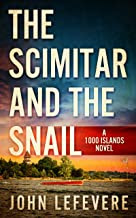
embarked on the 1000 Islands Novel series in 2015. I actually intended for the first book in the
series (The Scimitar And The Snail) to be a one-off, but it was well received
and people I knew asked for more, so I wrote another three books, creating a
tetralogy (trilogy + one).
What’s the meaning of your series title A Thousand Islands?
The Thousand Islands refers to an archipelago of islands at the western end of the St. Lawrence River – some American and some Canadian. The novels are what I call Contemporary Thrillers Solving History’s Mysteries. The protagonists live in a tower on an island on the New York side and solve actual historical mysteries that occurred in the area while getting into other sometimes dangerous adventures.
The Thousand Islands refers to an archipelago of islands at the western end of the St. Lawrence River – some American and some Canadian. The novels are what I call Contemporary Thrillers Solving History’s Mysteries. The protagonists live in a tower on an island on the New York side and solve actual historical mysteries that occurred in the area while getting into other sometimes dangerous adventures.
How much background research do you do for your
novels? An awful lot. The first book in
the series took me roughly 18 months to conceptualize, research, write and
polish. Most of the research involves
actual historical mysteries that occurred.
My wife and I have a summer cottage in the Thousand Islands and I spend
the summer soaking up local history and learning more about antique mahogany
boats and other things that I write about as part of the stories. I have fictionalized the small village we
live in so that friends and my wife’s relatives don’t, for example, accuse me
of making them the town drunks.

I have third parties who format the manuscript and design the cover (under my supervision). Now that I’ve completed five novels, the publishing end is relatively easy, but the marketing is time consuming. Like every self-published author, I’d rather be writing than marketing.
What is the hardest part of writing for you?
I honestly don’t find any part of writing to be hard or difficult. I guess that is a function of all my non-fiction legal writing over a twenty-year span. Once I have an idea for a novel, I conceptualize how it will go and then write a long outline which covers the story chapter-by-chapter. Once I start writing, I copy and paste a particular chapter into a Word document and then expand it, add dialogue, etc. The outline is flexible and I may change parts of the story or write in specific things I want the characters to say or do, as well as (hopefully) humorous things I want them to do or say.
What do you know now about writing you wished
you had known sooner? Honestly, I’ve been writing so long on the non-fiction
side, that I can’t think of anything new that emerged from writing
fiction. I do think I’ve figured out
fiction and I love how one reviewer on The Scimitar And The Snail headlined her
review in the Kindle Store: “This man can write!” I can’t imagine a better compliment
tell an author. I do wish I’d understood self-marketing better
from the outset though.

I always think back to what 20th Century author, John D. MacDonald concisely advised when asked how to write (he wrote the popular Travis Magee series which in turned inspired Lee Child to write the Jack Reacher series). He said: “Story. Story. Damnit, story.” I try to write my novels to tell a story as if I were sitting with the reader explaining everything to her/him as I go along. River history, how the historical mystery arose, why my characters are doing what they’re doing, what are the villain’s motivations and so on. If you don’t have a good story, your book isn’t going anywhere.
Are there any other points about writing you would like to add?
Don’t just sit at a Paris café or in Starbucks dreaming about being a writer; write something! Make it interesting or as Elmore Leonard said: “Try to leave out the part that readers tend to skip.” Tell a story. If you don’t enjoy what you’ve written, your reader won’t either.

The latest book, Deep River Deception, just came out in October as the fourth book in the 1000 Islands Novel series. Here is a short blurb:
“What if videos of you confessing to a lie went viral – but it’s not really you? Jill and Steve must contend with public outrage over mysterious videos implicating them in fraud, while she tries to solve a mystery concerning a 19th century river pirate. And then someone sets a treacherous trap for her. Will they prevail?”
I’m also at very early stages of starting a new thriller/mystery/suspense series not set in the Thousand Islands.
That's all for today's interview. If you'd like to learn more about John's books, here are the links to get you started.
Website: https://johnlefevere.com/
1000 Islands Series
Link: https://www.amazon.com/gp/product/B078MRL6HC
YouTube: https://www.youtube.com/channel/UC9ed703uRj7a2whX7tlVSBw
Facebook: https://www.facebook.com/John-Lefevere-Author-389222554594292
Facebook: https://www.facebook.com/John-Lefevere-Author-389222554594292


