Blog Archive

Showing posts with label romance writing. Show all posts

Tuesday, January 29, 2019

Reasons for Writing: Author Interview with Marius Cipolla

Your bio says your first published writing was steamy romances to finance your college debt. What made you decide to write in that genre?
I started with that genre because I assumed romances would be quick and easy to write and would give me time to do my academic work. That was all true. What I didn't foresee was that I would enjoy writing so much that I soon became addicted, and wanted to do nothing else!

Fast-forward to your current writing which is historical romance and dealing with the rise of Hitler and the Nazis and WWII. What made you decide to write about that period of history?
This is the history of my parents' and grandparents' generation, and thus intimately connected with my own family history. I found it fascinating to write about their lives.

How long did it take you to do the research for these books? 
Research for my books can take anything up to two years of reading and travel. 

Part of your storyline includes Christian Dior, a real-life character who designed dresses for Nazi wives and French Collaborators. Why do you think that many wealthy people were drawn to Hitler's regime and ignored the atrocities he did?
Hitler's power was based on the carrot and stick technique – rewards if you followed obediently, a concentration camp if you resisted. As a famous American general once said, if you have their balls, their hearts and minds will soon follow.

What is the hardest part of writing for you? Starting? Creating a scene? Dialog? Tension, etc?
The hardest part for me is saying goodbye to my characters when I have to stop writing.

What made you choose the indie-route for publishing for your latest book?
Most of my books have been published by major publishers – at the moment I am with Amazon Publishing's Lake Union imprint – but I am always happy to take over independent publication of the books which publishers consider no longer in fashion!

What’s the best encouragement you’ve had in your writing?
No question – it's from the readers themselves. Both their praise and their criticism has been a major force in educating me as a writer.

We have all experienced rejection. Give me an example of one you’ve had, and how you learned to write past it.
Every novel involves a degree of rejection since the editing process invariably means sections need to be cut or rewritten. Someone else takes a hand in reshaping your work, and that can be hard to accept.

What has surprised you the most in writing/publishing? What frustrated you the most?
The most surprising development I've seen in the last decade has been the success of self-publishing, and the arrival of so many talented new authors whose work was not considered worthy by conventional agents or publishing houses.

What do you know now about writing you wished you had known sooner?
The loneliness!

What is the best writing advice you’ve received or could give?
The harsher the criticism you get, the more you need to listen to it.

Are there any other points about writing you would like to add?
Write from the heart. Nothing else matters.

What is the next book coming out? Can you give me a short synopsis?
Since The Designer, I have published two novels, The Ocean Liner (2018) and The Parisians(just out, Jan 2019). They are set in a similar time period, and once again, involve some very famous historical characters.

That’s all for today’s interview. If you would like to learn more about Marius’s books, here are two links to get you started. 

The Ocean Liner on Amazon:
https://www.amazon.com/gp/product/B0746KXXLY/

The Parisians on Amazon:
https://www.amazon.com/gp/product/B07DN8RWCS/

Friday, December 9, 2016

Writing the Christmas Theme: Author Interview with C.J. Carmichael

C. J. Carmichael is a USA Today Bestselling author has written over 45 novels in her favorite genres of romance and mystery. She has been nominated twice for the Romance Writers of America RITA Award, as well as RT Bookclub’s Career Achievement in Romantic Suspense award, and the Bookseller’s Best honor.

What made you decide to write several Christmas themed books
Over the years I've discovered that I enjoy writing Christmas romance more than any other type of romance, possibly because of the feeling of magic that surrounds the holiday, at least for me. I enjoy edgy, provocative main characters as much as the next person, but when I'm looking for a holiday read, I want to root for a woman who is truly a kind and good person, and an honorable man who is willing to put his woman's best interests ahead of his own. I also love including a child in my stories who is need of "rescuing" of some sort. Because Christmas if for children, right?

Could you give me a short synopsis of your favorite for my readers?
A Bramble House Christmas is one of my favorite holiday stories. The hero of his story, Finn Knightly (a.k.a. Finn Conrad) wants to know why his recently deceased father left his nurse fifty thousand dollars after knowing her a mere six weeks. So he travels to Bramble House B&B in Marietta, Montana to find answers.

But Willa Fairchild is not the conniving woman he expects to find. Before he knows it, Willa-and her six-year-old son Scout-are stealing his heart. And that’s before he finds out Scout’s secret and the real reason this Christmas is so important.


What are some of your favorite Christmas traditions?
There are many! Baking and getting the house decorated for Christmas. Watching holiday movies with my family. And waking up Christmas morning to open stockings by the fire.

What’s next? (future books, novellas, special appearances you want to mention)


Currently, I'm working with 5 other authors on a year long series Love at the Chocolate Shop. We'll be putting out one book a month for a year beginning with October 2016 and ending September 2017. These books have a lot of the heartwarming appeal of the Christmas stories I love so much.

Any special awards or achievements you’d like to mention?
I've very excited that A Bramble House Christmas is currently on option for a TV movie, with plans for a Christmas 2017 release. Plus, it was nominated for a RITA award by Romance Writers of American in 2016, so I guess there are others who like this story besides me!


What’s the best writing tip you’ve learned or been give that you’d like to share?

Learning how to use conflict to create compelling stories and characters was crucial for me. Whenever my writing seems to be lagging, it's generally a lack of conflict that's to blame.

What do you know now about writing and publishing you wish you had learned sooner?
In romance, it's smart to create a fictional community and write a series of at least 4 or 5 books. That's the best way to get known and to build a readership.


Any last words or tips?
At the beginning of a career, I think it's smart for an author to focus on one genre for at least five to ten years.

That's it for today's interview. If you'd like to learn more about C.J.'s books, here are some options to get you started. 

A Bramble House Christmas: http://cjcarmichael.com/books/bramble...
Love at the Chocolate Shop FB Page:https://www.facebook.com/LoveattheCho...
My website: http://cjcarmichael.com/

Tuesday, February 2, 2016

The Road to First Publication: Author Interview with Camille Di Maio

This is your first novel. When did you actually start writing? What made you decide to write a book inspired by the Beatles song, “Eleanor Rigby”? 
I have wanted to write for as long as I can remember, and wrote stories when I was quite young. As much as I wanted to write a whole book, I didn't believe that I had it in me. Then, I was driving one day, and out of the five thousand songs that shuffled through my iPod, "Eleanor Rigby" came on. I have always loved that song, and my dad used to call it "The Two-Minute Novel,"

This particular time, I thought about the characters - Father McKenzie and Eleanor. Who were they? What if they knew each other? What if they had a history? This last question really sparked my imagination, and I wrote down fifteen plot points, fleshing out the beginning of a full story. Ultimately, the book is not "about" the song - the names of the characters are different, but the story of a priest and this older woman created the idea behind it. And, it is set in Liverpool.

Prior to writing this book, what other writing credits do you have?  
I have written a few things here and there for magazines, but I don't have much by way of a writing resume. I suppose I decided to go big the first real time out!

How long did it take you to write the first draft? Who encouraged you to write?
The first draft took six weeks to write, staying up until 3 and 4 am every night and drinking lots of Dr. Pepper like a good native Texan girl. We have four children, and my husband, Rob, was a champ changing diapers, doing dishes, and losing me to writing during that time period. 

Other supports beside my husband were my parents. My mom lived through my early short stories and drilled a good vocabulary in to me. Some of the most fun on this journey has been sharing it with my dad, who wears his heart on his sleeve.

How many rewrites did you do? 
Now, in its published form, I'd say it's about fifteen drafts in, and I learned so much with each one. 

Did you have beta readers? Who helped you with the editing? 
Although many of my friends beta-read it, it was all self-edited until I got an agent, and she referred me to a great freelance editor named Catherine Knepper. After Lake Union Publishing purchased it, it went through the standard developmental editing process with an editor named David Downing. It was very interesting to have their different perspectives, but both were very insistent on it still being my voice.

How did you go about finding an agent? How many sources did you pitch? What type of feedback did you get? From the time your manuscript was delivered to the publisher, how long did it take to get an acceptance?
I made some rookie mistakes early on. Of course, I thought my first draft was all wrapped up and ready to go, so I started sending it out to many agents. After about forty rejections, I had to face the fact that it was not, in fact, ready to go, and that I had a lot to learn. Most of my rejections were the standard, canned email responses. "Not a fit for me." I set out to attend several writing conferences and classes, really learning the craft. I also learned that I had gone about querying agents in the wrong way - I had just sent email after email without really researching the person. 

What did you do next?
Once I had the manuscript very polished - this was several years later - I decided I was ready to query agents again. I took my time to research six of them, and two asked for full manuscripts! What I did right this time was to read their bios, see if they represented my genre, tell them why it was a fit, how it was like other books they represented, etc. I also decided to sell myself a bit - I have had great success in my real estate business, which has a lot to do with marketing. So, I told them that I was confident that I could take that experience and turn it in to successful selling of my book if they would take me on. 

How did you finally get your agent?
I ended up getting a contract from Jill Marsal of Marsal Lyon Literary Agency in California. She has had great success with both fiction and non-fiction, and I was sure that we would "click". I was very excited when she asked for the first fifty pages, then a full, then she called me with an offer for a contract! It was one of the best days of my life. I think the rejection rate from agents is about 94%, and I believe that it is harder to get an agent than a publisher. Because, it's hard to get a good agent. But, if you do, it's because they're confident that they can sell it. That's the hardest door to get through in my opinion. Jill was an amazing partner through the process - I took her suggestions to heart, and it was only a couple of months before we knew that several publishers were interested.

Tell me about the process. How many changes did you have to do?
There were a lot of changes from first draft to finished product. The biggest change came after someone close to me committed suicide - the feelings there helped me explore the darker side of emotions, and I realized that my manuscript was lacking that particular depth. I worked through those feelings and changed the beginning of the book from something quite flighty to something with a lot of gravity. 

Another big change was my agent pushing me to rewrite something in the book that depended on a rather large coincidence. So, while on a walk with my husband, I bounced some thoughts off of him, and he said something that really broke open what I needed to do to change that scene - and it is so, so much better for it. 

The final big change was the ending. I'm a fan of tragic British books, Jane Eyre being a favorite. Again, my agent pointed out where my original ending needed some work. The new ending came about at breakfast with my dad - again, I was bouncing ideas off of him, and we had a great brainstorming session. In fact, that's one thing I learned more than anything else - writing is not a solitary event. I may be the one with my name on the front cover, but much has come from inspiration that others gave me. I now understand the reality of Acknowledgment sections at the back of books! In fact, it's the first thing I read when I start a book.

How do you write? Did you do an outline first? Did you do individual character development before doing the full plot?
I have a basic idea of where things are going in a story, but I'm not a plotter. I see picture boards of some of the walls of post it notes that authors far more organized that I am create. I just can't work that way. I need to feel things as I write them, and some of the best things I've written were not part of anything I'd originally planned. I also tend to be story-driven rather than character-driven. So, I write the story, and then go back and see how I can fill in the characters and give them greater dimensions.

What type of publicity do you expect your publisher to do in promoting your book? 
This will be a new chapter for me, so to speak! My agent told me that Lake Union Publishing (an imprint of Amazon) is particularly great at marketing, and based on other authors I've spoken to, this really seems to be the case. The book will be released in May, so we'll be having more serious publicity discussions in the next few weeks. 

What plans do you have to promote your book? How active are you with social media? 
I have gotten very active on social media - Facebook, Instagram, Twitter, etc., and had someone build a website for me. I've also printed 5x7 cards with information about the book so that I'll have that to hand out if I end up in conversation with someone about it. Just the other day, I got in to conversation with a cashier at Trader Joe's, and he wrote the name of the book down because he wants to order it for his girlfriend. Same with a new hairdresser I went to. It's natural for people to ask what you do for a living, and there seems to be some sort of fascination when you tell people that you're a writer! I like that kind of publicity. Just visiting with people, face to face.

What do you know now about writing that you wished you had learned sooner?
I wish I had known more about the craft of writing, although I would caution other young writers to find their voice before "learning" too much. I think you can also take so many classes that you kill your own creativity trying to follow "the rules". I wish I had known how much authors struggle. This image of having daily inspiration and words just flowing from your fingers is a myth. 

The VAST majority of the writing process is staring at a blank screen, struggling over a particular word, feeling like a failure, wanting to trash your own work. Then, there are those brief and glorious moments where you type out something brilliant and you love what you do again. But like anything else, writing is hard, hard work, and takes a lot of dedication. 

If I had known this earlier on, I would have written more sooner. I thought that since I wasn't just full of inspiration, then maybe I wasn't really a writer. What I was missing was the component of just being committed to it regardless of how I was "feeling".

Is this a stand alone book or are you planning a sequel or prequel for any of your characters?The Memory of Us is a stand-alone book, although there are two minor characters whose stories have been almost begging me to tell. So, maybe that will come along in the future. In the meantime, I've turned in book #2 to my agent and editor, so I'm waiting to hear if they're going to pick that up! I should know very soon. It's set in Texas and is a book about two sisters. I have an idea for book #3, and I can't wait to get started on that one. It's set in New York, and follows a family through an important part of that city's history. That one is just an idea, though, for now.

What is the best advice you’ve been given about writing or that you’ve learned that you would like to pass along?
The most encouraging thing I ever heard is from a very successful writer of historical fiction. She said that each of her books goes through about thirty drafts. It helped me realized the commitment that a writer must have, the humility to make mistakes and receive critiques, and the patience it takes to get it done. 

My other inspiration was reading about Stephenie Meyer, who wrote the Twilight series. She wrote that while at swim team practice with her kids. I have four children. It was a turning point for me where I said, "If she can do it, I can do it."

That's it for today's interview. If you would like to pre-order the book, here's how to do ithttp://amzn.to/1P1JhmO

Other links for the author
Author's website: www.CamilleDiMaio.com
Facebook: www.Facebook.com/camilledimaio.author
Instagram: camilledimaio_author
Twitter: camilledimaio

Tuesday, December 15, 2015

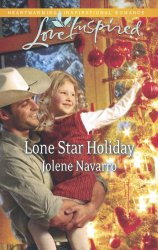
Christmas in Texas: Author Interview with Jolene Navarro

How did you come up with the idea for your Christmas themed book?
I have to admit when I first proposed this story it was set in the spring. My editor came back and said they had an October opening and thought this might be a great Christmas story. With family traditions, finding a home and overcoming loss I agreed. As I dove into the rewrites I realized this story is so much deeper because of the Christmas theme I was able to work with. The holidays can be the toughest times of year when dealing with grief. All the traditions and memories come to the surface. On the other hand I had a single mother that never had a true Christmas so bringing them together, well it was wonderful for me to watch the love develop.

Give me a short synopsis on the story for my readers?
Homeless, single mother Karly Kalakona has a new job on the Childress ranch. It is the perfect Christmas gift she and her son needed for their future. The single mom just never counted on dealing with not only a stubborn patient, but also his prodigal son.

Pilot Tyler Childress, has spent his adulthood exploring the world, avoiding the grief and regret he left on his family Texas ranch. He returns home due to his father’s illness. The chemistry he shares with his father’s nurse is undeniable – and has him thinking of sticking around past the holiday season. Can Tyler’s need for wings and her desire for roots make a perfect home full of love in time for Christmas?


What are some of your favorite Christmas traditions?
I love Christmas, from decorating the tree to gathering with my mom’s family on Christmas Eve and eating tamales. It’s all the little things like spending time with family, drinking hot chocolate, baking cookies and singing songs. I love Christmas music. I have a large collection of Nativity scenes that I set out each year.

What’s next? (future books, novellas, special appearances you want to mention)
I’m about to turn in book four in Clear Water Texas. A marine that is now a Texas State Trooper finds out his ex-wife had his son and never told him. Overnight he becomes a father to a four year old son and that son’s nine month old sister. It is Garrett Kincaid and Anjelica Ortega’s story. I should be getting a title soon. It will be out in September.

Any special awards or achievements you’d like to mention?
A Texas Christmas Wish was on the Publisher Weekly top 25 for two weeks. It was very exciting to see my book up there with Nora Roberts.

What’s the best writing tip you’ve learned or been given that you’d like to share?
To keep writing. To sit in the chair and write and once you finish your story don’t be afraid of digging deep and revising. Then move on to another story. Write, rewrite, finish and start over.


What do you know now about writing and publishing you wish you had learned sooner?
To sell or market your story well - you need to know your hooks. What will make an editor or reader know pick up your story over all the other books out there?

Any last words or tips?
Don’t forget to keep reading the best in the field. Once you start writing, finding reading time can be difficult. But like any field you have to keep an eye on what is going on with the ones that are most successful. But don’t confuse that with following trends.

If you'd like to learn more about Jolene and her writing, here's some options to do that.

Website: http://jolenenavarrowriter.com/
Amazon page: http://amzn.to/1kmRgSX

Tuesday, October 1, 2013

A Haunting Interview with Kathryn Knight

In honor of Halloween this month, I thought it would be appropriate to start with a writer who dabbles in ghosts. So, let's get started and find out how she webbed her eerie tale.

Let's start with the basics. When did you actually start writing your first book?
Thanks so much for having me here, Chris! I had most of Silver Lake written in my head for years before I typed a single word. I’ve always had a passion for reading, as well as an active imagination, so I often entertained myself by making up elaborate stories. 

How long did it take to complete your first draft? Who encouraged you along the way? 
My husband encouraged me to start writing the manuscript, and I finally began in a spiral notebook during an 8 hour car ride. It took me 2 ½ years to complete the first draft, and my husband continued to support my efforts throughout the journey. I re-wrote Silver Lake no less than 4 times before it was contracted by my publisher.  

Prior to writing paranormal/romance books, what other published writing did you have?
I had absolutely no publishing experience—I began writing Silver Lake before I fully understood just how challenging the entire process would be. And I’m grateful for my naivety at the time, because I’m not sure I would have pursued my dream had I been more knowledgeable. 

A life-long passion for reading served as the foundation for my initial attempts. Along the way, I spent hours and hours researching creative writing online, and I enrolled in a few courses. I never had a writing group, but I did have Beta readers. Then, I was lucky enough to find an editor who loved my query and initial chapters. She read the entire manuscript and gave me a ton of feedback when she had finished. While she told me she couldn’t recommend Silver Lake for a contract at that point, she thought it had tremendous promise. She was kind enough to give me details of what would have to change to make the manuscript marketable.

It was really a leap of faith for both of us. She had no guarantee I’d stay with it, or resubmit to her if I did. I had no guarantee of a contract even if I did go back and rewrite. But in the end, after one more small re-write, I sold my first novel to The Wild Rose Press.

Romance writing is such a broad term but it has many sub-genres. How did you go about finding a publisher for your type of story?
Romance is a huge genre, holding the largest percentage of the U.S. consumer market in sales. The great thing about that is there are now a number of publishers focusing exclusively on romance. So that’s where I began, sending out queries to smaller presses actively seeking romance submissions. The Wild Rose Press is one such publisher, and we have many different lines to categorize the different sub-genres. Initially I submitted Silver Lake to the Romantic Suspense line, but eventually it was turned over to Paranormal Romance, as there is a strong paranormal element (a haunting) driving the suspense.

What has surprised you the most about getting published other than the joy of seeing your book in print?
The incredible competition for readers surprised me. There are just so many books vying for attention, and self-promotion is an absolute must. It’s overwhelming at times, but it’s something all authors need to do in this market. I’ve come way out of my comfort zone this past year, doing book signings, author presentations, radio shows, and even a television interview.

What advice would you give someone who thinks they have the great novel in them just waiting to be told? What is the best advice you’ve been given or learned?
Don’t be deterred. Writing a novel is a tremendous endeavor, but if you don’t start, it will never happen. There is plenty of time along the way to strengthen your skills and improve your writing. Some of the best advice I received on writing involved pacing, and this came from the editor who initially rejected Silver Lake…when I was already in the query process. But several re-writes later, I can see how her feedback helped turn the manuscript into a true page-turner.

Another great piece of advice came from an online seminar hosted by a literary agent. She said agents like to see the “hook” immediately—the conflict, ideally, should be on the first page. If not page one, it should be within the first three pages. This is especially important for new authors.

How much time daily do you have for writing? Do you write full time? Or do you have a second job to support your writing?
I held two part time jobs while writing Silver Lake and Gull Harbor. Recently I resigned from one in order to spend more time on writing and promotion. I wish I could spend more time writing, but at this point in my life, with two boys, a husband, two pets, and my part-time job, I can only usually devote one or two hours a day to writing.

How much does social media play in your promotion of your books? What type of publicity do you do to promote your book?
Social media plays a very important part in my promotional efforts. For me personally, e-book sales far surpass print book sales, and my online presence helps generate interest in my books. I admit I dragged my feet at first, telling myself I could get by with just a Facebook author page, but now I’m all in, and it really does make a difference. Over the last year, I’ve branched out to Twitter, Pinterest, Triberr, and Google Plus. I maintain a website and a blog, posting frequently. I usually tell the new authors joining The Wild Rose Press to tackle one media platform at a time…otherwise, it’s just too overwhelming.

Offline, I do book signings, speaking engagements, and I’ve been on the radio and television. I even set up a booth at a Psychic Fair, since both my books involve communication with spirits. All this takes up a lot of time, but my books are my passion, so I push myself where promotion is concerned.

Was it harder or easier to write your second book? How do you write? Do you start with an outline? Or do a character study first?
 It was a hundred times easier to write my second book. I began Gull Harbor after my very last re-write of Silver Lake, and by that point, I knew so much more than I did when I first began writing. I understood exactly what point to start the book, how to pace the story to keep it constantly moving forward, how to scatter pieces of characters’ back stories into the current action, and what pitfalls to avoid. I had the outline in my head, and a strong sense of the characters. I finished Gull Harbor in record time, nine months, and it was accepted for contract immediately.

Thank you for your time, Kathryn. Everyone's path to publishing is different and I've enjoyed learning about yours.

If you would like to learn more about Kathryn's book or read her blog, here's the links:
blog          Silver Lake novel             Gull Harbor novel     


Saturday, December 8, 2012

Let's Talk Christmas Books! An Interview with Anita Higman


Tell my readers a little about your new book which is holiday themed and why you wrote it.
Even though A Merry Little Christmas is really a love story, I felt it needed some additional conflict, and some of the racial struggles of the 60s seemed to be the right choice for this particular plot. I grew up in the 60s, and I was always interested in the African-American Civil Rights Movement. In some ways I feel I’ve waited my whole life to write this book. It came easily to me in that it’s been percolating in my imagination for a long time. Even though it sounds like a cliché, A Merry Little Christmas truly was the book of my heart.

Did you grow up in the country as the farm scenes seem realistic?
I did. While the small towns in the book are totally fictitious I did grow up on a wheat, cattle, pig, and chicken farm in Western Oklahoma, and it was pretty much identical to the one in the novel. If the farm scenes seem realistic it’s because I got to know farm life quite well before I moved off to college at eighteen.

Your main characters, Franny and Charlie come from very different backgrounds, but are both looking for something very different from the way they've grown up. Do you think as humans, we all just have a "grass is always greener on the other side" mentality?
Yes, that is a human frailty that is easy to succumb to, and I’ve been guilty of it as well. But God is good about reminding me that he’s placed me on my own unique life-road, and it may have little to do with anyone else’s journey. Besides, in many cases when we get a closer look at someone else’s “lush green grass” it usually turns out to be turf.

Do you think that sometimes people don't pray for what they want because they are afraid of getting what they pray for?
Perhaps that’s true. It would explain why Franny is equally nervous and excited about the sudden answer to her prayers.

Is Franny's character based on any "real life" person?
Franny is like me in some ways, but she has a lot more courage than I have and more laughter in her heart. So, really, I want to be Franny when I grow up.

Was there a reason you added the themes of Christmas and music to the story?
My editor asked me to add those elements, and it was a blessing, since Christmas is my favorite time of year, and I love music. Also, female readers in general love novels that are set during the holidays, and I’m hoping the music adds a cozy feel to the overall Christmas theme.

What is your favorite Christmas song?
“The Holly and the Ivy.” The song has a melancholy feel to it, but it’s also beautifully sweet. I love the “Currier and Ives” style pictures my imagination conjures up when I’m listening to it.

What is your favorite Christmas tradition?
I love to have my gal friends over for brunch around Christmastime. I have been collecting tea dishes for many years, and so when I do a brunch, I go all out. Women are usually in a service mode most of their lives so when they come to my house I want them to feel wonderfully pampered. And by the time they leave, I hope their hearts are a little merrier and they feel we’ve celebrated Christmas well!
 
Does the song "Have Yourself a Merry Little Christmas" have a special significance to you?
The song makes me swoon it’s so romantic and lovely. It makes me think of being snowed-in with the man I love. Of course, that scene also needs a mountain cabin with a crackling fire and two mugs of wassail.

You have written everything from romance to suspense/thrillers to nonfiction. What is your favorite genre to write?
I love inspirational romance. There’s just nothing else like it for writing and reading. It naturally makes you want to curl up on an overstuffed couch and read the day away.

Anita Higman, has over thirty books published (several coauthored) for adults and children. She’s been a Barnes & Noble “Author of the Month” for Houston. She has six books coming out in the next two years. She won a 2011 RWA Readers Choice Award (first place) Her latest coauthored book, Love Finds You Under the Mistletoe, was on the Nielsen’s best-seller list for five weeks for religious adult fiction and #6 on the CBA best-seller list for fiction. Anita’s novella in the compilation, Once Upon a Christmas Eve, was given a four-star review in Romantic Times Magazine. If you would like to learn more about her writing or buy her books, here's a link to do just that.


Tuesday, December 4, 2012

Celebrating a New Book Launch by Nona King

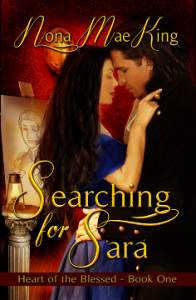
Searching for Sara, Heart of the Blessed Book One

Nona King's latest  inspirational [historical] novel, Searching for Sara, launches TODAY in hardback, paperback, and digital formats. Searching for Sara is not your run of the mill "romance", as this is simply a small facet of the story. Searching for Sara is the story of two people who face their daily tortures of fear and grief to find happiness and renewed faith.

 If you buy one today, contact her with your order number and the site where you purchased it from, and get a free copy for a friend or family member this Christmas!
Submit a review on Amazon (or Kindle), Goodreads, Barnes & Noble, or Shelfari and you can get a second free copy, or a free copy of one of my other books!

About the Book

Sara Little has ached to live in America. But being born of a single mother in London’s working class, she could only dream. Then, scrawled in hasty intensity, Sara receives an invitation to America. Drawn to the possibility of a new beginning, she follows God’s whisper and steps forward into the unknown. But more awaits than the realization of her dreams. Sara’s benefactor is handsome widower Christopher Lake, a philanthropist dedicated to helping the less fortunate redefine their future. Though devastated by the loss of his wife, he dedicates himself to her last request: To provide Sara the means for a brighter future. Sara’s gift of art inspires Christopher’s sponsorship, and he is determined to protect her gentle heart while propelling her into artistic society. Even if he must press her forward beyond her shy nature. But when a local paper weaves tales of a romantic entanglement, Sara is stricken by the stark reality of a growing devotion. Caught in the whirlwind of debuts and dinner parties with prospective patrons, she has fallen in love with the one man she believes she does not deserve. Could a servant girl hope to bless such a noble man to happiness?

Where Can I Buy Searching for Sara?

eBook
Amazon Kindle B&N Nookbook Smashwords Goodreads
  • B&N Nookbook - Pending
Print
Amazon B&N Nona King's eStore
  • Let me know if you would like a library cloth hardcover edition complete with dust jacket

About Nona King

Nona King is an independent writing professional for Angel Breath Books. She has dedicated herself to writing true-to-life characters, be they villain or hero, so her readers can experience life and its many passions. All her stories focus on faith, honor, and the importance of communication and trust in our relationships with others. You can find more books by Nona King at these locations: Fiction URL: www.NonaKing.com Blog URL: www.WordObsession.net Amazon Author: amazon.com/author/nonaking Shelfari Author: shelfari.com/nonaking Barnes & Noble Author: barnesandnoble.com/c/nona-king Goodreads Author: goodreads.com/nonaking Smashwords Author: smashwords.com/profile/view/nonaking

Tuesday, November 20, 2012

Wriiting Romance with Janice Palko author of St. Anne's Day

What inspired you to write this novel?

St. Anne’s Day was inspired by several things. At the time it all came together in my mind, I was watching Pride and Prejudice with Colin Firth and working on writing my grandfather’s life story. He was born and raised in the Lawrenceville section of Pittsburgh, where the novel is set. His family owned a bar there—I’m Irish—what else would they own? And for some reason, a high school memory popped into my head one day.

The episode happened when I was in high school at the now-closed St. Benedict Academy. It was an all-girls school, and when prom time came during my senior year, there were a few girls in my class who couldn’t find dates. As my brother and cousin Richard can attest, no single young male was safe from a desperate SBA girl in need of a date. They were both drafted as dates by friends of mine at various times during high school.

So how did you use this in your story?
One day before social studies class, we were trying to come up with dates for some of the girls when our teacher, Sister Jane Frances, came in and heard what we were talking about. She told us we needed to start saying the St. Anne prayer. None of us had ever heard of it. This is what she taught us: Dear St. Anne, get me a man as fast as you can.

That’s pretty unique. But why St. Anne?
St. Anne is the patron of housewives, and we all thought it was pretty funny. However, for the next few weeks, we said it every day before class. And don’t you know, every girl that wanted a date got one for the prom!

When did you start writing the story?
One night in 1998, I dreamed about a bar in Lawrenceville and someone who looked like Colin Firth. I couldn’t remember the details of the dream, but I remembered the feeling of romance that lingered when I awoke. So in the blender that is my mind, I began writing, trying to capture that feeling in a book, and St. Anne’s Day was the concoction that resulted.

What do you hope people will discover from your story?
What I hope people take away from the story is that no matter what has happened in your past, you can still find your true love.

Is this your first book?
St. Anne’s Day is actually the second novel that I have written. The first is entitled, A Shepherd’s Song, and is a Christmas story that I will be releasing after Thanksgiving. I started that one in 1996, and I began St. Anne’s Day in 1998.

When did you start writing?
I was always the kid in class who liked when the teacher assigned an essay, but I never dreamed I’d become a writer. I started my writing career in 1996 when I attended a class on writing greeting cards. I sent my first batch to the card company and sold one my first time. I thought that was quite exciting. But it’s hard to be funny and heartfelt in 20 words or less.

What did you decide to do then?
I began to attend creative writing classes at my local community college. When I read my first story in class, I made everyone cry which showed they got my point. I began to send out the pieces I wrote in that class and sold some of them. Eventually, I was asked to write a bi-monthly column in our newspaper. I continued to write, and ironically, I was asked to teach the creative writing glass that I first attended. I taught that class as well as Memoir Writing, Freelance Writing, and Writing for Children.

Where have you been published?
I’ve had numerous articles appear in publications such as The Reader’s Digest, Guideposts for Teens, Woman’s World, The Christian Science Monitor, The Pittsburgh Tribune-Review and The Pittsburgh Post-Gazette. My work has also been featured in A Cup of Comfort for Inspiration and A Cup of Comfort for Expectant Mothers and Chicken Soup for the Single’s Soul.

One of the magazines for which I wrote articles, Northern Connection, hired me to be its executive editor. I’ve been the executive editor there for six years, and this spring I was asked to be the editor of its new magazine Pittsburgh 55+ as well.

How did you go about getting the book published?
I sent St. Anne’s Day out to numerous agents and publishers and even pitched it to Harlequin at the RWA conference in New York City in 2003. They requested the entire manuscript and many of the other agents expressed interested it, but it was ultimately rejected because it didn’t fit into any one genre. St. Anne’s Day is a romantic comedy with Catholic overtones, but I was told it was too edgy to be an inspirational and too tame for the Fifty Shades crowd.

I say my characters aren’t saints, but they are trying to be. They have hearts, minds, and consciences, but like the rest of us make mistakes. In retrospect, I’m glad it didn’t fit in any genre completely. It makes the story unique. If I had to compare it to any other book, I’d say it’s like a Maeve Binchy novel. Since it would probably not find a home with a traditional publisher, I independently published.

I’m a control freak so I like being responsible for the success of the book. No one has more invested in it that I, and no one believes in the story as much as I do so it made sense that I be the publisher and promoter of it.

How have you promoted your book?
I launched this book in August with a party at my home for friends, coworkers, and family and on-line on my blog and at the Beach Book Blast site. I’ve been to a local Book Fest and will be appearing at some libraries in my area as well as visiting with a book club that selected St. Anne’s Day for its October book selection. I’ve recently been book my first event for April so as the word spreads, I’m getting more offers.

Other than seeing the book in print, what is the most exciting part about having the book published?
The most exciting part of having my book published has been the reaction of readers. I thought the story was good, but it’s gratifying to have people contact me to tell me that they loved the book, that they laughed out loud and have recommended it to their friends. The other most exciting thing is one of the readers told me that on a whim she began to say the St. Anne prayer and has found herself in a very promising relationship with a lovely man.

Is there anything that you have found frustrating in the process?
I really haven’t found the independent publishing process all that frustrating. I have some background with word processing and am employed as an editor so prepping St. Anne’s Day for publication wasn’t all that difficult for me.

What do you wish you had known sooner about publishing?
I wish I had known much sooner how much my novel would appeal to readers. About 18 months ago, I posted several chapters of St. Anne’s Day on my website with the hope that an agent or editor would stumble upon it and bestow a lucrative book contract on me. What happened was that several people stumbled upon it and asked where they could buy the book because they would like to read all of it. I then realized that my market had found me instead of the other way around. Instead of trying to appeal to an agent, I was able to appeal directly to readers—the people who really count when you are writing.

What advice would you give aspiring authors?
When new writers ask for advice, I find it very difficult to answer them. There is just so much to tell them, but the first thing is to love writing. I have been writing professionally for 15 years, and some of those years, especially the early ones, without ever making very much money. In his book The Outliers, author Malcolm Gladwell states that for most people to become adept at an endeavor, it takes 10,000 hours of practice. I believe that. I have spent countless hours writing. So if you are willing to put in your 10,000 hours, then be a writer.

I like that. You just don’t magically become a writer. You definitely have to hone your craft. If this has peaked your interest to buy the book it is available at Amazon in paperback as well as Kindle version, Barnes & Noble Nook store and on Smashwords. She's got a new book out just in time for Christmas as you can see by the cover above. Could make a great Christmas gift!

If you would like to get to know the author better, drop by her blog where you can also register to receive her newsletters. Just click here 

Tuesday, June 21, 2011

Interview with Historical Romance Writer, Jeanette Baker

Thinking back to when you wrote your first book in 1992, in what ways have you seen publishing change over the years? Is it easier or harder to get a book published?
Publishing has never been easy. The competition was, and continues to be, fierce when courting major New York publishing houses. The difference between 1992 and 2011 is that e-publishing has made it possible for anyone to publish.

The challenge is distribution. Without the enormous promotional clout of major publishers ratcheting sales figures into the tens of thousands in a single month, an unknown writer will sell no more than 50 books in a 6 week period. The upside is that the books don’t go out of print after 3 months and may, eventually, establish a web presence.

Do you do more to promote your books now than then?
I do the same amount of promotion for my books but, due to the Internet, today, the promotion is mostly virtual.


Your first book was a historical book on Scotland and then you moved on to Irish history. What type of research do you do in writing something with a historical base?
My inspiration always begins at a particular site with a particular event that intrigues me. For example: NELL began with a visit to Maynooth Castle, home of the Fitzgeralds, the uncrowned kings of Ireland. Henry Tudor, a cousin, was terrified of their power and on a trumped up charge executed all 5 male heirs in one fell swoop. He made the fatal error of misjudging the courage and determination of one member of the family, a woman, Eleanor, who made it her mission to save the last male left in her family, an 11-year-old boy.

After the initial premise, I spend time reading as much as possible about the era and the family. This part, I think, is the most essential part. Historians help the fiction writer bring authenticity to her story. Finally, I spend time at the site, walking, breathing, imagining what it must have been like.

So much has changed in 500 years. The giant forests are gone, bogs have been drained, there is more sunlight and grass covers the hills. Still, many times, the ruins are still there and if one has an imagination, the ideas come.

When you spend time in Ireland in the summer do you stay in Innishmore or do you travel around looking for ideas for stories?
I live in my house in Tralee, a town in Kerry. My husband is a Kerryman and although he has acclimated to California, his heart is Irish and he can’t be away for too long. We do travel throughout Ireland and have yet to see it all.

Do you read contemporary Irish writers? If so, who are your favorites? I happen to be a fan of Maeve Binchy and I love her husband’s picture book illustrations.
I, too, love Maeve Binchy and Nuala O’Faolain, as well as English writers, Johanna Trollope, Elizabeth Buchan, Marcia Willett, Georgette Heyer and American writers, Anne Rivers Siddons, Joan Wolf, Elizabeth Berg and so many, many more.

How much “artistic license” do you use in creating locations for your stories? How do you react when a reader complains that your descriptions of areas aren’t correct?
Not much artistic license actually. Sometimes I combine a bit, but only when I think it makes for a better story. Not that I haven’t made mistakes. Of course, I have.

I usually ignore reader complaints because usually the criticism is accompanied with words like, “I loved the story and I will definitely read more of this author’s works,” or “this author writes beautifully so I won’t cross her off my list.” How can a writer argue with reviews like that?

Sometimes I thank the reviewer for reading the book because a bad review is always better than no review and the person has taken the time to read my work. Writers cannot be thin-skinned and most of the time, we can learn from our readers.

Your bio says you won a RITA award. What category was it for? How did winning that award boost your ability to get publisher’s attention?
I won the RITA for my novel, NELL, in the paranormal romance category. Pocket, a division of Simon & Schuster had already published six of my previous books. What the RITA did was boost my advances and create an interest with several different publishers. Ultimately, I made the decision, with my agent’s advice, to change publishers and go with MIRA books.

I remember when Barbara Cartland was the biggest name in romance writing (and the most prolific author)and the books that she wrote were termed as “bodice busters.” Now it seems that Nora Roberts is almost perennial the winner of a RITA award. How do you see the publishing of romance books changing?
I don’t know that the perception of romance has changed. People still think of romance novels as bodice rippers. Some, I suppose, are, but most are not. Romance novels, meaning novels with a romance in them, span the range between the bodice ripper and those that have a romance somewhere in the book but it isn’t really the focal point of the story.

I haven’t kept up with RITA winners because I haven’t written romance for quite some time, although 4 of my romances, LEGACY, out in March, CATRIONA, an August release, with IRISH LADY and NELL to follow, are being reissued by Sourcebooks. Romance sales represent 25% of all fiction sales.

Romance readers are extremely loyal. Publishing for the romance market is marginally easier than other genres because publishers must fill that demand. For perspective writers, it can be a foot in the door.

I see you’ve written for several publishers Sonnet, Pocket & Mira. Why the changes?
Sonnet was label created by Pocket books to feature historical novels. I’ve written for several different publishers and moved on when I was offered contracts that offered more money, greater exposure and more liberal artistic license. Ultimately, when the kids need braces, the money comes in handy.


Your current book, WITCH WOMAN, is only available in an e-book format. Why is that?
WITCH WOMAN is still only in e-book format. I was interested in determining exactly how e-publishing would compare with print publishing. Because the book is relatively new, I have not yet determined the advantages and disadvantages of this method of publishing. I am always looking for a print publisher who shares my vision for my books.

What advice would you give new writers who want to write historical fiction?
Read historical fiction. Watch period films. Travel. Join a critique group. Take classes. Attend conferences.

That's it for today's interview. If you would like to learn more about Jeanette and her writing go to jeanettebaker.com or visit her on her Facebook pages: Jeanette Baker, Jeanette Baker – author, Witch Woman. You can also learn more about her on her blog: http://Everythingirishfromanamericanperspective@blogspot.com