Blog Archive

Showing posts with label writing for the education market. Show all posts

Tuesday, March 8, 2016

An Education in Writing for Children: Author Interview with Janet Halfmann

Five years ago, I started doing author interviews on this blog. Today's interview is with one of the first authors I interviewed in the beginning. I thought it would be fun to see what's she's up to today. As I expected, she is still busy writing and has some interesting insights on the craft. So without any further ado, let's begin the interview!

You’ve been publishing books for more than 15 years, starting with writing for the educational market. Is that a good market for new writers to try to break into the field?
I think writing for the educational market is a good way to break into the field. When I was starting out, I submitted writing samples to various educational publishers and also submitted proposals to them for possible books and series. I wrote series books on bugs, habitats, architecture, “Plant Tricksters,” and more. Educational publishers are in constant need of good writers for the many series that they do every year.

How important is having previous writing credits to those publishers?
I really can’t speak to how important it is to have previous writing credits. Mostly, you want to show the publishers in some way that you are a good writer and can write for children.

How do you go about finding just the right trivia bits about your animal subjects that will intrigue a publisher? How many sources do you use to do research?
I always choose animals I’m interested in learning more about. I try to write about what I think kids will find fascinating. For example, Animal Teachers came about because I noticed that many animals teach their young skills such as swimming, just like humans do. I thought kids would enjoy seeing how animal lives mirror their own.

Eggs 1, 2, 3: Who Will the Babies Be? grew out of research I was doing on bird eggs. I found bird eggs fascinating with their many colors, patterns, and sizes. I figured if bird eggs were so captivating, the eggs of other animals likely were, too. To make my Eggs book more interesting, I created it as a counting book, riddle book, and a book that in a few words told a lot about the animals and captured their habitats. I was delighted when Blue Apple Books decided to make it a lift-the-flap book.

I do a terrific amount of research—mostly books, magazine articles, and internet pieces written by experts. I especially like to read first-hand accounts of animal behavior by scientists and naturalists in the field, because their accounts have lots more specific details, such as exactly how the mom gives a baby a bath, teaches the little one, etc.

What makes a non-fiction book sellable? Is it humanizing the animal? Choosing something that’s cute and cuddly or totally weird?
This is a tough question. When writing about animals, I try to make them come alive for the reader by including such things as the noises they make, their specific behaviors, etc. I also try to use lyrical language.

Before submitting, I always check the publisher’s catalog to make sure they haven’t already done a book on my subject. Some of my stories appeal to editors, and others don’t, so I don’t know the magic formula.

One of your favorite books as a child was Rumpelstiltskin. Those classic fairy tales were closer to 2000 words. Why do you think today’s stories for children are less than one-third that amount?
I think children today expect everything in their lives to move faster, including stories. Editors are definitely looking for shorter stories.

You’ve written numerous books for the Smithsonian Institute. How did that come about?
I saw some of these nature stories at my local library and was very impressed by them. They were very similar to the manuscripts I was writing. The company doing these books in conjunction with the Smithsonian was Soundprints. I looked through their catalog for an animal that they didn’t have in their collection, then spent about four or five months writing the very best story I could about a Sea Star. Soundprints didn’t buy that story, but later one of their writers dropped the ball on a story about the Brown Pelican. I was asked if I could write that story in two weeks—and I did. That led to nine more books. In these books my copy, the art, and the stuffed animals that came with the books all had to be approved by scientists at the Smithsonian. Sadly, Soundprints and the company that succeeded it went out of business a few years ago, and the books are no longer in print.

Luckily, the Sea Star story went on to have a life of its very own with another publisher. With more fine-tuning, it became Star of the Sea: A Day in the Life of a Sea Star, published by Christy Ottaviano/Henry Holt in 2011.

What type of publicity does your publisher expect you to do in promoting your book? 
I work with several publishes, and each one is different. But in general, publishers like their writers to do whatever they can to get the word out about their book. That can include speaking and appearing at book festivals and conferences, at bookstores, schools, libraries, etc. Publishers also like writers to contact people in their various networks to let them know about the book, such as traditional and social media, bookstores, friends, etc.

What do they do on your behalf?
The publishers have great networks and sales teams for distributing my books to schools, libraries, nature centers, and other markets. They also promote my books at various trade shows. The publishers also submit my books for reviews in major journals and for awards.

What did you learn in writing your earlier books that helped you in expanding your writing career?
The more I wrote, the better my writing became. Also, getting published by educational publishers gave me the confidence that I could indeed be a children’s author.

Also, about nine years ago, I joined the Society of Children’s Book Writers and Illustrators. We have a very active chapter in Wisconsin where I live. SCBWI offers all kinds of opportunities to hear editors, art directors, other writers, agents, etc. talk about the writing craft and so much more. The organization also provides many opportunities for promoting one’s books.

What do you think is the most positive aspect of children’s books going digital?
I think with digital books, there are even more opportunities for children to read. Children now can always have books with them—on a phone, tablet, or some other electronic device. Several of my books are e-books, as well as print books.

What frustrates you the most about the current publishing market? 
It frustrates me that more and more publishing houses are becoming closed to writers such as me who don’t have an agent. I was lucky to get my foot in the door of several publishers before they became closed houses. It is becoming more and more imperative that one has an agent in order to get your manuscripts even in the door of a publishing company.
What is the best advice you’ve been given about writing or that you’ve learned that you would like to pass along?
The best advice I ever heard at a writing workshop was that each word in a manuscript must “sing.” I realized that I wasn’t doing that. Now, I make sure every word counts. A good way to hear and feel the rhythm of a manuscript is by reading it aloud. I read each of my manuscripts aloud about 100 times before I send it off to a publisher.

What works do you have in the process?
My book Grandma Is a Slowpoke was released in February from Star Bright Books. The story was inspired by walks with my grandchildren when they were preschoolers.

Grandma Is a Slowpoke is the story of a little girl who goes on a walk with her grandma, but her grandma is such a slowpoke. She stops to take a close look at everything they see in nature. In the end, the little girl sees a muskrat that Grandma didn’t notice, and wants to linger longer to watch this amazing animal. The little girl becomes a slowpoke just like her grandma, and they are happy being slowpokes together. The book is also the story of a loving bond between a grandchild and her grandma. Kirkus Reviews called it “a sweet celebration of intergenerational slowpokery.”

Another picture book that I am extremely proud of will come out in Spring 2017 from Lee & Low Books. It's titled, Midnight Teacher. This is the true story of a courageous enslaved woman who believed in the power of education and risked her life to teach others to read and write.
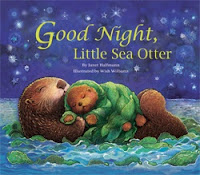
Also, I am shortening the text for my book Good Night, Little Sea Otter. It will come out as a board book for younger listeners this fall from Star Bright Books. I am very excited about this because this book is extremely popular as a gift for baby showers.

That's all for today's interview. I hope you're inspired to keep on writing and finding the genre that works for you. If you'd like to know more about Janet and writing for the children's market, here's some options to get you started.

Janet’s Website: http://www.janethalfmann.com
Grandma Is a Slowpoke Publisher’s Page: http://www.starbrightbooks.org/details.php?id=540
SCBWI: http://www.scbwi.org

Tuesday, May 17, 2011

Interview with author, Carol Peterson and Writing for the Children's Educational Market


Today's interview is with Carol Peterson who has worn many business hats. She is a licensed real estate broker, has owned and operated her own small business, and is an actively trades in the stock, bond and futures markets. This background led her to write for children and teach them about handling their finances. So let's find out how that writing began.

How did you begin writing for children? Were you a teacher?
Actually, I was never a teacher. I was one of those ever-present moms in the classroom. I was the scout leader and the organizer at charity events. What I learned is that kids learn best when it’s fun and fun usually means “doing” something. My 4 teacher resource books are filled with activities that help kids understand the curriculum by making learning fun.

Your blog says you are a trader in the stock, bond and futures markets. It says that’s what inspired your to create FUN WITH FINANCE. Tell me how that all came about?
I’ve always been interested in financial stewardship. When I looked at my background—stock market, real estate, small business owner—it quickly became my focus to help raise up a generation of financial superheroes. I had a ton of fun writing Fun with Finance. It includes readers theater scripts, activities and board games for each of 12 areas of finance. I don’t have any other books for children in the works; but my mind keeps spinning…

You do “mini events” for students. Tell me about how that started? How do teachers need to plan for it?
Basically the “mini events” are selected activities taken straight from my books. Each of the 4 teacher resource books is filled with activities to make kids’ curriculum interesting by making it fun. Teacher need to do very little to plan. I arrange for supplies and lead the activities and discussions.

I see you’ve also done what looks like a curriculum called Jump Into Science. How did this evolve?
Jump Into Science is another curriculum-based teacher resource. It was a result of my experience in classrooms. I would watch a science fair consist of 7 experiments of begonias grown to music and 14 vinegar and baking soda explosions. I simply took grade-appropriate science experiments and grouped them by type of science, added an introduction to the basic scientific theory and included tips for creating science fair displays.

Now, a teacher can select the single area of science currently being taught (such as ecology or biology) and have a supply of experiments kids can perform and present. The publisher for all of my teacher resource books is Libraries Unlimited/Teacher Ideas Press.

How did you get involved with writing for the education market? How do you find your leads for writing for the education market?
When I began writing for kids, I really, really wanted to write picture books and humorous adventure novels for boys. Meanwhile, I kept reading the standard writing advice: write what you know. And all my experience with kids said I know how to make learning fun.

As for leads? My copy of CWIM (Children’s Writers and Illustrator’s Market) was well worn and dog-eared with red notes in the columns, yellow highlighted pages, and multi-colored post-it fringe. In other words, I did my research on publishers—which publishers were looking for what. That research is one of the hard, but necessary, parts of writing for publishing.

I see you are a member of SCBWI. How has that helped you? Have you attended any of their conferences?
One of the very first things I did when I decided to write for kids was to join SCBWI. SCBWI provides its members with wonderful resources and gets writers and illustrators together in a professional manner so we don’t feel like we’re doing this all alone.

I attend every regional conference I can. Fortunately we have quite a few of them in California. I have not yet attended either the summer LA or the winter NY conference. But it’s a goal.

I understand you are active with a critique group called the Inksters. How did you get involved with that group?
We Inksters have been together since early 2001. All of us write for children but many of us also write for adults. We all began writing picture books, but have expanded into non-fiction, middle grade and young adult novels. The 5 of us “meet” online, sharing information and providing critiques and feedback whenever it’s needed. We also try to get together for a writing weekend once a year. And believe it or not, we even get some work done!

For those who want to break into working in the educational book market, what advice would you give them?
Before attempting a book proposal, I’d pursue magazine articles. Start with articles for local papers and periodicals—both for teachers and parents. Don’t ignore the huge home schooling market. Work up to national magazines that have an educational bent, such as the Cobblestone group.

Then go through your state’s curriculum standards. See what is being taught at each grade level. Talk to teachers and librarians and learn what they could use. Then settle on a topic, give it your unique slant and create an awesome proposal. Research publishers and send the proposal off only to the appropriate ones. Don’t give up.

You seem to cover all the bases in writing. I see you also do reader’s theater. What tips do you have for those who would like to write scripts for children?
I consider readers theatre to be a form of learning activities, so naturally I include it in my books whenever I can! Around the World through Holidays and Fun with Finance both include readers theatre.

Tips for writing readers theatre? Read what’s out there. There are many examples online at teacher sites. Make sure you have written grade appropriate scripts. Make it fun.

What do you do to promote your book?
Not enough. I have a website and until recently was part of a joint marketing website with several other writers. I’m in the process of organizing a speaker’s group with other children’s writers with the goal of coordinating marketing our books from a school visit and conference speaker point of view.

What do you know now about getting published that you wished you had known earlier in your writing career?
One thing I’ve learned is specific to the educational market. It was hard to compare my books to those of my friends who published with traditional publishers. My numbers are nowhere close to theirs because the market is so different. Now I recognize that if I sell 1000 books to teachers and each teacher uses my book one time for a class of 30, I’ve reached 30,000 children. That’s what it’s all about.

That's all for today's interview. If you would like to know more about Carol's books and her writing go to her website at http://www.carolpetersonauthor.com/

Tuesday, March 8, 2011

Interview with children's education author, Tina M. Cho

My interview today is with author, Tina M. Cho, a former elementary teacher and now a freelance writer specializing in writing for the educational market. She’s had published pieces in Parents Magazine, Clubhouse Jr. and Berry Blue Haiku Magazine. Just last month Lakeshore Learning, an educational publisher, released 16 educational phonic books that she did for them. Today we’ll learn what it’s like to work for that market.

Let’s see how that started. What made you make the transition from teaching into writing for children?
We had moved to CA, and because of the current economic status, most schools were not hiring elementary teachers. I decided to look into something else I had always wanted to do...writing for children. It's my dream to have a picture book. I want to leave a legacy for my children.

You found your first critique group through SCBWI. How many meetings did you attend before you brought in your first manuscript for review?
Nancy Sanders, the group’s leader, invited me to her critique group, CHAIRS, and told me I could bring a story. That first meeting, I brought a manuscript.

I understand it got good reviews from the critique group. What was that piece about? What happened to that story?
My first piece was a Christian fiction story for Pockets Magazine, about a 6th grade girl with a terrible attitude, who had to travel with her family on Thanksgiving. I rewrote it according to the critique group's suggestions, and then submitted it to the magazine. It was rejected.

How did you get involved with writing for the education market?
Some ladies in our CHAIRS group wrote for a Christian school's reading curriculum, and they invited me to join. I got connected with the editor and started writing about 2 stories a month for them. They gave Christian themes and a word list for their leveled reading stories. In fact, one of these stories was my very first story to be accepted. I still write for them and have written 38 stories now. This was my first work-for-hire assignment.

Having a teaching background helps me, as I am familiar with many educational publishers. I also like writing for teachers. So I came across an ad writing activities for education.com, and wrote 41 activities for them. I also submitted a lesson plan which was accepted by the educational publisher, Gryphon House, for their anthology of lesson plans called Learn Every Day about Our Green Earth.

How do you find your leads for writing for the education market?
I find most of my leads online. I read Writer's Weekly, Writing for Dollars, Sally Stuart's Christian Writer's Marketplace Blog, and another lady I'm in a critique group with, Ev Christensen, has a wonderful list of educational publishers http://www.evelynchristensen.com/markets.html

Tell me how this 16 book set for Lakeshore Learning.How did it begin?
Since I was still hunting for a teaching job, I also read the Los Angeles Times Career Builder online. I came across an ad by Lakeshore wanting an educational writer, someone with a teaching background! Of course, I had heard about Lakeshore, they are the "Cadillac of educational resources" in the teaching world. My co-teachers and I used to drool over their catalogs, wanting all their stuff. But as teachers, we were too poor to buy most of the products.

What were the guidelines from Lakeshore?
I submitted my teaching and writing resumes and the project manager emailed me with a writing test. I had to write 3 short samples on three different grade levels with questions and answers, according to their directions. For the project that was assigned to me, the product developer already had in mind which phonic rules would be emphasized for each book. My guidelines were the phonics rule, word count, grade level, and supporting nonfiction facts with a bibliography. I was free to come up with the topic for each book. I also had to give illustration guidelines, for exactly what I had in mind.

Do you work as a team with others?
I attended a meeting for this project, walking into a room of about 10 other people. I could have died! Editors, product developers, other writers... I worked closely with the developer and editor assigned to me.

How do you feel about the credit being under a group name?
Of course, I'd rather have my name on all the books. But I've heard other publishers do this, and even ghost-writers don't get their names on books. I just hope editors who are looking at my resume understand.

I know you are a big fan of Nancy Sander’s Book, Yes! You Can Learn How to Write Children's Books, Get Them Published, and Build a Successful Writing Career. What was the best advice that you learned in reading that book and working with Nancy?
It's hard to pin it to one point. Nancy has taught me EVERYTHING about writing! I guess the biggest advice I take from her book is to just query, query, and query some more. Never give up.

For those who want to break into working in the educational book market, what advice would you give them?
Check out educational books at the library or schools. Many of these are nonfiction sets specifically for school libraries. Ask for educational publishers' catalogs. Study the kinds of books they publish. If you feel you could write one, send a query of ideas to them.

If you like to learn more about Tina and her writing, go to her blog at http://tinamcho.wordpress.com. She also Has some great educational tips for parents and teachers which include activities and book reviews.