Blog Archive

Showing posts with label writing non-fiction. Show all posts

Tuesday, September 13, 2022

Writing to a Niche Audience: Author Interview with Mary C. Findley

I am amazed by all the books you have published over the years. What’s truly outstanding is that your book series have been written in four quite different genres. What's genre intrigued you to write the first book? 
Thanks! My first genre was historical fiction, and I wrote the Benny and the Bank Robber series for boys around ten, inspired by my oldest son. He turned out not to care much for reading, but the Benny series has grown with Benny, from age ten to nineteen so far, and it’s been our best selling book. It’s a special favorite with grandmothers looking for family-friendly, as well as exciting books to read to their grandchildren.

A sizable number of your books are co-written with your husband. How does that work?
My husband Michael and I co-write our non-fiction books. We have a book that breaks down into a series detailing the history of America’s unique form of government. Go back in time to Nimrod and the Tower of Babel and see the founding of Secular Humanism. A ruler had a high priest direct the people to worship the god on earth. In our homeschool series, with teacher and student editions, from Creation forward, history, science, and literature all try to direct attention away from the true God and His Word.
 
Your books are independently published under Findley Family Videos. Do you and Michael do all the non-writing stuff as well or do you hire it out? 
I do most of the editing, formatting, book and cover design, and I also upload and maintain the books on all online book sales sites. Until recently Michael was an over the road truck driver with no time for the day-to-day marketing maintenance.
 
What’s the hardest part for you in publishing and marketing your own books?
The hardest part of publishing is successfully marketing. Still working on that, but I know live events where you meet people and talk to them about yourself and your books really seem to get people interested.
 
What is the most difficult part of writing for you?
Starting is probably the most difficult part. I have an idea and an ending, usually. What I think is the beginning isn’t always where the story starts. My focus is on the characters and their conversations. Scenes come later, after they have told their tales. I don’t “talk to them,” as some writers put it, but I get to know them. They grow and the story grows around them.
 
What’s the best encouragement you’ve had in your writing?
Reviews that say things like, “Knowing some of Findley's background for teaching and evangelizing the message of the Gospel, I can see wonderful teaching moments while still making it very entertaining without being preachy. Youth love being taught when it is fun, so she has a wonderful platform here for this.”

Marketing is the biggest key to getting sales. What is the best marketing source you've used that has produces more sales rather than just clicks?
Since I have little money to spend on ads, I rely on both live events and consistently showing up in groups for readers. I talk to people, be genuine, friendly, and attentive to what they say, and present my works as offering excitement, mystery, and unforgettable characters that honor God and His Word. 

What do you know now about writing you wished you had known sooner?
I really wish, still, that I knew more about targeting the right kind of readers who are interested in what I write. It’s a niche audience, yes, but there are more who would read our books out there, I’m sure.
 
What is the best writing advice you’ve received or could give?
Be sure you have the skills necessary to write well, the self-discipline to finish and polish, and it doesn’t hurt to be “multi-talented” or skilled so you can do as much of the self-publishing process yourself as possible.
 
Are there any other points about writing you would like to add?
People generally talk about how much they love my characters and keep reading to discover what happens to them. So I suggest you may not need as much detailed world-building or “setting the scene” as you do strong, solid, relatable characters that people can get invested in, cheer for, and fall in love with.
 
What’s next on the horizon for your writing?
Right now we are trying to focus on creating alternate media versions of our works – game-like visual novels and videos. Outcome Unknown, a Sci-fi story about a husband and wife team creating balloon ships for mining the outer planets in the near future of our solar system. They face government interference from their own Space Empire government and fragmentary Earth empires seeking to restrict freedom and profit from the hard work they have done.
 
That's all for today's interview. If you'd like to learn more about Mary's different genres and fiction and non-fiction works, here's how to get started.

FREE eBook - First book in each of these series is free.
Benny and the Bank Robber (YA historical Adventure series) https://www.amazon.com/Benny-Bank-Robber-4-Book/dp/B00X6B4IIK/
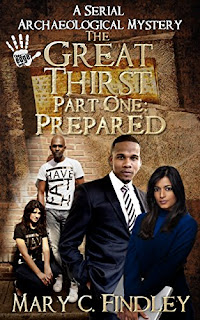
The Great Thirst Boxed Set (Christian suspense adventure and archaeological mysteries - includes 7 short novels) https://www.amazon.com/Great-Thirst-Boxed-Set-Archaeological-ebook/dp/B01B2HHD90/
 
Antidisestablishmentarianism – 5 book non-fiction series. A study of Secular Humanism and how it shapes religion, values, and science.  https://www.amazon.com/gp/product/B00X6AMPBS

Friday, July 15, 2022

Around the Web: Best Posts on Writing I've Discovered This Week

I subscribe to and follow several authors, blogs, and writing sources throughout the week.

Each Friday, I include links to FIVE sources to improve your writing that I found useful.

Here are my offerings for this week. Hope they inspire you to start writing and continue writing! 

I signed up for a 5 day webinar on writing for kids. Thankfully, it ends today. I am overwhelmed by all the info I learned. Here's a link from one of the presenters that is very detailed and extremely helpful. 

Not sure whether or not you want to promote your book with Amazon ads? Read this. https://blog.reedsy.com/guide/amazon-ads-for-authors/

When you're doing self-editing, make sure you keep these in mind. https://blog.bookbaby.com/how-to-write/good-writing-habits/seven-writing-mistakes

If you write non-fiction, here's a publisher that might be a fit for you. https://authorspublish.com/mcfarland-company-inc-now-accepting-manuscript-proposals/

Have you ever considered launching you own writing webinar or course? Here are some tips on how to do that. https://www.chriskyle.com/workshop?cookieUUID=f682d30e-096c-49e9-bc40-cc80a0d43378

If you've read some great posts this week, that you'd like to share let me know. I always like learning more about the craft of writing and marketing books.

Tuesday, October 7, 2014

Writing for the Long Haul: Author Interview with Paul Ellis

Since writing is your full time job, how is your day set up?
If I was to describe an idealized writing day, it would consist of me writing from 5:30 am to about 11;00 am, going for a run, then spending the afternoon running errands. I am most creative in the evening, so I would get back into it about 4pm and finish about 7:00 pm, before the kids go to bed. Let me add that I tend to write in bursts and don't keep this routine going for more than a few weeks at a time.

How long does it take for you to complete a book?
 Each one of my five books has followed a different track and I can't say I have this figured out by any stretch. My first book took two years to write; my last book took two weeks (not counting rewrites and revisions). I don't know if I'm getting better, but I am getting faster.

Your first books were Christian themed to answer adult questions on faith. Your latest book is for children. Why the change?
When I began reading stories to my children, I was miffed that the fathers were often untrustworthy or absent. You could write a PhD dissertation on the absence of fathers in fairytales. As a parent, I didn't want to contribute to this stereotype so I began making up my own stories. At first, the stories were based on events of the day that my children had experienced. Later, they became more imaginative and adventurous.

What is the best way for you to get your creative juices flowing?
 My best ideas come when I am resting. The seed for The Big House came on a Sunday morning when I was sleeping in. In my mind's eye I saw a strange and intriguing sight that became the rooftop scene in the final chapter. It took me two weeks to unpack the story and write it all down. I read it to my kids over a long-weekend holiday and their reactions told me the story was worth publishing.

What children's authors inspire you?
My tastes are fairly mainstream; Tolkien, CS Lewis, Roald Dahl, Dr. Seuss, etc. I also like Stanislaw Lem, the Polish writer. I try and pay attention to what my kids are reading. They are voracious readers. My wife regularly returns from the library with 50-60 books which will all get read in a day or two. I'm not exaggerating. If my kids get excited about a particular book I'll check it out.

Your books help people understand the Bible in everyday terms. What do you think is the biggest myth about Christianity today?
The greatest and most damaging myth is that God is something other than a good Father. Religion has told us that God is a judge and executioner, but Jesus shows us that God is first and foremost our Father who loves us as we are and not as we should be. Perhaps this myth - that God is not a good father - explains the absence of good fathers in the stories we tell our children.

Incidentally, the single greatest story of all time may be the one Jesus told about the prodigal son and the father who eagerly watched for his return. It's the story of the human race in just 500 words.

 What did you know about writing and publishing before you completed your first book?
Having worked in academia for 15 years, I am familiar with the publish or perish routine and my first book was published by a university press. My number one gripe with the traditional model is how the lion's share of the profits ends up in the hands of big business. It's like getting to keep only 15% of your baby. Another gripe is giving up control over things like cover design.

What made you decide to set up your own publishing company?
 I set up KingsPress ( http://www.kingspress.org/) two years ago for a variety of reasons, but mainly because I was curious to see if I could publish myself. It has been a lot of fun doing all those things that authors normally never do, like negotiating foreign language rights and working directly with illustrators. I created the cover of my first self-published title, The Gospel in Ten Words, ( http://www.tenwordgospel.com/) and was excited when it won a prize in a design competition.

 How much does social media play in your promotion of your books? 
 I was initially reluctant to join Facebook, but a friend showed me how to get started and once in I was hooked. That said, I actually don't invest a lot of time in "managing" my social media platform. A far superior means for connecting with my readers comes through my blog, Escape to Reality

 What do you know now about writing/publishing now that you wished you had known sooner?
 Because technology is constantly advancing, it's helpful to have a "suck it and see" attitude. If you have a clear goal, such as getting a finished and polished book onto Kindle, don't spend too much time trying to figure out in advance how to do it. Just do it and learn as you go.

What is the best advice that you've learned that you would like to pass along?
Writing is meant to be fun. Perhaps I'm naive, but I don't believe that the creation of art is meant to be a caffiene-fueled drudge. My strong view is if it's not fun, don't do it. Life's too short.

What other works do you have in the process?
I am currently working on a compilation-type book based on the best articles from Escape to Reality. I also have a children's series cooking in the back of my mind, but I'm not ready to talk about that one yet. Right now much is hanging on The Big House and whether readers like it or not. My kids loved it, but they're biased. Whether anyone else likes it remains to be seen.

What would you like readers to take away from reading your books?
I want them to go "Wow!" either because they have learned something about their heavenly Father who loves them with an extreme and over-the-top kind of love, or because they have read a story that fired their imagination. For instance, The Big House is about a couple of kids who discover that their father is about a billion times more awesome than they think he is which is just about the greatest discovery anyone can make.

That's it for today's interview. If you would like to learn more about Paul's writing and his books, here's the simplest way to do that.

 Paul's blog: http://escapetoreality.org  The Big House: http://www.amazon.com/dp/B00N28SV7G