Blog Archive

Showing posts with label writing sci-fi. Show all posts

Tuesday, July 28, 2015

Thinking Through the Story Pitch at the Beginning: Author Interview with Dave Cravens

Your work background covers the visual media with TV commercials and promotional trailers. What made you decide to move over to writing fiction?
I appreciate good storytelling.  No matter what medium I’m working with, I strive to tell a good story.  As a kid this manifested itself in many ways – I’d draw and write comic books, I’d make videos with my friends, and I’d write short stories and novels. 

The last twenty years or so, I’ve worked in video games as a video editor, then a cinematic director and most recently as a writer – it’s great collaborative work that takes hundreds of people to successfully realize a vision.  But as fun as it is, I’m still working on someone else’s world or property.  Creatively, I wanted to get back to the world and character building I did as a kid.  I wanted to express my creativity without the restrictions inherent to licensed material - for better or worse.  So I decided to return to an old love and write original novels.

Your first published novel was back in 1999 with Crusaders of a Dying Breed. Why did you chose to write in the YA genre?
Crusaders was an incredible learning experience for me – with a lot of hard lessons.  Going through high school, I attempted to write two novels.  I would get about 80% of the way before becoming disgusted with my own work.  I’d stop without finishing.  That needed to change.  So in college, I set out to finish a novel – any novel – to make it past that mental hurdle.  I chose Crusaders because it was based on stories and comics I had drawn my senior year in high school and the ideas were still fresh in my mind.  That was undoubtedly the YA influence.  To make sure I finished, I wrote the novel backwards.

How long did it take you to write that novel? How did you go about finding a publisher
It took me most of college to finish Crusaders.  After graduating, I submitted to traditional publishers and made it to the second round with a few of them.  They said they enjoyed it and liked my style, but ultimately passed because they couldn’t figure out how to sell it.  Crusaders mixes a lot of genres: fantasy, science fiction, young adult, comic books, adventure, etc.  I was told many times that it should be my third book to publish, after I established myself as a writer.  They insisted that my first outing should be something more traditional.  Pure fantasy.  Pure science fiction.  Pure YA.  Pure whatever.

 That's when you decided to indie-pubish.
Yes, when I received that feedback, I would foolishly dismiss it with a reactive: “What are you talking about?  You said it’s a fun read!  Why wouldn’t people buy something fun to read?”  So I published it myself and was among a new generation of authors to take advantage of “on-demand” publishing.  This meant books were only printed as they were ordered, so there was no waste in unsold copies.  It seemed like the perfect solution. 

In the end, the traditional publishers were right.  Crusaders was incredibly hard to market, and I had no idea what I was doing.  It fizzled out pretty fast, and then I got sucked into the video game world for the next twenty years.

But you came back to indie-pubishing
Now, I feel like I’ve come full circle with self publishing.  Whereas with Crusaders, it was a necessity, with The God Thought, it was a deliberate choice.  I’d met with several agents for TGT and the response was fantastic, but going that route would’ve meant another two years of wrestling with a publisher before it ever hit the shelves, and I would still have to do all the same things, marketing, etc. that I would be doing if I self published.  So I thought “the hell with it” and opted to self publish.  I could maintain complete creative control, and success or fail, could put the thing out on my own terms.  It’s a hard road, but I don’t regret it a bit.

What did you learn in writing and publishing that first book that helped you with your current one?
While waiting for The God Thought to come online, I decided to read through Crusaders for the first time in two decades.  It was a great read, witty, but I cringed every time I found a mistake in the text, which happened far too often.  I never had Crusaders professionally edited or proofread.  I couldn’t afford it at the time, but it’s still a decision I greatly regret.  It is impossible for any writer to self-edit their work, no matter how many drafts you go through.

One of these days, I’ll revisit the work and give it the polish and professional attention it deserves.  But lesson learned: ALWAYS have your work professionally edited and proofread.  That’s something I took very seriously for The God Thought. I also enlisted test readers throughout the entire process of writing TGT.  Since the book is a hybrid of transcripts and narrative chapters, I wanted to make sure the ideas were being communicated clearly and people weren’t getting lost. 
 
For my first draft, I had a team of seven people who would read five or six chapters as I wrote them.  They’d give me blunt feedback as to what they understood and where they thought the story was going.  I’d never written a first draft like that before and I found it incredibly insightful.  It also kept me from getting too attached to any bad ideas that I might have fallen in love with on the way.  I could see clearly what wasn’t working and correct it.

Why so long between novels? 
I just wasn’t ready for another go after Crusaders, and started working full time.  I had a lot of growing up to do - as a creative, as a writer, as a director – as a person.  My day job keeps me incredibly busy and fulfilled, but I’ve got that itch now to expand creatively.  Writing is something I can do on my own time, at my own pace for the rest of my life.  I understand it will be a long climb as a new independent author.  I’m essentially starting from scratch.  But I’m very proud of The God Thought.  It’s reviewing very well, and I love hearing from readers who had a great time with it.  The word will eventually spread.  It just takes time. 

Give me a short blurb on your current book, The God Thought.
The God Thought is about a farmer who one day has a moment of clarity so perfect, so divine, that all of life’s mysteries and secrets are revealed to him.  Legend calls it the “god thought” because some believe it is what “God thought” to create the universe.  But when the farmer experiences this, a terrible energy is released.  The explosion levels a small town in the Midwest, killing thousands of people, including the wife and daughter of our protagonist, Oliver Wells.  When the story begins, Oliver has just returned from a year-long sojourn of trying to pick up the pieces of his life. He is accosted by a stranger who tells him about his connection to the farmer.  Oliver sets off to confront the man responsible for the death of his family, and soon finds himself in the crosshairs of secret factions looking to exploit the farmer’s knowledge.
 
What type of feedback have you received on the book that surprised you?
When I tested early drafts, it always surprised me how different men and women would interpret specific scenes or language depicted in the book.  It was important for me that the story appeal to both sexes, so I put a lot of focus into finding a common language that could illicit the responses I wanted.  Change one word in a sentence describing a romantic encounter and it can become very appealing to men while turning women off entirely, or visa versa.

What do you think makes a sci-fi work or not work for the reader?
Believable and relatable characters are key for science fiction.  There’s a lot of crazy stuff that happens in The God Thought, and I revel in the spectacle of it, but what legitimizes those crazy things is how the characters react to them.  If a character doesn’t feel genuine, especially in their reactions to the world you’ve created, a reader isn’t going to buy anything that happens in your story.

Who are your favorite sci-fi authors?
I’m a big a fan of Suzanne Collin’s work in the Hunger Games series, and I respect the work of Michael Crichton.  I also love a good Dan Brown novel.  He’s not science fiction, but I’m a sucker for conspiracies.  Whether or not there is a shred of truth in any conspiracy I find them fun, imaginative and they get my brain going on crazy ideas. 

What type of research do you do for your books?
I research as I go.  If I can’t find accredited sources online that will answer my questions, I’ll contact experts in the field.  Sometimes they get back to me, sometimes they don’t. 
 
How do you write? Do you do an outline first?
These days, when I start a project, I’ll mull the idea around for a long time.  Eventually I’ll start pitching it to a few select people just to see how they react.  Concept ideas need to be really strong and thought out before diving in.  That may sound rather obvious, but I’ve seen so many of my contemporaries charge headfirst into a project saying things like: “I’m going to write an exciting adventure!” Or “We’re going to make a great 3rd person shooter action game!”  Fine goals, but what is it about your idea that’s going to draw people to it?  What is it about your idea that’s going to differentiate it from the billion other ideas out there?  If you can’t sum it up and get people to take notice with a good “elevator pitch” you should go back to the drawing board.

What type of publicity has worked best for you in generating sales?
I’m still early in the marketing process, so I don’t know that I have any good answers for that.  I wish I could say “if you do X and spend Y then you will generate Z sales!”  I wish I knew that formula. 

The reality is, the number one thing that sells books today is the author’s name.  No one knows who I am - so that’s a wash.  The number two thing that sells books is a referral from a friend.  I need to get people to take a chance on it, read it, and then enjoy it so much they grab one of their friends and scream to them: “You have to read this!”  That’s why sites like Goodreads are so important.  It’s a collection of hardcore readers who devour books and are looking for their next “fix.”  Hopefully you can get on the radar and make your book their meal.  But your book better taste awesome.

What has bombed?
What doesn’t work so great?  Facebook.  It’s easy to “like” something – it’s non-committal.  You’ll get a ton of “likes” by advertising, but they often won’t lead anywhere.  You need to find ways to have your readers commit to the next step and make the sale.

I’ve been told that the more books I publish, the more I’ll sell.  That seems rather obvious, but I’ve no interest in cranking out books for the sake of cranking out books.  I want them done right.

Since you previously have experience in doing promotional trailers and few authors have that skill, what would you suggest to a newbie who wants to do a trailer?
I’m not convinced that book trailers make that big of an impact on sales, but that may be because I haven’t seen one that has succeeded at it.  There are a lot of cheap looking book trailers out there and a lot of cheap companies who will gladly take your money to create one.  So if you decide to do one, try to be clever in your approach and spend the time and money to make it look good.  I’ve got a great script for my own, but will only pull the trigger if I become convinced the money will come back in sales.

What do you know now about writing/publishing now, you wished you had known sooner?
I’m amazed at how slow the publishing industry moves - even with all the advances in technology and communications we have today.  But the fact is, reading, editing and proofing one’s writing takes a considerable amount of time.  Compare this to a pointless 90 second video about Whiskers the Cat recorded on a smart phone, and how that thing can go viral and get a gazillion hits in less than a day – it’s a little depressing.  But the fact is, watching that video is a low risk investment for viewers.  It’s free, it’s short, and if it sucks, a viewer has only wasted 90 seconds of their time staring at their phone, something they check all the time anyway. 
 
Reading a novel is a more sizable investment of time and energy.  Readers have to focus on what they’re doing, they have to think about what they’re reading, and it takes longer than 90 seconds to appreciate it.  The fastest anyone was ever read my book is in ONE DAY.  On average, readers will get through it in ONE WEEK.  So if I’m counting on my book building momentum through word of mouth, I need to be incredibly patient for that process to run it’s course while seeking more avenues to court first time readers. It’s a marathon that I’ll be running over the course of years to come.

What is the best advice you’ve been given about writing that you would like to pass along?
Always finish what you start.  Even if you think it’s the worst thing in the world you’ve ever written, just finish it.  There is something to be learned from seeing that experience through that will make you stronger the next time around.  You must develop the habit of closing. That’s a big hurdle for some writers – it was for me.  But you need to be able to finish your novel, or you’ll forever be stuck with in the land of “what if?”
 
What other books or stories do you have in the works?
My current challenge is deciding on what to focus on next.  I wrote the first draft of a fantasy novel years ago, now I want to go back and polish it.  I would love to revisit Crusaders and give it the proper love.  There’s a crazy side project called Ghost Provokers: The Official Guide to Kicking Ghost Butt based on a comedy web series I used to do with friends of mine.  I’ve got an unusual idea for an erotic thriller that I want to explore.  And of course, there is the sequel to The God Thought.  I’m still an unknown author, so I could probably focus on any of these and move the ball forward.  But as they are all very different genres I want to be smart about the decision I make.

That's if for today's interview. If you'd like to learn more about Dave's current writing or upcoming works, here are a couple of options: www.thegodthought.com   www.facebook/thegodthought 

Tuesday, December 30, 2014

Creating New Worlds with Science Fiction: Author Interview with Jake Kerr

You write science-fiction, fantasy and steampunk. What drew you to genre?
More than anything I’m drawn to great stories, and those are what I want to write. Growing up, the stories of Edgar Rice Burroughs, J.R.R. Tolkien, and even the eighties paperbacks of Piers Anthony filled me with wonder and excitement. While I can appreciate the manic energy of Hunter S. Thompson and the complex characters found in William Faulkner, I have always been most drawn to the stories being told.
 
Genre, because of its fantastical framework, is such a great vehicle for telling stories. As readers, the sense of wonder is immediate and real. We see this fantasy or future world, and we want to travel along with the characters, because the discovery isn’t just about their conflicts and how they are resolved but also this new world. It is exciting to travel to parts unknown!

What do you think it is about sci-fi that draws readers to it? How do you think writing in this genre is different or the same as other forms of fiction?
The biggest difference in writing genre is that it is ostensibly harder. So many of the familiar touchstones for contemporary settings don’t exist and need to be established by the author. Otherwise the world is too strange and makes no sense. I can accept that there is a school of magic called Hogwarts, but what are the rules of behavior in this school? What are the rules of magic? What kind of social systems exist in a school based on something impossible? All these things need to be considered by a writer of genre and can be safely ignored by a writer of contemporary setting fiction.

Ultimately, though, writing genre is the same as other writing. I’m a big believer in Faulkner’s comment that we are all writing about the heart in conflict with itself. That conflict and the challenges we face as humans exists in one of Ray Bradbury’s Martian villages as much as it does in Jay Gatsby’s mansion.

In your novelette, Old Equations, a character consider Einstein as a “minor thinker.” Why did you choose a scientist who has done so much to spawn sci-fi as someone to minimalize?
The Old Equations is an alternate history, where the core tragedy involves around a married couple realizing that their expectation on how a deep space mission will go is not at all what they expect. This is a great example of how you build science fiction: We start with an impossible “if:” If relativity existed but no one knew about it, what would happen to a couple when one of them is on a mission that suddenly experience relativity effects? The answer is a heartbreaking discovery, and how the couple deal with this deeply personal and sad situation is the core of the story. Which brings us to your question: The entire story would not exist at all if I were not able to somehow create a world where Einstein’s theories were ignored. So I killed him early in his life and created a history where his influence was quickly dismissed.

In short, to create this tragic situation that illustrates a husband and wife dealing with unexpected loss, I had to create the scenario where this loss occurred.

Your current novel, Tommy Black and the Staff of Light, is listed as a trilogy. When do you expect to release the other books? What made you decide it could be a series?Book 2 will be out in February, while book 3 will be out in April. I can say now that I’m 90% certain there will be a book 4, which I will most likely release in July or August. I love how J. K. Rowling and Rick Riordan handled their series: Single books that could be read as stand-alones with a bigger story that slowly reveals itself. With the final book being how all those pieces come together.
 
For Tommy Black, I started with this single artifact—the staff--and as I considered where I would want to go with the books a lot of things came together: Persian and Arabic mythology, other artifacts, a world war as a background, and all of these competing interests among the characters. It was an epic tapestry behind a personal story, and to me that’s the ideal framework for a multi-book series.

I know you’ve done numerous short stories, but when did you actually start writing your first book? How many re-writes do you think you did?
I was about one-third done with a mystery novel when I decided to focus on short fiction. So I started novel-writing early but abandoned it. Tommy Black started out as a writing exercise about five years ago, and I would work at it and abandon it over that time. Part of my frustration was that it was my first novel, so I just kept writing. Each chapter was revised a couple of times, but it wasn’t until I hit 80,000 words and was nowhere near an ending that I realized I had to step back and look at the novel as a whole. At that point I plotted the book out in my head, deleted 40,000 words, and then rewrote the last 30,000 words. This was finally done in late 2013. I sent the book out to some beta readers, and one of them pointed out that a certain character was unnecessary. She was right. So I went back and then rewrote the final 50,000 words, removing this character.
 
So, all told, writing the first novel took about five years and probably a dozen rewrites, including two very large manuscript-wide revisions. The good news is that there were countless lessons learned, and I can write a novel and revise it much faster now.

I'm amazed by your gigantic rewrites of 40,000, 30,000 and 50,000 words. That's like totally rewriting your book. What stopped you from just throwing in the towel and saying it's too much work?
It’s funny, because it never even crossed my mind to abandon the book. I knew that the core ideas driving the story were sound, and I knew that the opening scenes were exciting and fun and drove forward momentum to find out what came next. I simply didn’t know what came next, which I saw as a fixable problem. I rarely abandon a story completely if I think it has what I call “good bones.” I have a fairly large folder of stories that I finished and didn’t revise or abandoned, but all of those fit into one of two categories: The core plot or concept turned out to be too broken to fix or, and this is generally rare, I just fell out of love with the story and couldn’t muster the energy to revise.

An example of the former is a horror novelette I wrote. It is decent, and the final scene is heartbreaking, but I really couldn’t find a way to fix all the various pieces to make it a cohesive whole. I may recycle the ending in another story someday, but for now it is sitting on my hard drive.

Who encouraged you  in your writing?
Along the way, the biggest encouragement came from my own family and a local critique group here in Dallas, the Writers Garret. They critiqued practically every chapter, and kept encouraging me to keep writing.

Are you active with any writer’s critique groups? If so, how have they helped you?I have two critique groups. One is an organized group in Dallas that I mentioned above—the multi-genre Tuesday night group at the Writers Garret. They could not have been more helpful at helping me hone my craft at writing. They are a treasure. The other group is a loose collection of writer friends who I can count on to critique my work. Critiques are invaluable, and they have helped me in every possible way, from grammar to character motivation to description guidance. They look at what I write and tell me where I went wrong.

I can’t find anything online about your publisher, Currents and Tangents. Is this your self-publishing imprint? Did you send your novels out to traditional publishers or agents?
Yes, Currents & Tangents is my self-publishing imprint. I created it solely to make the business side easier to manage for paperwork, but the reality is that this is Jake Kerr Press. I sent the novel out to about 50 agents, and the feedback was lukewarm. One agent felt it was too in between middle grade and young adult, while another simply didn’t love it, although he loved my writing and wanted me to send him my next novel. Two major publishers asked for the book. The first really liked it but the imprint didn’t handle middle grade. The other was still looking at it when I decided to self-publish and withdrew it.

What made you decide to go the indie route?
I decided to self-publish because I ultimately felt the risk/reward of self-publishing was worth pursuing. I tested the waters with The Old Equations, and it sold well. I also took part in an anthology series that was self-published by Hugh Howey and John Joseph Adams. That was a raging success. There are many more reasons, but the biggest one was that I had seen the potential and felt it was worth the risk.

What marketing has worked best for you?
Publishing, like music and TV and film, is a long tail business. There are a select few hits that make hundreds of thousands and then the income and sales drop dramatically. One of the things that the public doesn’t quite understand is how steep the long tail is. For every publisher, from self-publisher to New York or London publishing house, the aim is to climb as high up that steep slope as you can.
In publishing, there is no greater opportunity for an independent producer.
 
Getting radio airplay or movie theater distribution is nigh impossible for independents, yet getting distribution through Amazon—the worlds largest bookstore—is not hard at all for independents. Yet, publishing has possibly the steepest of all curves that lead to the long tail. So you can be in the top 10% of all sellers and only make a few dollars a day. It is that steep grade from 10% to 1% where fortunes are made.

For me, my challenge is to find ways to climb that mountain, to gain a few feet and set a new foothold, climb a few more feet and secure myself. So when I look at my sales and I see that my rank is, say, 9,000--which is quite strong when you consider there are millions of books on sale on Amazon—I know that the real battle, the tough battle, is growing from there. It is in many ways an endeavor that requires a lot of luck, so I put myself to be in the position to be lucky as much as I possibly can.

Have you done the Kindle free books promotions?
I am not doing any free promotions. I did a three day discount of the ebook to 99 cents in mid-December, and it significantly boosted my sales. So manipulating sales prices—including free—is an important strategy, but I think for it to ideally work you need to combine it with external marketing to reinforce the value of the discount. 

What has surprised you the most about getting published other than the excitement of seeing your books in print?
I was so busy doing all of the publishing work that I was surprised by something that I should have considered a hope all along but simply didn’t consider: That kids would actually like my book. It’s been out for a little more than a month, and I’ve had kids tell me it’s their new favorite book, create fan art for it, and been told by teachers that there is a waiting list to take the book out of classroom libraries. What an amazing, wonderful surprise.

What advice would you give someone who thinks they have the great novel in them just waiting to be told?
We all have stories to tell. We all have novels inside us. All of us. Writers are the ones that feel the overwhelming need to share those stories via the written word. So my first bit of advice is to be a writer. So write your novel down. It will suck. It won’t maybe suck. It WILL suck. But get it down. Then take it to a critique group. It can be online, in your hometown, writers you meet at a convention. However you get to know them, show them your work and examine their guidance.

What is the best advice you’ve been given about writing?
The best advice I ever received about writing was to read widely and weirdly. Having a broad understanding of what various writers are doing and how they are achieving their goals will help you in planning out how you are trying to achieve what you are writing.

What do you wish you knew sooner about writing that you know now?
That guided practice would be as effective as it is. Once I graduated from college I tried to write, but my writing was so horrible, and I had no idea how to fix it. As a result, I stopped writing for 20 years. It was only when I had guided feedback that I truly understood where I was going wrong. And this was done with hard work. Before I completed a single story I had done dozens and dozens of writing exercises. Looking at all the pieces of writing that I had trouble with before. When I finally did start writing stories, I was able to understand not only what I was doing wrong but how to fix it.

Is there anything else you'd like to add about writing?
Momentum is often important. So many writers get lost staring at a blank page. Just remember that you can always delete the words you start with. So start writing and let your imagination carry you away.

Thank you for taking the time to share your writing story with me. If you would like to learn more about Jake and his writing, here's a couple of links to get you started.

Author website: www.jakekerr.com
Tommy Black series website: www.tommyblackseries.com
Twitter: @jakedfw

Tuesday, June 24, 2014

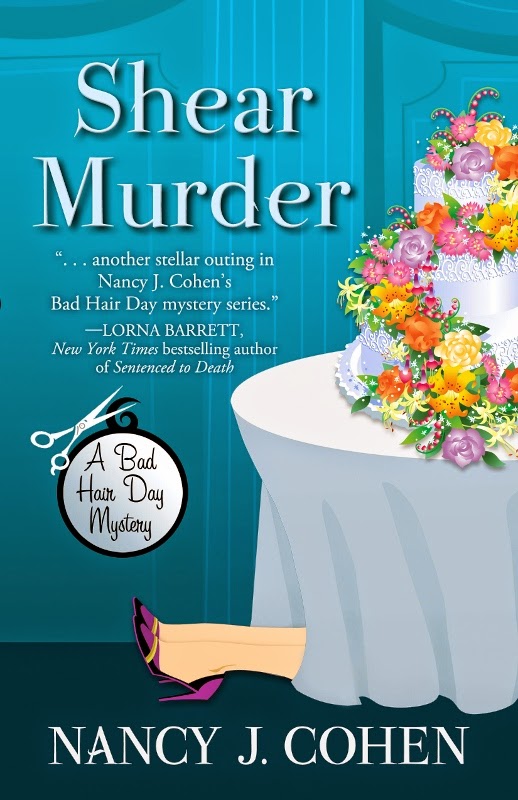
From Fantasy to Sci-Fi to Mystery: Author Interview wtih Nancy J. Cohen

I am in awe at the number of books you have written and how you can easily move between the different fiction styles. When did you publish your first book?
My first book was published by Dorchester in 1994. Circle of Light was part of a trilogy and won the HOLT Medallion Award. This started my career as a paranormal/scifi romance author. After three books in the Light-Years trilogy, I wrote another standalone scifi romance before switching to mysteries.

How do you keep the writing fresh and contemporary after so many books?
It helps to change genres. That way, I don’t get tired of writing same old, same old. If I need to refresh my creative energy, it’s time to switch to my other series. Setting a story in a different location can also help keep things fresh as does bringing in new characters or changing the way my character relationships evolve. Plus I like to learn something new for each book, and it’s this issue or place or material that excites me and urges me to write the story.

How do you write? Did you do an outline first? Did you do individual character development before doing the full plot?
I develop my characters first and do preliminary research. When the story is swirling in my head, I write a synopsis. Then I put myself on a daily writing schedule of five pages per day or twenty-five pages per week.

What do you think you learned from writing your first novel that helped you in the second one?
I like to believe my writing skills improve with each book. In the early days, I didn’t fully understand Point of View. I think I finally got it by book three. You’re always learning.

Do you use any writing programs, such as Scrivener?
And no, I don’t use Scrivener or other writing programs except for my brain.

I love the mystery titles of your hairstylist sleuth. What made you decide to have a hairstylist be a crime solver?
What could be more fun to research? Seriously, a hair salon is a great background setting for a mystery series. People gossip to each other, confide in their hairdressers, walk in and out all day. And a hairstylist doesn’t have to be confined to a salon to do her work. She can do wedding parties at a hotel, for example. It’s a great way for the main character to meet new people and get involved in other persons’ lives. Besides, I admire Marla’s talent. I have no ability to do my own hair. Book One, Permed to Death, starts with Marla’s grumpy client dying in the shampoo chair while getting a perm.

How do you define the difference between a murder mystery and a cozy murder mystery?
A cozy mystery is a whodunit featuring an amateur sleuth, a distinctive setting, and a limited number of suspects, most of whom may know each other. These stories contain no explicit sex or violence. The focus is on the character relationships rather than on forensic details of the crime. It’s essential to present a puzzle that challenges readers to solve the mystery.

Where would an Agatha Christie or a Mary Higgins Clark book fit? 
Agatha Christie’s novels typify this genre. I’d put Mary Higgins Clark into the romantic suspense category. These stories have a personal element of psychological suspense that you won’t see in a cozy. As for a murder mystery itself, this can fit into any genre. I had a murder mystery in Warrior Prince, book one in my Drift Lords Series.

You’ve written a “how to write” book for cozy mysteries. What is unique about writing cozy mysteries in their formula?
This technique is what works for me, and I explain the details in my instructional guide, Writing the Cozy Mystery. I’ll start with the victim. Who is it? How was the person killed? Who would gain from their death? Thus begins the round of suspects who may be the victim’s friends, associates, or family. Next I assign each one a secret. It might or might not be a secret relating to the murder. But everyone will either have a motive or will seem suspicious. Then you decide how the sleuth will uncover the crime, plant clues and red herrings, and your story is born.

Your writing includes different facets of the romance genre. How do you define the difference between paranormal, fantasy and sci-fi?
My earlier books were termed futuristic romance. I think a large part of it is marketing hype. Now I call them sci-fi romance, but a purist of this definition might want more detailed descriptions of space vehicles and weaponry, for example. Futuristics in general tend to be more romance oriented. They can take place on a pre-technology world, for example. 

I view mine as scifi romances because they involve space travel and take place on other planets that are technologically advanced. Keeper of the Rings is an exception in this regard, but it still fits the genre. The hero comes from another world and knows the truth about the religion practiced by the inhabitants of the planet, Xan. And it’s a truth most believers won’t want to hear.

I interpret paranormal romance to be an umbrella term for extraordinary phenomenon. It could involve ESP, psychics, vampires, shape shifters. These stories can be dark and scary or light and funny. Usually they take place in our modern world.

Fantasy-based stories may be set on imaginary worlds or here on Earth. Elements of magic, sorcery, and myth are included in this genre.

In many cases, the elements are blended. My Drift Lords series involves all of these. It takes place in modern day times on Earth, but the heroes come from other planets. They seek the help of six Earth women who have special powers. Norse mythology is the basis for these stories that involve prophecy, magic, and creatures such as evil trolls. But space travel is also mentioned. So it’s a mixed genre bag of tricks. Think Star Wars meets Lord of the Rings.

How do you personally find time to do all the personal media attached to your website? Does someone assist you?
I do my own marketing and book trailers because I like having control over what goes out there in my name. I have, on occasion, used publicists or virtual assistants. It depends on what I need to get done. For social networking, I prefer to do it myself. However, I wouldn’t be averse to a street team if someone volunteered to create and lead one for me.

What suggestions do you have for enhancing a writer’s social media platform?
Connecting with readers is all important. I listen to feedback, respond to emails, send out a quarterly newsletter and run contests. Plus any writer should have the basics: a professional looking website and headshot, a Facebook author page, an Amazon author page, Twitter, Pinterest, Goodreads. Doing a blog is a personal choice but it’s another way to build platform and enhance your brand. Writing is a business as much as it is an art.

What has worked best for you in generating sales?
It’s hard to evaluate what works and what doesn’t. I think you need to be “out there” in as many forms and many ways as you can so your name gets heard. Writing blogs and posts and articles helps as well. I do speaking engagements, talk at conferences and libraries, and am active in local writing groups. But what really works? Writing books people want to read on a consistent basis

What is some of the best writing advice that you’ve received or could give?
“Throw a lot of spaghetti on the wall and see what sticks.” This is good advice for the beginning writer to find your particular niche. Once you start to get fan mail, you’ll see what resonates with readers. Since you never know what you’ll be writing tomorrow, it’s good to join different writing organizations and attend workshops in other genres. Keep learning, keep growing, and keep writing. Always have faith in yourself. And networking with other industry personnel is crucial to learning the business aspects of this career.

What is the next book that will be hitting the bookshelves and eReaders?

On the mystery front, I’ve turned in Peril by Ponytail, #12 in the Bad Hair Day Mysteries.

My latest release in this genre is Hanging by a Hair. Here the blurb:

Marla’s joyous move to a new house with her husband, Detective Dalton Vail, is marred by their next-door neighbor who erects an illegal fence between their properties. When Dalton reminds the man of the local permitting laws, tempers flare—and worse, the neighbor is found dead the following day. Dismayed when Dalton is removed from the case due to a conflict of interest,

Marla decides it’s up to her to find the killer. Can the intrepid hairstylist untangle the clues and pin down the culprit before he strikes again? 


Warrior Lord is an August 1, 2014 release from Wild Rose Press. This title is # 3 in my Drift Lords Series. Here is the story blurb: 

Pottery sculptor Erika Sherwood has no idea her televised wedding in Las Vegas is for real until an official confirms she and the stranger she’s just met are legitimately wed.

A Drift Lord and warrior of the Tsuran, Magnor tricks the redhead into marriage because she’s one of six women prophesied to save Earth. But as he’s forced into her company in their race against the apocalypse, he wonders if he risks his heart more than his life.

Can a free-spirited ceramic artist and a fierce swordsman trust each other enough to prevent disaster? 


Tuesday, June 11, 2013

Writing Sci-FI and Making it Real: Author Interview with Neve Maslakovic

You have a background as a PhD in electrical engineering. How did you make the jump from a highly analytical field to a more creative side of writing fiction?
I had taken a few classes on short story writing before seriously turning to writing fiction with my first book, Regarding Ducks and Universes. That one took five years to write. Part of the reason it took so long was that I had to learn how to do it -- like you say, Chris, to make the jump from my analytical self to my creative self. 

That's not to say that engineering is not creative as well, it very much is, just that I had to learn to ignore that invisible hand that would tap me on the shoulder and point out things like Doesn't Felix (my protagonist in the book) ever need to go to the bathroom? Science is real life, but with fiction you can fudge a bit, like in a play where you set the stage with a few pieces of furniture and leave the rest to the audience's imagination.

What made you decide to start your novel?
As I was finishing up my engineering Ph.D, I came down with a nasty case of carpal tunnel syndrome that prevented me from working full time. Writing lets me control my hours, so it seemed like the right time to go for it. Plus I was full of ideas for stories!

How many rewrites do you do? Who helped you with the editing? I always do many editing passes on my books, too many to keep track of. I like that feeling you get with each pass that the book is nearing where it needs to be. Something I have learned in working with publishers is how important developmental and copy editors are. Beta readers, too, are invaluable in pointing out plot or character issues that you may have missed because you as the writer are too close to the story.

Have other books been started and stopped along the way?
And I've always finished any books I've started -- three now, counting the sequel to The Far Time Incident, which is in the late editing stage and ready to go to my editor.

How did you go about trying to find a publisher?
I queried agents while polishing the manuscript of Regarding Ducks and Universes and also entered the book in the Amazon Breakthrough Novel Award competition. The book made it into the Top 100 in ABNA and received a nice review from a Publisher’s Weekly reviewer, who called it “A witty and light ‘what if’ novel stuffed with an amusing and eclectic cast of characters.”

Even with that endorsement and though the book got positive feedback from agents, it was “a bit too experimental” and “not what we’re looking for at this time” in the end. When I received a publishing offer from Amazon’s new imprint AmazonEncore (which publishes original, out of print, and self-published works) I jumped at the chance. The novel came out in trade paperback and Kindle formats in 2011. For my series starter that just came out last month, The Far Time Incident, I signed a contract with Amazon's Science Fiction and Fantasy imprint, 47North.  

Your book, Regarding Ducks and Universes, is termed as a cozy sci-fi. I’ve heard of cozy mysteries, but what makes for a cozy sci-fi?
Hmm, cozy sci-fi... the opposite of dark, gritty, post-apocalyptic sci-fi? When you write a novel you're with it a long time, a year, two, or more, so for me it was important that I was working on something I enjoyed, with characters I looked forward to spending time with.

I love your “Ducks” cover. How much input did you have in its design?
I played a small role in choosing the cover -- the publisher presented me with three choices, and we went back and forth a bit with which was the best. I think it came out great in the end.

How do you write? Do you do an outline first?
I start with a couple of ideas and a sense of the main characters, but not a detailed outline. For me it seems to work best to let the story work itself out as I write, which is also when the secondary characters make their entrance in the book. I think it would be a faster process if I could outline the whole thing in advance, but I like to say I don't know what the book will be about until I finish writing it!

What type of publicity has worked best for you in generating sales?
I like to list giveaways on Goodreads to help spread the word about the books. It's very hard to say if there is a direct correlation between social media involvement and book sales. Maybe if you're very social-savvy, it does, but I am not.

What do you know now about writing/publishing now, you wished you had known sooner?
To continue what I was saying in the previous question, that it's okay to ease into social media. When Regarding Ducks and Universes came out, I jumped into having a website, a blog, setting up an account on Goodreads, LibraryThing, Facebook, Twitter, etc.

Now I've incorporated my blog into my website and only post when I have something to say, not because it's recommended that you post once a week or once a day or whatever. I would stay stick to the sites that you are comfortable with and enjoy being on. My blog updates stream to Goodreads and Facebook, and you can find me on Twitter on a daily basis. 

What is the best advice you’ve been given about writing that you would like to pass along?
Writing is just like any other job -- you get up in the morning and you do it. There is a quote from Neil Gaiman on writing that sums it up: “This is how you do it: you sit down at the keyboard and you put one word after another until it’s done. It's that easy, and that hard.”

If you would like to learn more about Neve and her writing, here are some links to get you started

Website            Facebook            Amazon             Twitter