Blog Archive

Showing posts with label writing suspense. Show all posts

Tuesday, October 6, 2020

Playing the Long Game of Writing: Author Interview with Robert Masello

My interview today is with an award-winning journalist, TV writer, and the bestselling author of many novels and nonfiction books -- including books on writing. Though that gives me many options to discuss his writing, for this interview, we're focusing on his suspense writing.
 

What drew you to writing mystery /suspense novels?
It was all rather a fluke. It’s true that my mother, a writer herself, was a fan of those Gothic mysteries – you know, the ones where the cover showed a young governess in a cloak fleeing from the brooding manor house on the hill – and I was always influenced by what she was reading. 

In any event, I was trying to break a contract clause with a publisher many years ago, and to do that I wrote just a chapter of a supernatural suspense novel, and to my surprise and my agent’s, the publisher liked it and bought it. Ever since, I’ve been writing in the historical and suspense genres. And happily so.

What type of research do you do?
I do a lot of research for my novels – the old-fashioned way in libraries and increasingly on-line. Thank God for Google! It has made my work so much easier. If I need to know what kind of saber an English cavalry officer might wear, I can look it up, even in the dead of night, from the comfort of my own home. 

The hard part is knowing when to quit the initial research phase – there’s always so much more to learn – and when to simply start writing the book and fill in the gaps as you go. I know writers who get lost in the research stuff and never emerge!

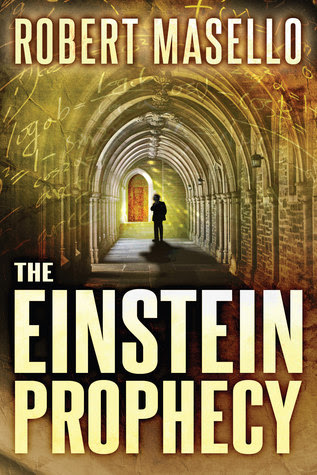
Why do you choose historical figures like Einstein and H.G. Wells and Robert Louis Stevenson as baselines for your stories?
That, too, is a strange occurrence – I wrote a novel called Blood and Ice, years ago, in which historical characters, including Lord Cardigan and Florence Nightingale, appeared, and I found it added so much to the heft and believability of the story, which was, in essence, a Gothic romance between a young nurse in the Crimean War and a present-day photographer in Antarctica. (Plainly, there was some time-juggling involved.) 
The book did very well, and before you know it, I was writing a follow-up novel, The Medusa Amulet, about the Renaissance sculptor Benvenuto Cellini and his centuries-long love affair with his model. Then it was onto the Romanovs and Rasputin for The Romanov Cross, and so on. I love history, and enjoy sharing what I’ve learned.

What’s the hardest part about writing suspense?
These days, the hardest part is dealing with technology! So much of suspense has always hinged on people getting lost, being unable to communicate with each other, or find their way somewhere. Now, with cell phones in everyone’s pocket and navigation systems in cars, etc., it’s tough to throw enough obstacles in their way. 

Also, it’s always a matter of figuring out how much information to dole out to the characters, and to the readers, while maintaining credibility and the necessary tension and suspense.

What do you know about writing/publishing now that you wished you had known sooner?
How long and laborious a process it is. You really have to have lot of patience and fortitude. It takes me a year or more to write each book, and at least that long for it to go through the publishing process and eventually hit the stores. And sometimes it takes awhile after that for the book to find its audience. You have to be willing to play the long game.

What’s the best advice you’ve been given about writing?
I had great writing teachers, including the late Robert Stone, who won the National Book Award for Dog Soldiers, so I’ve been fortunate in that respect. But if I had to come up with one thing, I’d say it’s the advice to go deeper into my characters, for motivation and insight. 

What makes readers care about a story is that they become invested in the characters, and the better you can render those characters’ inner life, the more your readers will want to continue reading to find out what happens to them.

What other books do you have in the process?
The Haunting of H.G. Wells is of course my most current book, recently released, and I’m happy to report that for a couple of weeks it remained high on the Amazon Top 100 list. It’s selling briskly, most notably in the UK, where H.G. Wells, author of such classics as The Time Machine and The War of the Worlds, may be even better known than he is here in the States. And its heroine is Rebecca West, the greatest English journalist of her generation, and an ardent suffragette.

Like most writers, I never talk too much about whatever book I’m working on next – you could jinx it! – but I am starting to pull together the threads for another of my historical suspense novels, this one involving some prominent American figures from the 1930s. I’ve got a few chapters done, but I’m still looking for the rest of the darn plot! (If anyone finds it wandering the streets, please give me a call!)

I like that tease about the next book. I've read several books set it that time frame so you definitely have my interest. If you'd like to learn more about Robert's books, here's how to get started.

Tuesday, March 7, 2017

Writing into the Shadows: Interview with Mystery Author Laura Griffin

Today's interview is with a New York Times and USA Today bestselling author who started her career in journalism before venturing into the world of writing romantic suspense. Her books have won numerous awards, including two RITA Awards and a Daphne du Maurier Award. Impressive!

Let's go back to the beginning. What made you decide to write suspense? Was there an author who made you think, "I could write a book like that?'
I’ve been a fan of suspense ever since I read my first Nancy Drew mystery as a child. I think the first author who made me think about writing suspense was Stephen King, who has such an amazing talent for pulling you into the story right away.

Aa an established author, can you tell me about the process of getting an agent?
Everyone’s process is so different. I’ve been working with the same agent, Kevan Lyon, since the very beginning of my career. For writers seeking a literary agent, it’s important to find someone who believes in your work and is a strong and diplomatic communicator.

What's the best encouragement you've had in your writing?
For me, the best encouragement always comes from readers. I love hearing from readers, especially when they have a strong emotional response to a story or a character. And I always like to know which characters they focus on and want to read more about.


We have all experienced rejection. Give me an example of one you've had, and how you learned to write past it. 
I certainly had plenty of rejections when I was first starting out. The key is to shake it off and keep working. If you believe in yourself and your story, hang in there. Perseverance is so important in this business.

What's the hardest part about writing for you? Starting? Creating a scene? Dialog? Tension, etc?

I love writing dialogue. I hear the characters talking together in my head, and it’s my job to get it all down, including the unspoken communication. I would say a challenge for me is sorting out the mystery side of the story, especially if it’s got a lot of twists and turns.


Besides writing your own book, you've collaborated with another author> Tell me about that process. 
Allison Brennan and I became friends years ago and always talked about how fun it would be to work together. We decided to team up of for a suspense series called Moreno & Hart, based on a private detective agency in Southern California. Allison writes from the point of view of Scarlet Moreno, while I write from the point of view Krista Hart, so each book features both of our voices. We've done three Moreno & Hart books, plus a novella, and the collaboration has been a lot of fun!

What type of publicity does your publisher expect you to do in promoting your book?
With every release, the publisher wants to see the author getting out there to talk about the book. Social media has made outreach easier than ever before, but it’s a lot to juggle. I use my personal newsletter, as well as Facebook and Twitter, to stay in touch with my readers. 
And I always enjoy book events where I get to meet people face to face.


What did you learn in publishing your first book that helped you in your writing?
I learned the importance of the revision process. Every book, no matter how wonderful you think it is, can be improved. I think sometimes beginning authors feel defensive about taking suggestions, but a good editor can add so much if you are willing to listen.


What has surprised you the most in writing/publishing?
There is a comradery among writers that I didn’t expect. I was surprised how many established authors were generous enough to encourage me as I was starting out. I think about them all the time and try to pay it forward.

What frustrated you the most?
The publishing business can be frustrating because so many factors that directly affect your book are beyond your control. But the important thing is to keep doing your best work, keep creating your best stories, and not get distracted by the ever-changing market forces.

What do you know now about writing that you wished you had known sooner?
I think it’s so critically important to protect your writing time. If you don’t, it will get gobbled up by everyone around you.

What is the best book you've ever read about the craft of writing?
There are so many! I love Stephen King’s ON WRITING. His tenacity is so inspiring.

What is the best advice you've been given about writing or that you've learned that you would like to pass along? 

Develop a thick skin and don’t give up.

Do you have any other works in the process?

At the moment, I’m working on two books—the next addition to my bestselling Tracers series, which focuses on a team of forensics experts in Texas who help detectives crack their toughest cases. And then I’m starting a new series about an elite firm of personal security specialists called Wolfe Security. Both series combine my two favorite genres: romance and suspense.

Any other tips or words you'd like to share about writing?

Don’t get caught up in what the market is doing. Write the story that is in your heart.

That's all for today's interview. Laura just released her newest Tracers book earlier this year, AT CLOSE RANGE. Each book features a stand-alone mystery and focuses on a different romantic couple, so people can pick up any book in the series and dive right it. For details about AT CLOSE RANGE: http://lauragriffin.com/books/atclose...
You can also visit with her at www.lauragriffin.com or www.Facebook.com/LauraGriffinAuthor

Tuesday, November 1, 2016

Writing and Publishing: Author Interview with Michael Hicks Thompson

Let's start with some details about your current novel. You originally released it as a novella. Why the re-release as a full novel?
After publishing The Parchman Preacher (a novella), I realized I'd made a mistake. I should have written and finished the entire allegory of Christ's ministry. I'm encouraging people to NOT buy that book because a lot of it is in The Rector. So, I decided a full-length re-do of The Parchman Preacher needed a new title, hence, The Rector. 

How long did it take to write your first draft of the novella? Was the rewrite quicker?
It took 3 months to write the novella. (I'm a binge writer.) And, no, The Rector took longer. I made lots of changes to the novella and completed the story. It took another 3 months + new editor, + rewrites + +.

What made you choose the suspense genre? What type of research did you do for this book?
Why suspense? Well, what's a good mystery without suspense? Research? I've been involved in prison ministry, so I already knew about "men in prison." I also know a lot about the Delta, so that came natural for me--the people, the drinking, the small town life with quirky characters. Most of my research centered around finding the right theological questions Martha or Oneeda or Mary might ask the rector. What Biblical wisdom would fit in which scene? It had to be woven in undetected by my reader. i.e., not contrived.

Are you active with any writer’s critique groups? If so, how have they helped you?
Yes, once a month, I attend the Collierville Christian Writer's Group. There are about 30 of us. We have a great leader in Susan Reichert. She gives us writing exercises, presents topics that help make us better writers, and there's a small feedback group afterward. Susan won't let us use the term critique group. She prefers "feedback." 

I've also been in two Media Bistro Master Novel Writing online courses. There are usually eight writers, from all over the globe, and an awesome instructor, Caitlin Alexander, former editor with Random for eleven years.

You've also done two illustrated novels on the life of King David from the Old Testament. What drew
you to write his story?
Ahh, the DAVID novels. BTW, I call them novels because I added scenes that aren't in the Bible. However, those scenes don't interfere with Biblical teaching in any way. They're there to help the reader move from one scene to the next. As for what drew me to write the story, I was simply intrigued by the fact that David was the only man in the Bible whom God said was a man after His own heart. I first thought it'd be a 12-part TV mini-series. I wrote three episodes and outlined the other nine, took it to Hollywood in search of an agent or filmmaker. "We're not doing sand and sandals films right now," I was told. 

How did you go from a script to a graphic novel?  
On the flight back I decided to turn it into two graphic novels. I'd worked with artists my whole career (I owned an ad agency for 30+ years, as creative director and one of the copywriters). 

How did you go about replicating Goliath's armor and the Ark of the Covenant?
The Goliath suit of armor I had made by a metalworker here in Memphis. It's nine feet, six inches tall, not including his intimidator helmet--another eight inches. I then had another artist build a replica of the ark of the covenant, covered in faux gold leaf. I rented a U-Haul and traveled from bookstore to bookstore, signing books. To my surprise, the Goliath suit of armor made a bigger impression on people than the ark. 

Goliath stands next to me in my vaulted studio. I donated the Ark to Third Millenium Ministries in Orlando. Richard Pratt, Th.D., founder of IIIM, vetted my DAVID novels and even wrote the foreword to each.

Each of your books are under your own imprint. Did you first try the query route with agents and publishers?
In 2011, after publishing the novella through WestBow Press, I thought it would be better to have an agent for The Rector. Granted, I had published the DAVID novels under my own imprint, Shepherd King Publishing, knowing no publisher would ever spend the kind of money I spent on those two illustrated novels. But, for a full-blown murder mystery, I thought it would be good to have an agent and a publisher. I hired Mark Malatesta to help me find an agent. He doesn't actually query, but he helped spruce up my query letter and synopsis; and he provided a spreadsheet of all the potential agents handling my genre--Religious Fiction. 

A year later, I signed up with an agent and a year after that he secured a small publisher. The contract? I would receive twelve percent royalties, but do all the marketing myself. That didn't make sense, so I published The Rector under my Shepherd King Publishing imprint (and released the agent). This way, I'd receive seventy percent, not twelve. Made sense to me. I hired an editor and had six Beta readers provide me with straight and narrow suggestions. I published through CreateSpace for paperbacks, had a New Jersey printer handle the hardbacks, and went with Draft2Digital for all the e-Books, e-Pubs, etc.


Other than completing your novels, what was the most difficult aspect of publishing for you?
By far, the most difficult aspect was uploading all the different formats to CreateSpace, the hardback printer, and digital portals. Each had different requirements, some of them too complicated for a sixty-six-year-old man.
​
What has surprised you the most about getting published?
That I must compete with 300,000 new books a year--so many of them from CreateSpace by first-time writers who didn't spend the money to have them edited. These writers persuade their family and friends to read the novel, only to discover mistake after mistake. (Hire an editor!) What those books do is turn readers back to the celebrity novelists, leaving only a small window of new writers to break through. For me, that means I have to work harder to build a fan base.
​
What do you know now about publishing that you wish you knew sooner?
The cost to self-publish and do it professionally: cost of an editor, professional book cover design, purchasing the hardbacks and paperback books from CreateSpace for book signings, conferences to attend, etc. All in, about $7,000 per book, but a mere pittance compared to the two DAVID novels. Still, I keep doing it. Doing it because I love the writing, the re-writing, studying each and every word ("Is there another word that would work better?"), polishing and polishing ... about twenty-five read-throughs for each novel. I do it for the love of writing, and hopefully, if only a dozen readers are entertained and take away just one theological thought they'd never considered, I'll be happy.

What’s been your best promotion for selling books?
Traveling to book signing tours--bookstores. Second, building an opt-in list of subscribers for my monthly newsletter, "Stay Up With Mystery." It's on my site.
​

What advice would you give someone who wants to indie-publish? What is the best advice you’ve been given or learned?
Be prepared to spend $5,000 to $7,000 if you want to do it right. And, set up an LLC, for your own protection. Do not use gmail.com as your email address. Use your author site's URL. Oh, and don't worry about getting into libraries until you've become famous. I spent far too much time, effort, and money to set up a wholesaler for library distribution.
Best advice I've been given? Hmm, hire a great editor!
​
What other works do you have in the process?
The Actress, sequel to The Rector, will release in January. Then, another in the series will follow. Plus, I'm negotiating with a Hollywood film company to option The Rector. And, I have a re-write of a sci-fi thriller I want to polish and find a major publisher for in 2017.

Any last words you’d like to add?
Yes, read The Rector. It's already won four major awards. It entertains and informs, but first and foremost, the characters are unforgettable. (At least that's what the reviewers say. And, "It's not preachy.")
​
That's it for today's interview. If you'd like to learn more about Michael's current and future books, here are some options.

Follow this link for his monthly mystery-lovers eNewsletter, "Stay Up With Mystery." If you don't like what you receive, you can unsubscribe in five seconds. 

Tuesday, October 4, 2016

Keeping the Tension Tight: An Interview with Award-Winning Suspense Writer, Terry Brennan

I am pleased to announce my interview today with Terry Brennan who just won the Carol Award for 2016 best Suspense/Thriller at the ACFW Conference in Nashville last month. The award was for The Aleppo Code which is the third book of THE JERUSALEM PROPHECIES series.

I met Terry in August at a writer's conference where we were both in the same workshop. I'm a regular reader of suspense/thriller and wish I could write one. Unfortunately, that is not my forte, but it apparently is Terry's. So let's hear how he came to his writing success. 

What drew you to the idea of writing your suspense novel? Was there a specific book or author that made you think – I could write like that?
When I was a boy, I grew up on Saturday matinee adventure movies and the books that spawned them. I probably would have been reading my books – if that was possible. I grew up reading H.G. Wells, Sherlock Holmes and an author named Sax Rohmer, who wrote the Fu Manchu mysteries. 


Later it was classics that were a bit darker – Dracula and Frankenstein – but always for the suspense. Dracula is creepy, but it’s also an incredible adventure tale. And I’m still reading suspense and thriller books, spy stories, chases and shoot-‘em-ups – like Joel Rosenberg, Daniel Silva, Michael Connelly, Harlan Coben. There are times when I’ve read the literary classics (I adore Steinbeck’s use of language) and contemporary best sellers, but action/adventure is still my favorite.

I'm a big fan of Rosenberg and Steinbach, too. How did the first novel come about?
My first novel was really an accident. I had an idea about the Temple Mount in Jerusalem that was kicking around in the back of my mind for years. Then, one day, I was standing in the back of The Bowery Mission’s chapel, looking up at the organ pipes. I thought, wouldn’t it be cool if there was a room hidden behind those organ pipes. In 2006 when I went to my first writer’s conference, everyone had to ‘pitch’ a story idea. So I sat in the back of the room and scrawled out a plot for a suspense novel based on that one idea.

After that short scrawl of words, how long did it actually take for you to write the book?
Essentially, I wrote The Sacred Cipher in a year of Saturdays. Throw in some vacation time, or late nights – but it was essentially a year of Saturdays. At the time I was working my full-time job as Vice President of Operations & Administration for The Christian Herald Association, the parent organization of The Bowery Mission and three other ministries in New York City.

My wife, Andrea, was gracious enough to allow me that time. We lived in a small apartment in The Bowery Mission, and I would close myself up in a small corner of our bedroom, where my computer was, and work from early morning, often until well into the evening, on every possible Saturday.


So, it took me a year to write the book, another year to find an agent and secure a contract with a publisher (Kregel Publications) and then almost another year to work on editing and marketing preparations for the book.

How about the next book? How long did that take to write?
The sequel to The Sacred Cipher took four years to emerge. One reason it took so long was that I never dreamed I was writing a series. But people kept asking me when the sequel would be published. I had no sequel. In fact, I was deep into a new manuscript, called Hunger’s Ransom. But the questions about the sequel kept coming so I wondered, how would the story continue? 


There were lots of false starts and big chunks of copy on the editing room floor but The Brotherhood Conspiracy came out in 2013 and the third book – of what became THE JERUSALEM PROPHECIES series – The Aleppo Code was released in October of 2015. So, essentially, there was a four-year gap between the first book and the sequel, which was much more difficult to write. The third was a snap.

So tell me about the series.

Each book can be read on its own, but there is one story that flows through all of the books. They are an Indiana Jones/Bourne Conspiracy/Da Vinci Code amalgam of ancient messages, extinct languages and secret ciphers that lead a reluctant team of archeologists and historians chasing ancient secrets through a maze of treachery, death and destruction. The quest in The Aleppo Code is to unearth the most powerful weapon in the history of the world.

Sounds exciting and a great page turner. What type of research do you do for your books? Tell me about the process.
My books are global in scope and built on a foundation that crosses historical fact with fictional characters of today. So I spend a great deal of time doing research – perhaps almost as much time as it takes me to write the book. The plot elements of the series included an extinct Egyptian language that is the third language on the Rosetta Stone; a simple cipher written over 150 years ago by the English composer Sir Edward Elgar that has never been deciphered; megalithic tombs in the hills of County Meath, Ireland that are older than the pyramids of Egypt and the oldest, most complete copy of the first five books of the Bible – the Aleppo Codex.

How intriguing! I've seen the Rosetta Stone in England and I've been to the megalithic
tombs in Newgrange in Ireland and found them fascinating. Where did you do your research?
Most of this research is either done online or at New York City’s massive main research library on Bryant Park in Manhattan. I spend a lot of time in the Rose Reading Room. My wife and I have also traveled to Israel (Jerusalem, the Golan Heights, the Sea of Galilee), Jordan, Ireland, France and England to do physical research for the books.

And I use Google Earth a lot, to get an understanding of the area I’m writing about. Interestingly, the first book was written before we had a chance to go to Israel, so it was all based on observations from Google Earth and my research. It was interesting to see, in 2011, how much I got right, and how much I got wrong. I was right most of the time.

How did you go about finding your publisher?
I was fortunate enough to have another suspense author recommend me to her agent after she saw the manuscript for The Sacred Cipher, the first book of THE JERUSALEM PROPHECIES. Prior to that I pitched the book to anyone who would listen at the Philly Christian Writer’s Conference and the Colorado Christian Writer’s Conference. 

Once I had an agent, WordServe Literary, my agent helped me put together a book proposal that she then sent to more than a dozen publishers. Kregel Publications offered us a contract in the summer of 2008. Since then, I’ve been able to offer my books to Kregel without a proposal.

What type of publicity do you do to promote your book? What has worked best for you in generating sales?
Hard question to answer effectively. With Kregel, we’ve done blog tours for all three books and marketing on book websites and social media. I’ve done author interviews for/with bloggers and also radio and podcasts. For the first book, my wife and I went to every Barnes & Noble store in Manhattan (when there was a bunch) and some in New Jersey, handing out promotional post cards and signing books. I’ve done book signings at our local libraries, at bookstores … even at a pub. We had book launch parties and on-line launch parties. 

For the third book I concentrated on social media and a year-long, pre-launch marketing plan that I put in place personally and which the publisher responded to with some additional marketing efforts. I’ve more than tripled my Facebook “friends”, added an Author Page on Facebook, updated my website to make it look better and easier to access, put together an email newsletter mailing list of over 1,000 addresses, of which nearly 800 are still active, and send out a newsletter each month.

I think you need to do it all, and then pray it helps get word-of-mouth cooking.


What do you know now about writing/publishing now that you wished you had known sooner?
I wish I had known about the craft of novel writing. I was a journalist for 22 years, but writing for newspapers is totally different than the world of fiction. I know now how important it is to read the best books about writing and the importance of being active in the writing community – not just for critique groups, but also to develop relationships that can lead to book endorsements (one of the most difficult things to get – no writer has time to read a book just to write an endorsement).

I tend to do my writing in a bunker. This is what I write and I’m just going to keep banging out the words. But there is a lot that needs to be learned about the business of publishing, so being in a bunker is not a healthy way to operate your writing “business.”

What surprised you the most in a good way in writing your novels?

That the characters tell their own stories and that the stories often tell themselves. I started with one idea (What if there was a room hidden behind the organ pipes in The Bowery Mission’s chapel?). That was it. One idea. Ten years and three books later, it’s clear that God had a lot of other ideas He wanted me to include. There are statements or plot elements in the first book that were critical to the evolving plot in the second and third book – things that were in the first book which I had no clue would be important later. There is a character, Sammy Rizzo, whose personal story I didn’t know until half-way through the second book. And, honestly, Sammy told me his story.What’s been the most frustrating?
The most frustrating thing currently is that I just retired at the end of July and now that I have all this time on my hands I find so much more pressing in to steal it. And it’s been a bear trying to figure out the right schedule, how to prioritize things, and how to actually make some time to write.

It’s work for me to press in and keep to a schedule with my writing. Before retiring the challenge was balancing a very time-demanding and energy-demanding “real job” with carving out time to write. So far, I did a better job at it when I was working full time than I am now.

What is the best advice you've been given about writing or that you've learned that you would like to pass along?
Be yourself. Write like yourself, for yourself. That covers a lot of ground, but one first thing is to write your stories as if your best friend is in the room and you’re bursting with something you want to tell them. Spit it out! But write it as if you’re having a conversation with your buddy. Because that’s what you are doing, conversing with your reader.

Lately, I’ve been taught, and read, a lot about what makes “authentic” writing … and writing that is “high-impact”. Both of those themes have to do with writing from the depth of your heart, and not just from the depth of your mind. Ted Dekker says, find the scars in you. Write from the scars. Make them tattoos of victory. I just started reading Donald Maas’ Writing 21st Century Fiction. It’s all about high-impact writing.

What other works do you have in the process?
I have the manuscript for Hunger’s Ransom, which is still kicking around. It really needs some editing and character development along the lines of high-impact writing. That’s what I’m working on now, getting that manuscript sharpened and “singing” so that we can market it to publishers.


I’ve also started a new action/adventure/suspense/thriller series that is again set in the Middle East. It’s a whole new story line with a new cast of characters. Still working on a heavy, detailed outline and I’ve written some scenes for the first book of what could be up to four books. It’s about how the ancient empires of the past are, right now, rising once again and how all of those Empires are going to want the same slice of real estate at the same time – and how that all plays out on the prophetic stage.


Anything else?
I’m most excited about a non-fiction book that is just being born. The bones are beginning to appear. It’s a subject that is very personal, but one which I believe will strike a chord in the hearts of men the world over. That’s all I can tell you for now.

Are there any other points you’d like to cover?
My wife, Andrea, and I went to Town Hall in NYC last year to hear Joan Baez in concert. The legendary folk singer with the crystal-toned voice was celebrating her 50th year as an entertainer. During the concert, Ms. Baez had a running, one-way, conversation with the audience. At one point she said, “People always ask me about my voice. I always tell them, ‘The gift is from God. My job is just maintenance and delivery.’

The gift is from God. I can’t take credit for it. It’s the way God wired me. But the other part of the gift is the way God works through that gift he gave me. He takes the tool and uses it to create something of which I am totally unconscious. All too often, the words that come out of my fingers never went through my brain. They only went through my spirit, straight to my fingers.

My job is maintenance and delivery.

So sit down, put your fingers on the keyboard, say a prayer, and create with God. The gift is His to give.

That's all for today's interview. Thank you for your insight, Terry. To learn more about
Terry's writing (and to give you some marketing ideas), here's some links to get you started.

Video for The Sacred Cipher:
http://www.youtube.com/watch?v=cBBJPe0rFMQ
Video for The Aleppo Code
https://www.youtube.com/watch?v=8fkvSrh1j58
Website: http://www.terrybrennanauthor.com/
Facebook: https://www.facebook.com/terry.brennan.5201
Twitter:  @terrbrennan1

Author Page: https://www.facebook.com/AuthorTerryBrennan/

Tuesday, March 15, 2016

Writing in the Genre that Inspires You: Author Interview with Vanetta Chapman

I see you started your writing career with writing articles. How did you make the jump to writing a novel? 
I've always been an avid reader. After publishing 150 articles, I thought, "Hey. Maybe I could do an entire book." And then I just started writing. 

How did you meet your agent? Through a conference or sending out queries? 
I bought a Guide to Literary Agents at a Half Priced Bookstore. Starting with the A's, I marked any agent who represented what I had written to date. Then I started querying. This was in the old days (2000), so I sent everything in snail mail. I'd send 7 queries in each week. When I received a rejection, I'd send out 2 more. And yes, I had a chart to keep track of who all had rejected me, or said feel free to send something else, or whatever their response was. It took a couple of years, but finally I had several agents circling. At that point, I emailed some of their client list for references and made my choice.

How did you find your publisher?
My agent was submitting my work to all the major pubs. We had one (Harper Collins Christian Fiction) come back and say that they liked my writing but they didn't need another romance author. Would I consider writing a cozy mystery? My answer was ... OF COURSE.

Your first book was published in 2010. How long did it take to write that book? 
THAT book was a bit unique. I wrote it in 6 weeks because we had a publisher anxious for it, but they wouldn't make an offer until it was done. I don't recommend writing a book that quickly. When I was finished, I couldn't use my right arm - had a major case of frozen shoulder syndrome. 

Was that the first book you wrote?
The first book I sold was the 9th book I wrote. At that point it was taking me about 6 months per book. 


How long does take today?
Currently I have a full length novel (100,000 words) due every 3 to 4 months.

Was the next book easier to write?
I think each book has its own challenges--so they are both easier (because you have experience) and harder (because writing is always difficult).

What inspired you to write about the Amish? 
My agent asked me to try my hand at writing Amish. We'd been pitching romantic suspense and had good response but no congrats. 

Do you have an Amish family history? 
Possibly. My great grandparents lived in Albion, PA and all correspondence we have from them is in German - so it is possible that there are some Amish roots there.

Are you active in any writing critique groups?
Currently I am not involved in any critique groups. I have been in the past, but we moved to a small town and it's a bit of a drive to reach other authors.

What type of research do you do for your books? Tell me about the process.
If I'm writing a 3 book series, I always visit the location. I walk the streets, talk to the librarians and local museum folks, eat in the restaurants, and generally chat up anyone who will talk to me. I take lots and lots and LOTS of pictures. And I take home a few email addresses of folks who are willing to answer questions. I do a little internet research before I go and a lot after I get home.


Do you still go through the normal process of pitching your book to publishers?
Pretty much. I was recently thrilled to receive a 6 book contract from Harvest House publishers, and yes - I had to go through the pub committee like anyone else. My agent usually reads through my proposal before we send it. He may have minor suggestions, but he doesn't page edit or anything like that.

What does your publisher expect you to do to assist in promoting your books? 
I do a lot of promotion--basically I'm involved in all the usual places, plus I have a street team, and I've built a newsletter base. My publisher has told me several times that they're astounded at how much marketing I do and that it is one of the reasons they continue to re-sign me.

What do you know now about writing/publishing now that you wished you had known sooner?
I wish I'd spent less time worrying about "when" I'd be published and more time diligently learning the craft.

What surprised you the most in a good way in writing your novels? What’s been the most frustrating?
I guess what surprises me most is that the ideas don't dry up. I'm careful to take time off, not burn out, feed the artist well and all that. Still, I'm surprised that my brain knows where to go with a story even when I don't. And that would be the frustrating part. When I start, I have no idea what I'm doing. I usually have a character and where I want to start the story, and that's it. Even in the murder mysteries, I have no idea "who did it."


What is the best advice you've been given about writing or that you've learned that you would like to pass along?
Keep writing, keep writing, keep writing.

What other works do you have in the process? Are there any other points you’d like to cover?
I do have a whacky process that I'd love to share. I write the beginning of a novel until I'm bored with where we're going. Then I stop and write the ending. This could be an additional 3,000 work or (more often) 10-20,000 words. Once I have the ending finished, once I know where we're all going, I go back and fill in the middle. It's worked every time! And it keep the middle from sagging and slowing down.

That's all for today's interview. If you'd like to learn more about Vanetta's writing and her giveaways or special promotions here's how  www.vannettachapman.com

Tuesday, September 22, 2015

The Guilt and Insecurity of Writing: Author Interview with Dianne J. Wilson

Today's interview is with a writer  from South Africa, so you'll probably notice some different word spellings, between the two of us - which is fun. I love that I can get in touch with writers around the world from my computer for a chat about writing. 

Prior to writing this novel, what sort of freelance writing did you do? 
As a freelancer, my favourite thing to write was humour pages (All About Cats, Threads & Crafts, Shape) though I also found a niche in writing real life stories. I got to interview and write up the adventures of some fabulously interesting people. For a time I also wrote those odd little quizzes in women’s magazines – you know, the kind us women find ourselves doing while waiting to see the doctor.

What made you decide to take the big step and write a novel? How long did it take you to write your first book? 
I started writing Shackles out of a deep desire to produce something more than ‘fluff’. It took me five years to write. Shocking, I know. Part of that was insecurity (can I do this?) part of it was guilt (can I justify stealing this time from my family?) and part of it was sheer cluelessness (what am I doing?). I can’t really say that I re-wrote it at all, I had a wonderful group of beta-readers, who are each English gurus in their own way. They took on the editing as well. It was a team effort in every sense of the word.

Are you active with any writing groups? Who encouraged you along the way?
At the time I wrote Shackles, I was flying solo. My encouragement came from my beta readers. I’d write a few chapters and send them off, give up on writing because I was obviously useless and fooling myself, then they’d come back to me with comments like ‘please hurry up, I want to know what happens to so-and-so’ and I’d be back on the horse.

I currently run a writing group, having such fun seeing people grow in their craft and slowly become more prolific.

Did you ever want to give up writing your first book?
Many times.

What made you decide to go the indie-publishing route? Did you pitch traditional publishers or agents? 
I didn’t want to self-publish for a few reasons, mostly because I wanted to grow in my skill. I felt that self-publishing would only get me as far as what I already know. Shackles brought me a number of form rejections (so good for the self esteem), but also a good few ‘helpful’ rejections. I could tell that the editor had:  1) actually read it, 2) found some merit in it.

One of these came from an editor at Pelican / Harbourlight. She detailed what she loved about the story, but also listed reasons why it wasn’t a good fit for them. I spent the next year writing Finding Mia to their specifications and sent it to them. The editor remembered me (I nearly fainted) and they accepted it for publication. So while Shackles didn’t land a contract, it got my hairy toe in the door. At that point I re-read it and still loved the characters and the story.

Why did you choose Smashwords for the first book?
 I decided to put it up on Smashwords as a freebie sample of my writing to give potential readers the chance to see if they like my work or not. I love Smashwords as there is no initial cost—having three daughters is expensive, there’s not much extra cash hanging around waiting to be spent. Smashwords only take a percentage of any sales you make. They walk you through the process step by step and you retain complete control over your work. I’ve loved dealing with them.

How long does it take you to write a book? How do you write? 
My first took me five years and I pantsed it all the way. I started with a theme, an opening scene and my two main characters. Every time I sat down to write, I had no clear idea where the story would go.

The second, I planned using note cards. I started knowing what I wanted my reader to feel when they closed the book after reading The End. I wrote the beginning on one card, the end(ish) on another, and slotted key scenes I knew needed to happen in between. As the novel grew, I added and rearranged my scenes/cards. I did do a character sketch for my two mains before starting. I tried to write without doing that and I was stumped as I didn’t know how they would think or react. After getting to know them, I could put them in a situation together and watch the fireworks as they got on with it. Much easier! The second novel took me a year.

Where are you now in your writing?
I’ve just completed my third, Affinity. It is the first in the YA Spirit Walker series. This one had me in a headlock for a long time as it is Christian fantasy and required me to world build. Wow. What a learning curve.

I’ve been converted to outlining, it is so much quicker and you avoid problems of wrapping up wild loose ends at the finish. Having said that, each book has a life of it’s own and will seldom willingly yield to my ever-so-careful planning. In Affinity, I had two characters fall for each other that I hadn’t planned. There was chemistry from the first time I put them in a room together. I was truly shocked. Fortunately, being fantasy, the romance lines are less clearly defined than in your typical romance novel so I let them go with it.

What are some of the more difficult aspects of writing a romantic suspense novel? 
Keeping it fresh and free from clichés is a challenge. I find all the rom-com movies I’ve ever seen pop to mind when I’m planning. Also avoiding the cheese factor in dialogue and interaction takes some mental gymnastics. There has only been one ditched novel. I liked the idea of it, but couldn’t fathom how to stretch it out to 80K words.

What do you know now about writing/publishing now that you wished you had known sooner?
I wish I had trusted myself more in the beginning and just got on with it. I waited to be invited to the party. I felt that getting a publishing contract would give me the ‘right to write’. Now I know – if it’s in you, let it out. Don’t wait until it’s ‘official’.

I also wish I hadn’t spent so much time whining about not having enough time to write. I have two jobs and three kids and if I took all the time I lost bewailing my lack of writing time, I could probably have written another three books. Now, I’ve rearranged my routine slightly, get up earlier and I can consistently get out 500 words a day. It’s not a lot, but I’ll take what I can get.

What type of publicity do you do to promote your book? What has worked best for you in generating sales?
This is a tricky one to answer as I feel I’m just starting out. Finding Mia released in June this year, I ran a month-long give away on Goodreads which generated interest regarding the book. Whether those ticked over into sales… my first royalty statement will tell. I’m taking the slow and steady approach, rather than trying to create a big bang of interest at this stage.

What other books do you have in the works?
Spirit Walker books 2 and 3, though I’m currently detouring with a quirky inspirational romance project that sideswiped me and won’t go away. The only way to make it leave me alone is to write it, it seems.

What is the best advice you’ve been given about writing or that you’ve learned that you would like to pass along?
Lose the hang-ups and just write. Get on with it. Bad writing can be edited, but there is nothing you can do for no writing.

Are there any other notes you’d like to add?
If a scary-big writing opportunity comes your way, and there is the slightest chance that you can do what they are asking of you – say YES. I’ve taken on some projects that I had no idea I’d actually be able to pull off. I’ve always managed and learnt a ton in the process.

That's it for today's interview. There's no excuse for not writing. Treat it as a 2nd job you have to do as a time clock check-in. As Dianne says, "Get on with it!"

If you'd like to learn more about Dianne's writing, here's some great ways to do that.
Website: www.diannejwilson.com
Twitter: @diannejwilson
Facebook: https://www.facebook.com/diannejwilsonauthor
My lovely writing community on FB – all writers welcome: https://www.facebook.com/groups/writeandberead/

Tuesday, July 14, 2015

The Importance of Editing: Author Interview with Glen Robinson

You've taught writing classes as a college professor. What made you decide to go from the editing side of grading papers to the writing side as an author? When did you actually start writing your first book?
Actually, I was a writer long before I was a teacher. I’ve wanted to be a writer since high school. Before I took up teaching 17 years ago, I was a newspaper, book and magazine editor, and worked in public relations for a while. All that time, I tried—in varying degrees of success—to write books. My first one was published in 1982. It was a how-to book for Seventh-day Adventists called 52 Things to Do on Sabbath.

How long did it actually take you to write it?
52 Things was a great idea that I sat on for about a year before summoning up the courage to write it. You know, if you never write it, then they can never say no. When it came down to it, I wrote the little book over a Memorial Day Weekend. If it hadn’t been for one particularly persistent book editor, I might never have gotten it done.

Are you a more detailed editor for yourself or your students?
I don’t do a lot of rewrites, and probably should do more. Rewriting is my most difficult area and the part I hate the most. I rarely rewrite my students’ articles and stories. If it’s bad, I tell them what’s wrong and expect them to do the rewrite. Editors don’t do rewrites unless they absolutely have to, and rewriting is how students learn.

Do your students critique any of your works? Are you active with any writing groups?
Eight years ago, we started The Rough Writers, a creative writing club for students here on our campus, and yes, I let my students critique my work too. We all sit through critique. You learn that critique is actually a good thing, and we compete to see whose work is going to be reviewed. 

You write in multiple genres from middle grade books to YA novels and Biblical-based novels. How do you move so easily from one genre to another?
I usually just say I have a short attention span, and yes, I am probably doing myself a disservice marketing wise. But writing isn’t my primary source of income, and so I can afford to feed my muse. I wrote children’s book as a ghostwriter back in the 90s, then got into adult Christian suspense. In the middle of that, I threw in some steampunk and other science fiction just for fun. But right now, Christian suspense is my area of focus. 

Do you have different readers and editors for each style? 
As far as editing, indie authors usually need an editor badly, yet can’t really afford one. I lucked out in that a fellow indie author, Céleste Perrino-Walker, is also an editor. We’ve arranged to edit each other’s books as a swap. If possible, I encourage other indie authors to do the same thing.

What do you want readers to take away from your stories?
As I mentioned, I am a Christian suspense writer, and I obviously have an agenda. It’s posted on my website for anyone who’s interested. I call it the Great Adventure Manifesto.

You started with a traditional publisher and now indie publish. Why did you make the switch?
I published traditionally for many years, and I have nine books published that way. But I found that publishers were paying authors less and less and expecting more and more. It’s come to the point that the only thing traditional publishers offer that I can’t do on myself is advertising dollars. In addition, it’s easier to publish what I want this way.

You’ve published 19 books in what looks like a very short time span. Are you that quick a writer? Or have these stories been simmering for a while?
The first one was published in 1982. From then until 2012, I had another eight published. Then in January 2012, I decided to go out on my own. I’ve written a few books in the past two and a half years, but many of them are either reboots, anthologies, or in the case of the Champion Series, something I had recently completed. That trilogy took me six years to write. I’d just finished it in time to come out in 2013.

How do you write? Did you do an outline first? Did you do individual character development before doing the full plot?
The first book I wrote was without an outline, took me two years and was a disaster. I am glad to say I never published it. That was when I decided that my time was valuable enough to merit a good outline first. Today I don’t start writing until I have a clear view of the road ahead. Part of that is the characters, part is the storyline.

What type of publicity has been the most successful in promoting your book?
The two things I really like about indie publishing is (1) you pretty much do everything yourself, which fits my personality (I have the added advantage of so many years as an editor); and (2) you’re always learning something new. Every indie author has to learn what works for him or her as far as marketing. Social networks, advertising, giveaways, book signings. I’ve tried them all with varying success. No secrets; you just have to keep trying.

What do you know now about writing that you wished you had known sooner?
Writing is like swimming. You have to jump in, swallow a lot of water, almost drown a time or two, and learn as you go. You will never learn to swim (or write) sitting on the poolside.

What other books do you have in the works?
I’m glad you asked! September 1 is the launch of Salome’s Charger, my first opportunity to co-author with someone, in this case Céleste Perrino-Walker, whom I mentioned earlier. It’s a Christian suspense novel about the platter that held the severed head of John the Baptist, how it’s discovered by archeologists, and how it is rumored to have the power to change the future. The story’s full of international thieves, cults, lots of danger and is set in Dallas and Juneau, Alaska. Great fun and we look forward to sharing it.

What is the best advice you’ve been given about writing or that you’ve learned that you would like to pass along?
My writing mentor was a British gentleman by the name of Arthur Milward. He used to regularly write short stories for Reader’s Digest, Redbook and The Saturday Evening Post. He used to say, “You can tell the house of a successful writer. He’s the one who hasn’t mowed his lawn.”

Thanks for your insights about writing. That's it for today's interview. If you would like to learn more about Glen, his writing and upcoming works here's some options to do that.

Website: http://glenchen.com Twitter: http://twitter.com/glenchen
Facebook fan page: http://facebook.com/booksbyglenrobinson
Goodreads: https://goodreads.com/glenchen

Tuesday, July 7, 2015

Knowing your Genre: Author Interveiw with Liz Lipperman

Today's interview is with Liz Lipperman who writes under two names. As Liz, she writes cozy mysteries. As Lizbeth she writes gritty, suspense thrillers. Read on to learn how she got started and made writing her career.

Like many writers, this is your second career. How did you go from being a nurse to a mystery and suspense writer?
When my kids were teenagers, I decided to go back to college and took a creative writing class as an elective. On the final exam, the professor wrote, “You should consider a career in fiction writing.” It started me thinking and I picked up a pen and gave it a shot. I joined my local romance writers’ group and learned a lot about the craft of writing. I was still actively working as a nurse, so it was slow going, plus I had no idea what I was doing.

About fifteen years later, I got serious and finished a manuscript. That book was titled SHATTERED DREAMS, and after many rejections from romance editors and agents who said no romance novel could be set in Colombia, I finally got the call from an agent who loved the story. Unfortunately, she couldn't sell it, either, for the same reasons. Guess the guns and explosions put a damper on the romance part!! That book, titled just SHATTERED and now billed as a romantic thriller, is self published and remains my favorite book.

Your bio states you thought you were a romance writer but pesky villains kept popping up. Did you ever publish a mainstream romance novel?
All my books have suspense and killings. It wasn't until, my agent took a sabbatical and I was passed on to the owner of the agency that I realized I was a mystery author, although all my books have a touch of romance in them.

My new agent took one look at my stuff and declared that I was not a romance writer. She could have knocked me over with a feather, but because I trusted her, I wrote MORTAL DECEPTION, my first attempt at “suspense.” And yes, after I discovered I was a mystery author, I threw out the first 125 pages of SHATTERED and started the story with a kidnapping instead of the romance. Those first 125 pages, with different character names and back stories, was published as a short story last year by Amazon StoryFront. So, I can now say I kinda am a romance author!!

What drew you to the idea of writing mystery/suspense novel? Was there a specific book or author that made you think – I could write like that?
I always have read mystery/suspense and loved humor in books. Some of my readers think I write a little like Evanovich (I wish!) although I would never in my wildest dreams compare myself to her. She’s like the Nora Roberts of mystery.

Are you active in any writing critique groups?
I have a long-time critique partner who writes very similar to the way I do. She and I exchange every chapter for edits. After I edit a final manuscript (which doesn’t take long since I edit as I go) I send it out to two trusted writer friends who beta read it. Then it goes to my agent and on to the publishers. I do belong to a very unique group called the Plotting Princesses. We have a retreat three times a year to get help plotting books and to catch up on the marketing strategies out there. In between, someone will call an occasional lunch/plotting session to iron out any problems with their story.

What inspired you to create a family of sisters as sleuths rather than a single female lead?
A Dead Sister Talking Series was inspired by my own siblings. I have four sisters, one of whom died way too young. Her name was Theresa (we called her Tessie) and although my trash-talking ghost is Tessa, she’s nothing like my sister. Theresa married her High School sweetheart, had four wonderful kids, and was a great wife and mother. How boring would that have been?? The relationship between the other four sisters is spot on, though, as my sisters remain my best friends. They tell everyone that the books are about them. My younger sister has gone so far as to complain that I make her too dull, so I had to spice her up in the latest book.

How long did it take for you to write your first book that was published? How long does it take for you to write a book today?
That first book took over 15 years. Today, with deadlines, I can write two books a year when I don’t mess around.

Your books are published by traditional publishers, which now don’t take unagented authors. Tell me about the process of getting an agent.
I went to a lot of conferences and pitched to romance agents/editors. You know how that turned out! Also, I am one of those people who need valium when I pitch, so most of my submissions were via snail mail. About 6 years after I got serious about writing, I got the call. There are no words to describe how I felt hearing someone say they loved my “ugly” baby.

My first sale to Berkley was after my agent had submitted the first Dead Sister Talking mystery to her. She said she loved the book but would have to ruin it by making it into a cozy. She asked if I could write a cozy series for her, specifically a foodie. I said, “Absolutely. What’s a cozy?” After researching it, I almost turned down the offer because all of the ones out there were about gourmet food and fancy wine, both of which I hate.

Then I decided to write about a sports nut (like me) who ends up as the culinary reporter in a small town newspaper. I wrote three chapters and a synopsis and got a three book deal for the Clueless Cook Series. Unfortunately, I wasn’t happy with the contract they offered for the fourth book of the series and decided to self-publish it. I would tell any unagented authors to go to the conferences and try to buddy up to an agent—the best place is in the bar—and just strike up a conversation. Almost always, he/she will ask what you write. It’s the best way to do a casual pitch. Research the specific person you are targeting and know if they represent what you write. That’s the biggest gripe my agent has.

What type of research do you do for your books?
I am a plotter and have the book mostly plotted before I even write a word. The idea behind MORTAL DECEPTION came from a true story about a child who was saved by the cord blood of a sibling from a genetically perfected embryo. Of course, I had to add spicy details!! For other projects, I have researched all kinds of things like poisons, ricin, Al Qaeda, etc. I’m positive I am on a Homeland Security list somewhere.

Since you write full time, what is your daily writing schedule? Did you do individual character development before doing the full plot?
I am very undisciplined and usually wait until my deadline looms. Then I go into panic mode and am pretty sure I need a twelve-step program for crisis junkies. I do character profile sheets on all the major characters. Although I know things like what kind of car they drive, what kind of perfume they wear, etc, most of this stuff never gets in the book. It’s just a way for me to really get to know them.

I love you play on words titles for your Clueless Cook series. Are playful titles more acceptable with cozy mysteries?
I think playful titles are more prevalent with cozies, which usually have a nice dose of humor. My first cozy title, DUCKS IN A ROW, was quickly changed in a marketing meeting at Berkley to LIVER LET DIE. After I realized I could have fun with it, I started coming up with a catchy title,
then plotting a story around it. Berkley loves my titles.

What type of publicity do you do to promote your book? What has worked best for you in generating sales?
I wish there was some magic formula. Honestly, I think the best way to keep readers and get new ones is to write the next book better than the previous one. Social media is good, but it can really be a time suck. I love Facebook but rarely use Twitter. I have a FB street team closed page for all those who are willing to help me promote when I have a new release and give me reviews when they are so inclined. I do all my release parties with giveaways there. Other than that, I simply announce on my personal FB page.

What do you know now about writing/publishing now that you wished you had known sooner?
How very hard it is. To all the new writers out there, enjoy your first book because once you get deadlines, it’s a job!

What inspires you the most in writing your novels?
I love when the readers email me to tell me something they loved about the story or to ask about one of the recipes in the back.

What’s been the most frustrating?
What frustrates me is the fact that writers have to spend so much time promoting and marketing. This should be writing time.

What is the best advice you've been given about writing or that you've learned that you would like to pass along?
From the awesome Nora Roberts—Keep writing. Unlike a blank page, even crap can be turned into something brilliant.

What other works do you have in the process?
Just released a Cleuless Cook/now titled Jordan McAllister Mystery novella titled SMOTHERED, COVERED & DEAD. A second Jordan McAllister mystery novella titled PEACHES AND CREAMED will come out early next year and be paired with the first novella in a print book.The third Dead Sister Talking/now titled Garcia Girls Mysteries, titled MISSION TO KILL, releases in September.

 I have a Romantic Suspense series almost ready to go called SWEEPERS. The first book in that series, SWEEPERS: DIE ONCE MORE will be finished this month along with a prequel short SWEEPERS; A KISS TO DIE FOR. Then I have one last Garcia Girls mystery with a release date in September, 2016. And if that isn’t enough, I have a new cozy series that will debut next year.
As you can tell, Liz is one busy writer. If you'd like more details on her books and maybe buy one or more, you can do so by visiting her website at www.lizlipperman.com