Blog Archive

Showing posts with label Christian suspense books. Show all posts

Tuesday, August 25, 2020

It's All a Matter of Mindset: Author Interview with Susan Sleeman


My interview today is with a bestselling author of over forty Christian/inspirational, romantic suspense, and mystery novels.  She’s won several awards, including the ACFW Carol Award for Suspense and the Romantic Times Reviewers’ Choice Award. And she has sold over a million books. Read on to learn how she’s achieved this success.

I am in awe at the number of books you have written and how you continue from one series to the next. At the beginning, you published with HQ Love Inspired Suspense where many new authors begin. How many books in did it take until you thought, I can make a career out of this?

What a good question. It was after my first multi-book contract with Love Inspired, that I believed I could make a living at writing. This would've been the contract for my Justice Agency series or my fourth book.

You now publish under Edge of Your Seat Books, Inc., which is the tag line on your website. Am I to understand this is your own imprint? What made you change to indie-publishing? 

Yes, this is my own imprint. I didn't change to indie-publishing alone. I am a hybrid author. I write for Bethany House Publishing under a traditional contract as well as publish books via my company.

I actually happened into indie accidentally. I was asked to join other authors in writing a novella for a multi-book set. Then we each published our novellas independently. I wrote Cold Harbor with the thought of it being book one in a series. Sales for Cold Terror took off right away, and I quickly thought if a short novella could sell so well, what might a novel do? 

So I wrote the second book in the series, and it sold very well too. So I wrote the third book. At that point, I didn't look back. I fit as many indie novels as I could between my contracted books and my indie career was born.

What are the pitfalls of going indie that new or established authors need to know before they make the switch?

I have found no real pitfalls in indie publishing. But something I would tell any author before doing it, is that you have to treat it like a business and be able to manage a business to succeed. I have prior management experience and this helped me succeed as an independent author.

But you have to be prepared to wear every hat. From cover design, to administrative details like uploading books, to advertising. Or plan to hire someone who can do it for you. Everything is up to you. You succeed or fail based on what you put into it. One other thing I would mention is that to succeed financially you need to write several books a year. Preferably one every ninety days or so. Many writers can't do that so it's something to consider.

Besides suspense novels, you’ve also penned three cozy mystery series. What made you branch out to that genre? Do you think you’ll write more?

I actually started with the cozy mysteries, but for some reason cozies don't sell well in the Christian market so publishers didn't want to contract them. If I wanted to make a living as a writer, I needed to write what the market wanted, which at the time was romantic suspense and still is. I'd love to write more cozies, but I just can't fit them into my schedule.

That's too bad because I am an avid cozy mystery reader. The suspense novels I see in stores and online are male driven with male authors. Why did you choose to write suspense novels? 

Romantic suspense is female author driven and I write romantic suspense. So I'm not unusual there. But what is unusual is that I write police procedurals, which seem more like suspense books, I suppose. I have read suspense books all my adult life, so it was natural for me to gravitate toward writing them. 

Plus, I am fascinated with forensics and police procedures. I love doing the research and learning new things in that area. Also, I attended the FBI's citizens academy and other local police citizens academy. When I saw the agents' and officers' hearts for helping people, I was hooked on writing in this genre.

What is the hardest part of writing for you?

This has changed over time. I used to struggle with starting that all-important first chapter. But now that comes easy to me, and it's coming up with fresh plots, forensics, and conflicts I haven't used before that challenge me. After writing forty books, that's a big challenge for me. I can come up with the big plots, but the investigative details are more challenging.

What’s the best encouragement you’ve had in your writing?

I guess winning awards is very encouraging and affirming as are good reviews from the trade magazines like Publishers Weekly and the Library Journal. But mostly, I'm encouraged by emails from readers who say the books not only entertained them, but the spiritual message gave them something to think about and employ in their own lives.

We have all experienced rejection. How have you learned to write past it?

It's a matter of mindset. When my life is interrupted, I remember to go back to the place where I last saw God in my goals and work, because I believe He is the one driving my writing success. So, if I've prayed about a direction, and I still believe that is the direction I am supposed to head, I move forward knowing at some point that he will bless it.

What has surprised you the most in writing/publishing?

I guess the biggest surprise is that you're never done learning and growing. No matter the number of books you've written. The amount of money you've made. The accolades you've received. No matter all of that you, still need to keep improving and working to write your best book ever. And always remember that you are writing for the reader, not for yourself.

What has frustrated you the most?

It's hard to name my biggest frustration, but one thing that is a challenge is hurtful reviews. Not negative ones, but ones that are mean and hateful as if you, the author, have personally written a bad book just to hurt the reviewer. Every author pours their heart and soul and many, many hours into each book and never intends to disappoint readers. I have learned to overcome this by not reading reviews. I just ignore them now. But earlier on, it was hard.

What do you know now about writing you wished you had known sooner?

I definitely wished I'd started sooner in life, but other than that, I feel like my journey was my journey because I had to experience it the way I did. It was God's path for me, so I am glad it unfolded as it did.

What is the best writing advice you’ve received or could give?

Be open to criticism from critique partners, editors, and even some reviewers. Take the comments that you can employ and use them, not only in the book that has been evaluated, but carry them forward to future books. This goes back to my comment about never being done learning or growing.

Are there any other points about writing you would like to add?

It's a wonderful career, but also a very hard one. If you want to succeed you have to be pretty thick-skinned and prepared for disappointments. But the joy of crafting books and creating memorable characters can overcome it all if you have the right mindset.

What is the next book coming out? Can you give me a short synopsis?

My recent release is Minutes to Die, book two in my Homeland Heroes series from Bethany House. Reviewers are calling the book 'a nail biter from page one! Here are the details. 

It’s the intel every agent fears—terrorists have been smuggled into the country intent on unleashing the most deadly attack since 9/11. With the threat imminent, FBI Agent Kiley Dawson and ICE Agent Evan Bowers are charged with taking down this terrorist cell. Only problem is, Kiley blames Evan for the death of her former partner, and she can barely be in a room with him. But with millions of lives on the line, she has no choice. 

If it wasn’t for a bad call Evan made, Kiley’s former partner would still be alive, and Evan has to live with that guilt for the rest of his life. When he starts falling for her, the agent’s death seems an impossible obstacle—but it’s also the last thing he needs to think about. As the terrorist plot veers toward targeting Kiley’s family, the two are pushed to the breaking point in a race to save countless lives.

I can see why it’s considered a nail biter. I’ll have to read it. To learn more about Susan’s books, you can sign up for her newsletter that includes exclusive excerpts, giveaways, and other goodies.  I’ve done that. Here’s the link and others to get her books.

http://www.susansleeman.com/susans-newsletter/ 

Website: http://www.susansleeman.com

Facebook: http://www.facebook.com/SusanSleemanBooks

Goodreads: https://www.goodreads.com/author/show/4053429.Susan_Sleeman

BookBub: https://www.bookbub.com/authors/susan-sleeman

Amazon: https://www.amazon.com/Susan-Sleeman/e/B003ANF6Z8

Review Site: http://www.TheSuspenseZone.com

Tuesday, May 10, 2016

Writing what you Love: Author Interview with Sylvia Bambola

My interview today is with Sylvia Bambola, who is an award winning author of eight novels. Her novel, Rebekah’s Treasure, won the 2014 Readers Favorite Bronze Award for Christian Historical Fiction and the 2015 Book of the Year Award, Christian Small Press Association, for Historical Fiction. The Salt Covenants was the 2015 Readers Favorite Bronze Award winner for Christian Historical Fiction.

What drew you to the idea of writing your first mystery/suspense novel?
I like suspense. That’s why I gravitate to it and have employed suspense to some extent in all my novels. My personal belief is that all books should contain at least some suspense elements. In a romance novel it is: Will the boy get girl? In contemporary novels: Does the leading character grow and develop as a person? Overcome the obstacles? In a mystery: Do the police solve the case? In a true suspense novel: Does the good guy win? Suspense is a crucial element in good story telling.

How long did it take for you to write the first book? Was it harder or easier to write your second book?
It took years to write my first novel. I’d change it, tweak it, add characters, subtract them. What I didn’t understand was all the while I was learning my craft. Each rewrite taught me something new. I can’t overemphasize this for any new writer: Don’t rush your first novel. Use it to learn and grow as a writer. Many writers never sell their first book because their training is more like “homework.” If a writer takes his/her time with their first novel, then the second, third, forth, etc. will come much faster and be far more likely to find a publisher.

Are you active in any writing critique groups?
No. And even when I was first started I wasn’t involved with one because there just weren’t any around. But I would strongly advise getting connected. It makes the process so much easier. And that means not only joining a critique group, but also going to writer’s conferences. That’s where you’ll learn from pros, meet other writers as well as agents and editors. I would not skip this step.

What type of research do you do for your books? Tell me about the process.
Research is critical for any good novel. It creates verisimilitude, makes your story believable and gives you, the writer, credibility. My historical novels required much more research that my contemporaries, but all were well researched before taking pen to paper or rather applying fingers to keyboard. I used the same process for all my books. First, I asked myself a series of “what if" questions. That gave me the general idea of what I would need to research. Then I purchased all the necessary reference books.

When researching I like to do it with actual books that I can underline and notate. After reading all my reference books, I then go through them one by one making notes on 3 x 5 index cards. When researching for The Salt Covenants, which takes place in 1492 Spain, some of the card headers were “food” (what did people eat and cook during that period) “clothes, government, music, manners, morals,” etc. Because The Salt Covenants involved the Spanish Inquisition, as well as a voyage with Christopher Columbus, I had to research these things as well. After doing all that, then and only then will I begin writing because now I know exactly where my characters can go, what they can do, how they can behave, in order to create a realistic story.

Did you go through the normal process of pitching your book to agents and traditional publishers?
When my second novel, Refiner’s Fire, became a Christy Finalist an agent actually contacted me and asked if I wanted representation. You can guess my answer. She was able to place two of my subsequent novels before she left the agency to work for a publishing house. By then I had four traditionally published novels under my belt and it was easier to get noticed by another agent, which I happily was. 

Before Refiner’s Fire was published by Multnomah (now under the Random House umbrella), I self-published another book knowing how difficult it was for an unknown to get an agent or a publishing house to look at his/her work, I used this novel to develop a portfolio. In it, I collected all my reviews, the letters from two movie agents who wanted to pitch it as a movie (nothing came of it) and any awards (Small Press Editor’s Choice Award) and sent it off to Multnomah. And it worked. They published my second novel. Self-publishing can be an option or way of developing a name and following, and for helping you get an edge with an agent and publisher, but it’s not for everyone.

What type of publicity do you do to promote your book? What has worked best for you in
generating sales?
By far, the best publicity is word of mouth, and book reviewers will help you with this. That’s why it’s a good idea to send your book to as many legitimate reviewers as possible. But do your homework. Send only to those who review your genre. It’s pointless to send it to someone who reviews sci-fi if you write sweet romances.

What do you know now about writing/publishing that you wished you had known sooner?I wished I had known that writing and marketing are different sides of the same publishing coin, and you can’t do one without the other. This runs against the grain for most writers who love the creative process but hate the marketing and self-promotion aspects. But I had to get over that. Because a writer who doesn’t market won’t get very far.

What is the best advice you’ve been given about writing or that you’ve learned that you’d like to pass along?
First, never give up. I personally know of no “overnight wonders,” those who banged out a novel in six months them became a bestseller. There may be some, but believe me they are few and far between. Most of the time it takes years for a writer to learn his/her craft then garner an agent and publisher. So, if writing is really what you want to do, understand it may take years, but keep working at it. 

Secondly, write what you love. I know the prevailing wisdom is to write what you know, but things can be learned, and knowledge gained by research and study. But if you write what you love, what you are truly interested in, chances are you’ll get your readers interested, too. And don’t follow trends. By the time you chase a trend it’s usually over.

Any other points you’d like to cover?
I’d just like to say, “thank you” for hosting me on your blog.

That's it for today's interview. Here's a glimpse of her newest release: The Babel Conspiracy

Two women engineers struggle to develop the world’s first nuclear-powered aircraft amid ever intensifying global terrorism and muddled personal lives. Trisha Callahan has an abiding faith in God, and “those roots of middy blouses and pleated skirts, prayer books and incense-filled churches went deep.” This faith is tested when she finds herself in love with a married man. Audra Shields sees herself as a modern Lady Chatterley, “liberated but not forsaking breeding, intellect, or femininity.” When she becomes involved with a dangerous stranger, she begins to question her lifestyle.

Both women try sorting out their personal problems while racing the clock to finish a project fraught with sabotage and murder. And who’s behind it all? When the Department of Homeland Security and the Mossad finally figure it out, the answer surprises everyone.


Here's the way to find out more about this book and her other novels.
Website: http://www.sylviabambola.com
Amazon: http://www.amazon.com/Babel-Conspiracy-Sylvia-Bambola/dp/0989970728/
Booktrailer: https://www.youtube.com/watch?v=6lAqWKGGMXQ

Tuesday, January 7, 2014

A Pre-qual to the Bible? Author Interview with Donovan M. Neal


My interview today is with suspense novelist,Donovan Neal. He is an ordained ministry as well as a prolific songwriter and singer having written over 50 different songs of praise and worship for his local church, and has performed in various schools and churches in the Ministry of Christian rap. Let's learn about his intriguing story

The title of your book, The Third Heaven: The Rise of Fallen Stars caught my attention. What drew you to writing this story?
When I conceived of the book it was after reading Frank Peretti’s, This Present Darkness. I wanted to read more fiction about angels and their work. When I looked at the time all the books and TV shows really didn’t portray what I imagined was a serious look at the subject of the fall of Lucifer. After thinking more about it, I really thought this story was a powerful one that serves as the back drop and also the context of a lot of what has happened in the Bible. There is betrayal, innocence, war, corruption, sin did not originate on Earth is originated with Lucifer’s desire for power. It was such a compelling story to me so I decided that in my audacity I would write about it myself.

Some might be shocked in hearing you call it a prequel to the Bible. Do you consider yourself like one of the great prophets from the Old Testament?
Me? A prophet? Lol...hardly. But when I did think about the phrase, ‘prequel to the Bible’, there seemed to be a ring of truth to it. Lucifer’s fall predates Adam and Eve. If the serpent is the Devil as many in Christendom believe. How then did he come to be in the garden? How is It that such a malevolent creature would even have access to humanity right at the very beginning of its creation? The story about the fall of Lucifer seemed pretty “prequelish” to me. I thought the moniker fitting. I’m just a story teller who hopes those who read the novel enjoy it for what it is: good Christian fiction.

What do you hope readers will learn in reading your book?
I don’t pretend to have written the book to expound or preach some moral truths. That was not my intent, Undoubtedly, many readers will and can devise them from my work. One of the few lessons is that God is sovereign. He’s in control. Our actions are not surprises to him, and that even in the best of circumstances evil lies ready to rear its head. But good will ultimately triumph, and that there is always a cost to subdue evil.

How long did it take you to write that book? How many rewrites did you do on it?
It took me seven years of off and on writing to finish the first draft. The first draft was finished July 4th 2012. Afterwards I had some beta readers read it, which had me revise some things. I did editing myself, and then I paid an editor. All in all it had about 4 to 7 rewrites. And if the resources were there I would have done another edit. But there comes a time when you have to release your work into the world. I felt that I had done the best work that I could and felt the release in my spirit to make it public.

This is your second book. Your first book was the Gospel Explained. What did you learn from writing your first book that helped you with this one?
I think the biggest thing I took away from that first small book was that it was possible. I learned that there was more to publishing that writing the actual book. There was the cover design, the layout, finding a printer. It helped me to realize that fiction was far more intense and difficult in my opinion to write than a non fiction book. I found it also gave me the realization of how much it would take for me personally to complete it.

How did you go through the process of finding a publisher?
Well, I struggled to determine if I wanted to self-publish vs trying to traditionally publish it. But when I seriously looked at the Christian fiction houses that were out there, and looked at the book stores. I didn't get the impression my work was something the gatekeepers would want. Speculative Christian Fiction is not a large portion of the work that I see on book shelves in stores. Marcher Lord Press recognizes this trend, and seems to “get it”. 

Most Christian publishers cater to the predilections of the standard “CBA reader” (mainly: females who like romances and female-oriented thrillers). I happen to agree with them and that the audience described isn't typically the one who reads the Lord of the Rings, or similar types of books. I realize I am generalizing, of course, but when I go to the bookstore, the offerings seem to bear me out. My book doesn't really cater to that audience. 

So I only pitched it to one agency, they rejected me, and I just said I’ll do the first book myself. I created my own publishing company, Theoneustos Ministries(Theoneustos means "god breathed") and then I asked myself did I want my book in stores? The answer was yes so Lightningsource was my printer of choice because of their association with Ingram. I also decided to use Createspace as it provided me another avenue to sell directly on Amazon, and I also found their process much easier than Lightningsource.

How do you write? Did you do an outline first? Did you do individual character development before doing the full plot?
Wow, that’s a great question. You know, I think I’m still figuring that out. I think I do a bit of both. I actually lay out the order of the scenes I see in my head on an excel spreadsheet. It's easy to move the cells around that way. Again it's not so much something that’s done chronologically (i.e. outline first then character development.) it's connected I think, organically. When doing the character development, I might think of something that should be in the plot. Or as I’m writing certain aspects of the character's development, it's fleshed out more. It’s like a seed that is planted, then sprouts leaves, and grows upward in various directions until you have fruit that someone can pick from and say “oh wow that tastes good” or “ugh that fruit it too tart”. That’s kind of how I see the writing process; as an organic growth that happens over time.

How much does social media play in your promotion of your books? What suggestions do you have for enhancing a writer’s social media platform? What type of publicity do you do to promote your book? What has worked best for you in generating sales?
For the author its all about exposure. You can’t create that if you’re not on social media. So to me that’s a given. My route is to increase my presence on social media, and using certain networks until traditional media takes notice. Then exposure will kick into promotion, which is really different than advertisement. I have been featured on the Christian author show, An article written about me will be coming out in February on Hibu.com 


Currently I am doing a lot of giveaways to promote reviews and am starting a month long blog tour on the Virtual Book Tour Café. I’d encourage new authors to do things like Goodreads and Librarything giveaways. Email lists are still king, and authors that can take advantage of building that list to send information blasts out to prospective buyers will go a long way. What’s worked best? Good ole fashioned word of mouth, and the excitement from such.

I understand that you also are a songwriter. Which artistic expression do you prefer the most – writing music or writing stories?
Oh that is so not a fair question! Lol. I enjoy both, it’s not an either or to me it’s more like a both and. They are the same in many respects to me. A song is simply a lyrical story. Songs are easier for me to write. But I have several stores I want to tell. And I think I look forward to telling those stories more than I look forward to writing songs at the moment.

What do you know now about writing/publishing now that you wished you had known sooner?
I wish I knew more then about the importance of establishing a platform when I first started. I also wish I had put a bit more away to help my work further as editing is probably the most costly portion for me of the whole publishing process. I’d encourage people to never skimp in this area.

What is the best advice you've been given about writing or that you've learned that you would like
to pass along?
There are two things I've learned. One is that reading is not writing, studying is not writing, outlining is not writing. Only writing is writing. You don’t finish a novel by not writing. You only finish by writing. Secondly, some authors say they hate promoting. But I say that writing a novel without wanting to promote it is like wanting a child without wanting to raise it!

Thank you for taking the time to learn more about Donovan's writing and his thoughts. If you would like to buy his book or learn more about his next book, you can check out his website or his blog
 

Tuesday, July 17, 2012

Interview with Steven Lightfoot, author of The Mikveh Scrolls series


The title of your book, The Mikveh Scrolls caught my attention after I read the blurb about it. What drew you to writing this story?
I have always had an interest in archaeology and have vivid memories of digs for pottery in Central and South America and photos of myself sitting atop an obelisk at Stonehenge.

The original manuscript of The Mikveh Scrolls centered around the Geoffrey Proudman character. Proudman, for me, was a catharsis, and is the character I created as a vessel in which to pour my demons from the war. My return from the Gulf War brought with it a severe case of PTSD, and I needed a way to express certain experiences and yet remain detached from them. As a result, Proudman’s flashbacks to his days as a combat Marine are woven into the fabric of the story.

Is the storyline drawn from any part of your own life?
The storyline evolved as my own spiritual journey brought me to a place of healing and I recognized that my survival had a purpose. The Mikveh Scrolls series became an expression of my desire to know Christ and to make Him known. There is a compelling need in the world today for people of faith to step outside their comfort zones and to engage those who have not yet discovered God’s grace and mercy. I cannot help but feel that there is an urgency to reach as many souls as possible before Christ’s inevitable and imminent return.

While it is certainly true that no one knows the time of Christ’s return, it is prudent for us to be ready for that joyous event now… right now. It is in that spirit that I wrote The Mikveh Scrolls and The Yeshua Sanction. It is my deepest desire that those in the community of faith would use these simple books as tools to engage seekers, those who need a relationship with the Lord, but who, for one reason or another are not inclined to immediately go right to the source of God’s word: The Bible.

What do you hope readers will learn in reading your book?
 If my work inspires even one soul to delve deeper; to investigate the source material; to find the scriptures and truths contained within my work and trace them back to their origin; then, I will consider the time and effort well worth the investment.

How long did it take you to write this book? How many rewrites did you do prior to sending it out to publishers? The Mikveh Scrolls series is written as a trilogy. Book One, The Mikveh Scrolls, evolved over several years after I returned from the war. After numerous rewrites, it was finally ready for release in late 2010.

Book Two, The Yeshua Sanction, was written and released 12 months later. The characters seemed to develop a life of their own while I wrote Book One, so Book Two flowed naturally out of me the following year…as if the characters dictated their sequel. Book Three, God willing, will release later this year. I’m still in the brainstorming process for a title.

Did you self-edit or hire someone else?
After many rounds of self-editing, I engaged a professional editor to review and proof before submitting to any publishing houses. In my mind, it is always better to have a trained, unbiased eye review before submission.

Once you wrote the book how did you go about looking for a publisher and or agent?
I didn’t spend too much effort looking for an agent at first. My efforts were centered on publishing houses specializing in Christian fiction. After several months of rejection letters, I refocused on literary agencies and finally found representation. It was a long, arduous process and I can hold my head high and say that I have been turned down by some of the finest publishers in the country.  

Was the second book easier or harder to write?
Simon Cross, Geoffrey Proudman and the other characters have depth, in my opinion. As the characters developed in the original manuscript, I knew that there was no way that I would be satisfied after typing the last word of The Mikveh Scrolls. The momentum these characters built in Book One carried them into Book Two easily; however, Book Two is much darker than the first in content and imagery. The result is characters that are multi-dimensional and adaptive to the darker storyline.

What has frustrated you the most in the publishing process? 
I don’t know that I was ever frustrated during the publishing process. Publishing, like writing, is a journey. For The Mikveh Scrolls series the journey is about healing and ministry. All along the road, from conception, through writing, through publishing, through marketing and distribution, lives have been touched by the message contained within the pages. I simply can’t find frustration in that.

What surprised you the most about the publishing process? 
Not sure that “surprised” is the operative word. Nothing about the creative process, or the mechanics of producing and distributing the results of that process, surprises me. I did experience a realization, however. No matter how important my content and message was to me, no matter what my desired lofty outcome was… to the people involved in the project from a strictly business perspective, my books were simply opportunities to create revenue.

In short, even if your book contains the ultimate in life-changing content, there are some people essential to the processes that don’t have any emotional or spiritual connection to your work. So don’t lose your business sense and keep your wits about you when negotiating with editors, publishers and the like.

What has been the most productive promotion that you’ve had with marketing your book?
My personal marketing efforts for my books revolve around social media and radio and television interviews. I also find that giveaways on Goodreads and other venues generally boost awareness and, of course, sales. I think it is important to point out that, sales, from my perspective, is an indicator of lives touched and the potential for souls saved. The majority of proceeds from the sales of my books have gone to charity, most recently a non-profit clinic ministry providing healthcare to low-income, uninsured families in Texas.

Who are your favorite novelists?
My wife, Angela, and I just spent the most incredible week in New England. We visited the Custom House in Salem where Hawthorne conceived The Scarlet Letter. We walked through The House of Seven Gables, which inspired his book of the same name. We traveled to Concord and walked up Authors’ Ridge in Sleepy Hollow Cemetery, paying respects to Hawthorne, Thoreau, Emerson and Alcott. And we stood on the shore of Thoreau's Walden Pond, watching the rain ripple the glassy surface. So much history and inspiration in New England… A writer's paradise, really.

Writing seminars are always telling us about building a marketing platform. What have you learned from using social media sites like Facebook, LinkedIn, Twitter and others?
Never under-estimate the power of word of mouth to get your book noticed. The exposure my books get as a result of a small Facebook fan page following grows exponentially every time someone “likes” the page. There is real marketing value in that. Of course, you have to interact regularly with your site and your blog to keep people talking.

What is the best advice you’ve received on writing? Or what is the best advice you could give other aspiring authors from your experience?
My advice to writers is to pour yourself into your characters. Use your own trials and tribulations to bring your characters to life. Use your triumphs, your joyous victories to make your characters soar. Observe your world and capture it with words. You can’t write about life if you haven’t experienced it. So put down your pen, close your laptop every now and then and get out into the world and experience the gifts God has for you.

That's all for today's interview. I hope it has encouraged you to look into his writing. 

If you would like to buy his book click here

If you would like to go to his website, here's the link 

Or you can go to his page on facebook

Twitter: @MikvehScrolls

Tuesday, May 31, 2011

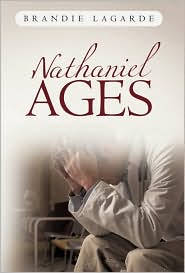
Interview with Brandie LaGarde


Today’s interview is with Brandie LaGarde who was a stay-at-home mom who home-schooled her six children. She was happy acting as a teacher and didn’t really consider writing until she was challenged by one of her children.

So let’s get right to the interview and find out how she was inspired.

Where did you get the inspiration for writing Nathaniel Ages?

My twenty-two year old daughter suffers from Bipolar Disorder and hasn't found her niche yet. She decided upon being a writer and showed me her work and I was amazed. She soon lost interest and quit and I tried encouraging her to continue to the point of upsetting her. She told me that I had no idea how hard it was to write a book and to back off.

She was right. I had no idea, so I decided that I would try it. A new passion emerged in me, I loved writing almost as much as reading. I generally read two books a week and had no idea that I would love creating a story that I controlled would be so exciting. So in between home-schooling my other five children, I wrote Nathaniel Ages in four months. I showed it to my daughter and she told me that it was great that I wrote a book, but now I just had an unread manuscript in my laptop. Again, she was correct.

So I let a few people read it and once my husband read it, he insisted we do more with it than let it sit in my computer. We googled “publishing” and that is where I developed phobias for the first time in my life. Phobias to the words, synopsis, query, tag line, social platform....I was done. Deep down, I knew I had to do this publishing thing to show my daughter that I could, so she would know that she could.

Who is your target market for this book?
Christian suspense, but this has a powerful romantic element to it also.

Is this your first book or have you published other books besides this one?

This is my first book, but certainly not my last. I have recently been approached by a screenwriter, who has two scripts that Universal is interested in making into a two-part movie. He asked me to write the novelizations for these scripts. He is writing a script for Nathaniel Ages and he has pitched all to a couple of agents who are interested and are waiting on us to send them some things to look over. He wants to form a corporation and turn out scripts and books from our collective minds.

After much prayer and wise counsel, I have decided that I am going to pass on this offer. I want my books to remain a way to point the reader to Christ's loving salvation plan that He has for our lives and no amount of money is worth going astray from what He has planned for my writing. I have had some pretty amazing letters from readers who have dedicated their lives to Christ after reading this simple story about an angel with a powerful gift that in anger walked away from his Father, a human girl who turned her back on God in the face of tragedy, and a humble human man that obeyed God, no matter the consequences.

Did you contact any other publishers to produce your book?

With my newfound phobias, I settled on self-publishing as the way to go for me. I contacted a local author in my area that someone had told me about and after speaking with her, I decided that I would use I Universe and chose a publishing package and began the ball rolling. It was important to me that the book look really professional and it does; I'm very pleased with their services. I am on every website and my book is downloadable to every EBook format and my printed book is available in hard and soft back. I still own my book and can take it in any direction I choose.

What plans do you have to promote your book?
I actually just used Facebook and recently entered Up Authors best first contest and won, then my husband googled me and saw that I was already on Ron Knight's list of top fifty authors on Facebook. My book has some great discussion questions and seems to be a hit with reading groups. The book seems to have a life of its own and that's how I drew the attention of the scriptwriter. I don't know what's next for me and the agent or a movie from my book. After going to a writer's conference recently, I saw how unhappy several of the traditionally published authors were and discovered sites like Smashwords, I may be thinking of writing EBooks and keeping this writing thing going as fun.

Where are you in the process of publishing your next book, The Myth of Lilith?
I am on my seventh chapter. I stopped for a while as I had actually began work on the novelization, The Shroud, until I have recently decided to pass on doing it altogether. So now I feel happier and am back to work on The Myth of Lilith.

I may self-publish this one because I have some people, who only read printed versions of books, waiting to read this one. Westbow Press has offered me fifty-percent off any publishing package, so it is something to consider. My first job is homeschooling my children and the whole reason I ever wrote, my oldest daughter, has decided to begin writing again. It's all I wanted in the first place.

What advice would you give to other writers for encouragement? To write a good book. Word of mouth sells a book better than anything. It is a tough thing to get an agent and get traditionally published, but it does happen. First, you need to know what direction you want to go in, some people do very well with just EBooks, it all depends on a well written story. Keep writing and continue reading everday and let God lead you in all that you endeavor.

That’s it for today’s interview. If you would like to learn more about Brandie and her books, you can do that by going to her website at :http:/www.BrandieLagarde.com or you can contact her by Facebook at https://www.facebook.com/pages/Ponchatoula-LA/Brandie-Lagarde/12628467731059