Blog Archive

Showing posts with label Christine L. Henderson - author. Show all posts

Thursday, June 18, 2026

Celebrating 250 Years with Bookish Giveaways

 If you've been following my Facebook posts, you would know that I've been adding daily posts about the American Revolution. I believe it's important to know about our country's history so we can learn from it and move forward. I’m proud to be an American and celebrating the 250 years since the signing of the Declaration of Independence from Great Britain’s edicts and control.

Now I want to tell you about a special event I'm involved in to celebrate our 250 years.  It's called “America 250 Author Hop” and is only for one day – July 2nd. You're invited to our American-themed Treasure Hunt! Sign up and follow my Facebook page so you won't miss this fun event! There will be Giveaways throughout the day that include a chance to win free books, eGift Cards, and book bling! Plus you'll get to hang out with 32 authors and ME! Here's the link to my Facebook page to follow me: https://www.facebook.com/Christine.L.Henderson.author

And here’s a special bonus treat right now! Download a FREE bookmark with American-themed Treasures to find at the Treasure Hunt at the America 250 Author Hop. This is our free gift to you! Color and paste to create a bookmark. Use in book journaling. Keep it handy at the event. We know you'll find creative ways to use and enjoy.

 Each of our authors will be giving hints and clues about where to find these patriotic treasures at the Author Hop! Book lovers, download your free bookmark today and see you at the Author Hop on Thursday, July 2nd! The fun starts at 2pm EST.

Here's the link to get the bookmark - front and back. 

https://drive.google.com/file/d/1_n20LfHKBMr4bYuwDQIrPhpyZkJUZHN8/view?usp=sharing

Friday, September 6, 2024

Writing and Publishing Take work: Author Interview with Jessica Parker

You have now published 20 books, but what inspired you to write that first book?

Each book has their own spark of inspiration, but my first one.... that one was born as I sat on my couch. The TV had a commercial for The Bachelor playing, while I read The Hunger Games, and I wondered. What would happen if the women had to fight for a chance to marry a prince? I had to add magic because magic is awesome. I love and hate that book now. I love the idea behind it, but I hate that I was so inexperienced when I wrote it. The story is still so much grander in my head, and it didn't come out on paper the way I wanted it to.

Confession it doesn't feel like twenty books because I got the marketing wrong on a few of them. So I had to unpublish and redo the covers, titles, etc. to fit better, but they still show up online under the old covers and titles. I also explored shorter and longer stories before deciding which direction I wanted to take.

You currently have a 3 book series that is a hockey romance. What drew you to writing a series around hockey. Will there be more books in that series?
I love romance, give me a good happily ever after and I'll be happy. When I went to my first hockey game I knew as I sat in my hard plastic stadium seat that I needed at least one book with a hockey player. Then as I wrote that story, I fell in love with the other characters too. Those characters needed their stories told as well. There are still characters I want to write about in Glacier Bay. I will absolutely write more books in the Hockey Book Club series.

You also have written several reimagined fairy tales for adults. Why did you pick the stories you did?

Fairytales were my favorites as a kid. Starting with the picture books, I'd look over the pictures and then as I got older read those books over and over again. I love the fight between good and evil, the magic, the variety of people and places and things. The lessons learned and how everything comes together.

Snow White & Rose Red is not as well known but it's my favorite which is why I chose it as one of the stories I wanted to retell in my book, Rose Red. I took some liberties to make the characters older than in the original fairytale, and of course more romance. A judgemental village, magical curses, mystery, unrequited love, and a happily ever after in jeopardy.

My Sea Princesses of Eventyr fairytales were not something I planned on writing. The ocean was scary to me for a long time thanks to movies like Jaws. It took a long time getting over that. Part of that journey was learning to scuba dive and I fell in love with the water. So much so, I became a scuba instructor to better understand it. Diving in the ocean feels like being on another planet sometimes, and it keeps giving me ideas for mermaids. The Little Mermaid and her sisters needed their stories told.

Snow White's Witch is a story where I wanted to explore how villains are the "Hero of their own story". It's a quote I heard a lot at a writer's conference and what better way to challenge that than with a classic villain? So I asked myself, what if Snow White lied?

You’re an indie author, which means you’re in charge of everything from writing to publishing and marketing. Other than writing, what other parts of the process do you personally do or hire others to do?

Hire: editor and cover designer.

Me: Social media, newsletters, writing, answering emails, arranging book signings, figuring out this business thing. That's just me and I do sometimes have to pause the marketing side while I write, etc. so I can make sure I spend time with my family and get my day job stuff taken care of. As my business grows I would like to hire out some of the other things, but I'm not to that point yet.

What’s the best encouragement you’ve had in your writing?
Every author has their own process. Figure out what works for you and your readers, and take it one page at a time.

Marketing is the biggest key to making sales. What is the best marketing source you've used that has produced more sales rather than just clicks?
I'm still figuring out marketing. I've been experimenting with posting to various social media sites and some are better than others. I like analyzing data and it's been interesting to see how some of my books do better on TikTok vs Facebook. I decided a couple of years ago that I would put more effort into getting more books out so I'd have a bigger backlist to make marketing more cost-effective. Then along the way I also decided that I'd just do one thing better than before. One more post a week, then a day, etc.

What do you know now about writing you wished you had known sooner?

There's no magic answer. Writing and publishing takes work just like any other job. However, I find this work more rewarding.

What is the best writing advice you’ve received or could give?
Keep going, and back up your files.

Are there any other points about writing you would like to add?
There will be a million reasons not to write, not to publish. Write because you love it. Each author I've met has had their own journey and process. There is no "one way" to do it, just your way.

What is the next book coming out? Can you give me a short synopsis?
My next book is a short story, The Mistletoe Goal and it comes out November 24th.

This is a hockey romance between Dan and Alexis. They're best friends, and Dan is stuck in the friend zone even though he'd like to be much more. He convinces Alexis to spend the hockey team's Christmas Break with him in a small town. He has one goal in mind, catch her under the mistletoe, and prove they should be more than friends.


That's all for today's interview. If you'd like to learn more about Jessica's books, here are some links to get you started.
https://jessicaparkerstories.com/
https://www.amazon.com/stores/Jessica-Parker/author/B01DQZYR4K

And here's a bonus for my readers, leave a comment on this post and we'll pick one reader who'll receive a copy of one of  Jessica's eBooks. So do that now. It can be as simple as I want to be in the giveaway. We'll chose a winner next Friday!

Saturday, July 20, 2024

Creating the Mystery Puzzle: Author Interview with Larissa Reinhart

You’ve now published three mystery series, but what inspired you to write that first book?
My first published book was PORTRAIT OF A DEAD GUY, the first Cherry Tucker Mystery. I wrote it while living in Japan, soon after I lost my dad. I’m from a small farming town and had been to a lot of funerals. That’s part of small town life. My dad’s funeral made a huge impression on me. The line of people waiting to pay their respect took hours. Some people drove hours to come — people my mother hadn’t seen in years. My dad was a retired teacher but didn’t teach in my hometown. He taught in the “city.” He hadn’t been mayor (although he did a stint on the town board once. And hated it.) or anyone “important” in terms of social standing. But he was a good man. Dependable, honest, and everyone liked him. That was a funeral to be proud of. 
At the time, Miranda Lambert’s “Famous in a Small Town” was a popular song on my playlist. Thinking about my dad’s funeral and that song had me reflecting on another kind of small town funeral. So while I stayed with my mom for a few weeks, I let that idea play in my head. I hadn’t entirely known I was going to write a mystery at the time. Before his funeral, I’d been thinking about a somewhat dysfunctional but happy family living in rural Georgia. In Nagoya, I had a lot of thinking time while driving my youngsters to school every day, particularly on the way home. The 4 miles took 45 minutes.
I’m not really sure how it happened, but those two ideas merged to create Cherry Tucker and the murder, resulting in her portrait of a dead guy. It was published about a year later!
You mention the Sisters in Crime critique group on your website for writer’s help. For those who aren’t active with a writer’s group, what would you tell them about joining one?
I joined Guppies when I first looked for a publisher back in 2011-12. The Guppies were a tremendous help. It’s an online chapter of Sisters in Crime, meant for beginning mystery writers. I highly recommend Guppies (Guppy Online Chapter - Sisters in Crime). 
Besides SinC, over the years I’ve been involved with various local writer’s group and national organizations. At any stage in your writing career, I feel it’s important to connect with other writers. You need to network for business reasons, to better your craft, and to connect with people who understand the joys and difficulties of writing. Only other writers will understand what you’re going through! 
How do you go about plotting your mystery? Do you pick the victim or the murderer first? 
I’m more of a “pantser” or discovery writer. An idea for an inciting incident kicks things off for me, but plotting everything out hasn’t worked for me. I like to make it a puzzle for myself, I suppose, so I come up with the original crime and take it from there!
What do you think makes for a perfect murder mystery?
A perfect murder mystery has a good twist, some clever red herrings, and an interesting subplot that’s connected to the main mystery. Even if I figure out the whodunnit before the end, I will enjoy the story tremendously if it’s engaging and written well.
What’s the best encouragement you’ve had in your writing?
I’m always encouraged when my readers write to me. I like emailing with my readers. It’s a good way to get to know them individually. Many times, they are dealing with a difficult situation — whether their health or the health of another family member, or something else — and reading is an escape for them. Nothing gives me greater pleasure to know I helped someone smile.
Marketing is the biggest key to getting sales. What is the best marketing source you’ve used that has produces more sales rather than just clicks?

I feel like I’m not a good marketer (read my chapter in PROMOPHOBIA, the SinC mystery writers marketing book edited by Diane Vallere and you’ll get that!). I’ve got wonderful readers who’ve stuck with me over the years and that’s been a slow build. 
I think having preorders for upcoming books and letting my readers know the book is coming up has garnered most of my sales. I have a monthly email for my VIP Readers I send out with my book news, a few personal things, a link to my monthly blog with my friends’ new releases and book deals, and a fun giveaway. I’ve kept that up because I like doing it. I’m not so great at being consistent on social media because I don’t really like it.   
What do you know now about writing you wished you had known sooner?
I actually wish I’d go back to writing like I did 10 years ago. I wrote faster and with more freedom. Now I’m too careful. I slow myself down with fact-checking or getting stumped on using the right word and similar things. It’s harder to read and write now because I over-analyze everything. I think some of my friends feel that way, too. Maybe it’s our age. Or maybe it’s the fear of our editors. LOL  
What is the best writing advice you’ve received or could give?

Find your voice and use it consistently in whatever genre you write. This way your readers identify with you as an author — not just your series or a certain character — whether they realize it or not. How many times have you fallen in love with a book or series and immediately looked to see what else the author has written? I do it all the time, and I think I’m a pretty typical binge reader. 
To be honest, I find this idea of “voice” a little difficult to explain. I’ve got three protagonists in my three series. Their personalities, physical traits, and backstories are very different. The way they talk is different. Even the tempo, beats, phrasing, and structure of my writing is different for each series. But readers know they are my books because of some quality in the way I write. I couldn’t tell you exactly what the quality is. 
For example, when I read Meg Cabot, who writes series in very different genres, I always know it’s Meg Cabot. Same for Elmore Leonard, Joshilyn Jackson, Agatha Christie, or whoever. 

I think it’s important to be widely read — in-and-out of your genre. We’re told to read our “comp” authors (authors comparable to you or your genre), to keep up with what’s going on in contemporary writing. That’s important for meeting readers’ expectations. Books are much more fast-paced than they used to be. We’re competing not just with movies and TV, but with phones and apps. Our attention spans are shorter. You’ve got to hook readers right away. I can tell within a few pages, whether I want to continue to reading. 

To stand out, you need to find your own voice. Reading will spark ideas for your writing. It should anyway. Everything you read is getting filtered into your subconscious, stirred together, and mixed with your personality. That will somehow appear in your writing in a way that readers will know it’s uniquely you.  

What else would you like to tell my readers about your writing?
Joining my VIP Reader’s newsletter is the best way to stay in contact with me. I’ve always been a letter writer, so email me and I’ll write you back! (I don’t use any messenger or DMs on social media, although I do post on Instagram and Facebook).
What is the next book coming out? Can you give me a short synopsis?
I’m working on 21 GUNS, the next Maizie Albright Star Detective (#10) now. It’s in the early stages, so I don’t have a release date or synopsis yet. I’ve also got some other projects in my pockets — a few Cherry Tucker Mysteries and the next Finley Goodhart Crime Caper — that I work on when I can. I am reviewing the audiobook for 19 CRIMINALS now, too, so that will release soon. 

Here’s a brief synopsis for 19 CRIMINALS, Maizie Albright Star Detective, which released a few months ago.

Turner & Hooch meets Mr. and Mrs. Smith for the ex-celebrity-turned-private detective’s latest investigation. Maizie’s new partner is canine. Her ex-partner Nash is on the wrong side of her infidelity case. But it’s more than her career and their relationship at stake. Maizie’s life is on the line when she looks into old secrets connected to Nash’s investigation into her father’s company.

Sounds like there are a few twists and turns in that plot. If you'd like to learn more about Larissa's writing here are some links to get you started.
Website: http://larissareinhart.com/
And here's a bonus for my readers...Larissa is offering a free eBook of the first book in the Maizie Albright Star Detective series, 15 MINUTES.  is free on most e-readers. Here is a link to all stores: http://books2read.com/15

Saturday, June 22, 2024

Rules for a Mystery: Author Interview with Joan Hetzler

You’ve now published 4 different books, but what inspired you to write that first one? How many rewrites did you do on it?

I grew up with a love of writing and of mysteries. One quiet summer, I decided to write a mystery novel I had in my mind. Writing was easy. Editing was hard. Although I had a background in English literature and worked as a technical writer, writing genre fiction required different skills. I started attending a yearly writer's conference in Georgia in St. Simons Island where I could learn and network with other writers. Leaving out the times I had to set it aside for various reasons, it was about ten years before the book was published. I had dozens of rewrites but I don't remember a specific number.

 I see that you changed out your original covers to ones that pop more with color. How do you go about finding a new cover designer?

The colorful designs with the bloody dagger and gun wielding man were created by my publisher. I just recently took back my copyrights and re-published with the beige covers. My books have suspense and drama but also humor and friendship in solving mysteries. I wanted covers that reflect that lighter tone rather than a thriller. Most of the cover designers I talked to were on a waiting list, and I wanted to move forward so I did the covers myself. I may redo them again later. I'm looking for feedback so appreciate comments and ideas. The first book in my new series, A Cold Case in July: A Megan and Derek Mystery, has a more traditional cover with colors.

How do you go about plotting your mystery? Do you pick the victim or the murderer first? What do you think makes for a perfect murder mystery?

I usually start with a setting and characters who can interact in a way that could lead to murder. To me a good mystery is all about who is "involved" and not just the physical activity of a chase scene, although that is important for keeping interest. During the Golden Age of mysteries (1930s) a group of popular authors formed a club and decided on the "rules" for a mystery. One rule is that there must be clues scattered throughout the story that the reader can figure out who did it on their own. I try to include those clues without giving away the ending. To me the perfect mystery is to get to the last page and say, "Of course he (or she) did it. That makes perfect sense given the characters and motivation, but why didn't I figure it out myself?"

 What’s the best encouragement you’ve had in your writing?

Keep writing. If it's God's will, it will work out. I think praying before writing and taking time to listen to God's direction is important. Although it's not a Christian book, The Artist's Way by Julie Cameron was very helpful for me when I first thought of publishing. She has some practical tips on how to take away our inner critic that says writing is not a real job and we are wasting our time. She has exercises on journaling and other activities to be more creative. 

Marketing is the biggest key to getting sales. What is the best marketing source you've used that has produces more sales rather than just clicks?

My previous publisher chose to make books only available through Kindle Unlimited so I'm just now opening up to all retailers for my books. It's hard to compare. I have found mailer lists such as Book Cave and the Fussy Librarian the most helpful. I had the least success with Amazon ads.

What do you know now about writing you wished you had known sooner?

Editing is as important as the writing to really look professional. I always knew editing was important, but in fiction it can be the difference between keeping a reader's interest or not.  Poor editing can result in wordy and redundant sentences that slow down a reader. Misspellings can jar us out of the story into the real world if we notice them.

What is the best writing advice you’ve received or could give?

 For fiction, it's the often repeated, "show don't tell." Taking a reader through the same experiences as the hero or heroine is more engrossing that just a long description of what happened.

Are there any other points about writing you would like to add?

I try to remember that my readers interpret my writing through their own experiences. They may not have lived in the same city as my character or had the same type of job. So, I try to include extra background in a few words or paint a word picture of what my characters see to make the story clearer. Also, I limit slang because that changes from generation to generation and also areas of the country. And as a Christian, I try to make sure my characters act as a Christian would even during stressful times.

What is the next book coming out? Can you give me a short synopsis?

Two books are now re-published. One is a mystery that starts a new series after the Megan books. It is A Cold Case in July: A Megan and Derek Mystery.  Derek has left his job as a homicide detective to go to law school and during his summer break, a sheriff in a small North Georgia town hires him to find out who killed a well-known citizen four years earlier. Derek interviews the usual suspects only to find out that the case is more complicated than anyone thought. Megan and her computer savvy friends also lend a hand.

The other book is a poetry chapbook called Water Ways and God's Ways on St. Simons Island. For ten years, I lived on Saint Simons Island, a barrier island off the coast of Georgia. I printed and sold this chapbook in the local bookstores. Many people liked it and made positive comments as the poems are soothing and reveal God's grace in the island scenery and activities. For those who can't go to the beach this summer, they may enjoy these poems that take them for a soothing stroll along the quaint village streets or sit in an Adirondack chair on the shore's edge. From warm sandy beaches to shady oak trees with branches draped in hanging grey moss, the poems speak of God's gift of peace and beauty. 

That's all for today's interview. Hope you'll check out Joan's books. I just signed up for her newsltter to get her poetry book. I visited St. Simons years ago and still remember the peace and serenity I discovered there. Here are the links to learn more about her other books.

Website: https://www.joanhetzler.com 

Amazon author page: https://www.amazon.com/author/joanhetzler 

Book Cave: https://mybookcave.com/profile/joan-hetzler

And here's a special bonus... Click on her website and sign up for her newsletter. In return you'll get a PDF of Water Ways and God's Ways on St. Simons Island  https://www.joanhetzler.com.


Friday, May 31, 2024

Navigating Through the Process of Publishing: Author Interview with Shannon Savory

You’ve now published 3 picture books for kids, but what inspired you to write the first one? How long did it take you to write and publish it?
When my oldest son was young, I often travelled for work and felt extremely guilty for doing so. Ahead of one trip I told him not to worry, because “we’ll always share the moon” and that phrase stuck in my head. Over the next 10 years, I found myself building this phrase into scenarios, and trying to make the rhymes work in my head.

By this point I had two boys, so while driving them to school or activities, or as I waited for them to fall asleep at night, I’d be working out the rhythm. My problem was that by the time I got somewhere to put these ideas onto paper (or computer), I had forgotten a lot of what I came up with. This went on for years.

Finally, as I approached my 40th birthday, I decided enough was enough and I was going to put in the work and make it happen. I tried to connect with publishing houses but didn’t have much luck. It was disheartening and led me to question if I should proceed or just give up. I thought, if they didn’t see the value in my story, maybe it had no value. One day, I saw a random ad on Facebook for Amazon KDP and self-publishing (perhaps not random, knowing Facebook’s insight into what we want!) and decided that I was going to do this myself, for no one other than me.

I tell people that it took me nearly a decade to publish We’ll Always Share the Moon – finding the time with small kids was nearly impossible, but the idea was always in the back of my mind. Then when I was rejected by traditional routes, I had to sit with that rejection for awhile and process that loss of something I had been daydreaming about for years.

Finally, when I decided I was going to do it for me, and really started to put forth a true effort, it took me less than a year to build out my ideas, find and hire a local illustrator, and figure out the complex world of self-publishing (the hardest part!).

I didn’t tell anyone I was doing it – not until it was completely finished did my husband, children, friends, or family know what Ari and I had created. I read it to my kids, messaged my friends “so… I did something…” and started to share it out to the world. Which was scary in and of itself! But all the firsts and the frustrations that got me there, those were mine. The first time I saw the illustrations from Ari, to the first time I saw it available for purchase on Amazon.

How did you find your illustrator? 
I had originally looked at various freelance illustrator services online where you can connect with artists from all around the world. I had found some possibilities, but I was nervous about working through these sites (even though other authors have had good results), and I kept coming back to wanting to support local. I searched online for illustrator / graphic arts programs in my city and looked for names of graduates, and then Googled their names hoping to find their websites so I could see their work and determine if it aligned with what I envisioned for a children’s book. (Yes, I should have been a private eye) At some point in the process, I came across Ari – I reached out, and here we are!

Each of your stories feature hidden characters. How did that come about?
I have read many books to my boys over the years, and I found consistently that when they were tasked with a “job” while reading, they were more likely to stay engaged with the book. Our cat is such an important family member that she was the perfect addition to each page, and Ari did a great job of hiding her in sneaky and obvious locations (to appeal to various children’s capabilities). When I would read the book at schools, the kids were OBSESSED with finding the cat and loved hearing that she’s a real (and mischievous) cat who lives in my own home. 

Their interest and love of hearing about her bad behaviour is what led me to write and publish my second book, Miss No Manners. Knowing what a hit the “search and find” was, we decided a mouse was the perfect character to hide. As this had now become “our thing,” hiding a character in HEY TEACHER! (You’re Pretty Great) was an obvious must. Ari came up with the iguana idea and to date, he’s my favourite mischievous addition.

You are an indie author. Other than writing, what other parts of the process do you personally do? 
I am not sure if my experience is reflective of most indie authors, but I believe it is likely reflective of most NEW indie authors. Aside from the illustrations, everything else falls onto my lap. I did all the research related to publishing through Amazon KDP, including what specs Ari had to build her design files to. Getting my first book onto their platform was trial and error, and error, and more trial, and some more error. I leaned heavily on Facebook self-publishing groups for answers and found a great community of people who were willing to point me in the right direction. It wasn’t for the faint of heart, and I had to read a lot of KDP tutorials, online tutorials from other writers, and I watched a lot of YouTube videos on how to meet their technical requirements. At the end of the day, I didn’t want to pay someone to do this step, so I had to figure it out.

Marketing is the biggest key to making sales. What is the best marketing source you've used that has produced more sales rather than just clicks?
Marketing is the largest time-sucker as it takes a lot of trial and error to figure out what works, what makes sense to spend money on, and what to not waste energy on. I post my books to free self-promotion sites on Facebook – they are mostly made up of authors also trying to promote their books, but I believe many likely have kids in their lives so perhaps my books would be of interest to them. I tried paying for advertising on Facebook and Instagram, but didn’t see a return on investment. I also set up a Facebook page, and tried TikTok. Both take a lot of time to maintain, and since I work a full-time job and have a family, they have fallen to the wayside. I paid to have my book read and designed into a YouTube video that turned out great, but it was expensive and it’s hard to know the direct impact that money spent had on my sales. 

Finally, I took a free Amazon ad course from Bryan Cohen that taught me how to advertise with success on Amazon, and that’s truly been where I’ve found success. He runs a free course a few times a year, and it took a lot of time, but it taught me how to correctly and effectively advertise my books on the Amazon platform. I don’t spend a lot of money on it, but at least I know that the money I am spending is resulting in sales. I strongly suggest his free course to anyone who asks!

What do you know now about publishing you wished you had known sooner?
When I look back to my first book, We’ll Always Share the Moon, I think back to how I knew absolutely nothing about what I was doing, but I was determined to figure it out. I failed at many tasks not because I am a failure, but because I was on my own navigating a process and platform that I knew nothing about. It was frustrating at times, but I just kept trying and reading and tweaking until it all came together. Miss No Manners went a bit smoother, but I had forgotten lots so I had to research a lot of the “how-tos” a second time. Hey Teacher! loaded successfully to Amazon on my first try.

With Hey Teacher! I was more prepared with the back-end tasks. I already had searched “key words” to start advertising on Amazon as soon as the page went live. I had already created my A+ content (which are the product images that you see when you search items on Amazon) – previously, those had always been loaded months later. I wanted to give anyone searching my book terms the best possible chance of landing on my page, and buying my product.

With my next, I hope to plan better on how to get reviews quicker as I think that will help with early sales. I haven’t done this for any of my three books, and I know it’s so important to have those reviews, so this will be a “what’s next to learn” task for me.

What is the best writing advice you’ve received or could give?
My best advice is that it’s never too early or too late to write and publish your book. When I read to classrooms there is inevitably a child who tells me they want to be an author too and I always encourage them to staple together white paper and write / illustrate their own books now, to enjoy being creative and telling a story, and to keep getting their ideas down on paper. I didn’t publish until I was in my early 40s, to check “published” off my bucket list as I hit that age milestone. I see people in the Facebook groups I’m part of who are in their 80s and even 90s who are publishing for the first time. If it’s a dream for you, then do it! Indie authors don’t publish to make money (it often costs us money!), we publish because it’s good for our hearts to share the stories that are rattling around in our brains.

Are there any other points about writing you would like to add?
I have found tremendous value in the previously mentioned groups I have joined on Facebook. There are several that are advice-only (no self-promotion). When I’m scrolling, I will see questions from other authors, and I’ll often read all the comments because there is so much knowledge being shared! I hope those tidbits (about how to get a character-themed stuffy created, or how to successfully read at schools, or how best to ship copies if you start your own website) stay in my brain until I need them.

What is the next book coming out? Can you give me a short synopsis?

Right now I will focus on promoting HEY TEACHER! but I have a folder on my computer with lots of sub-folders and story ideas. I honestly don’t know which will come next!

That's all for today's interview. I hope you have learned something new about writing and encourage you to improve your craft. Check out Shannon's books for the kids in your life. I'm sure they'll appreciate it.

And here's a bonus for my readers... leave a comment on this post and we'll pick one reader who'll receive a copy of one of  Shannon's book, HEY TEACHER! Giveaway only available to U.S. and Canada residents. So do that now. It can be as simple as I want to be in the giveaway. We'll chose a winner next Friday!


Friday, May 17, 2024

Doing the Research for Timeslip and Dual Timeline Novels: Author Interview with Sarah Hanks

Y
ou have now published multiple titles, but what inspired you to write that first book? How long did it take you to write it and finally be ready to publish?
Great question. I consider my official debut into professional writing to be Mercy Will Follow Me, the first book of the Mercy series. However, I was writing for over a decade before that book baby saw the light of day. 
I wrote my first novel when I was seventeen. I didn’t know it then, but I had so much to learn. The three novels I wrote before Mercy were my hobby novels. I snatched pockets of time during my children’s naptimes as well as late at night. Something in me had to write, but I never saw it as end-game for me. I wrote because I couldn’t not write, but I never called myself an author. I was a children’s ministry director and a homeschool mom who wrote on the side.

My mindset changed when I got sick and those other roles were stripped from me. Though still a mom of many, I had to send them to school, and I needed help caring for them. (You can learn a lot about my battle with POTS from my novel Fall Back and Find Me.) 

During this season, I couldn’t function much, so I read. Then I began to write. I emerged from my cocoon as a writer with stories to tell. Mercy Will Follow Me was the first, and it took me three years. I wrote only on Saturdays at the library. The next books came more quickly as I found my footing and grew healthy enough to attend writers' conferences and grow in the craft.

How did you go about doing research for your 
time/slip stories?
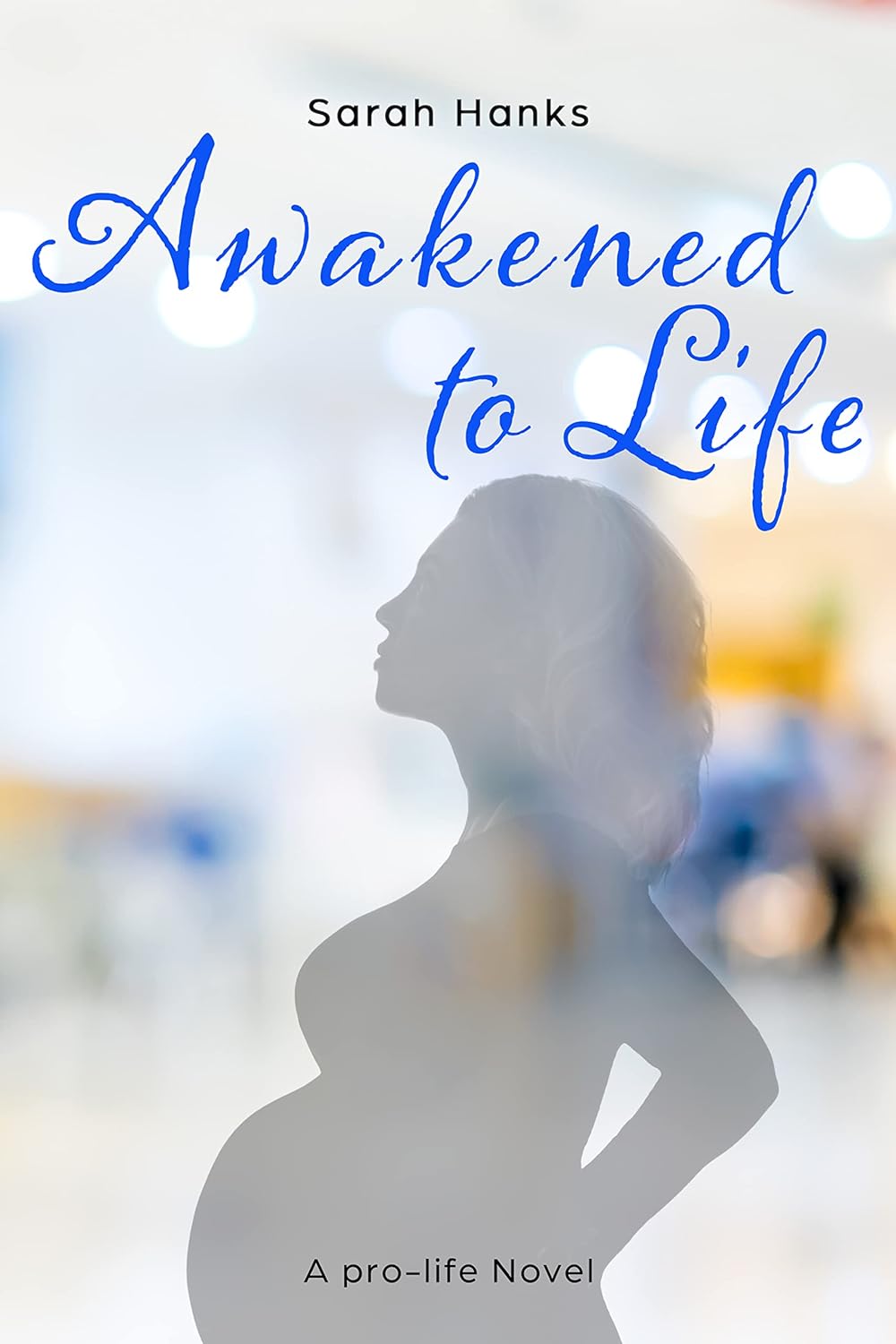
All of my books save Braving Strange Waters are split-time novels that have dual timelines. The Mercy Series has two (or in the case of the 3rd book three) storyline in present day and one in a historical time period. Awakened to Life has several contemporary POV characters intertwined with a Biblical fiction storyline. A Battle Worth Fighting and Fall Back and Find Me have contemporary storylines and each have a historical storyline featuring a secret female Civil War soldier. Braving Strange Waters is my first actual timeslip or time travel novel in which a character travels from the contemporary time period to the past. People confuse the terms split-time, timeslip, and dual timeline all the time and even different people in the industry define them differently. Most people don’t mind what each is called, but some do. Way to make things ultra confusing, huh?

For my part, the same amount of research went into my split-time books as did my timeslip. It did help that I’d already done a ton of research on Bloody Kansas for Fall Back and Find Me as well as on steamboats and slavery for the Mercy series. Researching for me is a love/hate relationship. I enjoy discovering new things, but I’m always itching to write already, so holding myself back is the hard part. I search the library for as many books as I can find on the subject, utilizing inter-library loans and all of their resources. I try to get a variety, but I need at least one or two great first-person sources. A diary, a collection of letters, a journal. Something. 

Once I get a pile as high as my house, I go through them and figure out which ones truly include information that will be useful to my book. I buy those books used on Amazon so I can write in them and mark them up with highlighters, so the weeding process is important to avoid bankruptcy.  I also utilize documentaries, YouTube videos, podcasts, etc. I also try to visit historical places whenever possible. When it’s not possible, I take virtual tours.

As you can imagine, it’s a lot of work, and so much of what I learn never makes it directly into the book. However, it all comes together to flavor the work and to give me confidence as I write. Nothing is wasted. It is helpful to write in the same time period or about the same subject for several books, though, to get the most bang for my research buck.

How do you decide if a book will be a standalone or a series? Or did the story just grow too long to be covered in only one book? Will there be more in your current series?

I knew from the beginning that the story I wanted to tell in the Mercy series could not be contained in only one book. Pain that is so complex and layered must be dealt with delicately lest it appear trite. For Natassa’s story, this meant I needed to show the ebb and flow of her healing. Otherwise, I ran the risk of treating victims of sexual assault as if they just needed to forgive and get over it—not my heart. The Sister in Arms books are considered a collection, not a series, which means they have a common thread but can be read as stand-alones. There will be more Time Sailor books containing some of the same beloved characters. With thse, it will work best to read them in order, but one won’t have to to enjoy the story.

You are a recipient of the Angel Awards for your writing and a previous guest speaker at their Faith and Fellowship Book Festival. How did you first hear about them? What is it like being on both sides of the awards program.
I’m not positive, but I probably first heard about the Faith and Fellowship Book Festival from fellow author and ray-of-sunshine, Joy Mehlville. She’s an Angel Award recipient herself and a huge proponent of the festival. I’ve participated in the festival as a panelist for a few years now and have won three Angel Book Awards. The festival is always an uplifting and encouraging time to connect with other authors and readers, and it was such an honor to receive the Angel Book Awards

What’s the best encouragement you’ve had in your writing?
 That’s a hard one. I absolutely love hearing testimonies from readers. Never underestimate the power of writing a review or sending an email to an author to let them know how a book impacted you. I received a lot of feedback from readers of my novel Fall Back and Find Me saying they have started putting into practice what the main character in that book does. In the novel, Amber asks the Lord for a word about her identity each day and writes it down. It is so exciting to me to get comments and emails stating readers have started going to Jesus for their identity and it’s changing the game for them. People who have struggled with their self-worth are being set free by the power of Jesus’ love! How thrilling that my little book could play a part in something so life-changing. It makes every hard writing session worth it.
 

What do you know now about writing you wished you had known sooner?

 That’s a bit of a trick question. In a way, I kind of wish I would have attended writing conferences and attended classes/workshops sooner. I was a hobby writer for over a decade before I started taking myself seriously. But truly, I believe everything happened as it was supposed to. In the right season, the Lord showed me what I needed to know and led me to the people I needed to walk with during the journey.

What is the best writing advice you’ve received or could give?
 I’d say to just write and not worry about perfection. Get that first draft down. Worry about making it pretty later. I can be such a perfectionist and fear of putting something less-than-stellar on paper can paralyze me. Realizing that even the greats aren’t great on their first pass helps take the pressure off. 

Everyone needs an editor. Every author needs an extra set of eyes. None of us can do this alone … so I shouldn’t try to. I can ask for help when I need it. Help brainstorming, help problem-solving, help with critiquing. That doesn’t make me a weak writer; It makes me a smart one.

Find your people. Writing can be an isolating profession, but it doesn’t have to be. Seek out community. It’s there. Be intentional to nurture it. And then … write!
Are there any other points about writing you would like to add?
 
What is the next book coming out? Can you give me a short synopsis?

My next release, New Creations, comes out on August 16th. I wrote it to honor my grandpa, who is a legend in all the family stories. A good bit of it is based on his true shenanigans, and it’ll be one that runs the gamut of emotions, making you laugh and cry. 

Here’s the blurb:
Floyd Douglass is a blundering barber who faces retirement wondering if the past sixty years of his life has been a waste. When he's presented with the opportunity to go on a mission trip, it seems like the answer to his prayers and a way to finally make his life count for something. Now with a series of obstacles standing in the way of his newfound dream, he must decide whether to push through or find contentment in being the faithful family man he's always been.

Emira has always looked up to her grandpa, especially when her parents’ marriage fractured and left her foundations shaken. Now, she scrambles to assure the man who taught her how to love what a deeply meaningful life he’s lived.

That's all for today's interview.
If you'd like to learn more about Sarah's books, here are the links to get you started.
Purchase Braving Strange Waters on Amazon here.
Website: www.sarah-hanks.com
Follow me on Facebook or Instagram. 

And here's a tip for my readers... Go to her website and check out the freebies that are available to you to read at no cost. https://sarah-hanks.com/freebies/ and https://sarah-hanks.com/prayer-guide/
 

Friday, May 3, 2024

Telling Picture Book Stories with Animal Characters: Author Interview with Stephen G. Bowling

You’ve now published 5 picture books, but what inspired you to write the first one?

I got the idea for my first book, Calvin the Christmas Tree, about 20 years ago when I was traveling during the Christmas holiday. I was meeting some family and friends and we had rented a house. It was Christmas Eve, and everyone decided that we should decorate the house and it would be nice if we had a Christmas tree. The men in the group had the mission to get a tree, which was not easy as everything was closed. 

We went looking to no avail, and finally saw an abandoned Christmas tree stand, which was now basically an empty lot. Someone spotted a small, not very good-looking tree that fell over and was left behind. We considered ourselves fortunate that we found something to bring back. We loaded this awkward little tree in the car, and on the drive home I thought this would make a wonderful story. A story about a little tree that almost didn’t make it for Christmas. One that beat the odds and became a Christmas tree.

It was just a thought, and I didn’t have any plans to do anything with it. A few years later I needed to buy Christmas presents for a lot of young nieces and nephews and found myself with a lack of funds. I decided to write the story and give it as a present. It seemed like a good solution to resolve my dilemma. I had, as usual, put off getting presents until the last minute, so to get this completed in time I needed to work fast and well into the night. 

I wrote the story and illustrated it, finally finishing on Christmas Eve. I made copies of the “book” and gave them to the children. A friend of mine, who is an author, recently encouraged me to self-publish the story. I rewrote it, found a real illustrator (who is amazing), and did just that. So far it is the only book I wrote in prose, the rest are written in rhyming verse.

Three of your books have a bird as your main character. Why not make the story a magical adventure for a young boy rather than a bird?
Children seem to have a special relationship with animals. In their world, anthropomorphizing animals comes naturally. It wonderful aspect of being a child and I like to use it in my books. In one of the books, the bird talks to a ladybug on a flower having a cup of tea at a little table. I find it enjoyable creating animal or insect worlds that mimic our own. I believe children enjoy it as well. My first book does that with trees.

The three books you refer to are a series I wrote about Simon, a young bird. The first book came about when I had a challenge to write a story involving a birdhouse. It seemed natural to write about the occupants. I thought what do children do regarding their house? How do they think of their house or their room? Simon would think the same way any young child would. I wrote the story and thought it would be fun to use Simon in more books, adding more animal characters in each.

You are part of a non-profit philosophical organization that teaches students critical and analytical thinking. Would they also find that in your books?

To some degree, yes they would, in subtle ways. I don’t write with that specific purpose, however as the story unfolds analytical thinking often comes into play, perhaps because of my background. For example, the second book in my Simon bird series has the main character searching for a dragon that he has heard rumors about. He does what a lot of children do, or at least what I did, and he decides to look for it. 
He puts a bottle cap on his head as a helmet, as the dragon is rumored to be very big and mean, and begins his search. He asks the other animals if they have seen the “beast” that flies around the barn, none of which had ever seen it. 

What Simon eventually discovers is something quite different from the rumors he has heard. I think this helps children realize they need to question and search for the facts, to be critical and analytical about what they have heard as some things are not always what they seem. Another story deals with spatial relationships and resolving a problem by thinking of alternative solutions. My upcoming book deals with scarecrows who have a debate and use reason to settle an argument.

As an indie author you are responsible for every aspect of publishing. Other than writing, what other parts of the process do you personally do? What do you hire others to do? 

I currently do the formatting and put the books on all the platforms I use. I hire someone to turn the book into an eBook, although I may start to do that in the future. I obtain ISBN numbers, apply for the Library of Congress number (LCCN), and I do the copyright myself. I hire a company to do the Publisher's Cataloging-in-Publication Data (PCIP). 

I do some of the marketing, and I hire and try various companies and services for marketing. Some parts of the process may seem daunting at first, however like most unfamiliar tasks once you get familiar with them they become merely a chore you’re used to. I am by no means an expert at any of them and I am still learning. Doing much of the work yourself may not be for everyone. I have a tendency to jump into things without knowing much and learning as I go. I like to be familiar with the process even if I hire that process out. Doing these tasks yourself does take time which some may deem better spent on writing.

How did you find your illustrator?
I was very fortunate to find my illustrator whom I love working with. We have become great friends and a team, despite living on different continents and speaking different languages. He is an amazing artist and he hand paints all the illustrations. We work extremely well together. I happened to find him on one of the networking platforms. I saw his work and it was perfect for what I wanted. He had no reviews, so I decided to take a chance. I was lucky I suppose, and I am thrilled to be working with him.

What do you know now about publishing you wished you had known sooner?

I wish I had known how to launch a book before publishing it. That would have helped a lot, getting reviews and some awareness through blog tours, public relations, etc. before publishing.

What is the best writing advice you’ve received or could give?
My advice for children’s book authors is that you still need a good, well told story even though the book is written for children. Children like and enjoy good story telling as much as adults do. Books for toddlers would be written differently of course. Additionally, if you are writing in rhyming verse, it is vital to maintain a rhythm and cadence, and the words you chose for rhymes must be meaningful and advance the story, not chosen just because they rhyme.

Are there any other points about writing you would like to add?
For children’s books, authors should keep in mind that they are writing for two different readers. The challenge is writing children’s books so they are enjoyable for the child and the parent or adult who reads them to or with the child.

What is the next book coming out? Can you give me a short synopsis?
My next book is Winslow Scarecrow which should be out in late June in time for National Build a Scarecrow day. Winslow happens to be a very friendly Scarecrow who invites the crows to rest on him. Some of the other scarecrows are upset, as being scary is their job, it’s what they do. There is a fun debate between them, and Winslow comes up with a solution to make everyone happy. Describing what the scarecrows were wearing was a lot of fun. One of my favorite lines in the book is: “Now hold on there” said Jack, who had a Pumpkin for a head. Jack wore baggy trousers that were green but mostly red.”

I got the idea when I heard someone say “Aren’t scarecrows supposed to be scary?” I thought that would make a good story, having no idea how I would do it. I did know that many kids like scarecrows. And I have heard some young girls say they never see girl scarecrows, so I have plenty of both boy and girl scarecrows in the story. The next book after Winslow Scarecrow is about a man who yells at the Moon, that’s a fun one too.

That's all for today's interview. I hope it has encouraged you to learn more about Stephen's books. Here's how you can do that.
 Website: www.StephenGBowling.com
Amazon Author page: https://www.amazon.com/stores/Stephen-G.-Bowling/author/B07S94JV84

And here's some additional bonuses!
Free Activity Pages: https://stephengbowling.com/simons-tree-party-free-activity-pages/

Here's your chance to win a free eBook of Stephen's story Simon's Search for the Scary Dragon. Just leave a comment on this post and we'll pick one reader who'll receive this eBook. So do that now. It can be as simple as I want to be in the giveaway. We'll chose a winner next Friday!