Blog Archive

Showing posts with label Christine Henderson. Show all posts

Tuesday, June 2, 2015

Teaching Children with Writing: Author Interview with Kat Michels

What inspired you to write your books for children?
I wrote my first children's book, Children Have Got to Be Carefully Taught, as a baby shower gift for my sister's first child. Originally I had planned to write something cute, do some rudimentary drawings myself (stick figures), get one copy printed and give it to her. However, I'm a bit of a perfectionist, so as I worked on the verse I kept asking people to read it and tell me what they thought. Each of these people then asked if they could get a copy once it was published. When I told them that I wasn't planning on publishing it, they were aghast.
 
After about the 10th person to have this reaction, I realized that I had more than a baby shower gift on my hands, and my illustration skills would not be adequate. Thus began my search for an illustrator. Long story short, I missed the baby shower by a long shot (eight months), but Children Have Got to Be Carefully Taught made a great present for my nephew's first Christmas. I've continued in this genre because the English language fascinates me, and I get to play with language in a children's book in a way that I don't get to in other genres. I can set up whatever parameters I want - rhyming schemes, syllable restrictions, couplets, etc - and then I get to play with words. For me, writing a children's book is like a big puzzle, and if I can put together the right words, a beautiful world will be revealed.

How long did it take to write your first draft?
I wrote my first children's book over the course of a week. It took me six months of tweaking/rewriting before I had the finished text. My second book, 10 Cheeky Monkeys was created on a similar timeline. I find that at a certain point, I have to set the text aside and not look at it for a week or two. Only after a break, am I able to see it afresh and really hone the verse.
 
I am also finishing up my first adult novel, and that one took me five years to finish the first draft. While there are a few similarities in how I approach working on the two different genres, they definitely make me flex different muscles in my brain. It's a fun challenge.

Who encouraged you along the way to complete the first book?
As my first book was meant as a gift, no one knew I was writing it so I was going solo. As I started to show it to friends and coworkers for feedback, I got some encouragement from them, but overall it was a solo mission.

Prior to writing these children’s books, what was your publishing and writing background? 
I've been writing my entire life. I had some poetry published in high school and wrote a play in college that was produced. Other than that I kept everything I wrote to myself, and never took it seriously or saw it as a career path. It wasn't until I went back to college, for a second degree, that a professor pulled me aside and basically informed me that I would be writing the narrative for a short-form documentary he was producing.
 
I wrote the narrative to that documentary and one the following year as well. Both of those went on to win Telly and Regional Emmy awards. It was at this point that I started to look at writing seriously. Shortly thereafter I began work on my novel, became a theater critic in the Los Angeles area and began writing a column called Heroines of History for an online magazine. The children's books fall in there somewhere.
 
What was your process like in getting your first book published?
I self-published both of my children's books. The first one, because it was a gift, I wanted to get it out in time for Christmas and I figured that I might sell 5-10 copies. No big deal. I was proven wrong in my assumption when Children Have Got to Be Carefully Taught got over 30 five-star reviews on Amazon and hung out at the top of several searches for a couple of months.
 
I self-published 10 Cheeky Monkeys because I decided that I wanted to spend my time focusing on my novel so that I can get it finished by the end of this year, as I have an agent interested in that piece. That agent found me through the author platform that I have created online. Unfortunately, children's books and adult fiction are so different that I can't use the same agent for both. That being said, since publication I have submitted Monkeys to publishers along with the text for my third children's book, in the hopes of finding representation for that one. We'll see!
 
Are there any stories you’ve written that are l packed away that you hope will get published someday? Anything you would like to share about them? 
I have a shoe box full of half-formed ideas, fully-fledged ideas and partial drafts of pieces. I am never at a loss for something to work on. At the forefront are three children's books - Monsters in the Night, Because I'm a Girl and Nothing Rhymes With Orange - and three novels.
 
The first is historical fiction and takes place during the American Civil War. My main characters are female spies for the Union, but are both married to Confederate officers. The second is part biographical, part motivational. I tell the stories of extraordinary women in our American past, and what we can learn from them. What from their lives we can take and apply to our own lives today. The third is set during WWII and is a combination of actual letters that a soldier sent home to his mother, interspersed with fiction inspired by those letters.
 
Who acts as the sounding board for your stories before they’re published?
For my children's books I run the text by colleagues and friends, as well as a couple of editors. I have a much more complex system for my novel though. I have a group of seven people who come over to my house every two weeks for "book club," where we read chapters from my novel out loud and then I listen and take notes as they discuss. After I do the rewrites from those sessions, I have a group of ten people that I send the chapters to. I get feedback from them individually. Once I have all of the rewrites done from those notes, it will go to a grammatical editor. Only after the changes from the editor have been made, will I send it off to the agent that is interested.
 
What has frustrated you the most in the process of putting together the books?
It is amazing how many little things will crop up that will delay progress. For me, that is the most frustrating. With my new book, 10 Cheeky Monkeys, I went through a traditional printer. So there would be a delay because the file type wasn't quite right. Then there would be a delay because the wrong size boards were delivered, etc. There always seemed to be one more hurdle that had to be cleared before I could reach the finish line.
 
What has pleasantly surprised you in the process?
What has pleasantly surprised me, is the satisfaction that I've gotten from crossing that finish line. Had you told me five years ago that I would be publishing children's books, I probably would have laughed at you. After all, what in the world do I know about publishing? Now, the answer is quite a bit. It was a nice surprise at the end of the day to be able to stand back and say, "Hey, I did that."
 
What are some of the promotions that you’ve done for your books that have been the most successful?
I've had the best success on Goodreads, it's a great community. I had a giveaway for 10 Cheeky Monkeys going in May that  garnered a lot of attention. And by the way, 10 Cheeky Monkeys has won the TDMonthly Choice Award.
 
Do you write daily? What are your writing goals?
I write in some form on a daily basis. That can be anything from a blog post, a chapter rewrite, a brand new chapter, a long letter to a friend, a poem, or just a flow of consciousness brain dump to help me figure out an issue that I'm dealing with. I tend to get a little tetchy if I go several days without writing something, so for the sake of those around me, I've made it a daily practice.
 
Do you think you will stay with one specific writing genre?
As far as genres go, I already write in more than one, and will probably expand that list as time goes on. I love the challenges presented when working in different genres.
 
What is the best writing advice you’ve been given?
The first draft won't be perfect, so stop waiting for perfection and get the words on the page.

What message would you like parents and children to take away from your books? What plans do you have for other books?
I hope that the biggest take away is that big words are for little kids too. In 10 Cheeky Monkeys I use non-traditional vocabulary for a counting book. Instead of silly monkeys, I have whimsical monkeys. Instead of naughty monkeys I have mischievous monkeys. My illustrator, A. Sutton, did a fantastic job providing context clues within the illustrations to help kids figure out the meanings. Then there is a glossary in the back with kid friendly definitions, so that kids can look up the exact definition as well.
 
Kids are like sponges, they soak up and learn so much. The only reason that they don't know big words, is because they aren't exposed to big words. I continue this in my, as yet unpublished, third book, Monsters in the Night. My favorite line out of that one is, "A bleak scheme of knavish treachery abounds." Like Monkeys, it will also have a glossary in the back.
 
Thanks for taking the time to do this interview with me. If you would like to learn more about Kat and her current and future works, here's some links to get you started.

Tuesday, May 26, 2015

From Writing a Quarterly Literary Journal to Writing Novels: Author Interview with Michael Hurley

You had a long successful career as an attorney and then sold your practice to move to the coast and start a sailing charter business. How did you go from a high-power to wind-driven career? What was that like?
I loved the intellectual judo of trial practice, but while it tested my wits and afforded me a good living, it never really fed my soul. The long days, nights, weekends and missed vacations spent working seemed less and less worth the years of my life that I was trading for the money.  

Have you always loved sailing?
I had sailed as a boy with my brother on Chesapeake Bay and loved the freedom of it. When I took my first job as a lawyer at twenty-six, I also bought my first sailboat—a 16-foot day sailor. After my second child was born eight years later, I felt a sense of urgency that if needed to do something more personally fulfilling with my life or at least more enjoyable. I saw myself trudging off each day to a closeted office in a building where I would argue with other people closed up in their offices about who was entitled to a pile of money closed up in some other office---all so that one day, as a tired old man, I would get to retire and play a few rounds of golf somewhere before I died. It just seemed like a ridiculously bad trade-off to me—and it was—but I was also having was a rather ridiculous “early midlife” crisis. Clearly, if anyone needs to be trudging off to an office every day, it’s a man with two children under the age of two! 

 You've given us the reason to stay on the job, but you didn't. Why not?
Needless to say, my decision at age thirty-four of 34 to sell a successful law practice, move from Texas to North Carolina, and start a sailboat charter business surprised a lot of people and was not the smartest financial decision I ever made, but I’m glad I did it. I learned a great deal about myself and the world, and I knew I could always go back to the practice of law.  I very soon did just that, but I continued to look for other outlets for my wanderlust and creative energy. Twenty-three years later at age fifty-six, with my kids out of college and out on their own, I retired from the practice of law for good in order to devote more time to writing and sailing.  

You began writing and publishing a quarterly literary journal of wilderness canoeing after you moved to the East coast. What drove you to do a journal?
The journal was one of the creative outlets I developed while I continued to practice law.  It also gave me an excuse to go canoe-camping all over North America with my kids just as they were getting old enough to enjoy that.  The journal started as just a kitchen-table newsletter I put out for a few friends and family, with stories and maps and essays and photographs about the trips the kids and I were taking. Pretty quickly, though, it became this huge thing, with thousands of paying subscribers all over the country. Before long, my kids and I were spending two months out of each year on canoe trips for the journal. That made me an unlikely expert on wilderness canoeing, but it also taught me a lot about marketing and promotion in the publishing world, and it gave me confidence as a writer.
 
The press said some lovely things, comparing my writing to that of Hemingway and Annie Dillard and Thoreau and Robert Ruark.  It’s very humbling to me to be mentioned in that company. All the material I wrote for the journal has just been combined into a single hardcover volume spanning 784-pages. The book came out this March, and I’m delighted to have that as a legacy for my children that someday their own children can read.

 Your first novel was picked up by a traditional publisher, but you went indie on your next book. When did you decide to indie-publish?
I had just sold my sailing memoir, Once Upon A Gypsy Moon, to Center Street (an imprint of Hachette Book Group) when my agent asked me to hurry up and finish a first novel I’d been writing off and on for twenty years.  That novel was The Prodigal, but as it turned out it wasn’t appropriate for Center Street’s market. Center Street and FaithWords are two sides of the same coin, run by the same excellent editorial staff. Center Street publishes mostly nonfiction, but its novels are Christian fiction or thrillers that stay within boundaries of content acceptable to the Christian Booksellers Association—meaning as much murder and mayhem as you please, but no sex and profanity.

My agent suggested that I remove all the sex and profanity from The Prodigal in order to make it appealing to Center Street, but I considered these elements to be “baked in the cake.” A murderous villain who says “Oh, heck!” and characters who never take off their clothes or have premarital sex seemed contrived to me. I hadn’t really even been aware of Christian fiction as a genre until then, but when this issue came up I took a hard look at it. I noticed that the trade press didn’t seem to take these authors or their books very seriously. That’s not entirely true—there are some highly acclaimed Christian novels—but it seemed to be generally true. So, I left The Prodigal as I’d written it, my agent never presented it to Center Street, I published it through my own imprint Ragbagger Press a month later, and the agent and I later parted company as friends. 

All things considered, I’m glad I published The Prodigal as an indie novel. The Prodigal hasn’t sold a zillion copies, but it won a major literary award and was optioned for film by an Emmy-nominated producer. It also received glowing reviews in the trade press. Had I tried, I likely could have sold it for a small advance—probably not more than $5,000—to an small traditional publisher, but I would have spent two years trying to find one. I also would have had to sign over my rights and my control with no guarantee that the book would do well. Whenever I see traditionally published novels that are lower in the rankings or aren’t as popular on Goodreads as my books, I am reminded that traditional publishers don’t have a magic wand to make every book sell. The whole process has been a wonderful education in the publishing industry.

The sailing business didn’t have the same success as your law career; however, you did write Once Upon A Gypsy Moon from those experiences. Tell me about the writing and publishing process for the book.
Once Upon A Gypsy Moon is a divorce memoir about a man’s dark night of the soul. The 2,200 mile sailing voyage I made alone on my own boat after my divorce was my vehicle for telling that story.  It began as a series of essays that I wrote over a year and a half to help sort out my own healing process get my bearings.  They were bound and saddle stitched and sent to maybe seventy-five friends and members of my family, primarily to say to them and myself, “Hey, I’m still here, and I’m OK.” 

On a lark, I decided to collect these letters into a book and pitch the book to agents—something I’d never done before.  I received polite rejections from ninety-three of them until DCJA read the manuscript and loved it.  They signed me to a two-year contract. Don Jacobson, my agent at DCJA, received a $40,000 offer for the book from Hachette and a $20,000 offer from Thomas Nelson, but when he turned those down and suggested he might put the book out for auction to the rest of the Big 5 (then the Big 6), Hachette increased their offer to $75,000, and we took it.  I was equally thrilled and astonished.

The manuscript was already very clean by the time it got to Hachette, so the book went through only one round of copyediting by the publisher before it was published as a proof.  To their credit, they never tried to change the style or substance of the story.  Joey Paul, the editor at Center Street, loved the book so much he made it the cover of Center Street’s spring catalog in 2013.  

Looking at your various book reviews, it seems you know how to work social media? How did you get so perceptive?
When Center Street bought my memoir I worked with their in-house publicity department, and they also hired an outside publicist.  I learned a great deal about the roll-out process from them. However, what I also learned is that no one is going to promote an author’s book as well or as tenaciously as the author himself.  My two indie-published novels have been much more widely reviewed than my traditionally published memoir, and both have made it onto bookstore shelves.  

I write character-centered literary fiction, which sells in a completely different and much smaller market than plot-driven genre fiction.  Most self-published genre fiction sells in eBook format. Most of my titles sell in hardcover, through bookstores. My hardcovers outsell my paperbacks ten to one, and my paperbacks outsell my eBooks ten to one. So, while I have a lot of blog reviews for which I am very grateful, the fact remains that book blogs are concerned mostly with the genre fiction market—romance, Sci-Fi, young adult, paranormal, thriller, and adult contemporary (soft porn) being the biggest. 
 
What has boosted sales of my books more than anything else are good reviews in widely circulated trade publications like Publishers Weekly and Kirkus Reviews and Chanticleer, because those are read by independent booksellers and librarians who order books and recommend them to their readers.  It’s a slow process that hasn’t made me a lot of money, but it has given my books some modest recognition and respect in the traditional publishing world.
 
How do you write? Did you do an outline first? Did you do individual character development before doing the full plot?
I write without an outline. I begin with maybe one or two distinct characters who have been living in my head for a while and a general sense of the arc of their story. I give them a voice and a personality, and as these characters begin to think and speak and act in their world, they create situations that lead to encounters and conflicts with new characters whom I in turn bring to life. The web grows and, as they say, “the plot thickens.”  It’s like filling in the edges of a painting, but the characters themselves are moving the brush.  This takes time, which is why the chief complaint by readers of genre fiction about literary fiction is that the story moves too slowly. 

My idea for a story when I begin writing never turns out to be exactly the story I write. The characters do and say things I didn’t consider at the start. I try to be open to serendipity in the lives of my characters, but to allow that to happen I must first make them multi-dimensional and layered, like real people.   

What do you know now about writing/publishing now that you wished you had known sooner?
I wasted a lot of time setting up my books on Createspace and trying to market them to bookstores before learning that bookstores generally don’t stock Createspace titles. That’s because Createspace won’t accept returns and won’t offer bookstores the same discount offered by industry wholesalers like Ingram and Baker & Taylor. Createspace offers something called “Expanded Distribution,” but all that means is that a bookstore can look up a Createspace title online and order it if a customer comes in and asks for it specifically. A bookstore isn’t going to buy copies of a Createspace title just to put it on the shelf where store browsers who might not already know about the book can see it and decide to buy it. That’s because unlike every other title in the store, they can’t send a Createspace title back if it doesn’t sell.

Ingram launched a program in 2013 called IngramSpark that allows self-publishers to offer high-quality print-on-demand paperbacks and hardcover titles to bookstores, returnable and at the standard industry discount. What that means for self-publishers who have titles with Ingram Spark is that bookstores can order their titles from the same catalog and on the same terms as they can order a bestseller from the Big 5.  All I need to do today is tell a bookstore that my title is available through Ingram, returnable and at the standard discount, and the bookstore knows exactly what to do. As a result, I sell most of my books now through brick-and-mortar bookstores.  Ingram sends my listing to online sites like Amazon, so when someone orders my book online, it still comes from Ingram.

I know a lot of indie authors go the eBook route because of the potential cost of dealing with book returns from stores. How do you deal with that?
Returns are an issue with the POD model, there's no doubt. Because the print costs are higher with POD books, you earn less per book sold. If a bookstore returns your book, the entire sum refunded to the bookstore is charged to your account by Ingram. Returns of 25% are common with traditionally published books, but returns at that rate would completely wipe out the profits from a POD paperback from which the author might earn only a buck or two per book.
 
In fact the author can wind up owing Ingram for the cost of returns at that rate. In my opinion Ingram needs to start bearing some of the risk of returns or reducing its print charges. This would increase authors' earnings and reduce the cost to bookstores while also reducing the cost of returns born by authors---making it less risky to accommodate large orders.
 
However, for emerging authors Ingram's service is still a good deal, because indie bookstores are typically ordering five or fewer copies at at time, and at that rate the bookstores tend to hold onto those copies longer and discount what doesn't sell right away. Barnes & Noble is a different story. They buy in bulk but also return quickly and aggressively, and with POD the author who is selling a lot of books to B&N can quickly go into arrears. I don't pitch B&M's small press dept anymore for that very reason.
 
As for the return system at Ingram, the author typically specifies that returns should be destroyed after they are returned to Ingram. You can specify that returns be shipped to the author, but for an additional charge. I know Ingram has some changes planned for later this year that may address these concerns.  
 

What is the best advice you've been given about writing or that you've learned that you would like to pass along?
Justice Louis Brandeis said it best: “There is no great writing, only great re-writing.”  I typically go through eight to twelve drafts of a novel before I’m ready to show it to editors.

I know you have a new book in the works about that will tie into your upcoming passage to Ireland. How did this story come about? 
A woman from Dublin sitting at my table at a publishing conference in Washington state, last year, commented when I ordered a Guinness that they taste much better in Ireland. The idea for a book about an old self-loathing bastard, living on his boat and going nowhere, who meets and falls for a young Irish girl in a bar, developed from there. I will be sailing exactly the same size of model boat as the one appearing in the story, a thirty foot ketch, and accumulating details about the passage for the book along the way.  But, unlike the protagonist in the book, I won’t be taking any crew—stowaways or otherwise!

Any last tips you'd like to leave for my readers?
Chanticleer Reviews has been an excellent resource for me, and winning their book contest got me a movie deal for The Prodigal.  I don’t know of a higher recommendation I can give than that.  Their site is at www.chantireviews.com.

That's all for today's interview. If you'd like to learn more about Michael and his books, you can do so by visiting his website at  www.mchurley.com

Tuesday, May 19, 2015

From Writing Rejection to Acceptance: Author Interview with Becky Avella

What made you decide to write a Christian themed suspense novel?
I grew up reading Christian fiction of all kinds and also loved mystery and suspense books like Nancy Drew, Trixie Belden, and Elizabeth Gail. But as an adult I somehow missed the Christian Romantic Suspense genre. My good friend, Lisa Phillips, writes for Love Inspired Suspense and she is the one who introduced me to this genre as both a reader and a writer.

How long did it take you to write the book?
It took about 18 months total from start to finish including all of the rewriting and revising.

How many rewrites did you do on it?
After submitting it the first time, I had to do a complete rewrite. The setting changed and about two-thirds of the original story, but I’m so much happier with this version.

Who helped you with the editing?
I’m blessed to be in an extremely supportive writers group. They encouraged me to do the rewrite in the first place, and then they were instrumental in all of the revisions as well. I also have my good friend, Jennifer, who is a natural editor. I’m grateful she’s willing to read my work because she has an intuitive sense of what works and what doesn’t in story and catches my grammar errors. I probably should have had her double check this post for me.

Are you still active with any writing groups?
Yes, and I am so thankful for them! I belong to a larger local group of Christian writers and then also to a smaller group that has become so much more than just critique partners. When Lisa invited me to join them for a critique meeting, I didn’t realize what a gift she was offering me. I wouldn’t have made it this far without these women. We pray for each other, brainstorm together, compete for word count, and just support each other in general. They make the writing life more joyful.

Who encouraged you along the way?
I had so much encouragement along the way. I wouldn’t be published if it weren’t for my family, my friend Jennifer, and my writing buddies. (See above)

Did you ever want to give up on writing the book and getting it published?
Yes. After the original manuscript was rejected, I was pretty discouraged and decided it was a failed experiment. Lisa and our other author friend, Heather Woodhaven, helped me to see that the letter wasn’t a rejection but really an invitation to fix what was wrong and try again. I’m so glad that I listened to them.

How many publishers or agents did you pitch before getting your manuscript published?
I wrote this story specifically for Love Inspired Suspense so I only pitched it to them.

What was that process like? How did you get involved with Harlequin?
I’m ashamed to admit that I had an outdated view of Harlequin. I didn’t know they sold clean romance or Christian fiction. Again it was Lisa Phillips who introduced me to Love Inspired books and encouraged me to enter the pitch contest they were hosting called “Happily Editor After.” It was through this contest that I eventually sold Targeted.    

Walk us through how "Happily Editor After" contest worked.
The "Happily Editor After" contest was in 2013, and it was set up differently than the 2014 "Killer Voices" and this year's "Blurb to Book" contest. HEA was designed to mimic a speed dating event. We all had appointments on the Harlequin community boards. Once you were called into the special chat room, you had a set amount of time to post your 100 word pitch and wow the editor. She then either passed on your manuscript or requested a partial or full manuscript.

How did it work specifically for you?
I "won" the contest in the sense that Emily asked to read my full manuscript, but it was just a one day event and there were no contracts being offered at that point. I sent that submission packet in May of 2013 and heard back with a rejection in August.

The rejection letter said that she liked my voice but there were problems that wouldn't work for the Love Inspired Suspense line. I wasn't familiar enough with the genre and it showed. Since she had taken the time to be so specific about what didn't work, my friends helped me see that I needed to address those problems and try again. I'm so thankful that I did. 

The book blurb for your novel on Goodreads is 101 words – approximately the word count for first stage of Harlequin’s “From Blurb to Book Contest.” Was this part of a previous contest for that publisher? Did you write it? Or was it the publisher? The publisher is in charge of writing the book blurb. I wrote a similar one for the pitch contest (Happily Editor After) and also for the query letter that I sent to the editor. Learning how to boil your book down into 100 exciting words is a real challenge. It was interesting to me to find out how little control the author has over things like cover design and back cover copy. Thankfully, Love Inspired Suspense has great art and marketing departments. I’m really happy with how it all turned out for Targeted.  

What are some of the more difficult aspects of writing a romantic suspense novel?
This genre calls for tight manuscripts. You only have 60,000 words max to get in all of the character development, romance, suspense, and spiritual transformation that you want to accomplish. There isn’t any room for meandering. I had to learn to write as if the story was a line of dominoes, each event leading directly into the other without letting up on the suspenseful pulse. It’s a lot of fun to do!

Have other novels been started and stopped along the way?
I have begun so many novels! Entering the contest was the push I needed to finish a story. 

How do you write? Did you do an outline first? Did you do individual character development before doing the full plot?
I need to have a good feel for who the characters are first. I love discovering who they are and what they look like, how they think, etc. Making up people is easier for me than making up plot. I’ve been more of a discovery writer than a plotter. I’m hoping as I grow in experience, the outlining process will become more natural for me. Having a map to follow would make it so much easier.

Prior to writing this novel you wrote about dealing with your own personal miscarriages. What made you decide to open up that very personal and traumatic side of your life to others?


I was five months pregnant with our third child when I went to a women’s retreat. The speaker sent us out for some quiet time and asked us to talk to God about our dreams and to make sure they lined up with His will for us. I remember writing down a huge list of more than twenty things I’ve since forgotten but there were three written next to each other that I’ll be able to remember forever:

1. I want a son (we had two girls and I knew I’d be having an ultrasound that week)
2. I want to have an effective ministry
3. I want to write a book. 

Three days later, I went in for my ultrasound and found out that our baby boy’s heart had stopped beating. I couldn’t believe that that was what God had done with my dreams. 


After that I lost three more babies and had two failed adoption attempts. It was the most painful period of my life. In the middle of it all, I started writing. I was given five copies of the same book from people wanting to comfort me. It was a good book, but it was written by a man who could never truly understand what it’s like to lose a baby. After the second miscarriage, I felt like I was supposed to write a book. My first response was, “That’s not the type of book I meant! I wanted to write a novel!” 

What have you learned from writing that book?
God has used it in so many amazing ways to help other people and to help me heal. I’m so thankful that He has allowed purpose to come from all of that hurt. I’m glad I pushed through and wrote it.

Today, I’m so thankful to be able to say I have a little boy, I’ve been blessed to minister to hurting women through And Then You Were Gone, and my first novel was published this month. When we give God our dreams sometimes they have to die like a seed in the ground so He can grow something better than we could ever come up with on our own. 

That book was self-published through Pleasant Word, a division of Winepress. What was your experience like with them?
I started writing that book after my second miscarriage. I’m so thankful that I did and that I didn’t know more loss was coming. I was able to write through the pain and that gave more honesty to the book. After you have healed you are given a certain amount of amnesia, which is a good thing! Writing during it all helped me to capture emotions I don’t even remember feeling.

The publishing process went well but was a lot more expensive than it would need to be now. Independent publishing is so much more of a viable option these days and a lot cheaper. My post-publication experience was not a positive one, and I would caution anyone thinking about publishing in this way to do a lot of research beforehand. The company I worked with went out of business without warning. Thankfully, I’ve been able to find another way to keep my book available as an indie author.

What do you know now about writing/publishing now that you wished you had known sooner?
I didn’t think I was talented enough to be a “real” writer. When I read the book Plot and Structure by James Scoot Bell, it was the first time I heard someone say that writing was a skill that could be learned. I began devouring every writing blog, book, and podcast I could find. I don’t think I’ll ever believe I’ve arrived as an author, but I love knowing that I can keep growing, and that this is just the beginning.

I also wasn’t prepared for how shy I would feel about having my book out in the real world. It’s an exciting but also terrifying thing. I didn’t sleep well for weeks before my release. I’ve really had to learn to trust God and to find my value in Him not in the sales numbers or in the positive or negative reviews. This career requires a lot of humility. I’ve had to remember that pleasing God comes first. 

What type of publicity do you do to promote your book? What has worked best for you in generating sales?
I’m so new to all of this, I’m not sure what is working or not working. I am actively involved on social media like Twitter, Facebook and Goodreads, and I blog with other Christian Romantic Suspense authors on
www.teamloveontherun.com. I love the camaraderie we share and the way we support each other. I’m also visiting a lot of blogs like this one to share about my writing journey and about the book. Marketing and publicity is definitely an area where I still have a lot to learn.

Is this a stand-alone book or are you planning a sequel or prequel for any of your characters?
Targeted is a stand-alone novel and so is my current work in progress. I’d love to write a series soon. I think readers really enjoy returning to familiar settings and characters. I think it would be a blast to write one. 

What is the best advice you’ve been given about writing or that you’ve learned that you would like to pass along?
It wasn’t necessarily advice, just more of an

impression. I thought great writers were born. I wish I’d figured out earlier that writing is something that can be learned and that many writers continue to grow and improve throughout their lives.

Keep writing and don’t let discouragement win. Perseverance is so important in this business. And seek out community. I would not be a published writer if it weren’t for the support of my writing friends.

Thank you so much for inviting me to share my story, Chris! Happy writing everyone!

If you'd like to learn more about Becky's books and other works in the process, here's some options. 

Tuesday, May 12, 2015

Writing as a Team and Solo: Author Interview with Janet Bly

Today's interview is with longtime writer Janet Chester Bly who has written numerous books both alone and with her husband. Their writing runs the gamut from Christian devotions to Western Romance and self-help books. They've long been in the spotlight as writers and speakers. Now writing on her own after the recent death of her husband, she's still inspiring and helping others in their craft and giving readers some delightful books to review. 
 
 I am in awe at the number of books you’ve written and how you easily move from non-fiction
to fiction styles. When did you publish your first book?
My late hubby Stephen’s first book was an inspirational Christian life theme entitled, Radical Discipleship, 1982. That came about because I so desired to have a book proposal to take to the next writer’s conference I attended. I wanted an excuse to make an appointment with an editor, to practice having that experience, but I didn’t have a book length project of my own yet. We worked together to prepare a package from some classes he taught to college students from the Book of Mark. What a surprise, more like a shock, when two different major publishing houses (Moody and Tyndale) expressed interest. That book has been out of print a while, but in the past few weeks I’ve started a re-release as the Following Jesus Series eBooklets. The Way-Paver Society, The Pallet Carriers Union, and Get Ready! Get Set! are the first three available.

Encouraged by his success and getting the idea from a comment made by an editor during a meal at that same conference, we began working together on devotionals for kids and teens. Soon after we co-authored Questions I’d Like To Ask and Devotions With a Difference (later reissued as Winners and Losers)

After that came our books on family life, which grew out of Stephen’s speaking ministry for Family Living Conferences sponsored by Moody Bible Institute.

At what time did you think you could make a career in writing?
Stephen was serving as a pastor in a good-sized church in southern California when we a number of writing contracts came our way. Truly, one spring we signed for twelve kids and adult novels (grouped in series). What a stress to fit all the duties and ministries into a workable schedule. We determined we needed to either cut back on the writing or move somewhere with less responsibility. After much prayer and searching over several years, we settled in a small town in north-central Idaho. Slower pace. Cheaper lifestyle. Less pressure church ministry. That was in 1988.

How do you keep the writing fresh and contemporary after so many books?
I do try to keep notebooks with me at all times. I’m constantly writing down snippets of scenes and thoughts that catch my attention. However, all of that process was so much easier when we worked as a team. Stephen exuded creativity and ideas. He was a prolific thinker with a very active imagination. I so miss his input. Though a bit of that rubbed off on me, the project output will be much slower from now on. My mind does buzz all the time, stays dialed to alert. But my rhythm and output’s on a different speed and wave length.

Since you wrote as a team, how did you divide up the duties?
We approached each project a bit different. First, we’d brainstorm the outline and topics, or characters, setting, and plot. That would take a couple weeks or so. Then, with the nonfiction, we divvied up the topics or chapters. Pretty simple to split apart and then meld together. On fiction, we’d both develop character sketches and name ideas. We’d come to an agreement eventually on what would work best. But Stephen was definitely the best at coming up with incredible names. And plot twists. He kept us going.

Sometimes Stephen would do what we called his “rush flush” of rough draft scenes, writing as fast as he could. I would edit, adapt, and add descriptors of various types. Other times, we’d each try a scene and either combine the parts or delete one and include the other.

You’ve done a number of series from contemporary times to the old west. How do you go about writing a series?
My new novel, my first adult solo attempt, was a first book that had too many plot lines to keep it to a stand-alone. I had so much more material left that it just begged to be a series. The first one, Wind in the Wires, a Trails of Reba Cahill adventure, was released several months ago. I plan to start working on Book 2 about May 1st with a planned late Fall release. I’ve got a box full of a jumble of ideas that need major crafting to come to life in an organized, captivating story world. My working title at the moment is From the Prairie to the Ocean. Not catchy enough yet, but it helps me focus on the movement of the main characters.

As a rule, Stephen began with a proposal for the editors of a series of books. If the first one did okay in the market within a month or two after its initial release, they allowed more to be published. Other times, he stayed with a one-book deal, especially if it was a bit different than his others, or very experimental like his contemporary mystery adventure, Paperback Writer. The whole story takes place by looking inside the convoluted, crazy levels of the mind of a fiction writer. The reader doesn’t always know what’s real and what was his fantasy being played out. Writers absolutely loved it and gave him rave reviews. Had mixed comments with regular fans that expected a good ole western or something similar.

Do you think there will always be print books? Or do you think it will all go digital?
Yes, I do believe there will always be print books. They’ll sure be on my bookshelves. Though I have a Kindle and appreciate the advantages, I still prefer reading (and marking) paper and hardbacks.

How do you feel the digital market has changed the publishing industry for the better or worse?
I’ve seen huge turnovers of earthquake movements in publishing in recent years since we started in the early ‘80s. From my viewpoint, It’s been a perfect storm of a number of elements. The crush of numbers of new writers that exploded on the scene. Limited bookshelf and publisher production space. The overall economy turndown. The phenomenon of large distributors such as Walmart and Costco purchasing big bundles of books and then returning them if they didn’t sell. Celebrities and folks with ready platforms whose books (often written by ghost writers) became bestsellers and left the lesser known in the dust.

In addition, the demand for writers to be represented by agents. Publishers being bought out by larger companies. Countless reputable publishing houses going bankrupt overnight. The slow turn around from total disdain of self-publishing to the proliferation of almost everybody doing it. For those who once were in mainstream publishing, and now producing their own books too, a new title emerged: Indie writers. Now, anyone can publish his or her own book. And almost everyone does. The problem is, the market’s inundated and not always with good quality. Hard to discern the junk from the quality productions at times.

Your works have been published in the both traditional and indie markets. Since you had a lot of experience with the traditional side, how did you adjust to putting out your own books?
There are pros and cons. It’s nice to have a quicker turnaround in release dates. And it’s great to know for sure I’m going to be published. However, the incredible amount of work (and expense) involved saps resources and becomes so overwhelming at times.

Every step of the process, from actual printing details to distribution and marketing outreach, is now up to me. Some of it’s enjoyable. Some of it’s excruciating to figure out and find the time and energy. Not in my comfort zone at all. There’s the constant need to push books when I’d rather just spend time writing. And I prefer getting to know potential readers as friends and not think of them as customers all the time.

What promotions have worked best for you in book sales?
The best book sales come from speaking engagements, especially longer interactions such as weekend events when you spend a lot of time with the participants. It's always been that way. Still is.

How do you make a book signing a success?
It’s always a challenge. Often hard to engage people who don’t know you or your works. I’ve had some good response when combined with a workshop. Provided interesting giveaways. Had signups for drawings along with perks for subscribing to newsletter. Discounted my book (if agreeable with bookstore). Assigned someone be your reach-out person, to greet people and and encourage folks to come to your table.

What is some of the best writing advice that you’ve received or could give?
As a writer, nothing that happens to you, or that involves people around you, is ever wasted. It can all be used somehow, some way.

Trust God’s timing with your whole heart. Even when you have seasons of not writing, when you perceive no outlets, or everyone around you seems to have much more success. Rely on His purpose in you and through you to come to full fruition. He has a plan for your ministry and message. It will happen.

Are there any other points about writing that you would like to add?
Never presume you have it made, that you’ve got nothing more to learn. Don’t just grind out your material. Find fresh ways to present it. Figure out another slant. Be in constant renewal, no matter your age or stage.

What new works do you have planned?
Some I've mentioned above. Right now I’m re-issuing some of my late hubby’s early books in adapted formats. The Following Jesus Series, for instance. I’m also bringing back into print as many of our juvenile novels (ages 8-14) as possible. As of now, I’ve completed for eBooks and paperback editions the Nathan T. Riggins Western Adventure series, fiction for boys. Hope to have at least 15 of them ready before I start on Book 2 of the Trails of Reba Cahill Series in May.

This interview just touched on the many books Janet and Stephen have written. Hope you will take the time to review their website to get more details on each of the series and stand alone books.

Website: www.BlyBooks.com
Facebook page: https://www.facebook.com/BlyBooks
Goodreads: https://www.goodreads.com/janetchesterbly
Sign up for Almost Monthly Newsletter:
http://www.blybooks.com/contact/stephen-bly-books-newsletter/

Tuesday, May 5, 2015

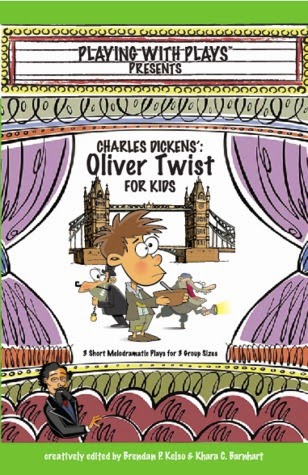
Having Fun with Shakespeare: Author Interview with Brendan Kelso

Your bio says you were an engineer before you moved to writing. How do you go from pure analytic to creative writer?
Well interestingly enough, I'm still an engineer by day, the director of innovation where I work. I've never exactly been "normal". I've never thought like a typical person, most likely due to my ADHD. But I've learned to embrace it over these years. I've always been very good with numbers, so engineering came somewhat naturally for me. But I had a very creative side as well, I see the world differently than most, and combining the two has been a lot of fun. By writing the books and doing the plays, that really fills the creative side of me.

When did you actually start writing your first book? How long did it take to write your first draft?
An actual book? In 2006, but couldn't find a good graphic artist. It took a long time to get the feel correct for my covers. I had a vision of what I wanted to see and didn't want to move forward till I had it figured out.

Who encouraged you along the way to complete your writing and publish it? 
Myself. I saw a lot of positive feedback from the kids and parents for the plays I made and I knew that publish on demand was becoming more mainstream, so I decided to jump in. Hardest part was finding someone who could capture my thoughts for the front cover...

Prior to writing these children’s plays, what was your publishing and writing background? Whytips  did you decide to take on re-writing Shakespeare? 
I had no experience with publishing and frankly, if you asked my English teacher in high school, she would say I should have no experience with writing either! If I feel something can be done, I just go out and do it, with or without experience. I took on Shakespeare, not because I'm an expert in anyway, I still have a lot of difficulty understanding the dialogue, but it had more to do with the way the kids reacted with it when we performed, and how fun it was to engage the kids in such great art and language.

Your books are self-published. What made you decide to go that route?
Self-publishing through CreateSpace (at that time, BookSurge) was easy and inexpensive. My marketing mind already knew that people were searching for kids and Shakespeare, and there really wasn't much in the way of fun books in that space.

What has frustrated you the most in the process of putting together the books? 
In the beginning, it was just finding a graphic designer who could render the thoughts in my mind appropriately for my audience. But the books and the process are pretty straightforward. Probably the most frustrating, is trying to find an agent. My books don't exactly fall into any typical category, but the amount of positive feedback that I get from parents and kids tell me that I have to keep moving. Just check out all the positive reviews on Amazon! Perhaps one day I’ll connect with the appropriate agent and they can help me reach more kids.

What are some of the promotions that you’ve done for the book that have been the most successful? 
I typically give away a lot of books. But I'm unique, because if someone likes one of my books, they usually purchase others. So it's worth the investment to mail it out. For a promotion perspective, I'm currently doing a Shakespeare Insult-a-thon, where two Shakespeare insults go head-to-head and people vote which is better. It should be a lot of fun, and I've had schools do it in the past with great success. You should check it out AND post an insult at InsultLikeShakespeare.com.
 
Have you used BookBub or Kirkus? 
I have never used either, perhaps next year maybe the first time.

Have you seen any of your plays produced by others? If so, what was the experience like?
Yes and it’s always amazing!!! I’ve been able to see a couple, but they are being produced all around the world. From Scotland in an actual castle to Singapore to Malaysia to all over the United States. It’s amazing how the kids have taken to the plays and how much the love Shakespeare and performing afterwards. It’s the MAIN REASON I continue to write plays!

Do you still direct and produce the plays?
I don’t anymore, BUT, I will again here shortly. As my kid gets older and I get more and more of an itch to get back on stage, it will be inevitable. I have performed them at schools and community centers. I’ve seen homeschools perform “backyard theater” as well. It doesn’t matter where, as long as the kids are having fun!

What advice would you give someone who wants to write children’s stories? 
Go out and just tell stories to kids, see how they respond. See if they engage with some of the characters you create, listen to their feedback while you're telling them your characters. They are your audience, the better you engage them the better they respond to you, the better your story will be. Don't spend a lot of time writing as much as telling stories until you get the right story, then write it down.

What is the best writing advice you’ve been given? 
By my wife: 15 minutes a day. Just spent 15 minutes a day working on your book. Believe it or not, sooner or later, you will have created something pretty impressive. The thought of just writing a book seems overwhelming, but the thought of just spending 15 minutes a day, is very manageable. You'll be amazed at what you can accomplish.

How much time daily do you have for writing?
Hah! Not 15 minutes unfortunately. But I'm lucky, I have co-authors.  It’s definitely a  joint venture, as none of my co-authors write alone, I heavily edit much of what they write to make sure it flows consistently with what I envision the books to be.

What message would you like parents and children to take away from your stories?
Just have fun with Shakespeare. The whole point is to just engage the kids and get them to like the plays, once you do that, the kids will have so much fun and many will end up looking up the actual Shakespeare text on their own. All I do is open the door, the kids will walk through it and have fun. That's the whole point of my books and the biggest message I tell parents and teachers. Just. Have. Fun.

What plans do you have for other plays?
I have a Shakespeare comedy, and a tragedy coming out towards the end of the year. Also, we will be producing jungle book by Rudyard Kipling. And I have a high school rendition for high school performances, coming out in the summer.

That's all for today's interview. If you're intrigued by his take on Shakespeare, here's some links to find out more details:  PlayingWithPlays.com and InsultLikeShakespeare.com

Tuesday, April 28, 2015

Finding Your Historical Niche: Author Interview with A.L. Sowards

You’ve been one busy lady in publishing 4 books since 2012. Are you that quick a writer or were these novels started a long time ago? How and when did you decide to write your first novel?
I started my first book (published as Espionage) in high school. My high school English class was assigned a creative project, so I wrote a short story. I’d always wanted to be an author, and the main character from that story stuck around in my head and I thought of more adventures for him. When I finished college and had more free time, I turned the short story into the first chapter of full-length novel. That first book took a while to write (two years for an initial draft then another few years of editing). Since then, I’ve written about a book a year.

Why did you choose WWII as your historical setting? What type of research do you do to keep your story true to the time frame?
I’ve been interested in WWII for a long time. In sixth grade we did a special unit on WWII and I’ve been hooked ever since. It helped that some of my favorite authors (Alistair MacLean and Jack Higgins) frequently wrote WWII novels.

How do you go about doing research for your historical fiction? Have you personally traveled to Europe to do any research?
Most of my research is through reading—a lot of reading. I haven’t been to Europe yet (unless you count the Charles De Gaulle airport in Paris during a layover), but I certainly wouldn’t discourage any aspiring authors who want to check out the location of their story in person. Good historical fiction requires extensive research.

What advice would you give authors in doing research for historical fiction?
My advice to other authors: you don’t have to know everything about a specific time period, but make sure you’re checked everything that ends up in your story. It only takes one error to lose a reader. Information from places like Wikipedia and History Channel documentaries can be fun places to start, but they shouldn’t be your only source.

How much “artistic license” do you use in creating locations for your stories?
My books are fiction, but I try to keep “big-picture” items accurate, especially locations. Most often, smaller locations, such as a character’s house, are made up. In The Rules in Rome, I give the true address for Gestapo headquarters in Rome, and most of the descriptions for that building (the exterior paint color and barbed wire barriers) are from research. Same with famous landmarks and battle sites.

On the other hand, Ottavia’s apartment, Gracie’s flat, and Bastien’s hotel room aren’t based on a real building (although Bastien’s hotel is located on the Via Veneto because during that time, a lot of German officers were billeted in hotels on the Via Veneto).

I have taken a bit of artistic license with spelling. For example, I use Romania and Yugoslavia instead of Rumania and Jugoslavia, even though the latter were more common among English speakers in WWII.

Give me an example of a difficult plot line that you needed to research?
In Deadly Alliance, I have a character in a prison camp on an island in the Adriatic. The first source I found (and the one that brought the camp to my attention) stated the camp was on the island of Vis. I looked and looked for a different source and couldn’t find anything else about the camp on Vis. I finally found a book that clarified that the camp was on Bisevo, a smaller island off the coast of Vis. Vis had an airstrip. Bisevo didn’t. Not having an airstrip near the camp meant I had to change a few things in my story, but it was worth it to make the novel into something that could have really happened.

Have your readers ever complained that your descriptions of areas aren’t correct or don't fit?
Like most authors, I have had a few bad reviews, but I haven’t seen any that complain about my description of the location. I normally read all reviews, even the bad ones, but I never reply to the bad ones—readers are entitled to their opinions. Some negative reviews are a result of a bad fit as far as my books and the reader’s genre preferences. But when reviewers point out legitimate weaknesses in my writing, I just try to do better with the next book.

How did you go about finding a publisher? Did you pitch agents?
I pitched to a few agents without success. My current publisher is a smaller company called Covenant, and they’re open to authors without agents. I followed the submission guidelines on their website and made a few changes to my initial manuscript based on their feedback before the novel was officially accepted.

Who encouraged you along the way?
My husband has been great with letting me chase my dream. I had a first draft of Espionage done before we began dating, so he kind of knew what he was getting into, but I’m sure he’s been surprised a few times on this journey. My siblings and parents have been supportive too. My earliest fan was probably one of my sisters. She’s taken French and German classes and she helped brainstorm character names for me. Plus, she’s read all of my books at least once before they were published. She had a master’s degree in military history, so she’s a useful test reader.

Are you active in any writing groups?
I am involved in a writer’s group and I trade manuscript evaluations with other writers and get input from test readers. Their feedback is incredibly helpful. I highly recommend getting thoughtful feedback from careful readers before looking for an agent or turning a manuscript over to a publisher.

What type of publicity do you do to promote your book? What has worked best for you in generating sales?
I normally have bloggers review my books (sometimes as part of a blog tour), but ultimately, most of my sales come from people walking into bookstores and buying my book there. My publisher focuses on books for the LDS/Christian market and they have good distribution in stores that cater to that same audience. Since my publisher handles most of the publicity, I probably can’t give you as good an answer as an Indy author could.

What do you know now about writing/publishing now that you wished you had known sooner?
I think it’s common for new authors to want and expect everyone to like their story. But I realize more and more the importance of writing to a specific market and then trying to get them to buy your book. If you want to write romance, don’t worry about attracting readers who just like mysteries. A lot of readers enjoy many types of books, but don’t expect universal cross-over.

I wish I would have known more about the typical sales pattern for series. Normally, each subsequent book in a series sales only 50-75% of the previous volume. Of course, 50-75% of a bestseller is still pretty great, but it’s important to realize that for the most part, you’re limiting your audience to people who have read your previous book. That’s true even if you write them so readers can pick any of the books up and read them as stand-alone novels, like I did. Going back in time, I probably wouldn’t have started out with a trilogy (Espionage, Sworn Enemy, and Deadly Alliance).

What advice would you give new writers who want to write historical fiction?
Develop at least a small obsession with the time period (or periods) you want to focus on. Try to interact with other people who are knowledgeable about that time. For me, I’m part of the Goodreads WWII readers group and I get great tips from the other members. Seeing how knowledgeable the other members are is good motivation for me to be accurate.

If you're a history buff and like reading about the WWII era, here's some links to learn more about A.L Sowards books and her future writing.

website/blog: http://alsowards.com/
facebook page: http://facebook.com/alsowards
goodreads page: http://www.goodreads.com/author/show/...