Blog Archive

Showing posts with label SCBWI. Show all posts

Tuesday, February 5, 2019

Grasping the Concept of Picture Book Writing: Author Interview with Jessie Oliveros

If you want to write books for children, you’ll probably want to join a local chapter of SCBWI (Society of Children's Book Writers). They offer multiple resources for learning the craft, workshops, critique sessions, and opportunities to pitch editors and agents. 

Each year they promote The Golden Kite Award. This is the only children’s literary award judged by a jury of peers. It recognizes excellence in children’s literature in five categories: Young Reader and Middle-Grade Fiction, Young Adult Fiction, Nonfiction, Picture Book Text, and Picture Book Illustration. 

Today’s interview is with a Golden Kite Award winner, Jessie Oliveros. She recently received the notice from Lin Oliver, Executive Director of SCBWI that she had won the award for picture book text! She’ll receive the award at the SCBWI Winter Conference in New York City. Now let’s learn all about her journey to publishing.

You've just released your first picture book, The Remember Balloons. How did you come up with the idea for your book?
While visiting my grandfather a few summers ago with my kids, I decided to write a picture book about Alzheimer's. He was diagnosed about five years ago. I wanted to make the disease, which is confusing, more accessible to children.

When I started writing the book, it was a straight-forward tale of a boy and his grandfather. But then inspiration struck—I thought of memories as balloons. (I'm a sucker for metaphors.) The boy's grandfather struggles to hold onto his balloons as he ages. The boy tries to catch them, but he can't. Yet, he finds another way to reclaim the balloons that his grandpa has lost.

How long did it take you to write it?
I wrote the rough draft of this book in an afternoon—which is unique for me. I struggle a lot with endings. Yet with this manuscript, I had a beginning, a middle, and an end in one sitting. Of course, since then, the manuscript has gone through several revisions. While I had the basic structure, there were many more changes to come. 

What do you expect readers to take away from that book?
I hope that reading this book offers solace to those who have a loved one suffering from Alzheimer's. And even if they don't, this is also a tale of holding onto the memories of those who have gone before us. This is a story for everyone who has loved and lost.

What writing experience/credits did you have prior to writing that book? 
This is my first published piece—although I did spend years before this trying to get published!

How has being active in SCBWI helped you in getting published?
Ten years ago, I had just decided I wanted to be published. I'd written off and on for years, but this time I needed direction. I remember attending an author talk of a book I had just read—Elizabeth C. Bunce. I found out she was teaching a workshop and attended. That was my first experience with SCBWI.

I remember at the workshop, she told me my writing was beautiful. I've never forgotten that. After the workshop, I attended a conference. I loved the community of writers SCBWI offered. Everyone working toward the same goal was truly inspiring to me. SCBWI really helped me get started on this journey.

How did you go about finding a publisher/agent?
After querying for years, I actually found my agent on Twitter. I pitched The Remember Balloons during #pitchmas—a Twitter pitch contest that has since retired from the Twitter scene.

My now-agent, Mike Hoogland of Dystel, Goderich, and Bourret, liked my pitch. We were talking on the phone just days later about representation. It all happened so fast—as did the pub deal. Less than a month after Mike sent out The Remember Balloons, we had interest from Simon and Schuster Books for Young Readers.
With my more recent submissions, I get a response anywhere from a couple of weeks to a few months later.

How do you write? Did you do an outline first?
For picture books, I like to plan much of it out in my head or on paper before I officially begin to write. For novels, I'm more of a pantser…at least at first. When my story takes more of a form, I'll outline the rest. My characters tend to develop as I go. I'm working on a middle-grade novel right now, one that's been in the works for years, and I'm still uncertain about some of my characters. As far as The Remember Balloons, my editor really helped me hone in on the character of my boy: James.

What did your editor harp on you the most in getting this book to publication?
I never felt like my editor was harping. I had two editors. My acquiring editor left Simon and Schuster for another house, and another took on my book. Both editors have been inspiring and patient, offering suggestions and asking questions in all the right places.

What surprised you the most in writing/publishing your first book?
I was surprised by the timeline from contract to publication date. My almost-three-year-old was just four days old when I received the offer. My book released in August. That's about 2 ½ years! But it was a full 2 ½ years, and I'm so happy with the final product! 

What frustrated you the most?
What I found frustrating, or difficult, was talking to booksellers about my book. It's kind of scary for me, but they've always been really kind and interested (if only politely interested) in my book.

What do you know now about writing that you wished you had known sooner?

I think I underestimated the power of reading in your genre early on. This is critical. Even if your book is different, you have to be familiar with what's out there.

What is the best advice you’ve been given about writing or that you’ve learned that you would like to pass along?
Patience. You have your whole life to get published. I know authors, debut authors, who are grandparents. No time is too late. Just enjoy the journey. 

Do you have any other works in the process?
I do! I have a picture book biography that is currently on submission. I'm also revising a middle-grade novel.

That’s all for today’s interview. If you’d like to buy Jessie’s book and learn about other upcoming books, here is the link to her website - Jessieoliveros.com. 

Tuesday, October 25, 2016

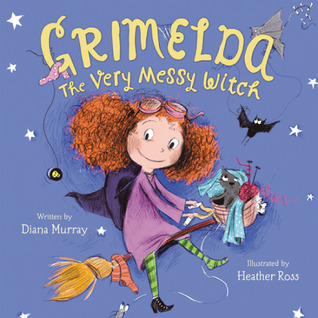
The Patience of Writing: Author Interview with Diana Murray

What made you decide to write for children? 
When my first daughter was born, we started reading tons of picture books together. I fell in love with them and the whole experience of reading together with a child. I wasn’t sure how the whole publication process worked, but I knew I wanted to give writing a try.

Tell me about the process of getting your book, Grimelda, the Very Messy Witch, published. 
It took about 7 years from the first draft to publication. It was a loooooong wait. And yes, I did get discouraged sometimes. Especially when it went to an editorial meeting and I got a revision request from an enthusiastic editor (who heard the first page read at a conference). I revised it and sent it back in, but it ended up getting rejected. That was around 2010, which was right after I got the SCBWI Barbara Karlin Grant. So the grant was very encouraging, but the subsequent rejection was a letdown. In hindsight, however, I know my revision skills simply weren’t strong enough at that time.

In 2012 I queried an agent with the manuscript and ended up getting an offer. After I signed with her, I sold Grimelda the Very Messy Witch and Ned the Knitting Pirate pretty simultaneously to different publishers. I did major revisions before getting the offers. It was daunting, but fun! And I’m pleased with how the revisions turned out. Unfortunately, there were some delays and the books took 4 years to be released.

Was it easier to write your next book? Did publishing doors open more easily once you had one book to show in print?
Perhaps it did get a bit easier to write because I got so used to picture book pacing and writing in meter. But I wouldn’t say that sales were easier. In any case, the next book I sold, City Shapes, was something I had written years earlier, but had never submitted. Funny enough, it came out first, even though it was the third book I sold.

Tell me about the process of getting an agent?
Getting my agent made a big difference in my career. I researched agents online by reading interviews, checking Queryshark, and checking on the SCBWI discussion boards (called The Blueboards at the time). I also met agents in person at conferences. When I read my agent’s bio, I thought she sounded like a perfect match for me. We seemed to like many of the same things. She was a junior agent at the time and actively looking for new clients. It was part luck and part determination. I don’t remember how many other agents I queried. Probably about 15 at the most, because not too many agents take queries from picture book authors who aren’t also illustrators or novelists.

What’s the best encouragement you’ve had in your writing?
Getting the 2010 SCBWI Barbara Karlin Grant. That was so exciting for me. Also, going to first page sessions and critiques at SCBWI conferences was often encouraging.

We have all experienced rejection. Give me an example of one you’ve had, and how you learned to write past it.
The worst rejections are form rejections. They’re so discouraging. I sub through an agent now, but I used to sub to the infamous “slush pile”. Form rejections made me feel unworthy--almost like I didn’t exist. It was especially harsh to have to wait an entire year only to get a generic form! But I get it. I know publishers just get so many submissions in the slush pile that it’s impossible to answer everyone personally. I sure did appreciate the times when I received a personal rejection! Even when it included some criticism.

When I did get so discouraged that I wanted to stop writing, the feeling was always short lived. I was drawn to writing, and it was impossible to stop.

What’s the hardest part about writing for you? What is the hardest part of writing for you? Starting? Creating a scene? Dialog? Tension, etc?
When I write in prose (not something I do often), the writing sometimes feels too distant. Like I’m writing “about” something, instead of being there, in the moment. When I write in rhyme, the hardest part is probably making everything sound natural and not letting the story meander to accommodate the meter. I adore writing in metrical verse. It’s like assembling a word puzzle.

What type of publicity does your publisher expect you to do in promoting your book?Mostly bookstore events. I also went to a spring preview event at Little, Brown once. I do book festivals and school events but I schedule those on my own.

What did you learn in publishing your first book that helped you in your writing?
I learned to take a more aggressive approach when revising.

What has surprised you the most in writing/publishing?
The CONSTANT waiting, waiting, waiting, and the anxiety that comes with that. I’m also surprised by how much I worry about reviews and sales.

What frustrated you the most?
Waiting!

What do you know now about writing that you wished you had known sooner?
Fresh eyes make a huge difference. If you set something aside for a year or more, you can often fix all the problems in a manuscript. Especially if you’ve been good about practicing your critiquing skills by exchanging with other writers.

What is the best book you've ever read about the craft of writing?
I think it’s between Writing Picture Books by Ann Whitford Paul and All the Fun’s In How You Say a Thing by Timothy Steele.

Is there a genre you wish you could write in, but never will? Which one?
YES! I wish I could write YA novels.

What is the best advice you’ve been given about writing or that you’ve learned that you would like to pass along?
Join a critique group.

Do you have any other works in the process?
Yes! I have a few other picture books and an early reader forthcoming, as well as many poems. You can check out my website for more info: http://www.dianamurray.com

Thanks for taking the time for this interview. Hope you'll check out Diana's books. I agree with you about being involved with critique groups and having fresh eyes on a book. Good tips as well for the craft books. 

Tuesday, January 18, 2011

Interview with Diana Murray, 2010 Winner of a SCBWI Grant

Every year SCBWI sets up a variety of grants and awards. One of them is for new writers and is called the Barbara Karlin Grant which is underwritten by Amazon. This is for a new unpublished picture book writer. All entries for this grant need to be postmarked by February 15th. You can find more information on this award and others at http://www.scbwi.org. As the deadline for grants is nearing, I thought it would be interesting to interview Diana Murray, who was the winner of the 2010 SCBWI Barbara Karlin Grant.

Books on writing always discuss the importance of having writing credits prior to submitting a book to a publisher, but prior to winning the grant, your bio shows just a few publishing credits.

At first, I wasn’t too concerned about getting magazine credits. But then I realized that an editor might spend an extra second reviewing a picture book manuscript if I had a few reputable credits on my cover letter. I had heard that Highlights and the Cricket magazines were among the most well respected (by editors and agents) and the most difficult to get into, so I made it a personal goal to get into those. I was very excited when I broke into those markets, and it was fairly recently. I didn’t submit much to magazines after that because I decided to focus on my picture book projects instead. Another reason is that I’m working on two poetry collections as well as an anthology, so many of the poems I write end up being allotted to those projects.

How many submissions did it take you to get accepted in the Highlights and the Cricket magazines?

I had about 4 rejections from Highlights and 2 from Spider. Highlights is quicker in responding. Spider can take 6 months. I could tell I was getting closer when I started getting personal rejections and invitations to sub again.

When did you decide to join SCBWI?

November 2007. That was a huge turning point for me. I came across the website while surfing the web. I feel that the moment I joined is the moment I became a “real” writer. Before that, I dabbled, but didn’t take it seriously. It took a while for me to be serious enough to educate myself about writing in meter and to educate myself about the market in general. Participating in the manuscript exchange area was huge too. It was scary to put my work out there, but getting feedback was like taking my first steps to becoming a writer. It was also extremely helpful for me to critique the work of others. That helped me become a stronger writer. I also started to familiarize myself with the submission process and all those nitty-gritty details. It took a while to get up to speed.

What motivated you to apply for the grant as some might be intimidated by the process? Have you applied for any other grants?

That was the second time I applied for that grant. It’s the only one I have tried. I didn’t really find it intimidating. Either you win or you don’t. Getting your work read during a first page session at a conference is a bit scarier, for example, because then you can see people’s reactions. At least for me that was more scary. But scary mixed with exciting. I applied for the grant because I wanted to have something shiny to put on my cover letter and the money was a motivation as well, since I started going to conferences and they can get expensive. I also wanted a sense of validation that I was on the right track.

How did you on which story to use for your application as you can submit only one book idea?

This past time it was very easy to choose because I had one story that was clearly my strongest. I could tell from the reaction of my peers, and I even felt it as I was writing. Based on my research, I knew editors often liked character-driven stories with a strong plot, with conflict, and with a final transformation in the main character and/or a twist, and my story had those ingredients.

Could you give me a short synopsis on the story you entered?
The title is “Grimelda, the Very Messy Witch”. The version I sent in was about 450 words. It’s a rhyming story about a messy witch who is constantly losing things. When she finally loses her trusty spell book, Grimelda is forced to do the unthinkable. Her frenzied, all-night cleaning spree uncovers surprises. I’m sorry to say, it was inspired by my messy apartment!

Tell me about the process. What happened after you submitted your story?
I just kept on writing and working on other projects. I honestly didn’t expect to win so I wasn’t anxious about it. I almost forgot about it. In June I got a bunch of calls from an unknown number. I thought it was some annoying telemarketer and kept ignoring my phone! Then I listened to the message. They were calling in regards to the SCBWI Barbara Karlin grant and asked me to call them back. I’ve never been so shocked in my life! I gasped, I screamed, and I did a little dance around the living room before calling back. I had to leave a message and then the organizer called me right back and told me the news. Aside from family events, that was probably the happiest day of my life. I posted my news in my critique group, on the blueboards, and on facebook. That was the first time I really went public about my writing in front of friends and family. I sort of felt like I was coming out of the closet.

After getting the grant, did that open new doors for you in writing? If so, how?

Yes. For one thing, I get a lot of hits to my website from the SCBWI site. I was able to submit to an agent who is normally closed to submissions. I've been asked to do interviews or guest posts on a couple of pretty prominent blogs, such as Tara Lazar’s blog. I also made some new writer friends as a result of winning. I noticed Deborah Diesen was on the list of past winners of the grant and I read in an interview with her that it was a big confidence boost. She later wrote “the Pout Pout Fish” which I believe is a NYT bestseller now. It was inspiring to see some names I recognized on the list. I can only hope that it opens the door to future successes. There certainly aren’t any guarantees!

The story you wrote is it under contract with a publisher now?

Not yet. Right before I found out that I won, I met an editor at a conference. She loved my story when it was read during the first page session and asked me to mail her the full. She emailed me about a week later and was very enthusiastic about it. It went to one editorial meeting and I sent her some revisions. Now I’m still waiting. It’s a slooooow business. I heard from someone else who is published by that house (it’s a big one) that it took 9 months to get an offer after she sent in revisions. And there's still a chance this editor will reject it.

What are your weekly writing goals?

Nothing specific, but I write every day. I have several projects going on at once and I often write short poems. I feel that the more you write, the quicker and easier it comes. It's like exercise. I also critique A LOT. I belong to two critique groups

What do you know now about writing that you wished you had learned sooner?

I wish I had read books on craft sooner. Books like “All the Fun’s in How You Say a Thing” (about writing in metrical verse) and “Writing Picture Books" by Ann Whitford Paul. Also Harold Underdown's website and other writing related blogs and sites. I also wish I had joined Verla Kay’s blueboards sooner. But really, there’s no way to rush things. It’s just a matter of doing, and learning over time. I’m still learning new things every day


What is it that you like about Verla Kay’s blueboards?

The blueboards is extremely active and you can always get pretty immediate answers to your questions from experienced writers and agents, or search for similar topics. It's very comprehensive. There is a lot of insider information. You can also get info on response times for agents and publishers which is really handy to know. The longer and more active you are as a member, the more sections you have access to.

What is it that you like about Harold Underdown's "Purple Crayon" website?

Answers to all the basic questions, like the difference between a cover letter and a query letter. Also, I often use his "Changes" page to see who's moving where and who has been promoted.

What advice would you give someone who is a new writer?

Don’t be afraid to experiment or make mistakes. Give yourself permission to write something that stinks. It may or may not stink in the long run, but you will learn from it either way. Keep an open mind to criticism. This is very important. Sometimes you have to "kill your darlings", as they say. And the more you write, the more confident you will become in your abilities and your choices. In the beginning, it may be hard to know when to change something based on a suggestion or stay true to your original vision.

Try to write everyday, even if it's just a short poem or story. Sometimes, write just for fun. It may not be something you submit, but you will learn from it, and in fact, when you write for fun, it may end up being your strongest work. Keep a notebook handy and jot down ideas as they come up. Even near your bed! Also, write down lots of ideas and then choose the best ones to concentrate on. For me, this kind of focusing works better than just writing anything that pops into my head (which is what I used to do). But any idea that truly inspires you is worth exploring. Find a good critique group or a few good critique partners. Don’t be discouraged by rejections.

Being part of the writing community helps. Everyone understands what it’s like. Always research publishers before you submit. A carefully targeted submission makes all the difference. Finally, don't get too attached to one project. It's OK to put something aside and start something new, and sometimes it's for the best. It's not about one story, but about the process of writing and just being a writer. Don't get stuck. Just keep moving forward.

That’s it for the interview today. I hope it encourages you to not only write, but also submit your writing! Don’t forget, if you want to know more about submitting for the current grant go to http://www.scbwi.org for the complete details.

Here are the links to the other websites that Diana mentioned in the interview that you might find helpful as well.
http://www.verlakay.com/boards/index.php
http://www.underdown.org/