Blog Archive

Showing posts with label adding suspense to your writing. Show all posts

Tuesday, February 28, 2017

Rewriting and Staying Motivated: Author Interview with Karen Rose

First off, kudos to you for winning two Rita Awards (RWA) and for being a finalist in five others. It looks like the first book you had published was Don’t Tell in 2003. How long did it take to write that first book? 
Thank you :-) DON’T TELL is my first published book and it took about 3 years to complete. I was working full-time as an engineer at the time, so my writing time consisted of stolen moments after my children were in bed and the weekends my hubby would take the girls to the bookstore or library to give me a few hours peace and quiet. 

In your bio, you said that book went through 5 full rewrites. 
I did write DON’T TELL five times before I finally sold it in 2001 and each time was a little different. The only things that were common in all five iterations were the prologue and the scene where Caroline meets her ex-husband face to face. Everything else changed and varied by mood and how much I’d learned from the past attempts. It wasn’t even a suspense until version four. It had been women’s fiction or mainstream romance for the first three versions.
Why are there multiple covers and imprints for this book?
There are two covers in the US – the original 2003 cover and a re-release in 2011 or so. The other covers are international versions. There are two for the UK and at least four for Germany!

From what I can see, you've always been traditionally published. Do you think it was easier then or now to get the attention of a large publishing house? 
Yes, I’ve always been traditionally published. That was the primary option back in 2001 when I sold my first book. Easier or harder now to get the attention of a large publishing house? That's a hard question to answer. I think there are many more paths to getting a traditional publisher’s attention such as the traditional query (although some houses do not accept unagented queries so you’d have to find an agent first), winning a contest where the prize is an editor’s read, successfully self-published sales, but the paths are much narrower, able to hold fewer authors. The number of houses has decreased, mostly due to mergers and buyouts. There are only so many slots for book releases, so fewer new authors can be considered. 

What are your thoughts on the rise of indie publishing?
I personally think the rise of indies is good because it allows so many more options for readers, but now there are so many that it’s hard to see the forest for the trees. Net? I really don’t know! If you do, please tell me :-)

What made you decide to write romantic suspense?
I didn’t start out writing suspense. My first books were women’s fiction or contemporary romance. It was my first agent who read the prologue to DON’T TELL and said, “You have a suspenseful voice. Have you considered writing a suspense?” I said, “No, but I’ll give it a try.” 

I approached it from a reverse engineering standpoint, LOL, and chose a suspense whose ending had surprised me. I read that book backward to figure out how the author had dropped the clues. Then I watched a LOT of original Law & Order to get rhythm and cadence of a suspense. Then I just sat down and wrote.
What are some of the more difficult aspects of writing a romantic suspense novel?
I think the most difficult aspect of writing a suspense is creating characters and plot compelling enough that readers are so caught up in the story itself that they don’t look for the clues. The most difficult part of writing a romantic suspense is keeping the balance right. Some of my books are more “romance-y” than others, but all have a core romance.
Have other novels been started and stopped along the way?
The only novel I started and never finished was a paranormal. I set it aside because I had suspenses to write and deadlines to keep. It’s always stuck in the back of my mind, though. Maybe I’ll finish it someday!

What’s the best encouragement you’ve had in your writing?
When I first started, it was to never give up. But now, nearly 20 books later, it’s the words of my very wise editor who knows me well. “Every book doesn’t have to be better than the last. Every book just has to be good.”

Perfectionists like me can obsess that THIS book (whichever is the next one) won’t be as
good. It can become debilitating. I put my heart and all of my effort into every book. I push myself to be better. But there comes a point when that drive toward perfection can freeze a writer in her tracks. So I just write as best I can and hope my readers fall in love with my characters all over again.

We have all experienced rejection. Give me an example of one you’ve had, and how you learned to write past it.
Oh my. Hmmm. My last rejection before selling DON’T TELL to Warner Books (I signed the contract 15 years ago this month!), was from an editor who said my book was “generic and familiar.” Ouch. That really stung. I didn’t really have to learn to write past it per se – I got “the call” offering to buy my book from Warner Books a week or so later. But I did deal with the sting by writing the rejection back into one of my books. The villain was told his art was “generic and familiar.” It made him determined to prove everyone wrong. Unfortunately, that villain upped his killing game. I just kept writing :-)

What is the hardest part of writing for you? Starting? Creating a scene? Dialog? Tension, etc?
Easily the beginning is the hardest part. So many directions the book can go at that point! It’s like a long hallway lined with doors. Some have tigers behind them and some just lead to weird, wrong places. If I pick the wrong door, I’ll have to start all over again.

What does your editor remind you to do most often?
Keep it tight! My books tend to be complex and long, with a lot of characters. I’m reminded often to keep the storyline tighter.

What did you learn in publishing your first book that helped you in your writing?

Be respectful. Listen to feedback and carefully consider it because the editor wants the same thing I do – a good book. Be able to read between the lines of critique and understand what change the editor really wants to see, even if she or he hasn’t clearly articulated it. But at the end of the day, it’s my book. I have to be proud of the content. So I listen and make changes, those that are articulated and those that aren’t, but I stay true to my voice.

What has surprised you the most in writing/publishing?
The generosity of my readers! I love how much they love my characters.

What frustrated you the most?
That there are so many factors that make a successful book release – most of which I can’t control.

What do you know now about writing that you wished you had known sooner?
It’s not always easy to fall into the writing of a book (the “zone”) when it moves from hobby to business. The stress of deadlines can make creativity dry up. When I get caught up in the stress, I have to remind myself why I love my characters. So I wish I’d known sooner that I have to treat my characters like any other real-life relationship. Keeping my creativity, enabling my characters to thrive in my mind, takes work. I can’t expect it to always “just happen."

What is the best book you've ever read about the craft of writing?
GMC – Goal, Motivation, and Conflict by Debra Dixon.

What other works are in the process?
I am just finishing the edits on a summer-release book (I’ll have two out in 2017!) called The Monster In The Closet. It features all the Baltimore characters and is the story of Clay Maynard reuniting with his daughter, who was stolen from him before she was even born. And I’ve started the fourth book in the Cincinnati series!

Any other tips or words you’d like to share about writing?

Don’t give up. And don’t write to get published. That’s a lot of pressure! Write because you must, because you love your characters.

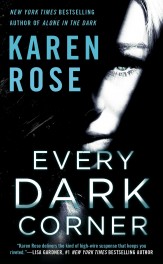
That's all for today's interview. If you would like to learn more about Karen's writing and her , latest book, here's the link to her EVERY DARK CORNER page on her website: http://www.karenrosebooks.com/books/every-dark-corner/overview

Tuesday, June 7, 2016

Keeping the Tension Ticking Way: Author Interview with Ed Markham

My interview today is with an author who works full time Monday through Friday as a freelance magazine writer and editor and devotes his weekends and evenings to his novels. Read on to learn from his writing experiences.

What drew you to writing psychological thrillers? 
I'd been attempting to write something literary for years, and could never get more than 10,000 words into a project without feeling discouraged and bailing out. I was trying to be Richard Ford or Jim Harrison, and that wasn't working. My dad is the kind of guy who reads one or two books a week, mostly thrillers, and he kept encouraging me to give one a shot. I felt from the start I was writing Founders' Keeper for my dad, and that's probably why I ended up making it about a father-son team of FBI investigators. 

Who are your favorite authors in this genre?

I was (and am) a big fan of Thomas Harris and Stephen King, both of whom kind of blur the lines between horror and thrillers. And of course I like a lot of our great contemporary thriller writers like Michael Connelly and Jo Nesbo. So I took my dad's advice and tried writing a thriller, and I realized quickly that I was enjoying myself a lot more and the whole undertaking felt more manageable (though still really daunting). 

How long did it take to write your first draft? 
Probably five months. I remember my wife and I went out to dinner to celebrate. I knew the book needed more work. But just getting to the end and having a complete draft to tighten and clean up felt like a major accomplishment. It still does. 

How many rewrites did you do on it? 
Oh wow, at least a dozen. The first few were on my own, and then feedback from friends and family and prospective agents instigated big rewrites. The draft my wife and I were celebrating that night at dinner is only vaguely recognizable as the book now available on Amazon. 

Founders' Keeper was always about a father-son team chasing a Constitution-obsessed killer, but nearly every detail has been reworked over and over again. My second book, Son of a Gun, was a much smoother effort. By then I (kind of) knew what I was doing, and was able to avoid a lot of the pitfalls I'd fallen into while writing my first book.

What do you think makes for a good thriller?
A lot of it is reader preference. But to even be considered a "thriller," I think there has to be what one agent I spoke with called a "ticking clock" element, or something that urges the characters and plot forward to accomplish or prevent something before it's too late. At the same time, I like a thriller that has some real meat to its middle. You see a lot of books in this genre where, once the initial story and plot are established, it kind of feels like the characters are just running in place and burning pages until everything reaches the big surprise or reveal at the end. I think of it as tap dancing. There's a lot of noise and movement, but nobody's going anywhere. To me, having a cool twist at the end doesn't cut it if the rest of the book was a lot of nothing.

What type of research do you do to give a sense of reality to your stories?
I spend a fair amount of time reading through old transcripts from law enforcement and FBI conferences. Google Maps is a great way to revisit a place and get the feel of it again, or to explore a town or city I haven't visited in person. Wikipedia. Google Scholar. 

Like all authors, I'm lucky to have the internet at my disposal. But sometimes I don't know what I don't know, and I make mistakes. I had a reader point out to me that the thing that spins on top of a helicopter is called a "rotor," not a "propeller," which was embarrassing

(but I appreciated hearing about).


Did you go through the normal process of pitching your book to agents and traditional publishers? What feedback did you get? 
I did try the traditional route. It was really a tough experience. Not altogether horrible, but just difficult. After about six months of querying agents and having no luck, I attended Thrillerfest in New York and pitched my book to about 15 agents. The one I was most interested in connecting with accepted the first few chapters, and then requested the whole book. She read it in two days. We spent an hour on the phone, and she told me she loved it and had publishers in mind for it. But she had a couple minor issues with the ending and wanted me to fix those. I agreed, spent three weeks tuning it up based on her feedback, and sent it back to her. She said she was caught up with some existing client projects, but would read the rewrite as soon as she could. 

Months and months passed, and eventually I had to give up on her because I'd found another agent who wanted to sign me. The new agent was with a great agency, but was very junior and had never represented a thriller author. He was great, and pitched Founders' to all the big publishers. We received a lot of encouraging feedback. But ultimately everyone passed. My agent wanted to pitch some smaller publishers, but I'd heard some horror stories about authors selling the rights to their books for peanuts, and seeing it fail because there wasn't much marketing or resources to support it. 


At that point, publishing on my own seemed like the better choice. All in all, I think I spent about three years querying agents and trying to secure a traditional publishing deal. It was a learning experience, and I don't completely regret it. But it's hard now that I have two young kids to look back at those prime, productive, childless years and wonder how much I could have accomplished focusing on writing new books and publishing them myself. 

How do you write? Did you do an outline first? Did you do individual character development before doing the full plot?
I'm a big process guy. I sit down every weeknight at 9 pm and work until I hit 1,000 words. Weekends I do the same thing around midday during my kids' nap times. I did a lot of character planning for my first book. But now the main characters have carried over, so there isn't as much of that. I lightly outline--mostly the first 50 or 100 pages so I know how I'll get rolling. I also try to have a conclusion in mind, though it tends to break down on me halfway through. Personally, I've found it's better to have a premise and an idea of where I'm headed, but to spend most of my time writing, not planning. I get into some trouble this way when I realize after a few days of work that a brilliant idea I had one evening doesn't fit--and needs to be rewritten. But I think letting the story and characters dictate what comes next feels more natural and helps me avoid that tap dancing I mentioned.

What type of publicity do you do to promote your book? What has worked best for you in generating sales?

Like most independent authors, I use sites like BookBub and Robin Reads and many others to get my books out there. Honestly, that's about it. I'm grateful you came to me with this opportunity, because I really haven't been great about marketing my books. I work full-time during the day. And with two kids, I only have a small window of time each day to work on anything relating to my books. I choose to spend that time writing, not marketing.

What do you know now about writing/publishing now that you wished you had known sooner?

A great deal of success in self publishing is about volume and marketing. That's not inherently a good or bad thing. But when I decided to self publish, I had this image of myself writing a book a year, formatting the thing for Kindle, clicking "publish," and waiting for readers to (hopefully) like what they read and spread the word. In reality, I've learned very few authors have much success that way. Some do. But many more find success by churning out a new book every few months and promoting the crap out of it. One way isn't better than the other. But you learn very quickly that the number of books you produce and how much you market them are huge factors when it comes to making money at this.

What is the best advice you've been given about writing or that you've learned that you would like to pass along?
Whether you're writing your first book or your tenth,  daily word goals are indispensable. They're the only way I got through my first book. Even if your goal is modest--say, 250 words a day--all you have to do is hit that number and eventually you'll have a full manuscript in front of you. It's like magic. But to be clear: Editing or revising what you already have DOES NOT COUNT toward your daily goal. You need to write 250 or 500 or 1,000 fresh, piping hot new words every day. 

What other works do you have in the process? 
I've finished a draft of my third book, which is tentatively called Ghosts in the Machine. Like my first two books, it features the same father-son team of FBI investigators. In this book, David and Martin investigate the disappearance of an internet mogul-- a Mark Zuckerberg type. I'm hoping to have it published by the end of July. I'd originally wanted it up by the end of this month, but my wife and I had our second son a few months ago, and that's really slowed me down. (He's not the sound sleeper his big brother was at that age.) 

Thank you, Ed for all your insights about your writing and publishing experiences. If you'd like to get a start on reading his series, here's a link to his website...  EdMarkham.com. 

Tuesday, January 12, 2016

Guest Blog with Angela Ackerman: Emotional Showing: 3 Tips For Writing Fresh Body Language

One of the biggest universal struggles writers have is repeat gesturing. This is when those shrugs, frowns, feet shuffling and smiles sprinkle themselves liberally across a manuscript because they are the obvious choices to show a character’s emotions. (The most common gestures involve the eyes, face and hands, as well as internal ‘tells’ such as a heartbeat or breathing changes.)

The big problem with choosing a well known gesture to describe character emotion is that it often comes across as tired and overused, or worse, cliché. This is usually because we don't just use it once, we use it multiple times throughout the manuscript because it is the first thing to come to mind when we set out to describe a feeling.

If the character is scared, they shiver. If they are nervous, they bite their lip. If they are excited, their heart races. Each of these responses to an emotion is realistic, but if every time the character is nervous she's biting her lip, the reader will not be pulled into the story.

Settling for phrasing that’s been done to death can not only make a character’s actions and emotions seem a bit hollow, it can also impact the empathy link between reader and character. For readers to fully immerse themselves in the story and character’s plight, they need to invest themselves emotionally. This means not only creating compelling circumstances that allow for rich, emotional interaction between characters, it means bringing the reader up close and letting them experience what the character is feeling.

Fresh writing is the key to emotional showing, and this means thinking beyond the basics of body language. It also means understanding the body’s instinctive responses (known as internal visceral reactions) and the thought process that accompanies each emotional experience. Drawing on all three of these as you describe will bright about a rich, layered description that will captivate readers.

Here are three tips to put the fresh back into your expressions.

1) Mine Your Memories


Sit back from the keyboard for a moment and think about what emotion your character is feeling. There may be several, but one will be the root cause of the others.

When you find it, think about a time where you felt the same emotion. Then, recreate that moment and allow your body to take over. What is it doing?

Let’s pretend it’s guilt. Is there a sour taste in your mouth? Does your stomach bunch up? Does your throat feel painful?

Act out the feeling and move around. Do you hold your arms close to the body? Is your posture slumped? Are your eyes closed, or open? Are you thinking about how awful it would be if others knew about your secret?

Keep mining until you find a movement, thought  and/or expression that is fresh and unique and fits your character's personality and emotional range.

2) Use the Setting
Setting is so much more than a backdrop, so have your character interact with it. Touching is intimate. What objects within the setting trigger feelings of safety or strife? Build these into the scene and show your character react to them.

Body language will also shift depending on how a person can express themselves. Confined to a chair, a character may show emotion differently than he would standing around a campfire, or in an elevator full of people.

Personality and comfort level will also affect body language, because people act differently alone versus in a group. Think about whether your character feels safe to express emotion in this setting. Are they open about it, or do they try to hide what they feel from others?

3) Watch People (But Don’t Be Creepy About It)

I know, this one seems a bit basic, but it’s something all writers should be doing. And don’t shy away from locations that provide high emotion either--people who are visibly upset, excited or frustrated are treasure troves of unique body movements!


Take advantage of wherever you are--a doctor’s office waiting room, at a pub watching the game, hustling through the grocery store. Keep an eye out for that uncomfortable patient, exuberant fan, or overwrought mom with three kids bouncing all around her.

The bottom line is that each of us express ourselves in our own way, and we must strive to do this with our characters. Dig deeper and think beyond the ‘easy’ gestures. Then, using a combination of thoughts, visceral responses and body movement, create your character’s unique emotional footprint on the page.

If you get stuck, dig out your copy of The Emotion Thesaurus or visit the thesaurus' online home at One Stop For Writers. If you don't have it on your bookshelf, here's a secret...Amazon's "look inside" feature is quite generous, and chances are, the free preview will give you a ton of ideas. Happy writing!

ANGELA ACKERMAN is a writing coach, international speaker and co-author of several bestselling writing books, including The Emotion Thesaurus: A Writer's Guide to Character Expression. She loves building communities, and her newest project, One Stop For Writers, is a powerhouse online library like no other, filled with description and brainstorming tools to help writers elevate their storytelling. You can also find her on Twitter and Facebook and at her website, Writers Helping Writers.

Tuesday, October 14, 2014

The Promise of the First Chapter, Guest Blog Post by Chris Eboch

You’ll hear it over and over again — opening lines are important. Your opening makes a promise about the rest of the story, article, or book. It tells readers what to expect, setting the stage for the rest of the story to unfold — and hopefully hooking their interest.

 What You Promise
The first scene should identify your story’s genre. This can be trickier than it sounds. Say it’s a romance, but the main character doesn’t meet the love interest until later. Can you at least suggest her loneliness or desire for romance? (And get that love interest in there as soon as possible!)

Maybe you’re writing a story involving magic, time travel, ghosts, or a step into another dimension, but you want to show the normal world before you shift into fantasy. That’s fine, but if we start reading about a realistic modern setting and then halfway through magic comes out of nowhere, you’ll surprise your reader — and not in a good way. Your story will feel like two different stories clumsily stitched together.

If you’re going to start “normal” and later introduce an element like magic or aliens, try to hint at what’s to come. Maybe the main character is wishing that magic existed — that’s enough to prepare the reader. In my novel for ages 9+,
The Genie’s Gift, an early draft didn’t introduce magic until chapter 5, when the heroine is on her quest. In revisions, I introduced magic in the opening paragraph:

Anise knew the candy must be enchanted. The genie cook always put some kind of protection on the food, so no one could eat it until he said so. Would it stick her jaws together so she couldn’t speak? Turn her lips and tongue blue? Taste like camel dung? But Anise didn’t want to wait until after the wedding. She was hungry now.

For this book, the title and cover help establish the setting anyway, but I still don’t want to make readers wait, especially impatient kids. For other genres, the title and cover may not be quite as clear-cut, and people using certain e-readers might not even see the cover or remember much about a book they bought some time ago. Give them a reminder right away.

When and Where
Your opening should also identify the story’s setting. This includes when and where we are, if it’s historical or set in another country or world. Once again, you don’t want your reader to assume a modern story and then discover halfway through that it’s actually a historical setting. They’ll blame you for their confusion. In my middle grade mystery,
The Eyes of Pharaoh, not only do I identify the historical setting with a tagline, but I then follow with a scene that is clearly not contemporary America:

Waset, Egypt
Year Seven, Day Five of the First Month of Summer
in the reign of Pharaoh Ramses the Third


Seshta ran. Her feet pounded the hard-packed dirt street. She lengthened her stride and raised her face to Ra, the sun god. Her ba, the spirit of her soul, sang at the feel of her legs straining, her chest thumping, her breath racing. 


In a contemporary story, you may not identify a specific city, but the reader should have a feel for whether this is inner-city, small-town, suburban, or whatever.
Whispers in the Dark, a romantic suspense written as Kris Bock, features archaeology and intrigue among ancient Southwest ruins. The opening immediately establishes both the unusual setting, and the "fish out of water" challenge for the main character:
 What had I gotten myself into?

I closed my eyes. Yes, I was driving, but a moment of distraction seemed safe enough, since I hadn’t seen another car in half an hour. Even the jackrabbits and rattlesnakes were hiding in the shade, leaving the road clear of everything but rocks and ruts. 

 I was starting an adventure. I had to remind myself of that—an adventure. I wanted to be here. I wanted to get away from the city, the classroom and office, the people. You couldn’t get much farther away than this, a tiny cluster of seven-hundred-year-old ruins in the Four Corners area of the Southwest. I had found the middle of nowhere.

 As I had wanted, I reminded myself.


Who and What’s Up
Your opening pages should focus on your main character. You may find exceptions to this rule, but your readers will assume that whoever is prominent in the opening pages is the MC. Switching can cause confusion. You should also establish your point of view early. If you’ll be switching points of view, don’t wait too long to make the first switch. In novels, typically you want to show your alternate point of view in the second chapter and then switch back and forth with some kind of regular rhythm.

And of course, you want some kind of challenge or conflict in your opening. This doesn’t have to be the main plot problem — you may need additional set up before your main character takes on that challenge or even knows about it. But try to make sure that your opening problem relates to the main problem. It may even lead to it.

In my latest Kris Bock romantic suspense,
Counterfeits, the story opens with the heroine returning to the New Mexico art camp her grandmother ran. Jenny is grieving over her grandmother’s recent death and wondering how this will change her life. Two pages later, she wakes up in the night to hear people searching the house. During her escape, Jenny crashes into a sexy man, an old friend who seems to have secrets of his own. She doesn’t figure out what’s going on until much later. Still, the book opens with a character who has problems and quickly gets into greater trouble.

The Fast Start
So, an opening should introduce many elements of the story. Yet you can’t take too long to set the scene, or your readers may lose interest. You want to start in a moment of action, where something is changing, and cut the background. But don’t rush things — take a little time to set up the situation, so it makes sense and we care about the characters and what’s happening to them.

Fast, but not too fast. How do you find the balance?

You can test your opening by seeing how much you can cut. What if you delete the first sentence, the first paragraph, the first page? Does the story still make sense? Does it get off to a faster start? What if you cut the whole first chapter, or several chapters? If you can’t cut, can you condense? Another one of my romantic suspense novels,
Rattled, involves a treasure hunt in the New Mexico desert. I jump into the story when the main character has found the key to the treasure, and give more detail throughout the opening chapters: 

            Erin could hardly believe what she was seeing. Could this be it? After all this time waiting, searching, had she finally, finally, found what she was looking for?

            She fumbled in her desk drawer for a magnifying glass and studied the symbols in the photo more closely. At a glance, they looked like your standard Indian petroglyphs. You could find them throughout the Southwest, tucked away in caves or scattered among boulder fields.

            But this was different.

            If she was right—and she had to be right—these symbols were a map. A map that could lead her to one of the greatest caches of buried treasure ever.
 

On the other hand, if your beginning feels confusing or rushed, you might want to try starting earlier in the story. Try setting up a small problem that grabs the reader’s attention, luring them in until you can get to the main problem. In
The Well of Sacrifice, another of my novels for ages 9+, the Maya are dealing with famine, disease, and marauders in the early chapters, even before the king dies and an evil high priest tries to take over. That gives readers time to understand these characters and their unusual world.

The inciting incident — the problem that gets the story going — should happen as soon as possible, but not until the moment is ripe. The reader must have enough understanding of the character and situation to make the incident meaningful. Too soon, and the reader is confused. Too late, and the reader gets bored first.

Options for Fast Starts:

· Start in the action, at a moment of change. Then work in the back story.

· Start with two people on the page.

· Start in the middle of a fight or other conflict.

· Start with a cliffhanger — something powerful about to happen.


· Start with a small problem that leads to the big problem, or is an example of the main problem.

Chris’s book
Advanced Plotting is designed for the intermediate and advanced writer. If you struggle with plot or suspect your plotting needs work, this book can help. Use the Plot Outline Exercise to identify and fix plot weaknesses. Learn how to get off to a fast start, prop up a sagging middle, build to a climax, improve your pacing, and more.

Chris Eboch writes fiction and nonfiction for all ages. Her novels for ages nine and up include
The Genie’s Gift, a middle eastern fantasy, The Eyes of Pharaoh, a mystery in ancient Egypt; and The Well of Sacrifice, a Mayan adventure. Learn more at www.chriseboch.com or her Amazon page.

As Kris Bock, Chris writes novels of suspense and romance for adults.
Counterfeits starts a new series about art theft. Whispers in the Dark features archaeology and intrigue among ancient Southwest ruins. What We Found is a mystery with strong romantic elements about a young woman who finds a murder victim in the woods. Rattled follows the hunt for a long-lost treasure in the New Mexico desert. Read excerpts at www.krisbock.com or visit her Amazon page.